
What should I do about black mold after water damage?
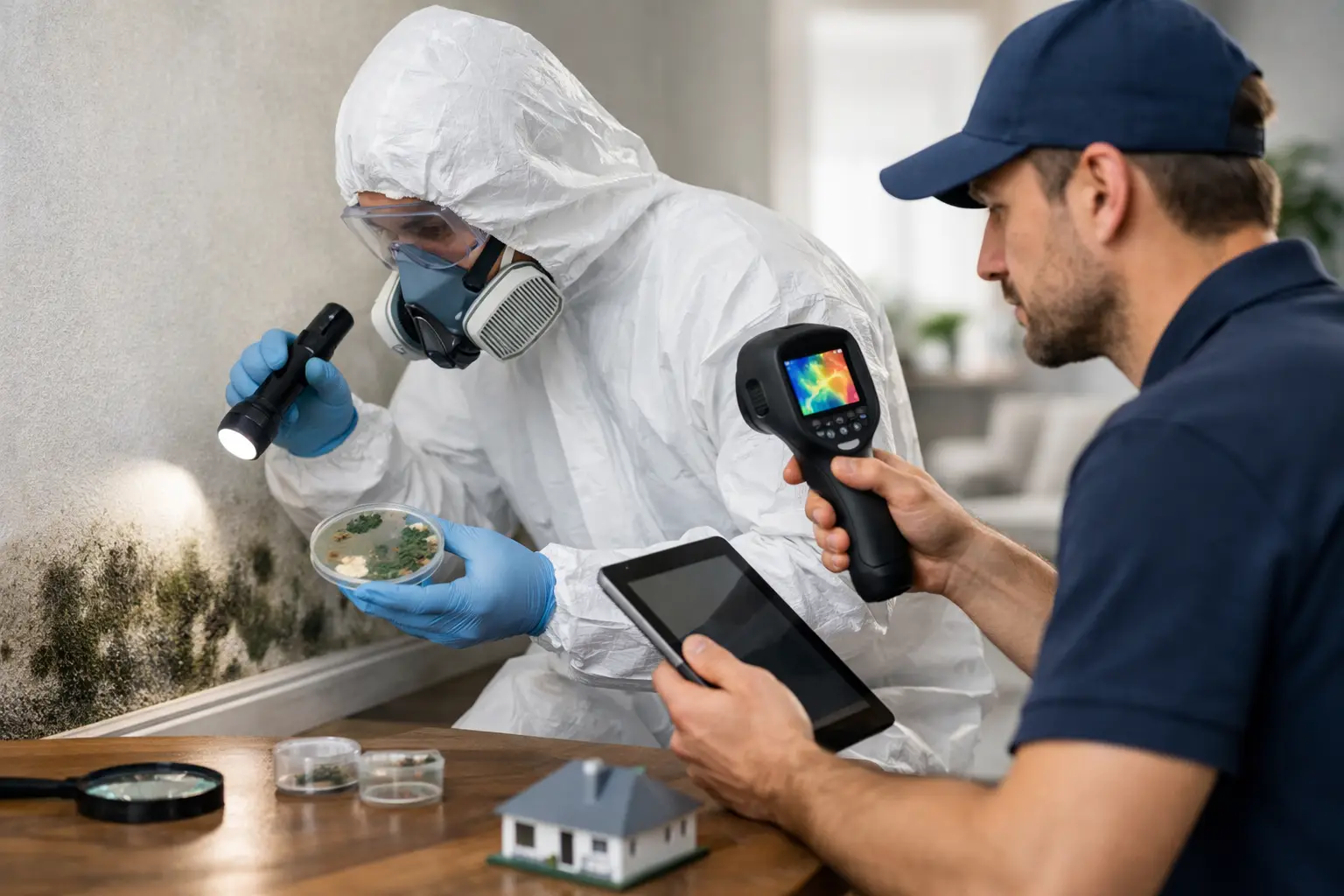
Black mold after water damage means moisture stayed long enough for mold to grow, often in drywall, insulation, or a crawl space. The real fix is to stop the source, inspect the affected areas, contain the spread, and remove contaminated materials before the damage gets worse.
What does black mold actually mean after a leak?
Black mold in this context means a moisture-driven mold problem, not just a dark stain. If a leak, overflow, or hidden seepage kept drywall, framing, or insulation damp, you may have growth inside the structure even when the surface looks minor.
The mistake people make is treating the color as the whole story. It is not. After water damage, the real question is how long materials stayed wet and whether the area was dried correctly. That is what turns a simple leak into a remediation job.
If you are trying to tell whether the spot is mildew or black mold, focus less on the shade and more on the source. Surface mildew often sits where you can wipe it. Mold tied to trapped moisture usually means something behind the surface stayed wet.
In a homeowner loss, that difference matters because drywall, insulation, trim, and subflooring can keep feeding growth long after the visible spot appears. By the time you smell it, the path of the water may already be wider than the stain.
This is why inspection has to start with moisture mapping and a look at the affected materials, not a quick spray-and-go approach. You want the actual wet zone, not just the obvious patch.
Separate the color from the cause and you make a better decision. Leave the cause alone and the problem keeps returning.
- Dark spotting is a clue, not the full diagnosis.
- Hidden moisture is usually the real driver.
- Wall cavities and crawl spaces are common trouble zones.
- A visible patch can be smaller than the affected area.
- The source has to be corrected before cleanup can hold.
What does black mold look like?
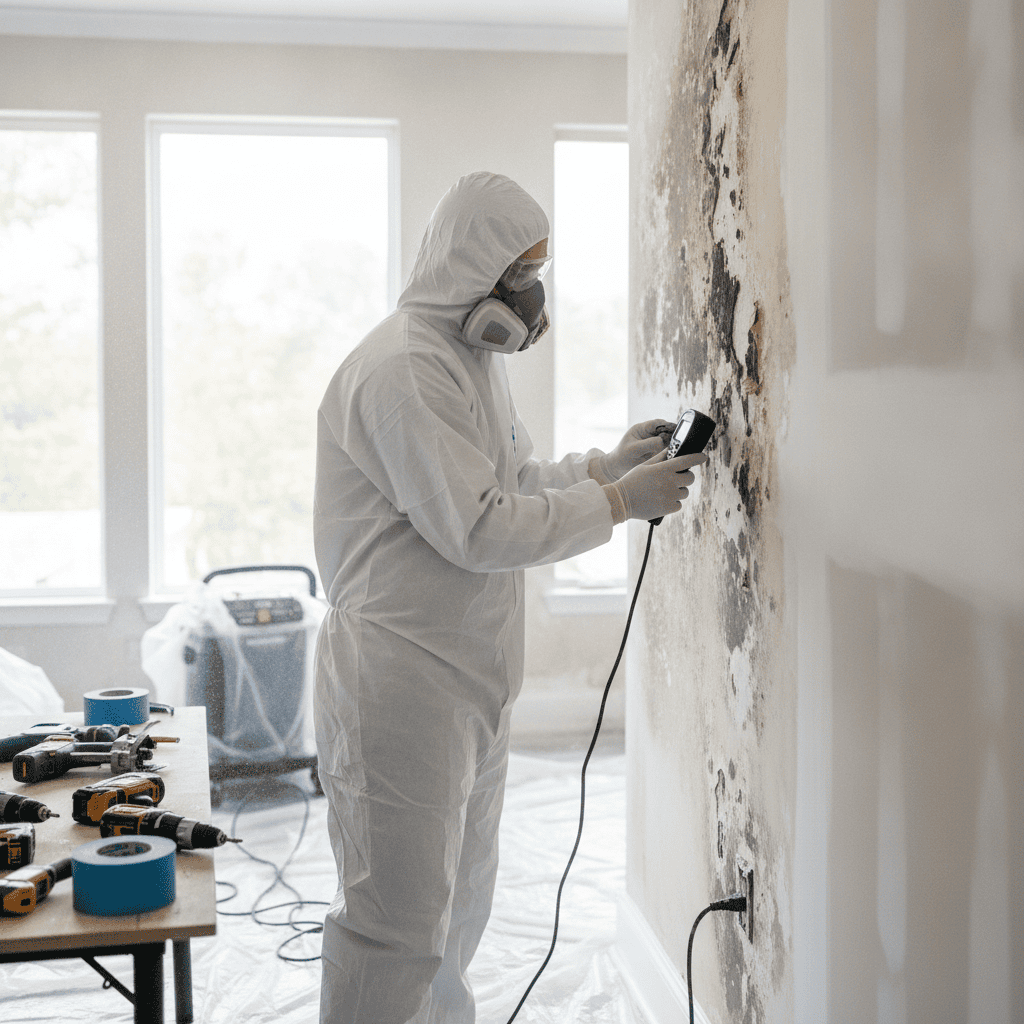
What does black mold look like? Usually not like one neat textbook photo. It can appear as dark specks, patchy staining, fuzzy growth, or blotches on damp drywall, caulk, wood, tile grout, or around HVAC-related moisture areas.
People want a clean visual rule because that would make the decision easy. Unfortunately, mold is messier than that. It can look slimy, dusty, fuzzy, or flat, depending on the material it is growing on and how long the area has been wet.
That is why a bathroom spot and a post-leak wall stain are not the same problem. The bathroom may be surface growth from recurring humidity. The wall stain may mean water traveled into the cavity and kept feeding growth where you cannot see it.
Color alone is a weak signal. Black, green, brown, and gray growth can all appear in homes after water intrusion. The question is not whether it matches a stock photo. The question is whether the material is contaminated and whether hidden moisture remains.
If you are looking at a dark area and wondering whether to panic, do not. But do not ignore it either. The better move is to document it, stop further water intrusion, and get the area assessed before you start scrubbing and spreading debris.
That is the practical answer most homeowners need. Not dramatic. Not casual. Just accurate enough to act on.
- May look speckled, patchy, fuzzy, or stained.
- Can grow on drywall, wood, grout, or trim.
- Color does not confirm the exact mold type.
- A growing pattern near water is more important than the shade.
- Visible growth can point to hidden contamination behind surfaces.
Are black mold poisoning symptoms the same for everyone?
No. Black mold poisoning symptoms are not identical from person to person, and that is exactly why self-diagnosis gets messy fast. Some people react with irritation, while others notice worsening respiratory symptoms or headaches after spending time in the affected space.
The phrase itself is a little misleading because people use it to describe a range of reactions, not one precise medical diagnosis. What matters for a homeowner is whether the environment is making people feel worse and whether the source is still active.
Children, older adults, and people with asthma or allergies may notice problems sooner. Other occupants may not feel much at all. That does not make the mold harmless. It just means human response is not a reliable way to judge the extent of contamination.
If symptoms seem to improve when someone leaves the house and return when they come back, that is a clue worth taking seriously. It does not replace medical care, but it does support the need for a proper moisture and mold assessment.
Do not wait for symptoms to prove the issue. Water damage gives mold the chance to grow regardless of whether the house feels fine for a day or two. The structure can be getting worse long before anyone feels it.
That is the ugly part homeowners hate hearing. The building does not care that the problem feels unclear.
- Symptoms can vary by person and sensitivity.
- Respiratory irritation is a common complaint.
- Allergies and asthma can make reactions worse.
- Feeling better away from home can be a clue.
- Environmental assessment matters even if symptoms are vague.
Elevated Operations provides 24/7 water, fire, mold, storm, and sewage damage restoration across Metro Atlanta.
Get a free quoteCan symptoms of black mold exposure show up after the leak is gone?
Yes. Symptoms of black mold exposure can show up after the water source has already stopped if contaminated materials were left in place or if the drying was incomplete. The leak ending does not automatically mean the hazard ended.
This is where a lot of homeowners get fooled. The bucket is empty, the pipe is fixed, and everyone assumes the crisis is over. But if the drywall stayed damp or the crawl space never fully dried, growth can keep developing out of sight.
Odors are often the giveaway. Musty air, damp odors in closets, or a smell that gets stronger when the HVAC runs can suggest mold is still active somewhere in the system or building assembly.
Another common pattern is delayed irritation after the family returns home and the space closes up. Closed windows, less airflow, and normal living can bring hidden moisture problems back into the air in a way that feels sudden even though the root cause was sitting there all along.
That is why restoration is not just water removal. It is drying, contamination control, selective demolition when needed, and proper reconstruction. If you skip the containment part, you are just moving the problem around.
A leak that is over in your head may still be live in the walls. That gap is where mold thrives.
- Symptoms can appear after the water event ends.
- Musty odors often signal an unresolved moisture issue.
- HVAC airflow can redistribute contamination.
- Incomplete drying is a common hidden failure point.
- The problem can live in wall cavities or crawl spaces.
Why does a burst pipe create a mold problem so fast?
Because water does not need much help once it gets into porous materials. A burst pipe can soak drywall, baseboards, insulation, and subfloors quickly, and those materials hold moisture long enough for mold to begin growing if cleanup is slow.
Homeowners tend to think the visible water is the whole event. It is not. The water that runs under flooring, behind cabinets, or into a ceiling cavity is the part that decides whether you end up with a cleanup or a rebuild.
Bursts and leaks also create a timing problem. The longer wet materials sit, the more likely they are to need removal instead of drying alone. That is why the first response after a loss matters so much.
If sewage backup or floodwater is involved, the concern rises again because contamination is not just about mold. It is also about what was carried into the home with the water. That changes how the area should be handled and what materials need to come out.
This is the point where people start searching like mad for what does black mold look like, then get distracted by every photo online. Better to focus on the actual source path, the affected materials, and whether the structure has been opened up enough to dry properly.
Water intrusion is a building problem first and a mold problem second. Treat it backwards and you pay for it twice.
- Porous materials hold water long after surfaces look dry.
- Hidden water behind cabinets or flooring is a major risk.
- Speed matters because wet materials can’t just be wished dry.
- Flood or sewage water adds contamination concerns.
- The source path should guide the cleanup scope.
Mildew or black mold: which one is the bigger concern?
Mildew or black mold is not the real debate. The bigger concern is whether the moisture source is still active and whether the growth is confined to a surface or has moved into building materials. That is what changes the scope.
Mildew usually gets treated like the softer word, so people relax. Then they find recurring spots after cleaning, and the same damp area keeps returning. That means the environment is still feeding growth and the problem was never solved.
Black mold concerns feel scarier because the phrase is loaded, but the practical issue is broader. You may need cleaning, containment, air filtration, selective demolition, and reconstruction depending on what was wet and for how long.
The right next step is not a guess from the internet. It is a proper inspection that looks for the source, the spread, and the affected materials. That gives you a plan instead of a hunch.
If the area is small and superficial, the response can be simpler. If the damage has reached drywall, insulation, crawl spaces, or subfloors, you are dealing with a much more serious restoration project.
So the question is not which label sounds worse. It is which one matches the actual condition of the home.
- Recurring growth means the moisture problem is still present.
- Surface cleanup is different from structural contamination.
- The scope depends on materials, not just appearance.
- Small spots can still point to bigger hidden damage.
- Inspection should identify source, spread, and affected areas.
How should a homeowner respond before mold spreads through the house?
Act like the water still matters, because it does. Stop the source if you can do that safely, limit traffic through the area, and avoid aggressive cleaning that can push contamination into the air or deeper into the structure.
People love to grab bleach and a rag. That is usually a bad first move. Bleach does not solve hidden moisture in drywall or framing, and scrubbing can aerosolize debris when the real issue is behind the surface.
If the leak is ongoing, shut it off. If sewage is involved, keep people and pets away from the area. If the ceiling is sagging or the floor is compromised, stay out until it is evaluated. Common sense first, heroics never.
Document the damage for insurance, then get the affected spaces inspected so the remediation plan matches the actual scope. That is where direct claim communication and a clean reconstruction path save you from wandering through three different contractors with three different opinions.
A homeowner does not need to become a mold technician. You need to know when to step back and let the structure be assessed correctly. That is how you prevent a bad cleanup from becoming a bigger one.
Once you cross into hidden moisture and contaminated materials, the cost of guessing rises fast. That is the whole game.
- Do not scrub first and ask questions later.
- Stop the water source if it is safe to do so.
- Limit exposure if sewage or heavy contamination is present.
- Document damage before major demolition begins.
- Get the affected area assessed for proper scope.
When the black mold problem needs more than surface cleaning
| Situation | What to do | Why |
|---|---|---|
| The spot keeps returning after wiping or painting. | Check for a hidden leak, trapped moisture, and damaged materials that need removal. | Surface cleaning fails when the source is inside the wall or under the floor. |
| There is a musty odor even after the leak stopped. | Inspect cavities, closets, crawl spaces, and HVAC-adjacent areas for lingering dampness. | Odor often means moisture remains in materials you cannot see. |
| Drywall feels soft, stained, or swollen. | Open the affected area carefully, dry what can be saved, and remove what is contaminated. | Porous materials usually do not recover once saturation and growth take hold. |
| People feel worse in one part of the home. | Treat it as an environmental warning and assess for active contamination and airflow spread. | Health complaints can point to a hidden source even when the surface damage looks minor. |
Doing it yourself vs bringing in Elevated Operations
| Doing it yourself | With Elevated Operations | |
|---|---|---|
| Finding the true scope | You can spot the stain, but hidden moisture behind drywall, trim, or flooring is easy to miss. | We inspect the damaged areas, track the moisture path, and identify what actually needs remediation and rebuilding. |
| Containment and cleanup | It is hard to contain debris, protect clean rooms, and avoid spreading contamination if you do not do this every day. | Our IICRC-certified technicians handle cleanup with a restoration mindset, not a surface-only mindset. |
| Drying and reconstruction | A fan and a weekend do not replace proper drying, selective demolition, and rebuild planning. | We provide a one-stop path from water removal through reconstruction so the project does not stall between trades. |
| Insurance coordination | You end up juggling photos, calls, invoices, and adjuster questions while trying to protect the house. | We manage the claim process directly so the paperwork does not become another full-time job for you. |
Frequently Asked Questions
What does black mold look like in a home after water damage?
It can look like dark specks, blotches, fuzz, or staining on drywall, wood, grout, or other damp materials. The look matters, but the bigger clue is where it appears and whether there was recent water intrusion. That usually tells you more than color alone.
What are symptoms of black mold exposure I should watch for?
Common symptoms of black mold exposure can include coughing, congestion, eye irritation, headaches, and worsening allergy or asthma symptoms. People react differently, so symptoms are a clue, not a diagnosis. If the home smells musty or symptoms improve away from the house, get the area checked.
What are symptoms of black mold ingestion?
Symptoms of black mold ingestion are not something to guess at because swallowing mold or mold-contaminated material can overlap with other illness causes. If you think exposure happened through food, dust, or contaminated water, contact a medical professional. Then address the source in the home or building.
How do I know if it is mildew or black mold?
Mildew or black mold can look similar at first. Mildew is usually more superficial and easier to wipe away, while mold tied to leaks often means hidden moisture has been present longer. If the spot returns, smells musty, or follows a water event, treat it seriously.
How much does black mold remediation cost, and can Elevated Operations help?
Cost depends on how far the moisture and contamination spread, what materials need removal, and whether reconstruction is needed. There is no honest flat answer without seeing the loss. If you want a real number, book a call for a free quote, and Elevated Operations can evaluate the damage and outline the next steps.
Get a free, no-obligation restoration estimate
Elevated Operations provides 24/7 water, fire, mold, storm, and sewage damage restoration across Metro Atlanta.
Get a free quoteCall (770) 404-6895Last updated September 19, 2026