
How do I choose water cleanup near me fast?
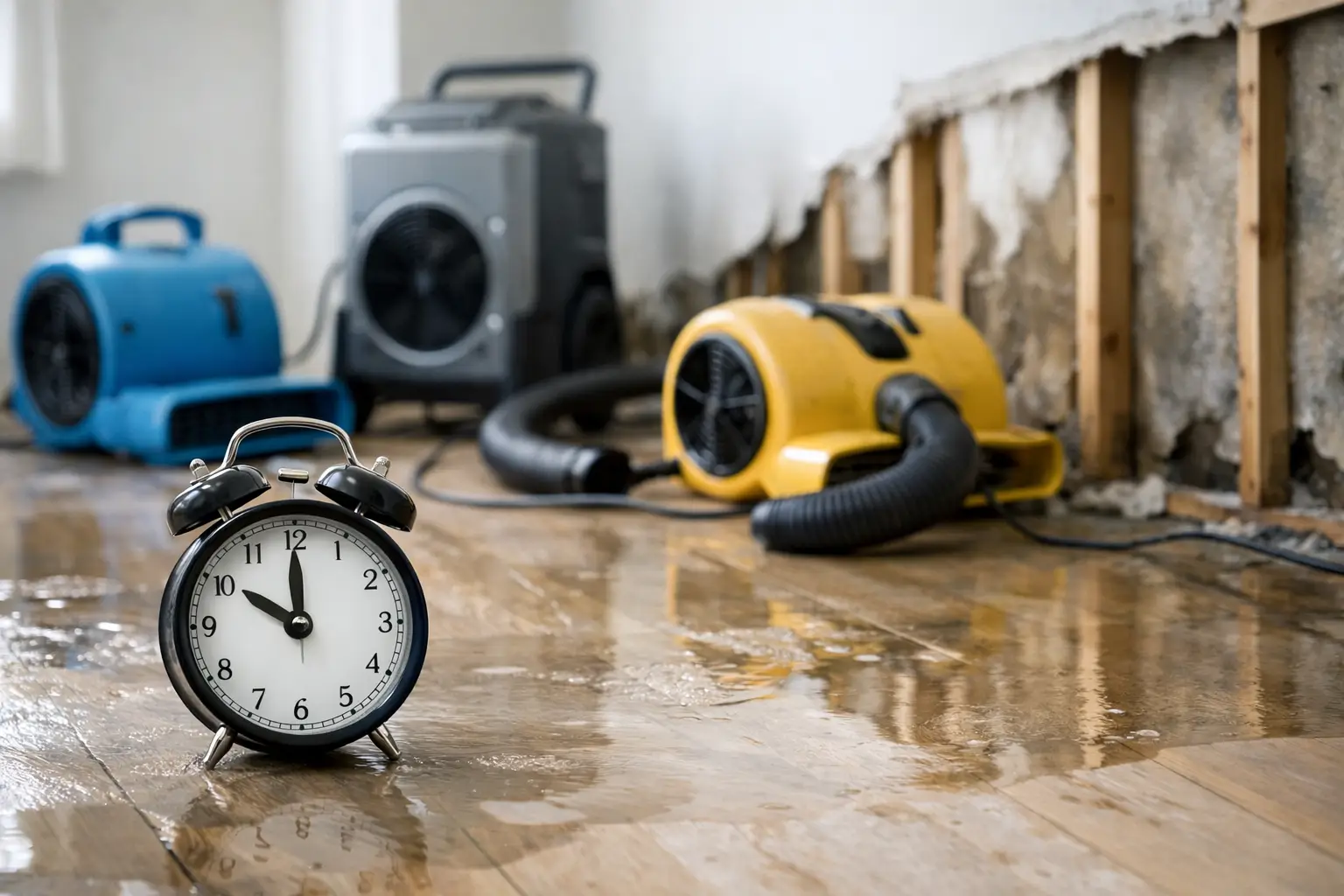
Water cleanup near me means fast removal of standing water, drying, and damage control before mold or structural issues spread. The real fix is quick source shutoff, proper extraction, moisture testing, and a restoration team that can handle cleanup through reconstruction if needed.
What does water cleanup near me actually cover?
It covers more than wiping up a visible puddle. For a homeowner, the phrase usually means emergency water removal, drying, and the first round of damage control before hidden moisture turns into a much larger problem.
Start with the obvious part: standing water has to come out fast. But the visible water is only the beginning, because moisture travels under flooring, behind baseboards, and into cavities you cannot see from the room itself.
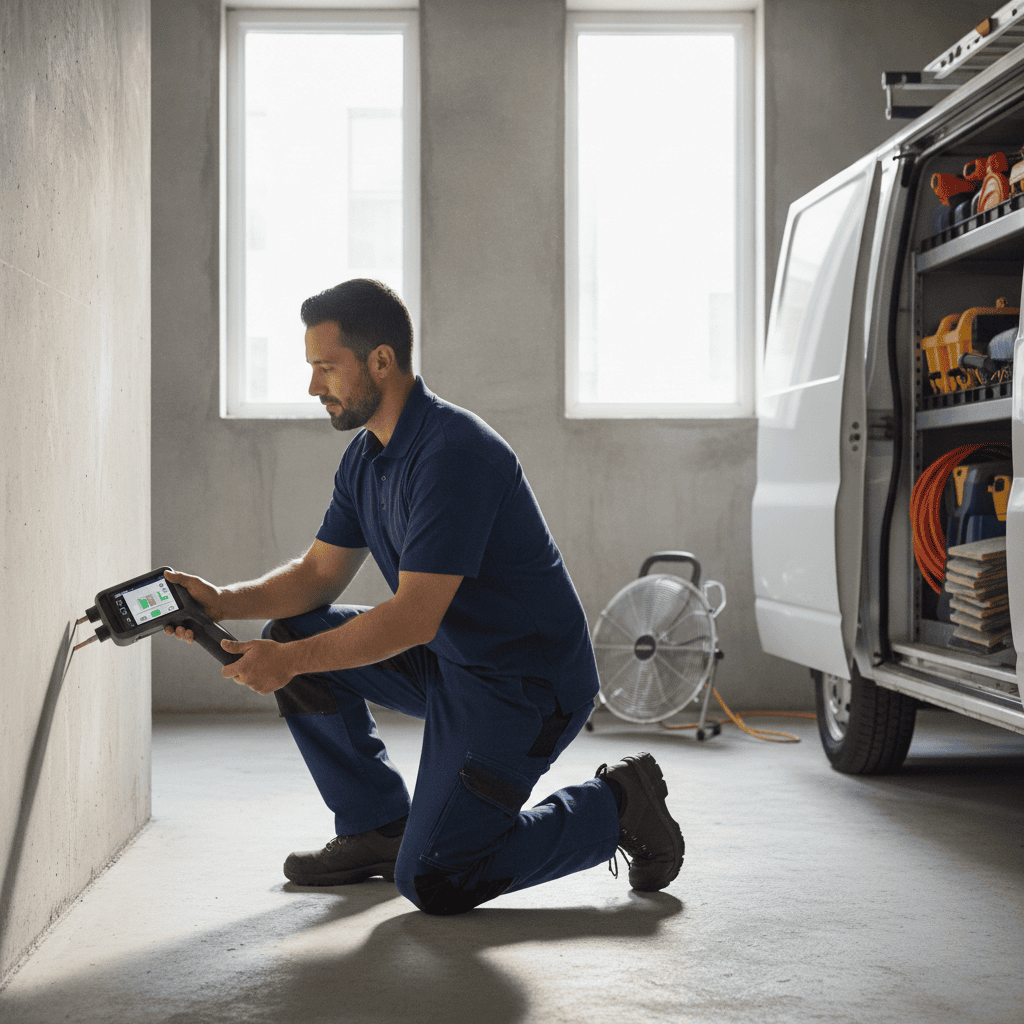
That is why water cleanup services are really a sequence, not a single task. Extraction, drying, dehumidification, and monitoring all matter because a surface that feels dry can still hold moisture in the materials underneath.
A lot of people search for a water cleanup company near me after they already tried fans, towels, or a wet vac. That can help on the surface, but it usually does not answer the bigger question: where is the water hiding now?
The right service also looks at what got wet. A tile floor, a hardwood floor, a drywall wall, and a soaked cabinet do not behave the same way, which is why cleanup has to be tied to the material, not just the room.
- Emergency water removal from visible pooling
- Drying and moisture reduction in wet materials
- Inspection of hidden water migration behind finishes
- Stabilizing the area before mold starts growing
- Determining whether cleanup is enough or repairs are needed
How fast should a water cleanup company near me respond?
Fast enough to matter, not fast enough to sound impressive on a website. In water damage, response time is part of the service itself because the longer the water sits, the more materials absorb it and the harder cleanup becomes.
This is where near-me queries get practical. When someone searches water cleanup near me, they are not browsing for an article. They are trying to shrink the gap between damage and action, which is exactly why local coverage matters.
Speed is not just about getting a truck out. It is about getting a qualified crew to the loss before secondary damage starts, including swelling, staining, odor, and the moisture conditions that make mold a serious concern.
The common mistake is waiting until the damage is visually obvious everywhere. By then, the job has often shifted from cleanup into cleanup plus reconstruction, which is a more complicated path and usually a more stressful one for the homeowner.
If you are comparing water cleanup companies, ask yourself one question: can they actually move from your phone call to on-site evaluation without dragging the issue out? If not, the keyword you searched does not really solve the problem you have.
- Local coverage shortens the delay between loss and mitigation
- Quick arrival helps reduce secondary damage
- Fast response is especially important for hidden leaks and seepage
- A real near-me provider can coordinate cleanup and repair planning
- Speed matters because wet materials do not pause for scheduling
Which water cleanup services matter first after a burst pipe or leak?
The first services are the ones that stop the damage from spreading. Extraction, drying, and moisture inspection come before cosmetic repair, because you cannot repair what is still wet underneath.
A burst pipe is a classic example. The visible problem may look small in one room, but the water can move quickly into adjacent spaces, especially if it runs along subfloors or under trim.
For a leak, the priority is not to make the area look better first. It is to remove the water, locate the source, and dry the affected structure so you are not trapping moisture inside the home.
Water cleanup services should also account for contents and affected materials. Furniture, flooring, drywall, and stored items all need different handling, and the wrong order can make salvage harder.
This is where buyers sometimes overfocus on the word cleanup and underfocus on the process. Cleanup without drying is incomplete. Drying without inspection is guesswork. The useful service covers both.
If the source is sewage or contaminated water, the situation changes again. Now the cleanup has health and safety implications, which is why a basic mop-up response is not the same thing as real remediation.
- Stop the source if it is safe to do so
- Remove standing water as quickly as possible
- Dry structural materials and hidden cavities
- Document affected areas for insurance and planning
- Separate simple cleanup from contaminated water remediation
Elevated Operations provides 24/7 water, fire, mold, storm, and sewage damage restoration across Metro Atlanta.
Get a free quoteWhy do water cleanup companies differ so much in quality?
Because some companies just remove water, while others manage the whole loss. That gap shows up in the details: how they inspect, how they document, how they communicate with insurance, and whether they can finish the job.
Two providers can both say they do water cleanup and still deliver very different outcomes. One may only focus on extraction. Another may manage the mitigation, the paperwork, and the repair path so you are not left coordinating five moving parts.
A bigger issue is whether the company understands the local search reality behind the customer journey. People use near-me searches when they are in pain, not because they want a brand lesson. They want the map pack, the local phone call, and the fast answer.
The better companies are the ones that have the operational pieces in place: real local service areas, consistent business information, strong review signals, and the ability to answer the call when a loss happens after hours.
For a homeowner, that difference is not abstract. It changes how many times you have to explain the damage, who handles the insurance back-and-forth, and whether the project stalls between cleanup and reconstruction.
That is why the phrase water cleanup companies should not be treated like a commodity term. It is really a filter for capability, responsiveness, and how much work gets pushed back onto you.
- Cleanup only versus cleanup plus repair coordination
- Local presence versus generic service claims
- Clear communication versus repeated handoffs
- Insurance guidance versus homeowner-only paperwork
- One-off extraction versus full loss management
What should you ask before choosing water cleanup services?
Ask the questions that expose process, not marketing. If a company can explain how it handles mitigation, documentation, and reconstruction, you are talking to a real operator instead of a glossy listing.
The first question is simple: what happens after you arrive? A good answer should cover inspection, extraction, drying, and next steps, not just a promise to show up.
The second question is whether they can manage the claim process or at least work cleanly with it. After a water loss, paperwork and adjuster communication can become its own headache, and many homeowners are not prepared for that.
You should also ask who is actually doing the work. In restoration, the person answering the phone and the crew in the property are not always the same level of qualified, and that distinction matters.
It is also fair to ask whether they can handle the project if repairs are needed later. A cleanup vendor who disappears once the dehumidifiers leave is not the same as a team that can see the job through.
Those questions help you separate a real water cleanup service from a company that only sounds local because it bought the right keywords.
- What is your first step after arrival?
- Who handles insurance documentation and communication?
- Are your technicians trained for the full mitigation process?
- Can you manage repairs if cleanup reveals more damage?
- How do you decide whether materials can be saved?
Can a water cleanup company near me also handle repairs?
That is the better version of the question, because cleanup and repair are often connected. Once moisture has reached drywall, flooring, or cabinetry, the job may no longer be only about drying.
In a smaller loss, the cleanup phase may be enough. But once materials are damaged, removed, or contaminated, the work can move into reconstruction, and that changes the scope fast.
This matters because homeowners often want one clear path, not a handoff maze. They want the water removed, the damage assessed, and the property restored without having to recruit a separate contractor for every phase.
A company that can handle both the emergency and the rebuild reduces the chance of delays between trades. It also helps keep the project organized when the damage crosses more than one room or material type.
That is especially useful after a burst pipe, basement flood, or long leak where cleanup reveals what was happening behind the scenes. The visible damage may be only part of the story.
The practical takeaway is simple: choose based on the likely full scope, not the first thing you can see on the floor.
- Cleanup may reveal the need for reconstruction
- One team can reduce handoff delays
- Repair scope depends on materials, not just water depth
- Basement and leak damage often crosses multiple surfaces
- The right provider plans for the whole loss, not the first visit
Decision framework: what to do when the water is already in the house
| Situation | What to do | Why |
|---|---|---|
| Water is still active or the source is not fully controlled | Shut off the source if it is safe, then call for emergency water removal and mitigation | More water means more hidden damage, and mitigation only works if the loss is stabilized first |
| Floors, drywall, or cabinets feel damp or look swollen | Get moisture testing and drying started instead of waiting for surfaces to air out | Visible dryness is not proof. Trapped moisture is what drives mold and deeper structural problems |
| You are trying to compare water cleanup companies while stressed | Use response time, local coverage, and process clarity as your filters | A nearby listing is not enough if the company cannot actually respond, document, and finish the job |
| The damage may involve insurance and later repairs | Choose a team that can manage the claim path and handle reconstruction if needed | The fewer handoffs you create, the less likely the project is to stall between cleanup and restoration |
Doing it yourself vs bringing in Elevated Operations
| Doing it yourself | With Elevated Operations | |
|---|---|---|
| Initial water removal | You can mop, blot, or use a wet vac, but you will not know what is still wet behind surfaces | We remove the water, assess the affected area, and focus on hidden moisture before it turns into a larger loss |
| Drying and mitigation | Home fans can move air, but they do not replace a proper mitigation plan or moisture checks | Our IICRC-certified technicians handle water mitigation with the equipment and process the loss actually needs |
| Insurance and paperwork | You carry the burden of photos, notes, calls, and back-and-forth with the adjuster | We help manage the claim communication and documentation so the project does not sit on your shoulders |
| Repairs after cleanup | If drywall, flooring, or other materials are damaged, you have to line up another contractor | We provide a one-stop path from cleanup through licensed reconstruction when the job requires it |
Frequently Asked Questions
What is the difference between water cleanup services and water mitigation?
Water cleanup services is the broader phrase people use when they want water removed, the area dried, and damage stabilized. Water mitigation is the damage-control part of that process. It is the work that prevents the loss from getting worse before repairs begin.
Why do water cleanup companies ask so many questions on the first call?
Because the source, location, and type of water change the entire response. A burst pipe, a roof leak, and a sewer backup are not the same job. Good questions help the company send the right equipment and plan the right scope before time is wasted.
How do I know if I need a water cleanup company near me or a general contractor?
If the property is wet, you need restoration and mitigation first. If the loss has already been dried and the main issue is rebuilding damaged areas, a contractor may be part of the next phase. Often the same provider should be able to guide both stages.
What affects the cost of water cleanup near me?
Cost depends on the amount of water, how far it spread, what materials were affected, and whether cleanup is enough or reconstruction is needed. The honest next step is to book a call for a free quote so the scope can be evaluated on site.
Can Elevated Operations help with water cleanup near me?
Yes. Elevated Operations provides 24/7 property restoration in the Atlanta metro area, and can help with cleanup, mitigation, and reconstruction when the loss calls for it. If you need a clear next step, book a call for a free quote.
Get a free, no-obligation restoration estimate
Elevated Operations provides 24/7 water, fire, mold, storm, and sewage damage restoration across Metro Atlanta.
Get a free quoteCall (770) 404-6895Last updated September 19, 2026