
How do I eliminate mold after sudden water damage?
Eliminate mold after water damage by drying the source fast, removing contaminated materials that cannot be saved, and cleaning the structure the right way. If the leak, flood, or sewer backup is still active, you do not have a mold problem yet, you have a moisture problem that will become a mold problem.
What does it actually mean to eliminate mold after water damage?
It means more than spraying a product and hoping for the best. To eliminate mold after water damage, you have to stop the moisture, remove contaminated materials that cannot be saved, and clean the remaining structure so the colony does not keep feeding.
A lot of homeowners want a disinfectant answer to a construction problem. That is the common mistake. Mold is usually the symptom. The real issue is water that sat in the wrong place long enough to turn building materials into a growth surface.
In practical terms, elimination means three things working together: moisture source control, containment of the affected area, and removal or cleaning based on what material was hit. If you only clean the surface and leave wet drywall or soaked insulation inside the wall, you have not eliminated anything.
The reason this matters after sudden water damage is simple. Water travels where you cannot see it. Behind trim, inside wall cavities, under cabinets, and into crawl spaces. That is why a musty odor often shows up before the visible damage looks serious.
For a homeowner, the goal is not to make the room smell better for a day. It is to get the structure dry, remove unsafe materials, and restore the space so the mold issue does not come back the next time humidity rises.
You are also dealing with risk beyond odor. Mold can affect indoor air quality, damage finishes, and complicate reconstruction if the wet materials stay in place too long.
- Stop the water source before anything else.
- Inspect hidden spaces, not just the visible stain.
- Remove porous materials that cannot be fully cleaned.
- Dry the structure to the point it is no longer a feeding ground.
- Restore the area only after the contamination is handled.
How do you know mold is hiding behind walls or under flooring?
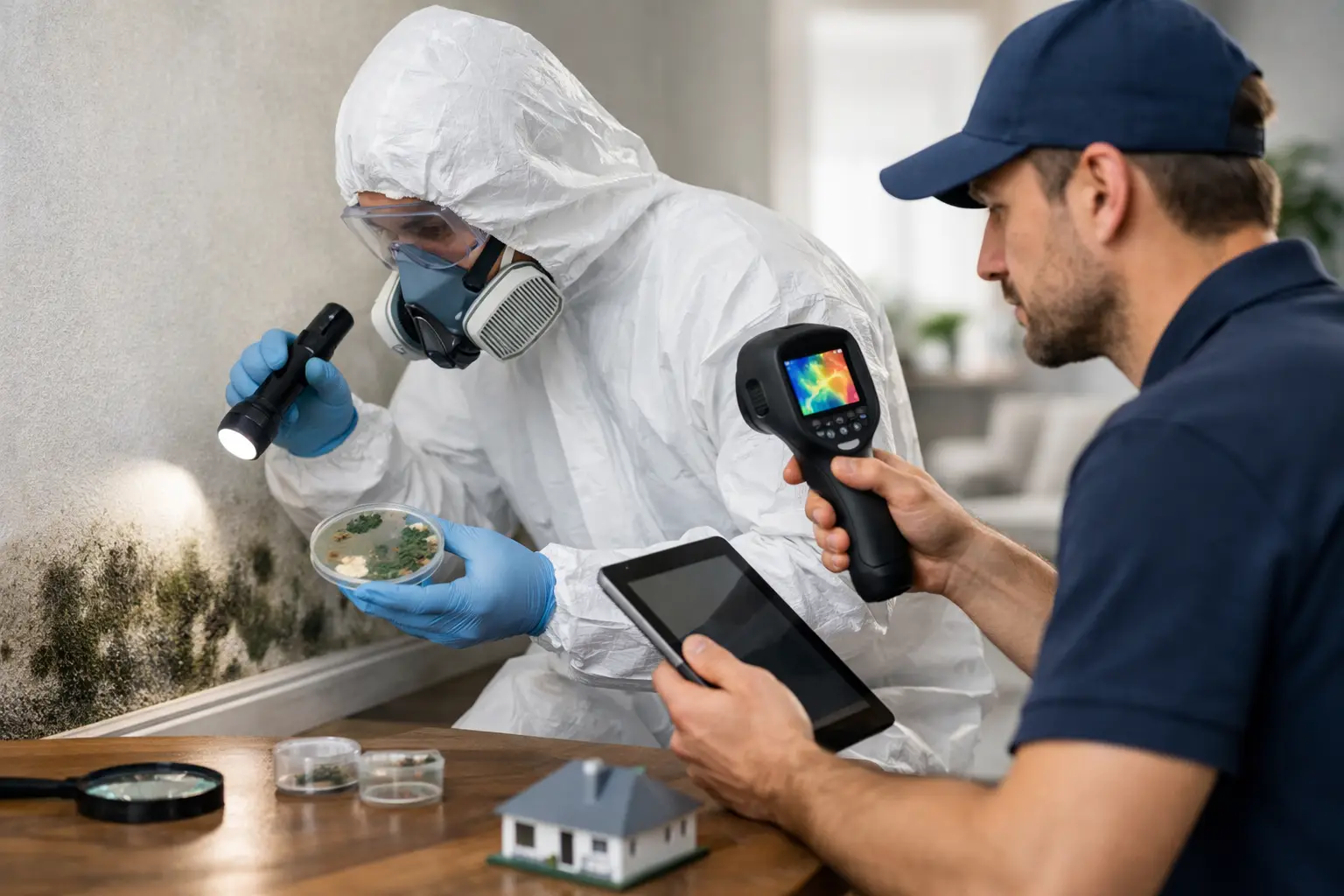
You look for the signs water leaves behind when it is trapped. Musty odor, soft drywall, swollen trim, warped flooring, and discoloration are the clues that tell you the problem is beyond the surface.
Homeowners often wait for obvious black spots. That is already late. Mold behind walls does not need to announce itself with a dramatic stain. It often starts with smell, material change, and places that feel wrong when you touch them.
After a leak or flood, the most useful questions are not cosmetic. Did water reach insulation? Did it sit under laminate or tile edges? Is there bubbling paint, cupping wood, or a damp crawl space under the home? Those are the real tells.
If the affected area was never properly dried, hidden mold can keep growing even while the room appears mostly normal. That is why a quick mop-up or fan treatment is not the same thing as actual drying and remediation.
The faster you identify hidden moisture, the less likely you are to end up tearing out more of the structure later. This is where homeowners lose time and money, not in the visible cleanup, but in the delay.
A proper inspection focuses on the source, the spread path, and the materials involved. That is the difference between guessing and solving the problem.
- Musty odor after water damage is a red flag.
- Swollen baseboards or trim usually mean water traveled farther than the stain.
- Warped flooring can hide moisture underneath.
- Bubbling paint or soft drywall suggests trapped water.
- Crawl space dampness can keep the problem alive upstairs.
Which materials can usually be cleaned, and which need removal?
That decision comes down to porosity and contamination. Nonporous surfaces can often be cleaned, while porous materials that absorbed water and mold often need to come out so the problem does not stay sealed inside the home.
This is where a lot of DIY cleanups go sideways. People clean what they can see and leave the soaked material behind because demolition feels extreme. But if drywall, insulation, carpet pad, or particleboard has been contaminated, surface cleaning is often not enough.
Nonporous surfaces like sealed tile or some finished surfaces can usually be cleaned more effectively than porous materials. The issue is not whether something looks dirty. The issue is whether the material absorbed moisture and contamination into its body.
Once porous materials are compromised, they can keep supporting growth even after the visible surface looks better. That is why the right call is often selective removal, not blanket replacement of everything in sight.
This is also where reconstruction starts to matter. If you remove damaged drywall or flooring, the repair is not just about cleanup. It is about putting the room back together correctly after the wet materials are out.
The goal is to avoid both extremes: over-tearing and under-treating. You want enough removal to eliminate the source of the mold, but not unnecessary demolition just because the damage looks scary.
- Drywall that stayed wet can be a removal candidate.
- Insulation often cannot be salvaged once it is contaminated.
- Carpet pad usually absorbs too much to clean effectively.
- Nonporous surfaces are more likely to be cleaned successfully.
- Reconstruction should follow removal, not guesswork.
Elevated Operations provides 24/7 water, fire, mold, storm, and sewage damage restoration across Metro Atlanta.
Get a free quoteWhy does drying the structure matter more than cleaning the stain?
Because mold grows from trapped moisture, not from the stain itself. If the structure is still damp inside the wall, under the floor, or in the crawl space, cleaning the surface is just cosmetics.
You can make a stain disappear and still have a mold problem. That is the frustrating part. The visible mark is only the clue. The real issue is the moisture inside the structure that keeps feeding growth where you cannot reach with household products.
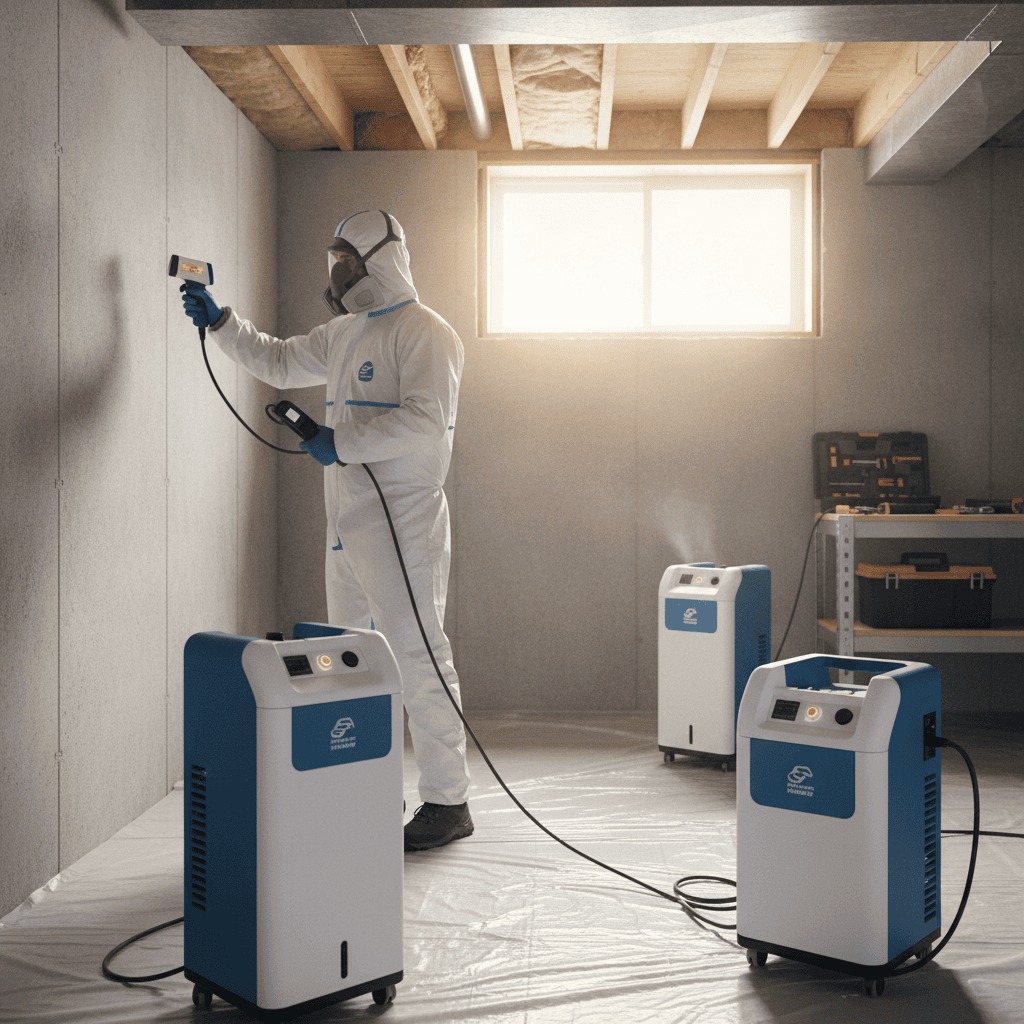
Drying has to be deliberate. Air movement, dehumidification, and material removal all work together to get the building back to a condition where mold is no longer being supported by the environment.
This is why burst pipe damage, flooded basement cleanup, and sewer backup situations require more than a wipe-down. Water gets into assemblies and cavities. If those spaces are not dried, the problem continues out of sight.
A homeowner may not notice the difference immediately. But the building does. If the material is still damp, the clock is still running. That is the part people hate to hear, because it means waiting and hoping are not a plan.
When drying is handled correctly, you reduce the chance of recurring odor, secondary damage, and a bigger remediation scope later. That is the practical reason it matters.
- Mold follows moisture, not just visible staining.
- Hidden dampness in wall cavities is the real risk.
- Drying should address floors, walls, and crawl spaces.
- Dehumidification and airflow are part of the solution.
- Surface cleaning without drying is incomplete.
What should you do in the first 24 hours after finding mold or water intrusion?
Act like the problem is active, because it is. Shut off the water if you can, keep people out of the affected area, and get the space inspected before the damage migrates deeper into the structure.
The worst move is pretending it can wait until the weekend. Water damage changes fast, and mold does not care that your schedule is full. If the source is still active, stopping it is priority one. If it is already stopped, the focus shifts to drying and assessment.
Do not start ripping everything out without a plan unless there is immediate safety risk. You can spread debris, overlook hidden moisture, or make the reconstruction harder than it needs to be. The right next step is a proper assessment of what got wet and how far it traveled.
If the affected area is in a bathroom, basement, attic, or crawl space, assume hidden materials may also be involved. Those spaces hide problems well, which is why they are often the places where mold grows quietly.
This is also the point where insurance documentation matters. Clear photos, notes about when the damage was discovered, and the location of the leak or backup all help keep the claim clean.
Fast action is not panic. It is triage. The earlier the source is controlled, the less likely you are to need larger demolition and more extensive reconstruction.
- Shut off the water source if it is safe to do so.
- Limit access to the affected area.
- Document visible damage before moving materials.
- Do not assume a small stain means a small problem.
- Get an inspection before hidden damage spreads.
How does mold cleanup fit with reconstruction after water damage?
Cleanup and rebuild are connected, not separate jobs. Once contaminated materials are removed and the structure is dry, reconstruction puts the home back together without trapping the same problem inside fresh finishes.
This is where homeowners get stuck between cleanup and repair. If you remove damaged drywall, cabinets, or flooring, you still need the space rebuilt correctly. Otherwise the room stays unusable, and the project drags on.
A good sequence matters. First comes moisture control and removal. Then cleaning and drying. Only after that should reconstruction begin. If you rebuild too early, you can seal in hidden moisture or contamination and start over later.
That is especially important after floods, burst pipes, or sewage-related water damage. These are not cosmetic events. They affect materials, structure, and sometimes adjacent rooms. The rebuild has to respect the damage that came before it.
For the homeowner, the value is simple: one coordinated process instead of juggling different crews, different schedules, and conflicting advice. The less handoff friction, the fewer opportunities for something to be missed.
Reconstruction is not an add-on. It is the final part of eliminating the problem completely, because the space is not truly resolved until it is repaired the right way.
- Removal and rebuild should follow a clear sequence.
- Reconstruction should not start before the structure is dry.
- Damaged cabinets, flooring, and drywall may need replacement.
- A coordinated process reduces missed steps.
- The home should be safe and usable again, not just cleaned.
Why Atlanta homes need a faster response when mold follows water damage
Because our climate and building conditions make delay expensive. In the Atlanta metro area, a wet wall, crawl space, or basement can turn into a lingering indoor air and structural problem if you wait too long.
Atlanta homeowners know the weather can push water into places it should not be. Add crawl spaces, basements, and older construction details, and the margin for delay gets smaller. That is why fast response matters when the goal is to eliminate mold after water damage.
The issue is not just what happened on day one. It is what the building keeps doing after the event. If materials stay damp, the home can hold onto odor, contamination, and hidden damage far longer than people expect.
Speed matters, but accuracy matters too. A rushed cleanup that misses the source is not a win. The goal is fast assessment, proper drying, selective removal, and rebuilding only after the problem is under control.
This is where homeowners benefit from a restoration company that can handle the whole chain, from emergency water removal through reconstruction, instead of stopping at cleanup and leaving the repair to someone else.
When the job is done right, the house stops fighting you. That is the point. You get back to normal without pretending the damage was smaller than it really was.
- Atlanta moisture conditions can make delays worse.
- Basements and crawl spaces need careful attention.
- Fast response should still be methodical.
- Hidden moisture can keep odor and contamination alive.
- A complete solution is better than a partial cleanup.
When does a mold issue need professional remediation instead of a surface cleanup?
| Situation | What to do | Why |
|---|---|---|
| The odor comes back after you clean or air out the room. | Treat the source, inspect hidden cavities, and remove contaminated materials as needed. | The smell usually means the moisture problem or hidden growth is still present. |
| Drywall, insulation, or carpet pad stayed wet after the water damage. | Do not rely on surface cleaning alone. Remove porous materials that absorbed contamination. | Porous materials can keep feeding mold even when the surface looks acceptable. |
| You have water damage in a basement, crawl space, or inside a wall. | Have the area assessed for concealed moisture and proper containment before cleanup starts. | These spaces hide spread paths, so the visible damage is usually not the full story. |
| There is sewage, flooding, or a burst pipe involved. | Use a remediation plan that includes drying, removal, cleaning, and rebuild planning. | These losses often affect more than one layer of the home and need coordinated handling. |
Doing it yourself vs bringing in Elevated Operations
| Doing it yourself | With Elevated Operations | |
|---|---|---|
| Finding the full extent of damage | You can see the stain, but hidden moisture in walls, floors, or crawl spaces is easy to miss. | We inspect the affected area with restoration in mind, so the cleanup plan matches the actual damage path. |
| Drying and material removal | Fans and cleaners may help the surface, but they do not solve soaked insulation or wet drywall. | We handle water extraction, drying, and removal of materials that cannot be salvaged, then move into repair. |
| Reconstruction after cleanup | You may end up coordinating separate trades and guessing when it is safe to rebuild. | We provide reconstruction, so the project can move from emergency response to final repair without unnecessary handoffs. |
| Insurance and paperwork | You are stuck managing photos, documentation, and adjuster communication while dealing with the damage. | We offer direct insurance claim management to reduce the admin load and keep the process organized. |
Frequently Asked Questions
Can I just clean mold with bleach and move on?
Bleach on a visible spot is not a full solution when water damage is still involved. The problem is usually moisture trapped in materials or hidden spaces. If the source is not controlled and the affected materials are not addressed correctly, mold can come back.
Is every mold problem a demolition job?
No. Some areas can be cleaned if the material is nonporous and the contamination is limited. But porous materials like drywall, insulation, or carpet pad often need removal when they have absorbed moisture and mold. The key is knowing the difference before you rebuild.
Do I need to worry about mold after a small leak?
Yes, if the leak reached drywall, flooring, cabinets, or a crawl space and stayed wet. Small leaks can become hidden problems when they sit long enough inside the structure. The size of the puddle matters less than where the water went.
How much does professional mold remediation cost?
It depends on how far the water traveled, what materials were affected, and whether reconstruction is needed after removal. The cleanest way to get a real number is to book a call for a free quote so the damage can be assessed in context.
Can Elevated Operations help if the damage includes water, mold, and rebuilding?
Yes. Elevated Operations handles water damage restoration, mold remediation, drying, and reconstruction in the Atlanta metro area. If you want one company to manage the work from emergency response through repair, book a call for a free quote.
Get a free, no-obligation restoration estimate
Elevated Operations provides 24/7 water, fire, mold, storm, and sewage damage restoration across Metro Atlanta.
Get a free quoteCall (770) 404-6895Last updated September 20, 2026