
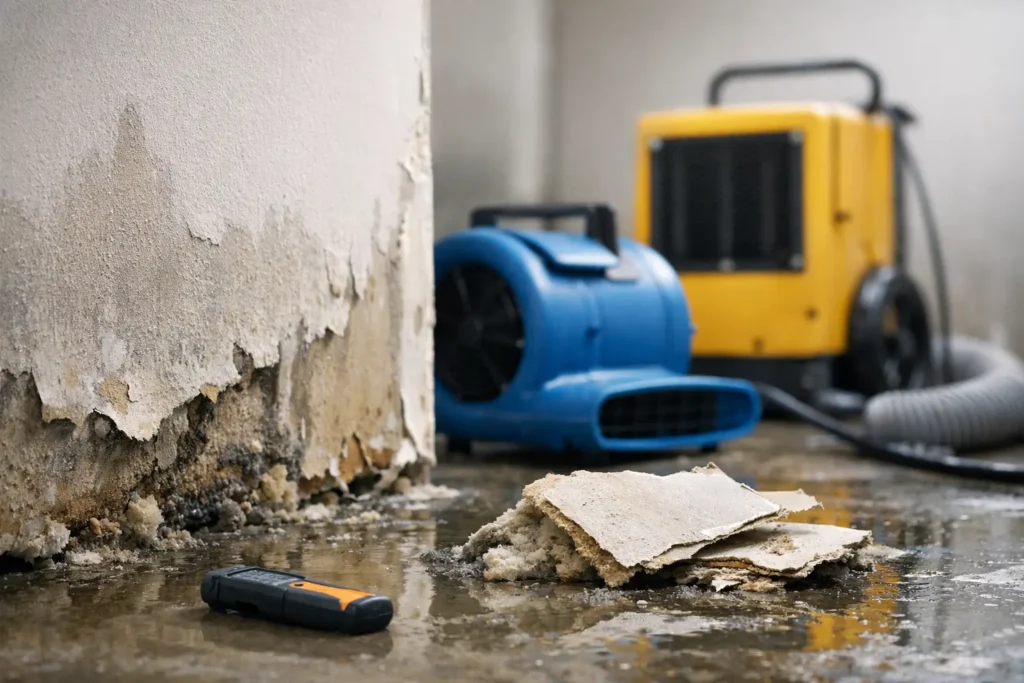
A burst pipe can soak the lower two feet of a wall before anyone sees a single drip. By the time the water is shut off, wet drywall drying is already a time-sensitive job. The question is not simply whether the wall feels dry on the surface. It is whether moisture has traveled behind the paint, into insulation, along framing, or beneath flooring where mold and material failure can begin.
Drywall is inexpensive to replace compared with the damage hidden moisture can cause. Still, replacement is not always necessary. The right decision depends on the water source, how long materials stayed wet, the construction of the wall, and verified moisture readings – not guesswork or a fan pointed at the problem.
Why Wet Drywall Needs Fast, Measured Drying
Drywall is made with a gypsum core covered in paper. That paper facing absorbs water quickly, and it provides an organic food source for mold when it stays damp. As water wicks upward, the wall can look unaffected above the visible waterline even though the core and insulation behind it are saturated.
A wall may feel dry to the touch while moisture remains trapped in the cavity. Paint can slow evaporation, baseboards can conceal wet lower sections, and insulation can hold water against the back of the drywall. This is why a basic cleanup is not enough after a leak, overflow, or flood.
Professional restoration teams use moisture meters and thermal imaging to identify where water traveled. Moisture mapping establishes the affected area, compares it with dry materials, and guides the drying plan. Readings are monitored during the process so the wall is not closed, repaired, or painted before it has reached an acceptable dry standard.
Can Wet Drywall Be Saved?
Sometimes, yes. Clean-water damage caught quickly may allow drywall to be dried in place. A small supply-line leak discovered within hours can have a very different outcome than a basement that sat wet overnight after a storm.
Drywall is more likely to be salvageable when the water came from a clean source, the material has not swelled or softened, insulation is not saturated, and professional drying begins immediately. Controlled airflow, dehumidification, and moisture monitoring can remove water vapor from the air and draw moisture out of materials.
However, drying in place is not automatically the least expensive or safest choice. If the drywall is badly saturated, its paper facing may separate from the gypsum core. It can become soft, crumble at the edges, bow between studs, or develop visible staining. Drying may reduce moisture without restoring the material’s strength or preventing later odor and mold issues.
The goal is not to preserve every piece of drywall at all costs. The goal is to protect the structure, the indoor environment, and the value of the property.
Signs Drywall Should Be Removed
Removal is generally the safer course when drywall has been exposed to contaminated water, has lost its structural integrity, or cannot be dried completely. A restoration professional may recommend a controlled flood cut – removing the damaged lower portion of the wall – to access wet insulation and framing while preserving unaffected drywall above.
Replacement is often appropriate when you see four or more warning signs:
- The drywall is soft, swollen, warped, crumbling, or pulling away from fasteners.
- Water came from a sewer backup, toilet overflow with waste, ground floodwater, or another contaminated source.
- Insulation behind the wall is wet, compressed, or retaining moisture.
- The wall remained wet for more than 24 to 48 hours.
- Mold growth, musty odor, staining, or blistering paint is present.
For contaminated water, trying to dry and keep porous materials is rarely a responsible solution. Sewage and other Category 3 water can carry bacteria and contaminants into drywall, insulation, and flooring. Those materials typically need removal and proper remediation rather than surface cleaning.
What Professional Drywall Drying Actually Involves
Effective structural drying is a controlled process, not a race to make the room feel less humid. First, the water source must be stopped. Then standing water is extracted and wet contents are moved or protected. The affected area is inspected using diagnostic tools to determine how far water migrated.
If drywall can be dried in place, technicians may remove baseboards, create small access points when appropriate, and position commercial air movers and dehumidifiers to create the right drying conditions. The equipment is selected and placed based on the materials, moisture level, room size, and airflow path. More fans are not necessarily better if they are not paired with sufficient dehumidification.
When wall cavities are wet, the team must determine whether insulation can be dried or whether it needs to come out. Fiberglass insulation may sometimes be dried under limited clean-water conditions, but wet cellulose insulation typically holds moisture and loses its effectiveness. In many cases, opening the wall is the most direct way to dry framing correctly.
Daily monitoring matters. Technicians take readings from drywall, wood framing, subfloors, and surrounding unaffected areas to confirm progress. They also track humidity and drying conditions. Equipment stays in place until materials meet their drying target, not until the room merely looks normal.
The Cost of Waiting Too Long
Property owners often hesitate because they do not want the disruption of opening a wall. That is understandable. But waiting can turn a contained water loss into a larger reconstruction project.
Moisture can spread into baseboards, trim, insulation, hardwood flooring, cabinets, and adjacent rooms. In a commercial space, it can also affect tenant areas, inventory, electrical components, and business operations. A wet wall next to a finished basement or a kitchen cabinet can conceal damage until flooring buckles, paint peels, or a musty smell becomes impossible to ignore.
Mold can begin growing on wet organic surfaces in as little as 24 to 48 hours under favorable conditions. Not every water event creates a mold problem, but delayed drying raises the risk significantly. Fast action gives restoration professionals more options and can reduce how much material must be removed.
What to Do Before Help Arrives
Safety comes first. Shut off the water source if you can do so safely, and turn off electricity to the affected area if water is near outlets, appliances, or electrical panels. Avoid entering rooms with sagging ceilings, contaminated water, or possible structural hazards.
Move furniture, rugs, boxes, and other items away from the wet wall when it is safe to do so. Do not puncture a bulging ceiling or start tearing out drywall without understanding what is behind it. Electrical wiring, plumbing, and hidden contamination can change the scope of the work quickly.
A household fan may help with a very small, clean spill after extraction, but it is not a substitute for moisture testing. Avoid running fans over sewage, floodwater, or visible mold because airflow can spread contaminants to other areas. Take photos of the source, affected rooms, and damaged belongings before extensive cleanup begins. That documentation can be useful for an insurance claim.
Drying Is Only One Part of Getting the Property Back
Once the wall is verified dry – or damaged materials are safely removed – the work shifts to repair. That may include new insulation, drywall installation, finishing, painting, baseboards, flooring repair, cabinet work, or reconstruction of a larger affected area. Coordinating mitigation and rebuilding through separate companies can create gaps in communication and delays in the claim process.
For Metro Atlanta property owners, Elevated Operations handles the emergency response, moisture mapping, structural drying, insurance documentation, and reconstruction in one recovery process. The team uses IICRC-informed methods and commercial drying equipment to address what water damaged, not just what water made visible.
If drywall is wet today, protect the building before the problem moves behind another wall or beneath another floor. A prompt inspection can tell you whether the drywall can be dried, what needs to be removed, and what it will take to return the space to a safe, finished condition.