
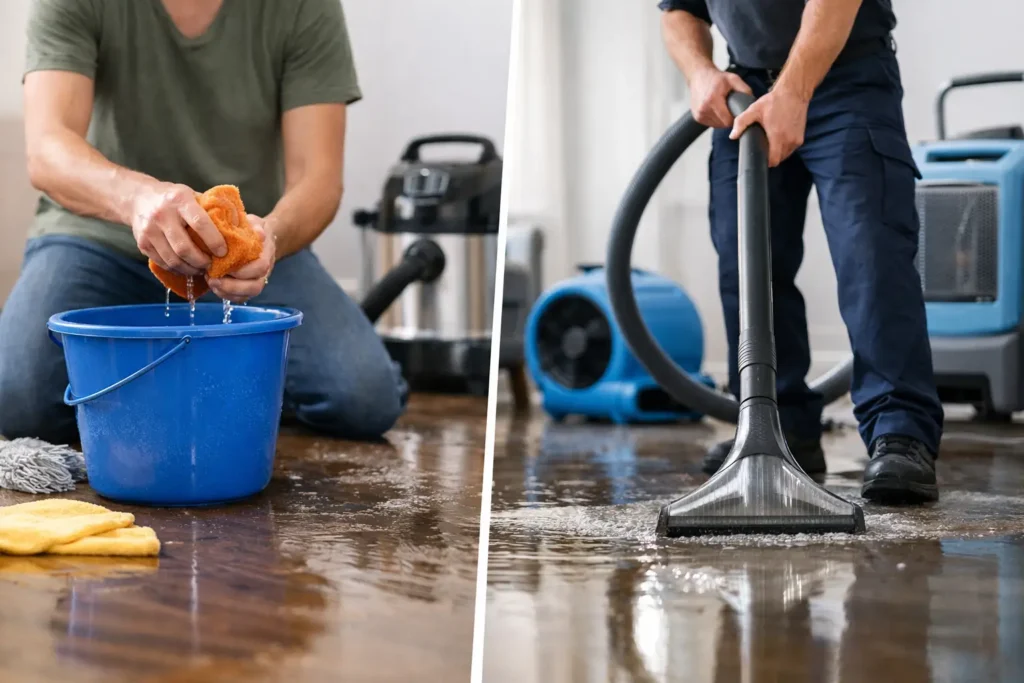
A wet floor can look manageable at 8 a.m. and become a mold, flooring, or drywall problem by the next day. That is the real decision behind DIY versus professional water removal: not whether you can mop up visible water, but whether the water has reached places you cannot see.
For a small, clean spill contained on a hard surface, DIY cleanup may be enough. For a burst pipe, overflowing appliance, roof leak, flooded basement, or sewage backup, speed and proper drying matter far more than a stack of towels. The right response protects the structure, supports an insurance claim, and keeps a disruption from turning into a larger repair.
The First Question: Is It Safe to Stay and Clean?
Before deciding who handles removal, identify the source and immediate hazards. Shut off the water supply if you can do so safely. Stay clear of standing water near outlets, power cords, appliances, or electrical panels. If water has reached electrical components, do not enter the area until a qualified professional confirms it is safe.
Water quality is equally important. Clean water from a supply line is different from water that has passed through a washing machine, dishwasher, toilet, drain, or outdoors. Sewage-contaminated water and floodwater can carry bacteria and other hazards. Those situations call for professional remediation, protective equipment, containment, and proper disposal – not a household wet vacuum.
If the water is coming from an active leak, a roof opening, or a failed plumbing line, stopping the source comes first. Drying without controlling the source only delays the damage.
When DIY Water Removal Can Make Sense
DIY water removal is reasonable when the affected area is small, the water is clean, and the material can be fully dried quickly. Think of an overturned glass of water on tile, a minor refrigerator drip caught early, or a small amount of clean water on a sealed concrete floor.
In these limited cases, remove the water promptly, use fans and ventilation, and inspect nearby baseboards, cabinets, rugs, and flooring edges. Keep an eye on the area for dampness, swelling, staining, odors, or cupping floors over the next several days. The goal is not simply to make the surface look dry. It is to confirm that water did not travel beneath or behind it.
DIY is also more practical when you know exactly how long the water was present. A clean-water spill cleaned within minutes is a different risk than water discovered after a weekend away. Time allows moisture to wick into drywall, insulation, subflooring, trim, and framing.
The benefit is obvious: you avoid an emergency service call for a truly minor incident. The trade-off is that you are responsible for recognizing when the incident is no longer minor.
Why Visible Dryness Can Be Misleading
Homeowners and property managers often judge a water event by what they can see. Restoration professionals judge it by moisture content, affected materials, contamination level, and how far water migrated.
Carpet can feel dry on top while the pad and subfloor remain wet. Water can run under laminate flooring, behind baseboards, inside wall cavities, and below cabinets. In multi-story properties, it can travel through a ceiling before it shows up in the room below. A fan may dry the surface, but it cannot tell you whether a wall cavity or wood framing has returned to an acceptable moisture level.
That is where professional moisture mapping changes the outcome. Technicians use moisture meters and thermal imaging to locate wet materials, define the drying area, and document conditions before and after mitigation. Commercial air movers, dehumidifiers, and extraction equipment then remove moisture at a scale household equipment usually cannot match.
The point is not to overreact to every leak. It is to avoid underreacting to the leaks that create hidden damage.
DIY Versus Professional Water Removal: The Cost Trade-Off
DIY cleanup usually costs less at the start. You may need towels, a wet/dry vacuum, fans, cleaning supplies, and replacement materials for a small affected area. That can be the smart choice when the damage is limited and clean.
Professional water removal has a higher immediate cost because it includes assessment, extraction, drying equipment, monitoring, documentation, and, when needed, controlled demolition and sanitation. Yet the expense has to be measured against what incomplete drying can cause: warped flooring, damaged cabinets, mold growth, compromised drywall, unpleasant odors, and reconstruction that could have been avoided.
Insurance can also affect the calculation. Many water losses are covered when the damage is sudden and accidental, although coverage depends on the policy, source of water, maintenance history, and endorsements. A professional mitigation team can provide detailed photos, moisture records, equipment logs, and insurance-ready documentation. That paperwork may be valuable if the claim becomes more complex than expected.
For landlords and commercial property managers, documentation is more than an insurance concern. It helps demonstrate a timely response, supports repair decisions, and creates a clear record for tenants, owners, or business stakeholders.
Signs You Should Call a Water Removal Professional Now
A professional response is the safer choice when water has affected more than a small surface area or when the source is uncertain. Call for help promptly if you see any of the following:
- A burst pipe, slab leak, appliance supply-line failure, or water heater leak
- Water under flooring, behind cabinets, inside walls, or through a ceiling
- A flooded basement, crawl space, garage, or multiple rooms
- Wet carpet or upholstery that cannot be extracted and dried quickly
- A roof leak after a storm, especially where insulation or ceilings are involved
- Gray water, sewage, toilet overflow, or outside floodwater
- Musty odors, peeling paint, swelling drywall, buckled flooring, or visible mold
These conditions do not automatically mean every material must be removed. They do mean the property needs a proper assessment. Some materials can be dried and saved; others become unsafe or unstable once saturated. The best decision depends on the water category, duration of exposure, material type, and measured moisture levels.
What Professional Water Removal Should Include
A qualified restoration team should do more than extract standing water and leave fans behind. The process begins with identifying the source, assessing safety concerns, and documenting the affected areas. From there, technicians extract water, map moisture, set up targeted drying equipment, and monitor progress until materials meet drying goals.
If contaminated water is involved, the work should include removal of unsalvageable porous materials, cleaning and disinfection of appropriate surfaces, containment where needed, and odor control. If drying reveals damaged drywall, flooring, insulation, cabinetry, or structural materials, the same provider should be able to explain the next repair steps clearly.
This is especially valuable after a larger loss. Managing an emergency plumber, mitigation crew, insurance adjuster, drywall contractor, flooring installer, and painter separately can create delays and gaps. A one-stop recovery partner can coordinate mitigation, documentation, repairs, and reconstruction from the first call through the final walkthrough.
A Practical Response Plan for Metro Atlanta Properties
Metro Atlanta weather and aging plumbing systems can create water problems with little warning. Whether you own a home in Marietta, manage rentals in Mableton, or oversee a commercial space in Atlanta, keep basic information accessible: your main water shutoff location, emergency plumbing contact, insurance policy details, and photos of valuable rooms or equipment.
When a water event happens, take a few clear photos or videos before moving items if it is safe. Save damaged materials when possible until the insurer or restoration provider advises otherwise. Move dry belongings away from the affected area, but do not pull up flooring, open walls, or use electrical equipment in a wet area unless you are confident it is safe.
Then make the decision based on the scope, not the inconvenience. A minor clean spill may only need careful DIY drying. Water that has spread, sat for hours, entered building materials, or involved contamination needs a faster and more technical response.
Elevated Operations provides 24/7 emergency water mitigation across Metro Atlanta, with IICRC-certified technicians, moisture mapping, commercial drying equipment, insurance support, and reconstruction when the job requires more than cleanup. When time matters, protect the property first and make the repair decisions with dry, documented facts in hand.