24/7 Emergency Restoration · Serving Metro AtlantaEmergency? (770) 404-6895

Mold remediation services Marietta starts with one job, stop the source and protect the structure. I’m Chris Kwangwari, and I handle mold work in Marietta with IICRC-certified technicians, direct insurance billing, and a 12-month warranty. Historic Square plaster and Kennesaw Mountain runoff change the job fast.
IICRC-Certified · 5-Star Rated · 60-Minute Response · Insurance Billed Directly
Historic plaster and older finishes can hide moisture behind a clean-looking surface, so I inspect before I remove anything.
Slope-driven water can keep crawl spaces and foundation edges damp long after a storm, which feeds recurring growth.
Yes, I offer direct insurance billing and keep the documentation tight so the claim stays organized.
I am Chris Kwangwari, owner of Elevated Operations, LLLP, and my team uses IICRC-certified technicians with a licensed general contractor on the job.
Start with safety, moisture control, and documentation. Do not scrub the area dry, do not run HVAC across the room, and do not tear out material until you know how far the damage spread. In Marietta, old plaster near the Square and runoff-driven dampness near Kennesaw Mountain both need a careful first move.
First, stop the water. If the issue is a roof leak, crawl space seep, or a wet wall from storm runoff, that moisture keeps feeding growth. I look at the source before I talk about mold cleanup, because removal without drying the cause is wasted work.
Second, keep traffic down. Old homes around the Square often have plaster, lath, and layered finishes that shed dust when people start poking at them. That dust can spread particles through the house fast, so the first move is containment, not curiosity.
Third, call for a mold inspection before anything gets ripped out. We see this in Marietta after heavy rain, especially where water tracks downhill from the Kennesaw Mountain side or collects near foundations. The goal is simple, identify the wet materials, then map the work cleanly.
The work starts with inspection, then containment, then removal of affected materials, then drying and air filtration. I follow the structure of the home, not a script. In Marietta, that matters because square-era plaster, finished basements, and runoff exposure all change how mold abatement has to be handled.
I start with a visual mold inspection and moisture check. That tells me whether we are dealing with surface growth, hidden dampness, or a larger leak path. If the home is near the Square and has older plaster, I pay close attention to wall cavities, trim lines, and attic transitions.
Then comes containment and hepa vacuuming. That step keeps disturbed material from moving through the house while the affected area is cleaned out. It is especially important in homes with mixed materials, because old plaster, wood trim, and newer drywall do not behave the same during mold removal.
After that, I focus on drying and verification. Air filtration stays in place while the space is stabilized, and the cleanup only closes out when the moisture problem is corrected. If the home sits where Kennesaw Mountain runoff pushes water toward the property, I want the source addressed before the final signoff.
You need mold remediation when you have visible growth, a musty odor that does not go away, water damage that stayed wet too long, or recurring staining near the same spot. In Marietta, I treat storm runoff, crawl space moisture, and roof leaks as red flags, not minor annoyances.
If a room smells damp after rain, I take that seriously. Marietta weather can push water into basements, wall cavities, and crawl spaces, and those areas do not dry on their own if airflow is poor. Mold starts in 24 to 48 hours, so waiting is the expensive choice.
If you see discoloration on plaster, paint bubbles, or soft drywall near the Square or in an older neighborhood, do not assume it is cosmetic. Those finishes can hide deeper damage. A small stain can be the top of a bigger wet section, especially around windows and baseboards.
If your HVAC has been blowing through a contaminated area, or you have had repeated roof or plumbing leaks, you need mold abatement planning, not another patch job. I want the source fixed, the damaged material removed, and the affected air handled with filtration before the house goes back to normal.
You can remove mold growth from affected materials and return the area to a clean, dry condition, but you cannot promise that every spore in the environment is gone. The real goal is control, source correction, and proper cleanup so the problem does not keep coming back in Marietta homes.
That answer matters because homeowners sometimes want a magic statement. I do not sell that. I sell honest work. If a wall section is contaminated, I remove what cannot be cleaned safely, and I clean what can be restored. The outcome is controlled and documented, not theatrical.
In older Marietta homes, especially around the Square, plaster and wood framing can hold moisture in hidden layers. That is why I do not talk about mold removal as if it were a surface wipe. The work has to respect how the home was built and how water moved through it.
The other half is prevention. If Kennesaw Mountain runoff or gutter discharge keeps loading the same wall, mold will return. I would rather tell you the hard truth than pretend a one-time treatment fixes a leaking exterior or a damp crawl space forever.
It depends on how much material is affected, how far moisture spread, and whether the source is still active. I do not guess at timing. A small contained area moves faster than a wall cavity, crawl space, or plaster system soaked by storm runoff in Marietta.
The first day is usually about finding the source and setting the work area. If the moisture issue is obvious, I can move faster. If the home has layered finishes, old plaster, or hidden cavities, I take the slower route because the wrong tear-out creates more damage.
Drying is its own step. Air filtration and dehumidification support the process, but wet framing, insulation, or plaster sections need time to stabilize before anything can be closed in. In Marietta, homes with basement seepage or hillside runoff often need more patient work than owners expect.
The last step is verification and closeout. I check that the affected space is clean, dry, and ready for repairs. Then I explain what was removed, what was saved, and what still needs attention. That is how I keep the job grounded in facts instead of hurry.
Marietta homes can combine older construction, mixed materials, and water from slope-driven runoff, which makes mold cleanup more complicated than a simple surface wash. Historic Square plaster, crawl spaces, and hillside drainage can all trap moisture in places you cannot see right away.
The historic Square changes the equation. Plaster walls, old trim, and age-worn finishes can look solid while hiding wet backing or failed joints. That means a quick scrape can miss the real issue. I prefer a careful inspection before any demolition starts.
Kennesaw Mountain runoff is another factor. Water does not have to flood a home to cause mold damage. It can run toward foundations, pool near low spots, or keep a crawl space damp long after the rain stops. That is when mold cleanup becomes a moisture job, not a cosmetic job.
I also watch for mixed construction. Many Marietta homes have additions, basement finishes, and different repair eras stitched together. One section may dry cleanly while another stays hidden and wet. That is why my mold remediation services are built around the house you actually own, not a generic template.
Shut off plumbing leaks, stop active roof entry, and move water away from the foundation if runoff is entering the home. Mold keeps feeding as long as the moisture stays active.
Keep people out of the affected area and avoid running HVAC through it. That helps contain particles and keeps the problem from spreading into cleaner rooms.
Take clear photos of stains, plaster damage, wet trim, and any visible growth. Good documentation helps with direct insurance billing and keeps the claim focused on the real damage.
Get a professional look before you tear out walls or cabinets. In Marietta, historic finishes and crawl space moisture can hide more damage than a quick visual check reveals.
Use proper air filtration, hepa vacuuming, and controlled mold removal, not a fast wipe-down. The goal is controlled mold abatement, not a mess that comes back next month.
From emergency mitigation to full reconstruction, handled in-house so you are never managing a chain of subcontractors mid-crisis.
 Water Damage
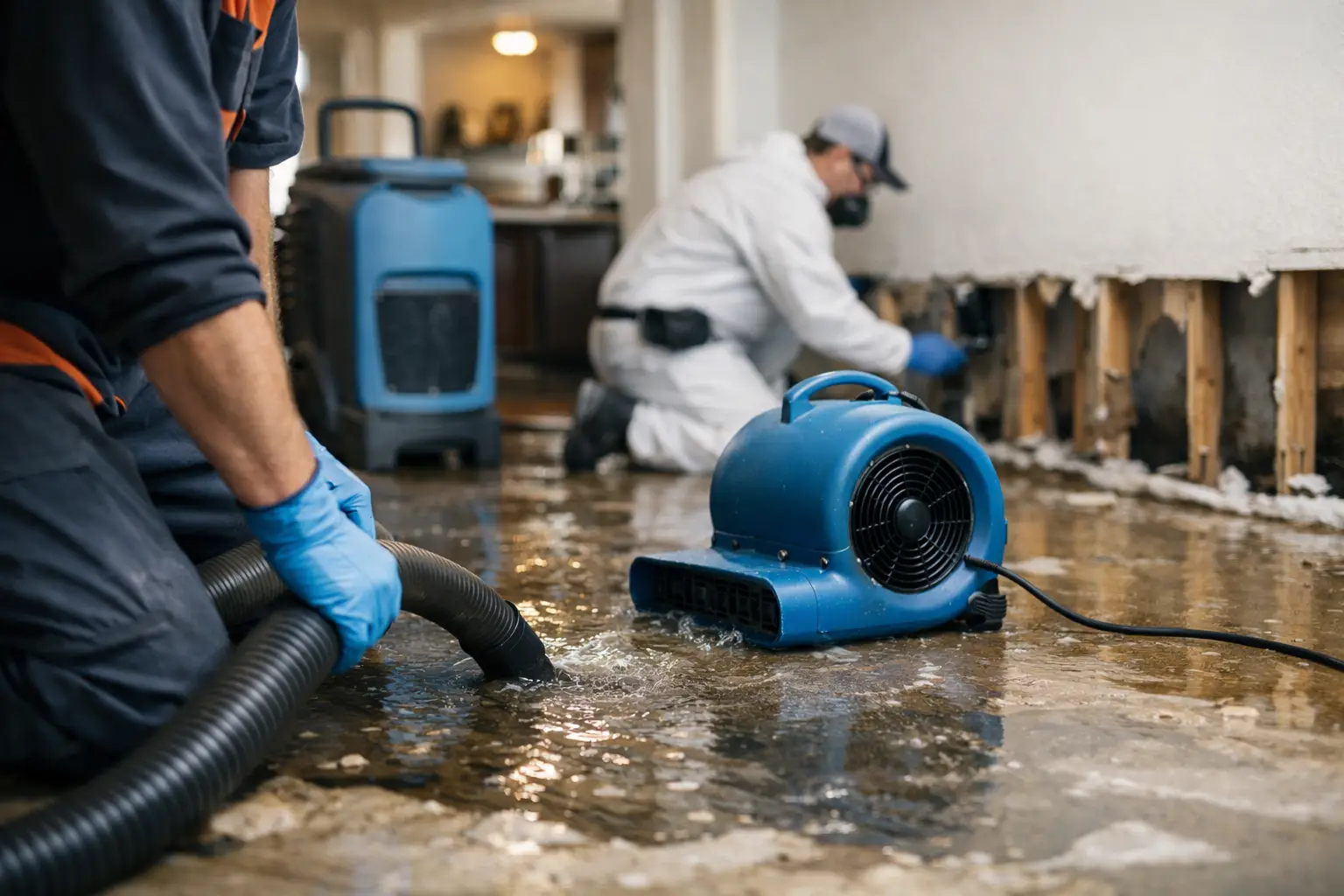
Extraction, structural drying, and moisture mapping after floods, leaks, and burst pipes.
Get help now Fire & Smoke
Soot removal, odor deodorization, and content cleaning after fire and smoke damage.
Learn more Mold
MoldContainment, removal, and moisture control that stops mold from coming back.
Learn more Storm
StormEmergency board-up, roof tarping, and full recovery after wind, hail, and storms.
Learn more Sewage
Safe biohazard cleanup and sanitizing after sewage backups and overflows.
Learn more Reconstruction
Full rebuild by a licensed general contractor, so your property comes back whole.
Learn moreElevated Operations is an IICRC-certified, licensed general contractor based in Mableton that handles the entire recovery in-house, so after one loss you are never coordinating a cleanup crew, a mold crew, and a contractor separately. One team, one point of contact, from the first pump-out to the final coat of paint.
People call when the property feels like a disaster. They leave reviews because Chris and the crew made it right. These are real, verified Google reviews.
Mold removal cost in Marietta depends on how much area is affected, where the mold is hiding, and how far it has spread, so every job starts with a free inspection and a written quote before any work begins. As a local mold remediation company, we answer 24/7 and bill your insurance directly.
What drives mold removal cost is the affected area and contamination level, so we inspect first and price it in writing, no guesswork.
We handle black mold with containment and HEPA filtration, then verify the air before we call the job done.
Dispatched from Mableton, our IICRC-certified crew reaches Marietta homes fast, 24/7, and bills insurance directly.
I start by checking where moisture entered, then I isolate the area, remove damaged material, and clean the space with controlled methods. Older homes near Marietta Square often have plaster, trim, and mixed repairs, so I do not treat them like modern drywall boxes. The work has to respect the structure and the hidden layers behind it.
If runoff left the crawl space damp or wet, yes, I want it inspected. Crawl space moisture can feed mold fast, even when the floor above looks fine. In Marietta, runoff from higher ground can keep the same area wet again and again, which means the source matters as much as the cleanup.
Sometimes, but not always. A small stain on plaster can hide a larger wet area behind the wall or above the ceiling line. I inspect first because old materials in Marietta homes can conceal damage well. If the source is still active, a surface mold removal will not solve the underlying problem.
It means we can work directly with the insurer on the billing side instead of making you manage every detail alone. I keep the process organized and documented. That matters when mold cleanup follows a leak, storm runoff, or another covered water event and the claim needs clear support.
If you only have a concern, a mold inspection is the right first step. If I find visible growth, hidden moisture, or damaged materials that cannot be saved, then mold abatement may be needed. In Marietta, especially in older homes and crawl spaces, I prefer inspection first so the scope stays honest.
Yes, it matters a lot. Air filtration helps capture disturbed particles while the work is underway, especially when old plaster or dusty framing is involved. In Marietta homes, I use it when the cleanup could spread debris from the work area into cleaner rooms.
Call right away. Mold starts in 24 to 48 hours, and storm moisture around Marietta can hide in walls, baseboards, and crawl spaces before it becomes obvious. The earlier I inspect, the easier it is to separate repairable material from damaged material and keep the project controlled.
I back my work with a 12-month warranty. That does not replace good maintenance or a fixed leak, but it does show how I stand behind the job. If the source is corrected and the cleanup is done right, the result should hold up.
Elevated Operations dispatches IICRC-certified crews across Metro Atlanta from our Mableton base, with a 60-minute emergency response day or night. Choose your city:
Call now for an immediate response, or request your free inspection and get a certified crew on-site within the hour across Atlanta and nearby areas.