

How do you get rid of mold after water damage?
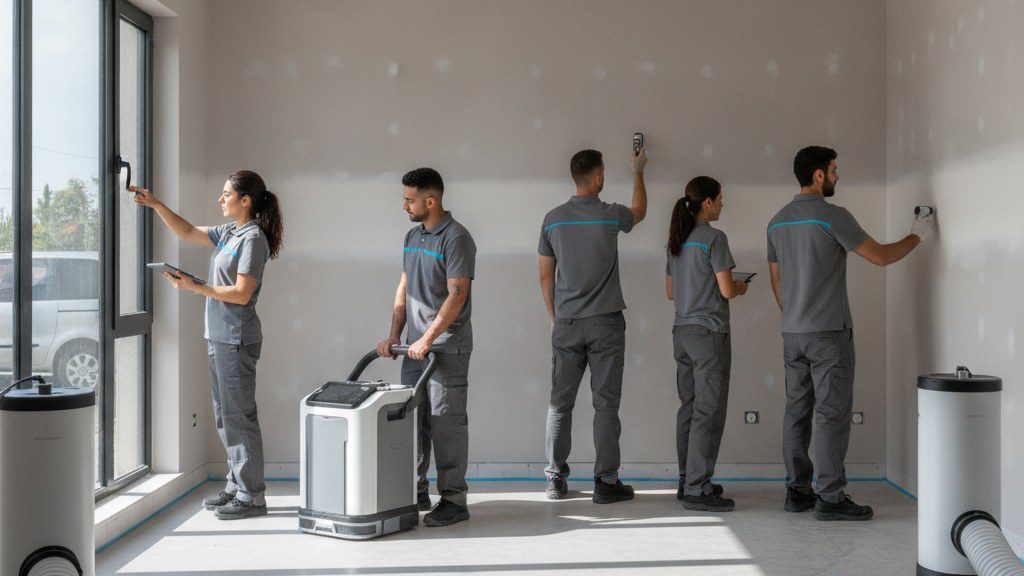
How to get rid of mold starts with stopping the moisture source, then removing contaminated materials the right way. If the growth is spread, hidden, or tied to drywall, insulation, or HVAC, the real fix is professional mold remediation and drying, not bleach and wishful thinking.
What counts as mold, and when is it a cleanup job?
If you are asking how to get rid of mold, start here: visible mold is only part of the issue, and not every stain means the same thing. The real question is whether you are dealing with a surface spot, hidden growth, or a moisture problem that is still active.
Mold becomes a cleanup job when the growth is tied to damp building materials, not just a dusty mark on a hard, non-porous surface. That is why the same kitchen spot can be minor in one house and a demolition issue in another. The material matters as much as the stain.
When people try to treat every mold problem the same way, they usually miss the bigger pattern. Mold likes places that stay wet, air cannot move well, and water damage was never fully dried. That is why a leak behind a wall or under a floor keeps showing up later.
You also need to separate cosmetic surface growth from contamination that has entered the building assembly. A surface wipe may help on some hard surfaces. It does not solve drywall, insulation, carpet pad, or a crawl space that stayed damp long enough for growth to spread.
For a buyer, the practical test is simple: if the area smells musty, keeps returning, or follows a leak, you are probably past a quick wipe-and-go fix. That is when mold removal services, proper drying, and sometimes reconstruction become the actual solution.
- Check whether the affected area is hard, sealed, and cleanable, or porous and absorbent.
- Follow the moisture, not just the stain.
- Treat musty odor as a clue that hidden growth may be present.
- Assume repeated spotting means the source of moisture is still active.
- If the area includes drywall, insulation, or carpet pad, cleaning alone may not be enough.
Can you get rid of mold with bleach, vinegar, or baking soda?
Short answer: sometimes on a hard surface, but not as a real fix for water-damage mold. If you are trying to get rid of mold after a leak, the product matters less than whether the material is contaminated and whether the dampness is gone.
This is where homeowners get sold a comforting myth. Spray something strong, wipe it down, and the problem disappears. Except mold does not care about your cleaning aisle habits if the drywall behind the wall is still wet.
Bleach can change what you see on the surface. It does not magically clean every material, and it does not address hidden contamination inside porous materials. Vinegar and baking soda are similar in that they may help with light surface cleaning, but they are not a restoration plan.
If the growth is on a non-porous surface and the source was minor and fully corrected, cleaning may be enough. But after water intrusion, that is often not the whole story. The real question is whether the material dried correctly and whether the area was isolated before spores spread.
The common mistake is doing a visible cleanup and calling it done. A better approach is to inspect the full area, remove what cannot be cleaned safely, dry the structure, and verify the moisture source has been corrected before you rebuild or repaint.
- Bleach may lighten stains but does not solve hidden contamination.
- Vinegar and baking soda are not substitutes for remediation after water damage.
- If the area is porous, cleaning chemicals are not the main answer.
- Surface cleaning without drying invites recurrence.
- The right sequence is source control, containment, removal, drying, then restoration.
How do you know if mold is hidden behind walls or in a crawl space?
If you smell something musty after a leak but do not see much growth, assume the problem may be hidden until proven otherwise. Mold behind walls and in crawl spaces often shows up first as odor, swelling, discoloration, or persistent dampness.
Hidden mold is frustrating because you can be standing in a room that looks fine while the problem lives in the wall cavity, under flooring, or in a crawl space. The signal is usually indirect. Odor, staining near baseboards, peeling paint, and warped trim all matter.
A crawl space can be especially deceptive. Water intrusion there may never look dramatic from the living area, but humid conditions and poor airflow can support mold growth for a long time. By the time you notice it upstairs, the material below may already be compromised.
Walls create the same headache after a burst pipe or slow leak. Drywall can hold moisture and feed mold out of sight. That is why a real inspection looks beyond the obvious spot and checks what the structure is telling you.
If you are guessing, you are already late. The goal is not to prove mold exists with a paintbrush test. The goal is to find where moisture traveled, what it touched, and what needs to be removed or dried before the issue spreads further.
- Musty odor after a leak is a serious clue, not background noise.
- Warped baseboards and peeling paint can point to hidden moisture.
- Crawl spaces often need separate inspection because they trap damp air.
- Drywall and insulation are common hiding places.
- Moisture mapping and close inspection beat guesswork every time.
Elevated Operations provides 24/7 water, fire, mold, storm, and sewage damage restoration across Metro Atlanta.
Get a free quoteWhen does mold removal require demolition instead of cleaning?
This is the line most people miss: if the mold is inside porous material or the water damage was severe enough, cleaning is not enough. You do not need heroic wiping. You need the damaged material removed and the structure dried correctly.
Demolition sounds dramatic, but in restoration it is often the practical choice. Drywall, insulation, carpet pad, and some ceiling materials do not clean like a countertop. Once contamination reaches deep into those materials, removal is usually the safer path.
The reason is simple. Mold needs moisture and a place to hold on. Porous materials give it both. Trying to save everything can turn into a slower, more expensive mess because the problem never fully leaves the assembly.
This is also where reconstruction enters the picture. If materials come out, they need to be replaced cleanly, with the source of water fixed and the area dry enough to rebuild. Otherwise you are just reinstalling the same problem in a nicer finish.
For the homeowner, the decision should be based on the material, the duration of wetness, and how far the contamination traveled. Not optimism. Not the internet’s favorite cleaning hack. The structure gets the final say.
- Porous materials usually cannot be restored the same way hard surfaces can.
- If mold has entered wall cavities, removal may be safer than cleaning.
- Wet insulation often cannot be salvaged.
- Reconstruction only makes sense after the source is fixed and the area is dry.
- Trying to save compromised material can trap odor and contamination inside the wall.
What you need to do in the first 24 hours after water damage
The first move after water damage is not to scrub mold. It is to stop the water, protect the area, and get moisture out before growth accelerates. That is the point where fast action changes the outcome more than any cleaner does.
Water damage and mold are linked because time is the enemy. The longer materials stay wet, the more likely you are to need removal instead of simple drying. That is why burst pipes, flooded basements, and sewer backups deserve immediate attention.
Start by stopping the source if you can safely do so. Then keep people out of the wet area if contamination is possible, especially after sewage or heavy flooding. After that, the focus shifts to extraction, drying, and documenting what got affected.
Do not assume fans alone are enough. Air movement is useful, but it is not the same as structural drying. Wet flooring, wall cavities, and insulation often need targeted extraction and controlled drying so the material actually returns to a safe condition.
The main mistake is waiting for the stain to dry on its own. By then, mold may already be taking hold in places you cannot see. A fast response does not guarantee a clean outcome, but it improves the odds dramatically.
- Stop the leak or entry point if it is safe to do so.
- Keep the area from spreading contamination to clean rooms.
- Begin water extraction and drying quickly.
- Document the damage before demolition or replacement.
- If sewage was involved, treat it as contamination, not routine cleanup.
How to keep mold from coming back after cleanup
If you only clean what you can see, the mold problem often returns. The lasting fix is to remove the moisture conditions that allowed growth in the first place and make sure the repair is actually dry, sealed, and stable.
This is the part people skip because it is less satisfying than scrubbing a wall. But recurrence is usually about moisture control, not cleaning enthusiasm. If humidity stays high, leaks continue, or airflow remains blocked, mold gets another opening.
After cleanup, the details matter: repair failed plumbing, seal roof intrusion, dry crawl spaces, and watch for condensation on cold surfaces. If a bathroom or basement always feels damp, that environment needs attention beyond surface cleaning.
It also helps to think in terms of building behavior. Areas with poor ventilation, hidden plumbing runs, or repeated flooding need a stronger plan than a one-time wipe. The fix should match the way the structure got wet in the first place.
The best outcome is not a spotless room for one week. It is a dry structure that does not keep feeding mold. That is the difference between a cosmetic cleanup and a real restoration result.
- Fix the original water source before rebuilding finishes.
- Keep humidity and condensation under control.
- Improve airflow in bathrooms, basements, and crawl spaces.
- Replace damaged materials instead of sealing in the problem.
- Recheck suspicious areas after repairs, especially around plumbing and exterior openings.
Quick decision guide: what symptom means what fix?
| Situation | What to do | Why |
|---|---|---|
| Musty odor after a leak, but little visible growth | Inspect for hidden moisture behind walls, under flooring, or in a crawl space, then dry and remove damaged material if needed. | Odor often means contamination is present where you cannot see it. |
| Visible mold on drywall, insulation, or ceiling material | Remove the compromised porous material, contain the area, and clean adjacent surfaces after the moisture source is fixed. | Porous materials usually hold contamination too deeply for simple surface cleaning. |
| Repeated mold in the same room | Track down the source of moisture, check ventilation and condensation, and verify the area is truly dry before repair. | If the wet condition remains, the mold problem will return. |
| Sewage backup or floodwater exposure | Treat the area as contaminated, remove unsalvageable materials, and use proper sanitation and drying before reconstruction. | Water from sewage or flooding can spread health and structural risks beyond visible mold. |
Doing it yourself vs bringing in Elevated Operations
| Doing it yourself | With Elevated Operations | |
|---|---|---|
| Finding the full damage | You can see the stain, but hidden moisture behind walls, in crawl spaces, or under flooring is easy to miss. | We inspect the affected area with restoration in mind, so the cleanup plan matches what the structure actually needs. |
| Removing contaminated materials | You may not know what can be cleaned and what should come out, which leads to trial and error. | We handle mold removal services and reconstruction as one coordinated process, so damaged materials are addressed correctly. |
| Drying and containment | Fans and cleaners can move air around, but they do not replace a controlled drying plan or proper containment. | We use restoration methods designed to limit spread and dry the property so the problem does not keep growing. |
| Insurance and rebuild coordination | You are left managing photos, scope, invoices, and the repair sequence on your own. | We provide direct insurance claim management and a one-stop path from emergency call through final construction. |
Frequently Asked Questions
What is the fastest way to get rid of mold after a leak?
The fastest real fix is to stop the leak, remove standing water, dry the structure, and remove any porous materials that were too contaminated to save. If the mold is hidden or widespread, surface cleaning alone will slow you down and may leave the source untouched.
Can I just paint over mold once it is cleaned?
Not if the moisture problem is still there. Paint is a finish, not a remedy. If the area was not fully dried or the damaged material was not removed, the mold can return under the paint and create a bigger repair later.
Do I need a professional for a small mold spot?
If it is a small, isolated spot on a hard surface and the moisture source is already fixed, you may be able to clean it carefully. If the spot is on drywall, in a crawl space, around a leak, or tied to sewage or flooding, professional help is the safer move.
How do I know whether I need mold removal or full reconstruction?
If the affected material can be cleaned and dried without leaving contamination behind, you may not need major rebuild work. If drywall, flooring, insulation, or trim has been compromised, reconstruction is often part of the real solution because the damaged material has to come out.
How much does it cost to get rid of mold in Atlanta?
There is no honest one-size-fits-all price because the cost depends on the size of the affected area, the materials involved, and whether drying or reconstruction is needed. If you want a clear scope for your property, book a call for a free quote. Elevated Operations can help with the full restoration process.
Get a free, no-obligation restoration estimate
Elevated Operations provides 24/7 water, fire, mold, storm, and sewage damage restoration across Metro Atlanta.
Get a free quoteCall (770) 404-6895Last updated October 9, 2026