
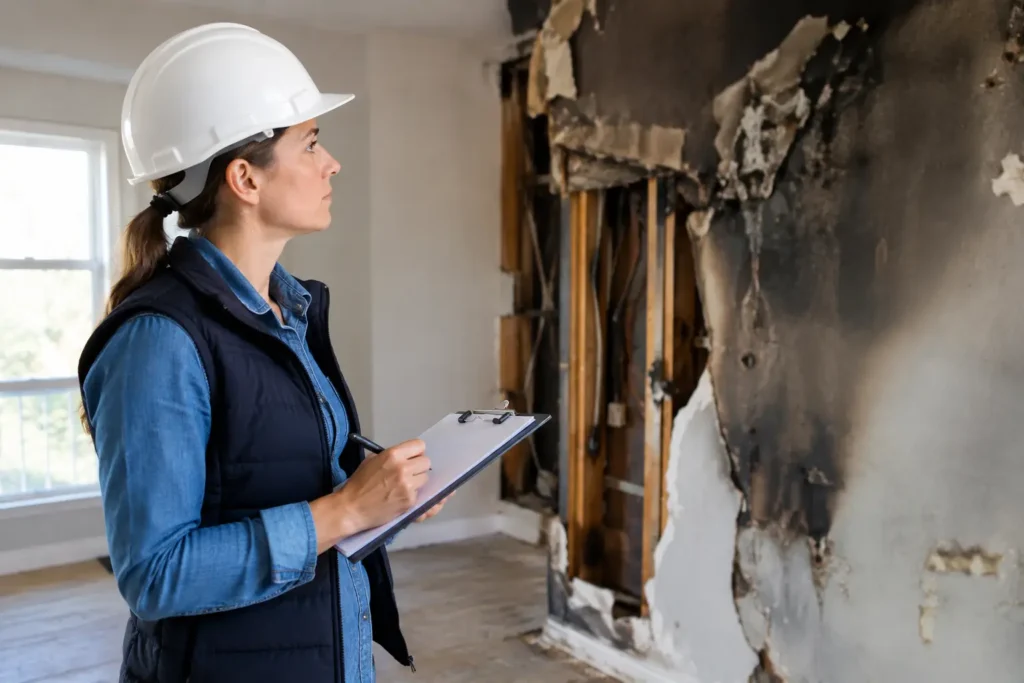
A fire can leave a home looking deceptively manageable. The flames may be out, and one room may appear to have only blackened walls and a smoky smell. But when homeowners ask, “can homeowners repair fire damage,” the honest answer is: sometimes, but only after the property is safe, documented, and professionally assessed.
Fire damage is not just what burned. Smoke travels through walls, insulation, ductwork, cabinets, and adjoining rooms. Soot can be acidic, water used to extinguish the fire can create hidden moisture problems, and damaged wiring or framing can turn a simple repair into a serious safety risk. The right first move is not to start cleaning. It is to protect the structure, your health, and your insurance claim.
What Homeowners Can Safely Do After a Fire
Once the fire department has released the property and your insurer has been notified, there are a few limited tasks a homeowner can usually handle. The goal is stabilization, not restoration.
You can take clear photos and video of every affected area before moving belongings or cleaning surfaces. Capture damaged rooms from several angles, close-ups of contents, smoke staining, damaged ceilings, and any water intrusion. Keep a written inventory of damaged items, including approximate age and replacement cost when possible.
You can also remove undamaged essentials if it is safe to enter the home. Important documents, medications, valuables, clothing, and electronics should be moved away from affected areas only after you have documented their condition. If an item is wet, smoky, or covered in soot, set it aside rather than trying to decide immediately whether it is salvageable.
Basic protection from further damage is also appropriate. If windows or doors were damaged, temporary board-up can prevent weather exposure and unauthorized entry. If the roof was compromised, emergency tarping may be necessary. These steps matter because insurance policies generally expect property owners to take reasonable action to prevent additional damage.
That said, avoid climbing onto a damaged roof, entering rooms with sagging ceilings, or attempting to secure openings near exposed electrical components. A temporary fix should never create a second emergency.
Can Homeowners Repair Fire Damage Themselves?
Small, isolated cosmetic repairs may be suitable for a capable homeowner after professional clearance. For example, repainting a room that has been fully cleaned, replacing a smoke-damaged curtain rod, or installing new trim after reconstruction may be reasonable DIY work.
The line changes quickly when fire, smoke, water, electrical systems, or structure are involved. Burned drywall is not always just a drywall issue. Soot may have entered wall cavities, insulation may retain odor, and heat can weaken framing or damage plumbing and wiring behind the surface. Covering stains with paint can trap odors and hide conditions that should have been addressed first.
Professional restoration is usually the safer choice when damage involves any of the following:
- Electrical outlets, wiring, panels, appliances, or HVAC equipment
- Charred framing, roof decking, floor joists, stairs, or load-bearing walls
- Heavy soot deposits, greasy residue, or smoke odor throughout the home
- Water damage from firefighting efforts, especially behind walls or under flooring
- Damaged insulation, ductwork, ceilings, or areas with limited ventilation
- Contamination from burned plastics, chemicals, batteries, or household contents
This is not about making a small repair sound complicated. It is about understanding what cannot be confirmed with a visual inspection. Restoration technicians use moisture meters, thermal imaging, containment methods, air filtration, and specialized cleaning processes because hidden damage can continue long after the visible mess is gone.
Why Smoke and Soot Cleanup Is Not a Normal Cleaning Job
Soot is a fine, abrasive residue that can smear deeper into surfaces when wiped incorrectly. Dry soot, oily soot, and protein-based residues from kitchen fires all behave differently. The cleaning method that works on one surface can permanently damage another.
For instance, scrubbing soot from painted walls with the wrong cleaner can drive residue into the paint film. Vacuuming with a standard household vacuum can spread fine particles back into the air. Using fans before soot is contained can push contamination into clean rooms and HVAC returns.
Smoke odor creates another challenge. It is not solved by fragrance sprays, candles, or simply opening windows. Odor-causing particles can settle inside porous materials such as carpet padding, insulation, unfinished wood, upholstery, and ductwork. Effective odor control begins with removing the source, cleaning affected materials correctly, and treating areas where smoke traveled.
If the smell returns on humid days or when the heat or air conditioning turns on, that is a strong sign contamination remains. At that point, more surface cleaning is unlikely to fix the problem.
Do Not Ignore Firefighting Water Damage
A home can have two restoration problems at once: fire and water. Water from hoses and suppression systems can saturate subfloors, insulation, cabinets, and drywall in a matter of minutes. Left untreated, that moisture can cause warping, delamination, material failure, and mold growth.
Homeowners can remove standing water from a small, safe, non-electrical area, but visible water is only part of the issue. Moisture can migrate under flooring and into wall assemblies where it is impossible to see without proper testing. Commercial drying equipment and moisture mapping help confirm that structural materials are actually dry, not just dry to the touch.
This is one reason fast action matters. Waiting until demolition or rebuilding begins can allow water-related damage to expand the scope and cost of the project.
Protect Your Insurance Claim Before Repairs Begin
Emergency mitigation and permanent repairs are different stages, and your claim should reflect both. Notify your insurance carrier promptly, document the loss, and keep receipts for reasonable emergency expenses such as temporary lodging, board-up, tarping, and protective supplies.
Do not throw away damaged belongings before they have been photographed and reviewed, unless they present an immediate health or safety hazard. If items must be discarded, take detailed photos first. Avoid signing a broad repair agreement or authorizing a full rebuild until you understand the scope, price, and how the work will be handled with your insurer.
A restoration company that manages documentation can make this process far less stressful. Detailed photos, moisture readings, drying logs, itemized estimates, and a clear scope of work help show what happened, what was required to stabilize the home, and what must be rebuilt.
For Metro Atlanta property owners, Elevated Operations can coordinate emergency fire and smoke mitigation, insurance-ready documentation, and reconstruction under one accountable team. That prevents the common problem of hiring one company for cleanup, another for repairs, and being left to manage the gap between them.
When It Is Safe to Start Rebuilding
Reconstruction should begin only after the affected structure has been cleaned, dried, inspected, and cleared for repair. In many cases, that means damaged drywall, insulation, flooring, cabinets, or ceiling materials must be removed before new materials go in.
This order protects the quality of the finished work. New flooring installed over a damp subfloor can fail. Fresh paint applied before smoke residue is properly removed can discolor or continue to smell. New drywall installed before moisture levels are verified can create a hidden problem behind a clean-looking wall.
The best repair plan is not always the fastest-looking one. It is the one that addresses safety first, preserves claim documentation, removes contamination, controls moisture, and rebuilds the home with workmanship that will last.
A Better Standard Than “Good Enough” Cleanup
If the fire was limited to a candle, a small appliance, or a single contained area, homeowners may be able to handle a few finishing tasks after professional assessment. But when fire damage reaches walls, ceilings, electrical systems, insulation, flooring, or multiple rooms, DIY work can create more cost and more disruption.
Your home deserves more than a surface-level cleanup. Secure the property, document everything, get the hidden conditions evaluated, and only then decide which repairs belong in your hands. That approach gives you the best chance to protect your family, your investment, and your path back to normal.