
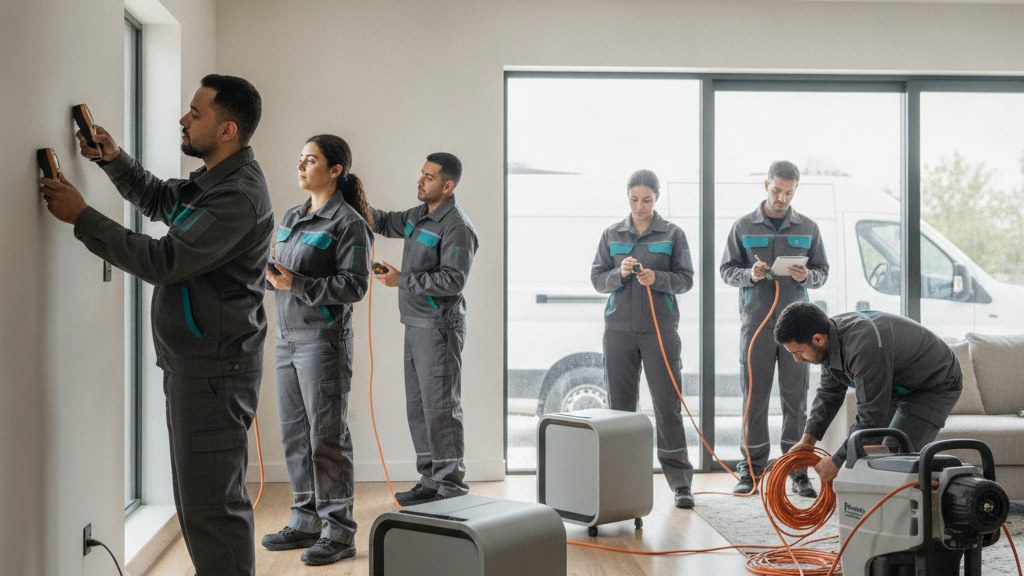
What should I do for emergency roof repair right now?
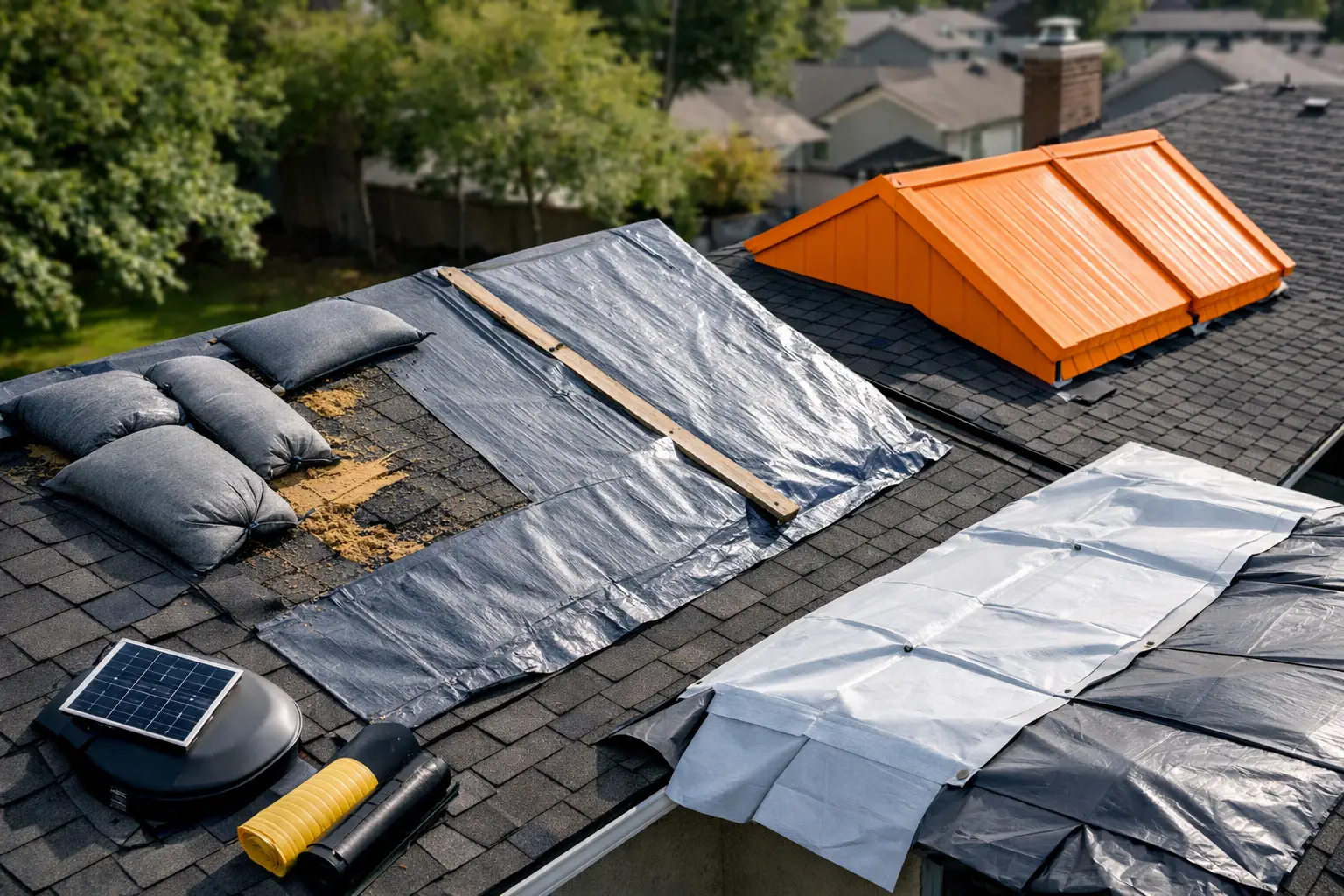
Emergency roof repair means stopping active water entry fast, then stabilizing the roof so the damage does not spread. In practice, that usually means tarping, temporary sealing, board-up support where needed, and a full inspection for hidden water intrusion before repairs begin.
What counts as emergency roof repair after a storm or leak?
Emergency roof repair is any immediate action that stops active water entry and keeps the damage from spreading. If the roof is compromised, the real job is to protect the structure first, then plan the permanent repair once the home is stabilized.
In plain English, this is not about cosmetic patching. It is about stopping a live problem. Missing shingles, lifted flashing, punctures from debris, or saturated roof sections can all turn into interior water damage fast.
Homeowners usually notice the ceiling stain first, but the leak path often begins higher up and farther away. Water can travel along rafters, wiring, and framing before it ever shows itself inside a room.
That is why a proper emergency response starts with locating the entry point, limiting more water intrusion, and checking for hidden wet materials. If you only chase the stain, you miss the source.
The right response is temporary stabilization now and a complete repair plan next. That sequence protects both the structure and your wallet, because unchecked water tends to create a second round of repairs nobody wants.
- Active dripping during rain
- Missing shingles or exposed decking
- Wind damage that lifted flashing or ridge areas
- Tree or debris impact on the roof
- Ceiling stains, wet insulation, or attic moisture
How do roof tarping and temporary leak control actually work?
Roof tarping works by creating a temporary weather barrier over the damaged section so rain cannot keep entering the home. It is not a full repair, but it is often the fastest way to stop the bleed while the roof system is evaluated.
A tarp only helps if it is secured correctly and covers the vulnerable area with enough overlap. A loose sheet flapping in the wind is not protection. It is a problem waiting for the next storm.
Leak control can also include temporary sealing around penetrations, isolating wet areas inside, and removing water that has already made it in. The point is to stabilize the environment, not pretend the roof is fixed.
The risk here is delay. Every hour the roof remains open to weather increases the chance of soaked insulation, stained ceilings, damaged finishes, and mold-friendly conditions in the attic or wall cavities.
If the roof deck or framing is exposed, temporary protection matters even more. Water does not stay politely at the point of entry. It spreads, and it keeps spreading until the opening is closed.
In an emergency, speed and proper coverage matter more than guessing. A quick temporary fix can save a far bigger repair later, provided it is done with the leak path, slope, and weather exposure in mind.
- A secured tarp blocks rain from the exposed section
- Temporary sealants can help around small openings
- Interior moisture control reduces secondary damage
- Attic checks reveal whether water has spread past the ceiling
- Proper overlap and fastening are what make tarping work
Which roof damage needs immediate attention instead of waiting?
Any roof issue that is letting water in now needs immediate attention. If the home is actively taking on water, the problem has already moved beyond routine maintenance and into damage control.
The common mistake is calling a visible stain a minor leak. If the stain is growing, the ceiling is sagging, or water is dripping during rain, that is an active failure, not a future maintenance item.
Storm damage is another red flag. Missing shingles, bent flashing, torn underlayment, or visible punctures can look small from the driveway and still let a surprising amount of water into the structure.
Mold risk starts sooner than most people think. Wet insulation and hidden damp wood create the kind of conditions that invite a bigger remediation problem if the roof is not stabilized quickly.
Electrical fixtures, attic storage, and ceiling drywall deserve extra caution. Water in the wrong place can turn a roofing issue into a safety issue, which is exactly why waiting is a bad strategy.
If you are debating whether it is urgent, the answer is simple: any roof problem that changes with rain is urgent. Dry weather does not erase the damage already underway.
- A ceiling stain that is expanding after rain
- Water dripping from fixtures, vents, or attic areas
- Shingles blown off, curled, or torn away
- Flashing separated around chimneys, valleys, or vents
- Sagging drywall, wet insulation, or soft ceiling material
Elevated Operations provides 24/7 water, fire, mold, storm, and sewage damage restoration across Metro Atlanta.
Get a free quoteWhat should you do before the roofer arrives?
Before help arrives, your job is to reduce damage safely, not to fix the roof yourself. Move fast on protection, but do not climb onto a wet or unstable roof if you can avoid it.
Start with safety. If water is near light fixtures, outlets, or a ceiling that looks bowed, keep people out of that area. A leak can create both structural and electrical hazards at the same time.
Use buckets, towels, and plastic sheeting indoors to control the spread. If water is dripping into a room, you want to protect floors, furniture, and anything that can absorb moisture and hold it.
Take photos of visible damage before cleanup if you plan to use insurance. Clear documentation helps show where the leak appeared, what materials were affected, and how the damage evolved.
Do not cut into walls or ceilings unless there is an immediate safety reason. Random openings can make a bad situation worse by releasing more moisture into hidden areas or damaging materials you could have saved.
If you can safely identify the affected area from inside the attic or from the ground, that is useful. If not, stop there and wait for a trained assessment. Guesswork on a roof is expensive.
- Protect people first, especially around electricity
- Use buckets and plastic to limit interior spread
- Document damage before you clean up
- Avoid climbing on a wet, steep, or damaged roof
- Keep the suspected leak area accessible for inspection
How does a roof leak turn into mold or structural damage?
A roof leak turns into bigger damage when moisture stays trapped in building materials. Once that happens, you are not just repairing a roof anymore. You are dealing with soaked assemblies, odor, deterioration, and possibly mold.
Drywall swells when it gets wet. Insulation loses performance. Wood framing can hold moisture longer than homeowners expect, especially in an attic where airflow is poor or the leak is intermittent.
The problem is often invisible for a while. Water can run along framing and collect in places far from the original entry point, which means the visible stain in one room may hide a larger wet area above it.
Mold does not need a dramatic flood to start. If materials stay wet or damp, the conditions can become favorable for growth. That is why emergency response is about moisture control, not only patching the roof.
Structural damage usually develops after repeated exposure or prolonged saturation. Roof decking, rafters, and support members can weaken over time if the entry point keeps reopening with each storm.
This is why a quick temporary fix is only the first step. The second step is drying, inspection, and repair planning so the home does not end up with a second restoration problem after the roof is closed up.
- Wet insulation stops doing its job
- Drywall and ceilings can swell and fail
- Hidden moisture can travel away from the visible stain
- Mold risk increases when materials stay damp
- Repeated leaks can weaken roof decking and framing
What does a full emergency roof repair and restoration plan include?
A full emergency roof repair plan should do more than stop rain for the night. It should close the entry point, assess hidden damage, dry affected materials, and map the permanent repairs needed to put the home back together correctly.
The best outcome is a clean handoff from emergency stabilization to complete restoration. That prevents the homeowner from juggling separate contractors who each see only one piece of the problem.
Inspection should include the roof surface, flashing, attic, ceilings, insulation, and any visible interior impact. If water traveled through the structure, the repair plan should account for all affected materials, not just the obvious stain.
Drying matters because wet materials do not magically reset when the roof patch is installed. If the moisture is still trapped, the home can keep developing odor, damage, or microbial concerns after the roof looks fixed from the outside.
Permanent repair may require reconstruction where materials are too damaged to save. That can include drywall, insulation, trim, and other interior finishes affected by the leak path.
A proper plan gives you sequence. Stop the water, document the damage, dry the structure, then rebuild what cannot be salvaged. Anything less is just a temporary disguise.
- Temporary protection against more rain
- Full inspection of roof and interior impact
- Drying and moisture control after the leak is stopped
- Replacement of unsalvageable materials
- Reconstruction where the damage has already spread
Emergency roof repair in Atlanta: what to expect from a restoration-first team
In Atlanta, emergency roof repair is often really a water damage problem with a roof problem at the front of it. The smart move is to work with a team that can stabilize the roof and handle the restoration side without making you coordinate three different companies.
That matters because a roof leak rarely stays a roof leak. Once water crosses the interior line, you are dealing with extraction, drying, damaged materials, and the chance of secondary issues like mold if the space stays wet.
A restoration-first approach keeps the response focused on the whole loss, not just the visible hole. You get the benefit of one coordinated plan instead of a patch now and a confusion later problem.
Elevated Operations fits that model for Atlanta metro homeowners because it provides 24/7 property restoration and reconstruction services, with IICRC-certified technicians and a one-stop process from emergency call through final construction.
If the loss involves insurance, coordination matters even more. Clear documentation, scope, and communication reduce friction when you are already dealing with a stressful repair.
The practical question is simple: do you need a roofer only, or do you need the leak stopped and the damage restored correctly? For active water intrusion, the second option is usually the one that saves the most trouble.
- 24/7 response for active water intrusion
- Roof stabilization plus interior restoration in one plan
- IICRC-certified technicians
- Support for documentation and insurance communication
- Final reconstruction when materials cannot be saved
When the damage has crossed from roof issue to restoration emergency
| Situation | What to do | Why |
|---|---|---|
| Water is actively dripping during rain or after a storm | Get temporary roof protection in place and inspect the interior for spread | Active entry means the damage is still growing, not sitting still |
| Ceiling stains are expanding or the drywall feels soft | Treat the area as water damage, not just a cosmetic roof issue | Wet finishes often hide moisture in insulation and framing above them |
| You see missing shingles, lifted flashing, or exposed decking | Stabilize the opening before the next weather event | Even a small gap can admit repeated water and create a larger repair scope |
| The attic smells damp or insulation looks wet | Check for trapped moisture and dry the affected materials | Hidden moisture is where mold and structural damage usually start |
Doing it yourself vs bringing in Elevated Operations
| Doing it yourself | With Elevated Operations | |
|---|---|---|
| Stopping the leak | You can use buckets, tarps, and temporary interior protection, but roof access is risky and easy to get wrong. | We respond with emergency stabilization and roof protection aimed at stopping further water entry safely. |
| Finding hidden damage | You may see the stain but miss moisture in the attic, insulation, or wall cavities. | We look at the full loss path so the repair plan includes what water touched, not just what you can see. |
| Drying and cleanup | You may dry surfaces, but trapped moisture often stays in materials you cannot reach or verify. | We handle water removal, drying, and restoration as part of one coordinated process. |
| Rebuild and insurance coordination | You may end up managing contractors, paperwork, and scope changes on your own. | We manage the restoration and reconstruction side and help coordinate the claim process so you are not juggling everything alone. |
Frequently Asked Questions
Is emergency roof repair the same as a roof replacement?
No. Emergency roof repair is the immediate response to stop water entry and stabilize the home. A roof replacement may come later if the damage is too extensive or the roof is near the end of its useful life. The first step is always to control the active leak and assess the full scope.
Can I wait until the weather clears before calling?
If water is entering the home, waiting usually makes the damage worse. Rain can keep feeding wet insulation, drywall, and framing, and that can lead to mold or more extensive repairs. The safer move is to address the leak as soon as possible, even if the repair is temporary at first.
How do I know whether I need tarping or a full repair?
Tarping is for immediate protection when the roof is open to weather or the leak is still active. A full repair depends on what caused the failure and how much material was damaged. An inspection should determine whether the problem is isolated or part of a larger structural issue.
Will insurance cover emergency roof repair?
Coverage depends on the policy and the cause of the damage, such as storm impact or sudden loss. The best approach is to document the issue quickly, limit additional damage, and keep records of the response. If the claim process feels overwhelming, a restoration team can help organize the scope and paperwork.
How do I get help from Elevated Operations?
Book a call for a free quote if you need emergency roof repair in Atlanta or the surrounding metro area. Elevated Operations can help stabilize the damage, manage the restoration process, and guide the rebuild when the roof leak has already turned into a larger water loss.
Get a free, no-obligation restoration estimate
Elevated Operations provides 24/7 water, fire, mold, storm, and sewage damage restoration across Metro Atlanta.
Get a free quoteCall (770) 404-6895Last updated October 15, 2026