
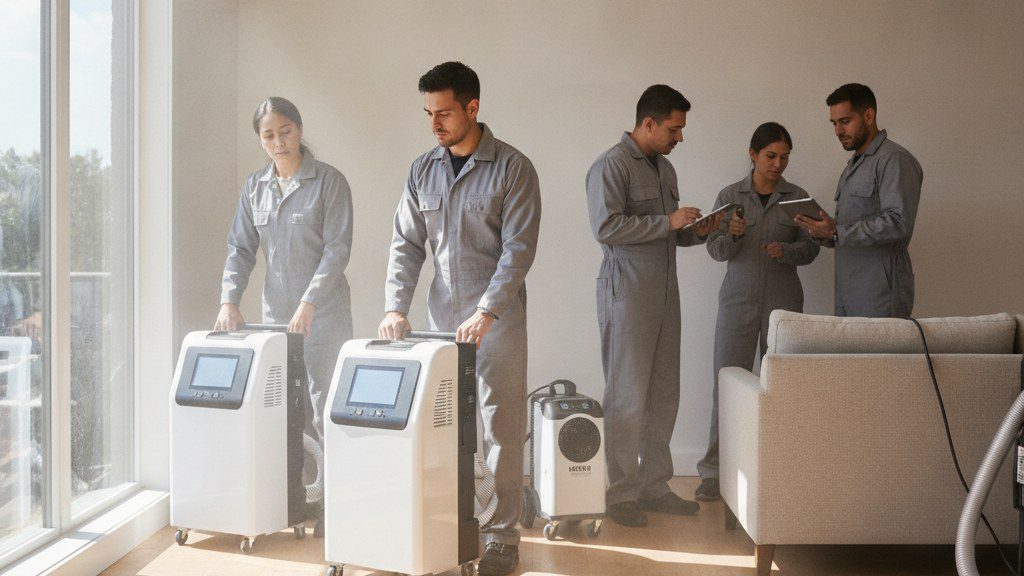
How do mold remediation dehumidifiers actually help after water damage?
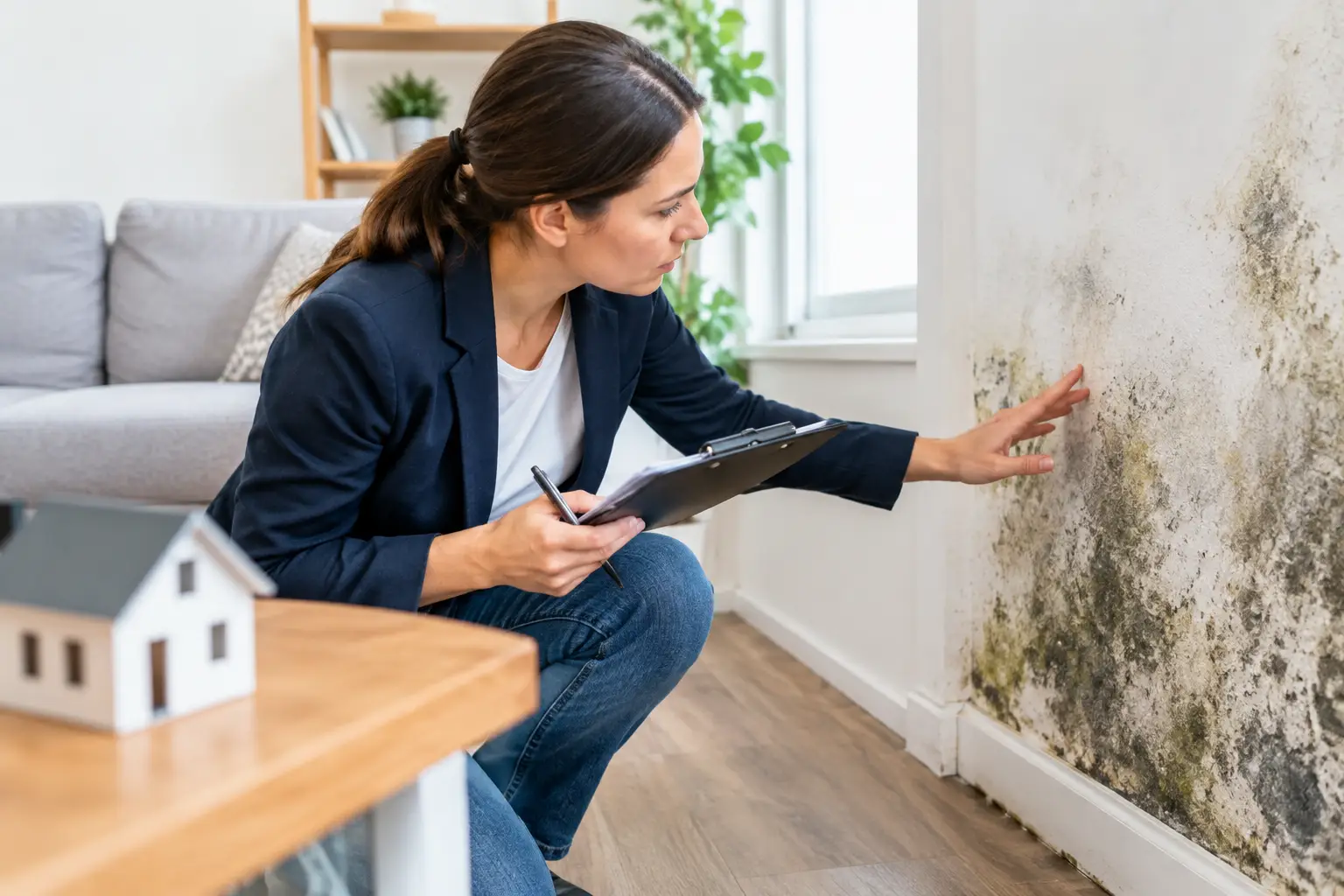
Mold remediation dehumidifiers help by pulling excess moisture out of the air and materials after water damage, but they are not the whole fix. If the source is still wet, hidden, or contaminated, you need proper drying, containment, and removal of affected materials before mold can keep spreading.
What do mold remediation dehumidifiers actually do after a leak?
They remove moisture from the air so wet materials can dry faster, but that is only one piece of the job. If the leak source is still active, if drywall is saturated, or if the space is poorly contained, the equipment cannot solve the underlying problem.
A dehumidifier does not clean mold and it does not repair water damage. It simply lowers the moisture load in the room and helps create drying conditions that make remediation possible. That matters because mold grows where moisture lingers, not where air merely feels comfortable.
In a real loss, the problem is usually not one wet surface. It is the combination of damp building materials, hidden pockets behind walls, and indoor humidity that keeps the whole area slow to dry. The machine helps, but the setup determines whether it is useful or just loud equipment in the corner.
This is why professional drying plans pay attention to the structure, not just the visible puddle. You want air movement, dehumidification, and moisture removal working together. Otherwise, you are drying the symptoms while the cause stays in place.
The buyer mistake is assuming a dehumidifier equals remediation. It does not. It is a tool inside a larger restoration process, and the process has to start with stopping the source and identifying what can be salvaged.
- Reduces indoor moisture so surfaces dry faster
- Helps control humidity in enclosed or affected rooms
- Supports structural drying after extraction
- Works best when paired with containment and source removal
- Does not replace mold cleaning or material removal
Why does humidity control matter so much in mold cleanup?
Because mold does not need a dramatic flood to keep advancing. It needs moisture that sticks around, and humidity is often the quiet reason a room never really dries out after the visible water is gone.
When humidity stays elevated, porous materials keep holding water longer. That slows evaporation, extends the drying window, and increases the chance that mold colonies keep developing behind surfaces. People often focus on what they can see, but humidity is what keeps the unseen areas wet.
This is also why a room can look fine and still smell off. The air may be masking what the walls or subfloor are still doing. If your nose says the room is not right, humidity and trapped moisture are usually part of that story.
Professional mold remediation treats humidity as a control variable, not a side note. If the drying conditions are wrong, you can clean visible contamination and still leave the structure vulnerable. That is how homeowners end up with recurring issues after a seemingly quick fix.
The point is not to make the air feel less sticky. The point is to dry the structure enough that mold does not keep finding a place to return.
- High humidity slows structural drying
- Moisture trapped in materials can keep feeding mold
- Musty odors often point to lingering dampness
- Dehumidification helps prevent repeated cleanup
- Humidity control is part of the remediation plan, not an afterthought
Which spaces need dehumidifiers the most after water damage?
The spaces that trap moisture longest are usually the ones that cause the most trouble later. Basements, crawl spaces, closed rooms, and wall cavities tend to hold humidity and hidden dampness after a leak, flood, or sewer backup.
Basements are the obvious one because they naturally run cooler and can hold moisture longer. Crawl spaces are just as important because they can feed humidity into the home from below. If those areas stay damp, the rest of the structure can keep absorbing moisture even after the surface water is gone.
Bathrooms, laundry rooms, and closets also deserve attention because they often have limited airflow. If water reaches drywall, insulation, or trim in those spots, a dehumidifier helps only after the wet materials are opened up enough to dry. Otherwise, the inside stays wet while the outside fools you.
Flooded or partially flooded rooms are especially tricky when flooring layers trap water underneath. That is where people get burned. The floor looks dry, but the underlayment or subfloor is still wet. Dehumidification helps, but only after the hidden moisture paths are identified.
If the area smells musty, feels cooler than the rest of the house, or shows swelling at the trim, assume hidden moisture until proven otherwise.
- Basements that hold cool, damp air
- Crawl spaces that feed humidity upward
- Bathrooms, closets, and laundry rooms with poor airflow
- Wall cavities and underfloor layers that trap moisture
- Any room with swelling, odors, or delayed drying
Elevated Operations provides 24/7 water, fire, mold, storm, and sewage damage restoration across Metro Atlanta.
Get a free quoteHow do airflow, containment, and dehumidifiers work together?
They have to work as a system or drying stalls out. Airflow moves moisture off surfaces, containment keeps the affected area controlled, and dehumidifiers remove that moisture from the air so it does not settle right back down.
People often buy the tool and skip the system. That is backwards. Fans alone just move wet air around. A dehumidifier alone may not reach deep or hidden moisture. Containment alone does nothing if the air inside stays saturated. You need all three parts in the same plan.
Containment matters because you do not want the drying process pushing contaminated air through the rest of the home. In mold situations, keeping the affected space controlled protects the rest of the structure while the drying work is happening.
Airflow has to be directed, not random. The goal is to lift moisture from materials and send it toward the dehumidifier, not create a wind tunnel in the room. When the setup is wrong, homeowners think the equipment is failing when the real issue is the layout.
That is the part most DIY efforts miss. Restoration is not just owning equipment. It is placing the equipment in a way that matches the damage pattern.
- Fans move moisture into the air
- Dehumidifiers remove that moisture from the air
- Containment helps keep affected air controlled
- Incorrect placement wastes drying time and effort
- The layout should match the actual moisture path
What kind of dehumidifier setup is used in mold remediation?
The right setup depends on the damage, but the principle is simple: remove as much moisture as possible, then keep drying conditions stable until the structure is dry enough to move forward safely.
In remediation, the question is not whether the machine is powerful enough in the abstract. It is whether the setup matches the size of the affected area, the amount of absorbed water, and the materials involved. A small, contained problem needs a different approach than a soaked basement or a room with hidden wall moisture.
The equipment also has to be monitored. As materials dry, the moisture load changes. If nobody checks that, the drying plan can drift. Sometimes the issue is under-drying. Sometimes it is chasing dry air while ignoring wet materials that were never opened or removed.
This is why moisture mapping matters. You want to know where the wettest points are and whether the readings are actually dropping. If the numbers are not improving, the setup needs to change before the mold issue does.
There is no magic box here. There is only a process: identify, contain, dry, verify, then remediate what cannot be saved.
- Setup depends on the size and type of water damage
- Equipment should be monitored as conditions change
- Moisture mapping shows where drying is working or failing
- Hidden wet materials may need opening or removal
- Drying comes before final remediation work
When does drying stop and mold removal begin?
Drying stops being enough when materials are contaminated, structurally compromised, or too wet to recover. At that point, the job shifts from moisture control to actual mold remediation and, in some cases, reconstruction.
This transition is where homeowners often hesitate. They keep hoping the damaged material can be saved because replacement sounds expensive. But if drywall, insulation, or subflooring has stayed wet too long or shows mold growth, leaving it in place can just preserve the problem.
The right call is based on the condition of the material, not wishful thinking. A dehumidifier can support drying, but it cannot restore material that has already been damaged beyond what is reasonable to keep. That is source removal territory.
If the area has already turned into a contamination issue, cleanup has to be more direct. That means removing affected material, cleaning surfaces properly, and making sure the remaining structure is dry before anything gets rebuilt.
This is the hard truth nobody likes. Drying equipment is useful, but it cannot negotiate with physics. Once mold has established itself in material that will not dry out, removal is usually the cleaner path.
- Contaminated material may need removal, not just drying
- Drying does not reverse structural damage
- Visible mold means the cleanup stage has changed
- Reconstruction may follow after removal and drying
- The goal is to stop the moisture source, not preserve every material
What should you check before you rent or buy equipment?
Check the source, the scope, and the hidden areas first. If those three are wrong, the equipment choice is almost irrelevant because you are drying blind instead of drying the actual damage.
First, confirm the leak or intrusion is stopped. Then identify what got wet: flooring, drywall, insulation, cabinets, subflooring, crawl space surfaces, or all of the above. The more porous the material, the more likely it is to hold moisture longer and support mold growth.
Second, look for concealed damage. Water travels. It can move under flooring, behind baseboards, into wall cavities, and into adjacent rooms. If you only dry the visible edge, you may leave the worst part untouched.
Third, think about contamination risk. A clean water leak and a sewer backup are not the same problem. A machine may dry both, but the cleanup requirements are different. That is why the category of loss matters as much as the amount of water.
If you skip these checks, you are guessing. And guessing is expensive when mold is the thing you are trying to avoid.
- Confirm the water source is fully stopped
- Identify porous materials that absorbed water
- Inspect hidden areas for spread beyond the visible damage
- Treat sewer or contaminated water differently
- Choose equipment after the scope is known, not before
How to tell whether drying equipment is enough or whether remediation is needed
| Situation | What to do | Why |
|---|---|---|
| The area feels damp, but there is no visible growth yet. | Use dehumidification with airflow and moisture monitoring to dry the structure completely. | Early moisture control can stop mold from gaining traction if the source is already fixed. |
| You smell mustiness even though the room looks dry. | Inspect hidden materials, wall cavities, and underfloor areas before assuming the problem is over. | Odor often means moisture or contamination remains where you cannot see it. |
| Drywall, insulation, or flooring is swollen, stained, or soft. | Remove unsalvageable materials and clean exposed surfaces as part of remediation. | Damaged materials can hold moisture and contamination even when the room air feels normal. |
| The source was a sewer backup, not clean water. | Treat it as a contamination event and do not rely on drying alone. | Sewage introduces health risks that require cleanup, drying, and safe disposal protocols. |
Doing it yourself vs bringing in Elevated Operations
| Doing it yourself | With Elevated Operations | |
|---|---|---|
| Finding the hidden moisture | You may dry the obvious area and miss what is behind walls, under flooring, or in adjacent rooms. | We look at the full damage pattern so the drying plan matches the real scope. |
| Equipment placement | Fans and dehumidifiers can be placed in ways that move air around without actually drying the materials. | We set up drying based on the structure, not just the room layout. |
| Contamination awareness | It is easy to treat a mold or sewage problem like a simple spill and underreact to the risk. | We handle water, mold, and sewage damage with the right restoration process for the loss. |
| Insurance and next steps | You have to juggle documentation, scope questions, and repair decisions while dealing with the damage. | We provide direct insurance claim management and carry the job through reconstruction when needed. |
Frequently Asked Questions
What is the difference between a regular dehumidifier and mold remediation dehumidifiers?
A regular home dehumidifier is built for everyday comfort. Mold remediation dehumidifiers are used during cleanup to dry affected spaces faster and more intentionally, often alongside containment, airflow, and moisture monitoring. The goal is not comfort alone. It is to reduce the chance that damp materials keep feeding mold.
What does relative humidity mean for my damaged room?
Relative humidity is the amount of moisture in the air at a given moment. In a wet room, high humidity slows drying and can keep building materials damp longer than they should be. That is why restoration crews care about the air, not just the visible water on the floor.
Can I just run a fan instead of using dehumidifiers?
A fan moves air, but it does not remove moisture from the air. That means the room can still stay humid, especially after a leak or flood. In most water damage situations, drying works better when airflow and dehumidification are used together in a controlled setup.
How much does professional drying or mold remediation cost?
It depends on the size of the damaged area, the type of materials affected, and whether the job needs cleanup, removal, or reconstruction. The safest way to get a real price is to book a call for a free quote based on your specific loss, not a guess.
Who should I call if I need help after water damage in Atlanta?
If you want a company that can handle drying, mold remediation, sewage cleanup, and reconstruction in one process, Elevated Operations can help. If the damage is active or the room still smells wrong, book a call for a free quote and get the scope checked before the problem spreads.
Get a free, no-obligation restoration estimate
Elevated Operations provides 24/7 water, fire, mold, storm, and sewage damage restoration across Metro Atlanta.
Get a free quoteCall (770) 404-6895Last updated October 15, 2026