
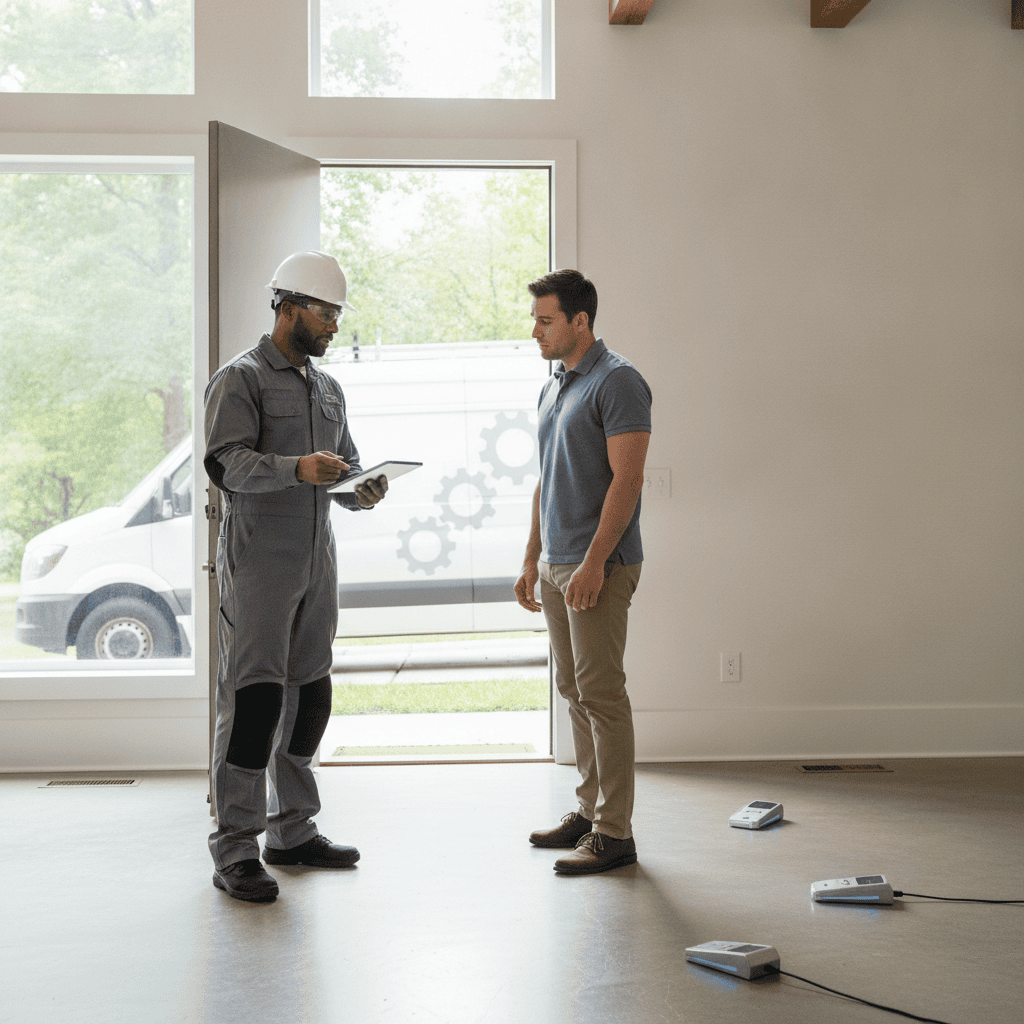
How do I choose a water restoration company after sudden damage?
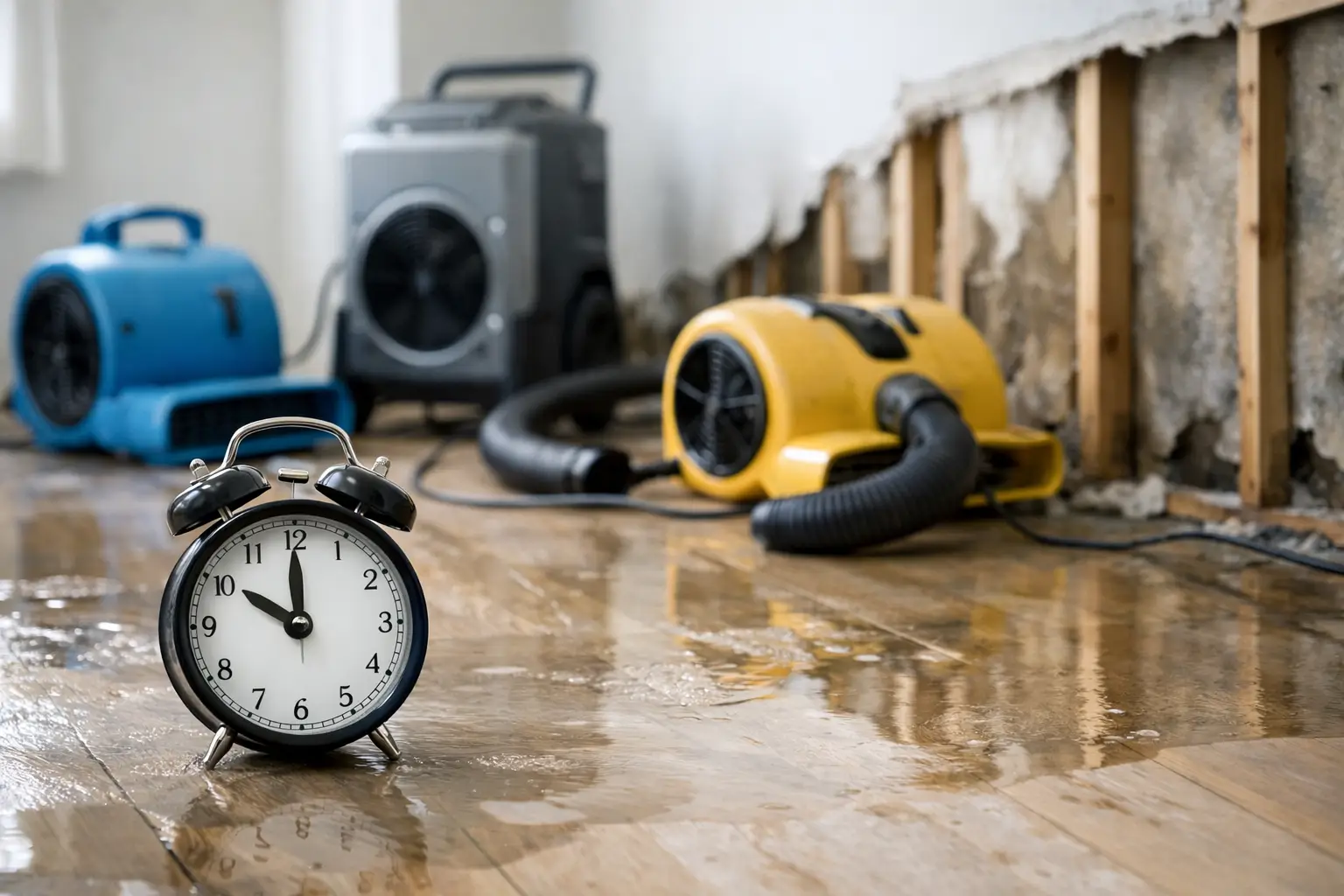
A water restoration company should stop the water, dry the structure, and reduce the chance of mold or hidden damage. Look for 24/7 response, IICRC-certified technicians, clear insurance communication, and one team that can handle extraction, drying, and reconstruction.
What does a water restoration company actually do?
A water restoration company handles the emergency, the drying, and the repair path after water enters a home. The work starts with stopping spread, then moves to moisture control, cleanup, and reconstruction planning so the problem does not quietly return as mold or structural damage.
This is where people usually get it wrong. They think the job is mopping up visible water. That is cleanup. Restoration is different. It is figuring out where moisture moved, what it soaked, what has to come out, and what can be dried and saved.
Good water restoration services are built around the sequence, not the symptom. First comes water extraction and source control. Then drying and dehumidification. Then inspection of materials that trap moisture, like insulation, trim, subflooring, and wall cavities.
If the damage also touched living spaces, contents, or a crawl space, the company should know how to document the loss, protect unaffected areas, and keep the home usable where possible. That matters because the hidden cost of water damage is not the puddle. It is the delay.
For Atlanta homeowners, the right call is usually whoever can respond quickly, explain the next move clearly, and manage the whole path instead of handing you off after the first truck leaves.
Emergency water removal to stop spread and reduce saturation
Drying equipment and moisture monitoring to target trapped water
Damage documentation for insurance and repair planning
Reconstruction when floors, walls, or finishes cannot be saved
One coordinated process instead of separate contractors for each stage
How do water restoration services differ from basic cleanup?
Water restoration services go beyond surface cleaning. Cleanup removes what you can see. Restoration deals with what water has already done inside the structure, and that difference is the one most homeowners pay for later when they choose the cheapest-looking option.
A towel and a fan may make a room look better for a day. That does not mean the wall cavity, subfloor, or insulation is dry. Water follows the path of least resistance, and the path usually goes deeper than the visible stain.
Restoration services use the right tools to find hidden moisture and dry it in a controlled way. That can include extraction, air movement, dehumidification, and removal of materials that cannot be brought back safely. It is a technical process, not a janitorial one.
If the incident involved a burst pipe, flooding, or a sewer backup, the stakes are even higher. You are not just dealing with wet materials. You are dealing with sanitation, odor, and health concerns that require the right remediation approach.
This is also why homeowners end up frustrated with fragmented help. One person dries the floor, another quotes repairs, and nobody owns the full result. A proper water restoration company is built to prevent that handoff gap.
Cleanup is visible; restoration is structural
Drying has to reach concealed cavities, not just the room surface
Contaminated water needs a different response than clean supply-line leaks
Repairs may be needed after the structure is stabilized
The whole point is preventing secondary damage, not just making the room look better
Is water restoration near me really about speed, or something else?
Speed matters, but not by itself. When people search for water restoration near me, they usually want the closest available crew, yet the real win is fast arrival plus the ability to assess, dry, document, and coordinate the next step correctly.
Near-me searches are a signal of urgency. The house is wet, and the homeowner wants help now. That part is obvious. The less obvious part is that quick arrival only helps if the team knows how to triage the damage instead of guessing.
The map pack is not your house. A contractor can be nearby and still be the wrong fit if they are weak on documentation, lack IICRC-certified technicians, or only handle part of the restoration process. The right choice should solve the entire problem, not just answer the phone.
In Atlanta, local coverage matters because storm patterns, basement moisture, crawl spaces, and older building assemblies can create different drying and repair needs. Nearby is good. Prepared is better.
The better question is not just who is close. It is who can respond quickly, explain the scope, and manage the path from extraction to final construction without wasting time.
Near-me searches usually mean the homeowner needs emergency help immediately
Fast arrival only matters if the company can assess and act correctly
Local knowledge helps with basements, crawl spaces, and storm-related damage
IICRC-certified technicians add credibility to the drying and remediation process
A single point of contact reduces confusion during a stressful loss
Elevated Operations provides 24/7 water, fire, mold, storm, and sewage damage restoration across Metro Atlanta.
Get a free quoteWhich signs mean you need water mitigation right now?
If water is still present, materials are swelling, or the home smells damp, you are already in mitigation territory. Water mitigation is the urgent step that keeps the problem from spreading while the full restoration plan is built.
The mistake is waiting for obvious failure. By the time paint bubbles, baseboards swell, or a ceiling stain expands, moisture has often already moved farther than you think. The emergency response should begin before the damage becomes dramatic.
Water mitigation usually focuses on stopping the source, removing standing water, and stabilizing the property. That is especially important after burst pipe water damage repair situations, basement flooding, or a leak that has run for hours before anyone noticed.
If there is contamination, the response changes. Sewage backup, storm intrusion, and long-standing moisture can all create safety concerns that are not handled the same way as a clean water event. This is where a capable restoration contractor earns its keep.
The key idea is simple: mitigation buys back control. Without it, every hour increases the amount of material that may need to be removed and replaced.
Standing water or repeated puddling after cleanup
Swollen flooring, trim, or drywall
Musty or damp odors that do not go away
Moisture near crawl spaces, cabinets, or wall cavities
Water intrusion that may also involve sewage or storm contamination
Can one company handle reconstruction after the drying is done?
Yes, and that is often the smarter path. Once the structure is dry, reconstruction restores what had to come out, from damaged drywall and flooring to finish work, so you are not managing a second contractor search while the first loss is still unresolved.
This is where many homeowners lose time. The drying ends, then the real scramble begins because now you need a separate builder who understands what was removed, what remains, and what the insurance scope allows. That extra handoff can slow everything down.
A company that also handles reconstruction can keep the project aligned from the start. That matters because remediation and rebuild are not separate universes. They are parts of the same restoration story, and the sequence has to make sense.
If the damage touched multiple rooms, a crawl space, or contents, a one-stop model can reduce confusion. It also helps with paperwork, photos, and scope consistency, which is exactly where claims become annoying for homeowners.
The ideal outcome is not just dry. It is restored to usable condition without making you coordinate three different vendors who all claim the last step belongs to somebody else.
Reconstruction replaces what could not be saved after drying
One team keeps scope and documentation more consistent
Less homeowner coordination during an already stressful loss
Useful when walls, floors, or trim must be rebuilt
Better continuity from emergency response through final finish work
Why IICRC-certified technicians matter in a water damage job
IICRC-certified technicians matter because water damage is not guesswork. Certification signals that the team understands moisture control, drying principles, and remediation standards instead of relying on whatever seemed to work last time.
Homeowners do not need jargon. They need confidence that the people in the house know the difference between drying a room and drying a structure. That is where training matters more than a pretty van wrap or a generic contractor promise.
Certification is especially relevant when hidden moisture, contamination, or mixed damage is involved. A tech who understands the process is less likely to stop too early, miss a wet cavity, or treat a sewage issue like ordinary cleanup.
It also matters for communication. Certified teams tend to understand documentation, scope clarity, and the chain from emergency work to rebuild. That reduces friction when insurance is involved and the homeowner needs the file to make sense.
In a market full of broad contractors, the real differentiator is not noise. It is competence under pressure.
Training supports better drying and mitigation decisions
Certified crews are less likely to miss hidden moisture
Documentation is usually cleaner when the process is understood
Useful when insurance, contamination, or reconstruction is involved
Technical knowledge reduces the risk of repeat damage
What should you compare before booking a water restoration company?
Compare the response model, the scope of services, and how clearly the company handles the aftermath. If a contractor cannot explain the process in plain English, you are probably the one who will pay for the confusion later.
The first filter is availability. Water damage does not pause for your schedule, so a real restoration company should offer emergency response, not just office hours and a voicemail. Then check whether they can handle extraction, drying, cleanup, and repairs in one chain.
Next, look at how they treat the insurance side. Direct claim management can save a homeowner a lot of back-and-forth because the documentation, scope, and invoicing have to line up. That is not extra fluff. It is part of the job.
Also pay attention to the practical stuff people ignore until they regret it: local coverage, technician credentials, reconstruction capability, and whether the company has the systems to keep you informed. That is how you avoid the slow drift from emergency to unresolved project.
If you are comparing options in Atlanta, the strongest choice is usually the one that removes the most uncertainty while staying available when the damage happens.
24/7 emergency response and practical arrival speed
Ability to handle drying, mitigation, and reconstruction
Clear insurance communication and documentation
Local Atlanta metro coverage, including surrounding communities
Technician training and accountability, not vague marketing claims
When to call a water restoration company versus waiting it out
| Situation | What to do | Why |
|---|---|---|
| Water is visible on floors, walls, or ceilings | Call for immediate water mitigation and inspection | Visible water often means hidden spread, and delay increases the amount of material that may need removal. |
| A musty odor shows up after the leak seems gone | Request drying and moisture verification | Odor often means trapped moisture remains in cavities, insulation, or subfloors. |
| Drywall, trim, or flooring is swelling or warping | Bring in a restoration team before more demolition is needed | Swelling is a sign the material has already absorbed enough moisture to fail. |
| The event involves sewage, floodwater, or storm intrusion | Use a company that handles remediation and restoration together | Contaminated water needs a different safety and cleanup approach than a clean supply-line leak. |
Doing it yourself vs bringing in Elevated Operations
| Doing it yourself | With Elevated Operations | |
|---|---|---|
| Initial response | You may mop, run fans, and hope the problem stays small, but hidden moisture is easy to miss. | We respond 24/7 and move into water extraction, drying, and mitigation as a structured process. |
| Damage assessment | You are guessing how far water traveled inside walls, flooring, and crawl spaces. | IICRC-certified technicians assess the loss and look for hidden moisture before the problem grows. |
| Insurance coordination | You handle photos, notes, and back-and-forth while trying to keep the house livable. | We help manage the claim process and provide documentation that supports the restoration scope. |
| Repair and rebuild | You still need separate help if flooring, drywall, or other finishes have to be replaced. | We offer reconstruction as part of the restoration path, so the project stays in one line from start to finish. |
Frequently Asked Questions
What is the first thing a water restoration company should do?
The first job is to stop the spread. That usually means finding the source, removing standing water, and stabilizing the affected area so moisture does not keep moving into walls, flooring, or adjacent rooms. After that, the company should assess what can be dried and what has to come out.
What does water restoration services include beyond extraction?
Water restoration services typically include drying, dehumidification, moisture monitoring, cleanup, documentation, and sometimes reconstruction. If the water came from a contaminated source or has been sitting long enough to affect building materials, the scope may also include remediation and removal of unsalvageable contents.
How do I know if I need a local company instead of a general contractor?
If the problem is active water damage, you usually need a restoration company first. A general contractor is often better for rebuild only after the property is dry and stabilized. Restoration is about controlling the damage now, not just repairing the visible finish later.
Can insurance help with the cost of water damage restoration?
Often, yes, but coverage depends on the cause of loss and your policy. The cost can vary widely based on how much water spread, what was affected, and whether reconstruction is needed. The best next step is to book a call for a free quote so the scope can be evaluated properly.
Why should I consider Elevated Operations for a water damage emergency?
If you want one company to handle the emergency response, drying, insurance communication, and reconstruction, Elevated Operations is built for that flow in the Atlanta metro area. The team offers 24/7 service, IICRC-certified technicians, and a free quote so you can act before the damage gets worse.
Get a free, no-obligation restoration estimate
Elevated Operations provides 24/7 water, fire, mold, storm, and sewage damage restoration across Metro Atlanta.
Get a free quoteCall (770) 404-6895Last updated September 20, 2026