
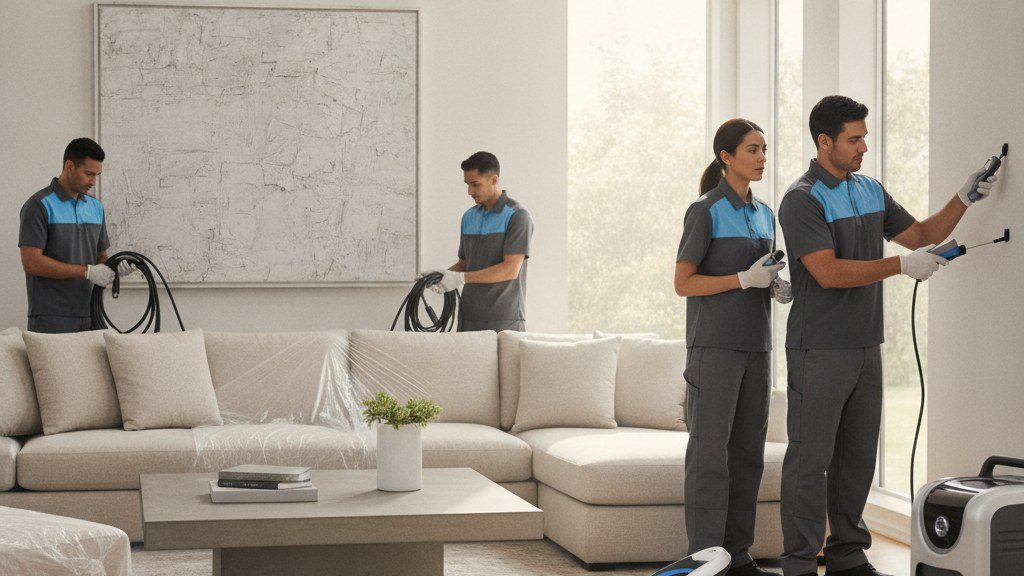
How do I find mold cleanup near me after water damage?
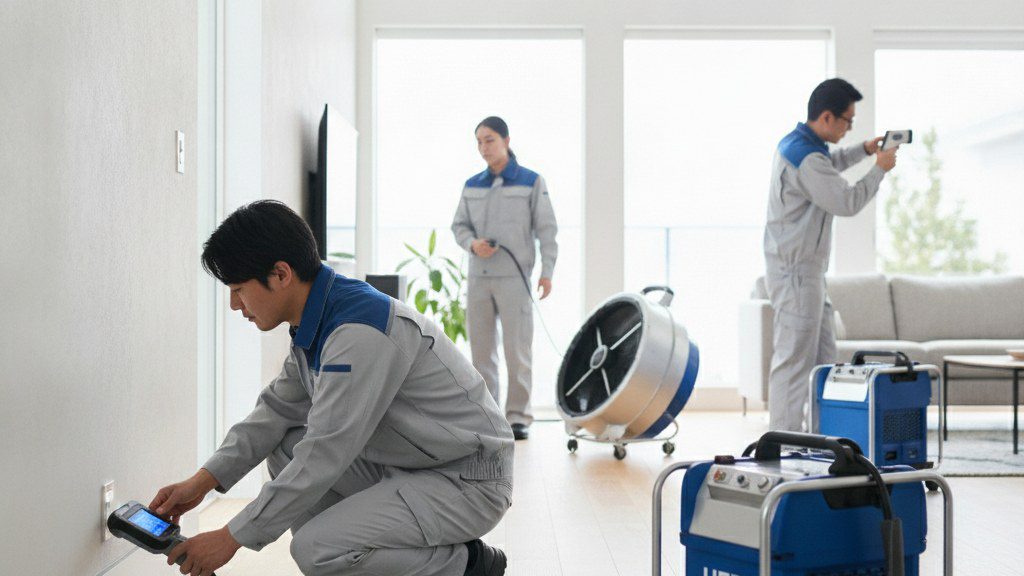
Mold cleanup near me means fast local inspection, moisture control, safe containment, and removal of the source so mold does not keep coming back. The real fix is not just wiping visible growth. It is stopping the water problem, drying the structure, and cleaning affected areas the right way.
What does mold cleanup near me actually mean after a leak?
It means you are not just looking for someone to wipe a wall. You are looking for someone who can find the moisture path, contain the affected area, remove what cannot be saved, and dry the structure before mold spreads farther.
In practice, a local mold cleanup search usually starts after a leak, overflow, burst pipe, or flood leaves the property damp longer than it should. The visible spot is rarely the whole story. Mold tends to follow the wet path behind drywall, under flooring, or into a crawl space.
That is why the phrase near me matters. You are not shopping for generic cleaning. You need a crew that can get there quickly, inspect the damage, and move from assessment to remediation before the problem migrates into more rooms.
A real mold cleanup service is tied to moisture control. Remove the growth, yes. But also locate the source moisture, dry the material, and decide what should be cleaned versus what should be removed and rebuilt.
For a homeowner, the useful question is not whether the stain looks small. It is whether the material stayed wet long enough for mold to take hold. That is the difference between a surface issue and a structural issue.
- Mold cleanup is about removal plus moisture control.
- Near me matters because response speed affects how far mold spreads.
- A mold cleanup service should inspect, contain, dry, and remediate.
- Hidden moisture is the reason surface cleaning fails.
- Water damage is often the trigger, not the mold itself.
How fast should a mold cleanup service respond after water damage?
Fast enough to stop the damp materials from becoming a larger claim, a larger repair, or a larger health concern. If water sat and the air got stale, the delay is already part of the damage.
This is where people get tripped up. They wait to see whether the smell goes away, and by then the moisture has already been feeding growth in places they cannot see. Speed is not a luxury in mold cleanup. It is part of the cure.
For a homeowner in Atlanta, the practical goal is rapid inspection and drying. If the property is still wet, or if humidity is trapped in a closed-up room, the response should focus on containment and source control before cleaning starts.
A good local process does not start with guessing. It starts with finding where the water went, identifying what materials absorbed it, and deciding what can be saved. That is the difference between a cleanup and a repeating problem.
Near me searches often come from people who are already behind. That is exactly why response matters. The longer the delay, the more likely the job grows from a small cleanup into demolition and reconstruction.
- Response speed affects how far the damage spreads.
- Drying is as important as removing visible mold.
- A local service can get eyes on the problem before it grows.
- Containment protects the rest of the home during cleanup.
- Delay is usually more expensive than prompt action.
Which parts of the home usually need mold cleanup after a burst pipe?
The short answer is the places that hold water or hide it. Drywall, flooring, baseboards, insulation, crawl spaces, and cabinets are common trouble spots because they trap moisture and let growth hide behind finished surfaces.
A burst pipe does not just wet one patch of carpet and stop there. Water follows gravity, wicks into porous materials, and often moves under trim or behind walls before you notice the smell. That is why cleanup needs a careful walkthrough, not a quick wipe.
Basements and crawl spaces deserve special attention because they can stay damp long after the surface looks dry. If air movement is poor, the moisture can remain trapped in framing, subflooring, or insulation and keep feeding mold growth.
Cabinets, vanity bases, and drywall near plumbing are also common problem areas. These materials can look intact while holding enough moisture to create a mold issue later. That is why inspection matters more than hope.
If the pipe break affected multiple rooms, the cleanup plan should separate salvageable materials from contaminated ones. Not everything is a loss, but pretending everything is fine is how homeowners end up with recurring odors and repairs.
- Burst pipes often affect more than the obvious wet spot.
- Porous materials can hold moisture after surfaces look dry.
- Crawl spaces and basements are common hidden-growth zones.
- Inspection should identify what can be saved and what cannot.
- A cleanup plan should follow the water path, not the paint line.
Elevated Operations provides 24/7 water, fire, mold, storm, and sewage damage restoration across Metro Atlanta.
Get a free quoteCan mold cleanup in Atlanta include drying, removal, and reconstruction?
Yes, and that is usually the sane way to handle it after a real water event. Cleanup alone is only one piece. If the damaged materials need to come out, the job has to move into rebuilding the affected area too.
This is where a lot of property damage jobs get messy. A homeowner thinks they need mold cleanup, but the real issue is a wet structure with damaged finishes. If the wall cavity, flooring, or cabinet base is compromised, cleanup has to be paired with removal and rebuild.
That is why one-stop restoration matters in a city like Atlanta, where storms, plumbing failures, and humidity all stack the deck. Drying stops the spread. Removal clears damaged materials. Reconstruction puts the room back together correctly.
You do not want a contractor who only wants the easy part. The easy part is spraying a surface and leaving the rest alone. The useful part is finishing the job so the area is safe, dry, and usable again.
If you are comparing providers, ask whether they can handle the project from mitigation through reconstruction. A fragmented handoff often means delays, duplicate explanations, and more chances for something to slip through the cracks.
- Cleanup, drying, and reconstruction often belong in the same project.
- Damaged materials may need removal before rebuilding can begin.
- One coordinated workflow is easier on the homeowner.
- A partial fix can leave hidden moisture behind.
- The goal is a dry, safe room, not just a cleaner surface.
What should you ask before hiring for mold cleanup service?
Ask the questions that reveal whether the company understands moisture, containment, and the full repair path. If they dodge those, you are not talking to a remediation specialist. You are talking to someone who hopes the problem stays small.
Start with the basics: what caused the mold, how will they contain it, and what will they do about the source moisture. If the answers are vague, the cleanup will probably be vague too. That is the expensive mistake people make when they are stressed.
You also want to know whether the team can handle the follow-through. In mold cleanup, the quality of the inspection and the plan matters as much as the cleanup itself. If they cannot explain why a material should be removed or dried, keep looking.
For Atlanta homeowners, local availability matters as well. A provider that can get there quickly and document the damage clearly is much easier to work with, especially when insurance enters the picture. That paperwork is not optional when the loss gets bigger.
Ask about credentials, too. IICRC-certified technicians matter because this work is technical, not decorative. The right team understands containment, drying, and remediation as a sequence, not a guess.
- Good questions reveal whether the company understands source control.
- Containment and drying are not extras; they are core steps.
- IICRC certification is a meaningful credential in this field.
- Insurance documentation can matter if the loss is larger.
- The best answer is specific, not salesy.
Why mold cleanup near me searches usually become insurance conversations
Because once water damage spreads, the paperwork starts following the damage. You are not just fixing a room anymore. You are documenting a loss, a source, and a scope that an adjuster may need to review.
This is one of those boring but important realities. The reason local homeowners search near me is often because they need help fast and they need someone who can speak the language of loss documentation. That is not glamorous. It is necessary.
A mold cleanup service that understands insurance can help keep the project organized. Photos, moisture findings, scope notes, and invoices matter when you are trying to show what happened and what had to be done. Without that trail, the process gets slower and more frustrating.
The mistake is assuming the cleanup and the claim are separate worlds. They are not. If the source was a burst pipe, leak, flood, or sewer issue, the restoration work and the insurance file usually move together.
This is where a local company with direct claim management support can make life easier. Not because they magically change the claim, but because they help keep the facts clear and the project moving.
- Insurance and restoration usually overlap after water damage.
- Good documentation helps support the cleanup scope.
- Local teams can move faster and keep records organized.
- Clear photos and notes help when the adjuster gets involved.
- The goal is fewer delays, not more back-and-forth.
When the problem looks minor but the moisture says otherwise
| Situation | What to do | Why |
|---|---|---|
| Musty smell even after wiping the visible spot | Get a moisture-focused inspection and dry the affected area before surface cleaning | Odor usually means damp material remains hidden behind finishes or inside cavities |
| Discoloration on drywall, trim, or cabinets after a leak | Check for spread behind the surface and remove unsalvageable material | Visible staining often points to a larger moisture path than the eye can see |
| Soft, swollen, or warped material | Treat it as damaged material, not a cosmetic problem | Warping usually means the product absorbed enough water to fail structurally |
| Crawl space or basement dampness after flooding | Address air flow, standing water, and affected insulation or framing | Below-grade spaces can keep feeding mold long after the surface seems dry |
Doing it yourself vs bringing in Elevated Operations
| Doing it yourself | With Elevated Operations | |
|---|---|---|
| Finding the source | You can spot the obvious wet area, but hidden migration behind walls or under flooring is easy to miss | We look for the source moisture and the damage path, then build the cleanup around that |
| Containment and cleanup | You may clean what you can see, but disturbing the area can spread contamination if you do not contain it correctly | We handle containment, removal, and mold remediation as part of one coordinated process |
| Drying and repair | Renting equipment and guessing at drying time is a hassle, especially if the damage reaches structural materials | We provide drying, restoration, and licensed reconstruction so the job does not stall between steps |
| Documentation and follow-through | You end up managing photos, notes, receipts, and contractor coordination while trying to fix the house | We can manage the restoration workflow and help keep the insurance side organized from start to finish |
Frequently Asked Questions
How do I know if I need mold cleanup or just a standard cleaning?
If the issue started after water damage, a standard cleaning is usually not enough. Mold cleanup is about removing growth and correcting the moisture problem behind it. If the area smells musty, has staining, or includes drywall, insulation, or cabinetry, you should treat it as a remediation issue, not a housekeeping issue.
What does a mold cleanup service usually include?
It usually includes inspection, containment, removal of damaged material when needed, cleaning of salvageable areas, drying, and planning for repair. The exact scope depends on what got wet, how long it stayed wet, and whether the source moisture has already been fixed. A good service should explain that clearly before work begins.
Can I stay in the house during mold cleanup?
Sometimes, but it depends on how much of the home is affected and whether containment is possible. If the damage is limited, you may be able to stay in unaffected areas. If the cleanup touches ventilation, bedrooms, or larger sections of the home, temporary relocation may be safer and more practical.
How much does mold cleanup cost?
There is no honest flat answer because the cost depends on the size of the affected area, the materials involved, and whether reconstruction is needed after removal. The practical next step is to book a call for a free quote so the scope can be reviewed and priced correctly.
Can Elevated Operations help if the mold came from a burst pipe or sewer backup?
Yes. If the mold started after water damage, you want a team that can handle the moisture source, cleanup, drying, and rebuild in one process. Elevated Operations serves the Atlanta metro area with restoration and reconstruction services, so you can book a call for a free quote and get the project moving.
Get a free, no-obligation restoration estimate
Elevated Operations provides 24/7 water, fire, mold, storm, and sewage damage restoration across Metro Atlanta.
Get a free quoteCall (770) 404-6895Last updated October 4, 2026