
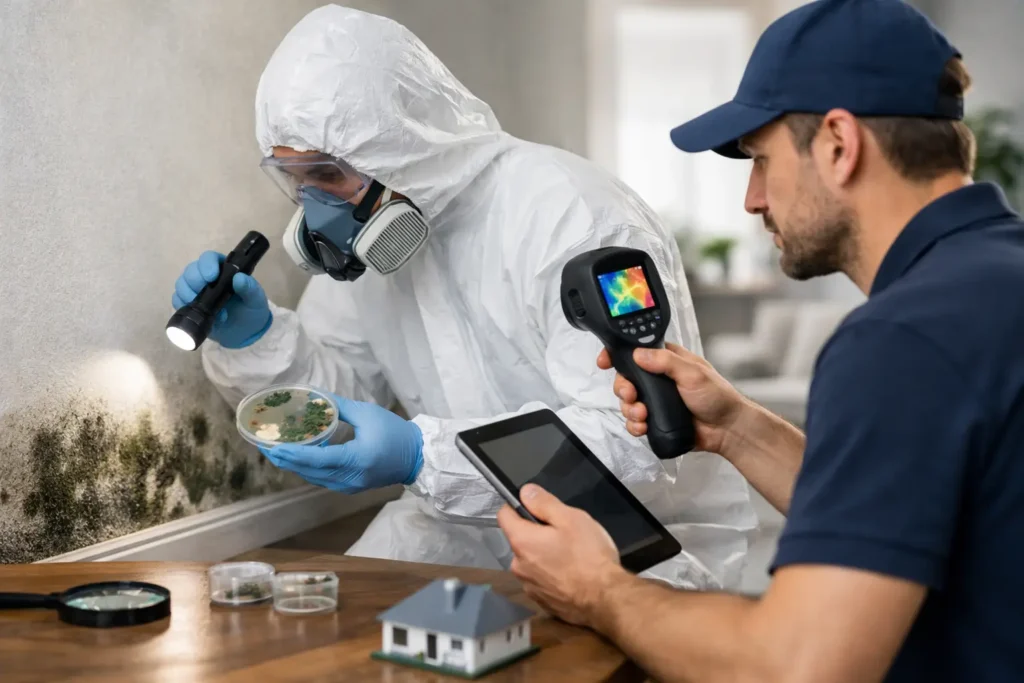
How do I choose a mold cleanup service after water damage?
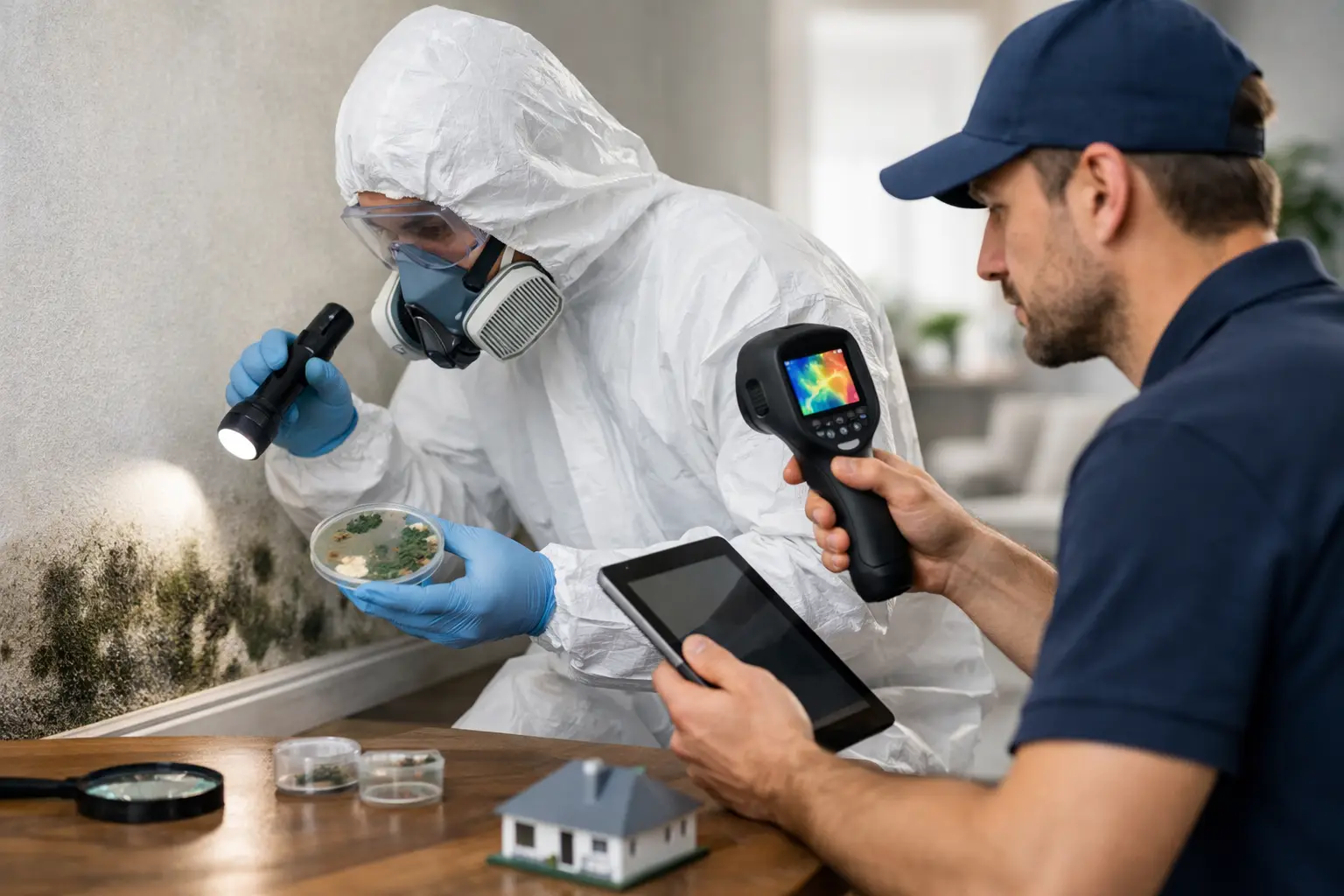
A mold cleanup service should remove the moisture source, contain affected areas, clean or remove contaminated materials, and verify the space is safe to use again. If you just spray and hope, mold comes back. The real fix is moisture control plus proper remediation, not a surface wipe-down.
What does a mold cleanup service actually cover?
A real mold cleanup service covers the wet source, the growth you can see, and the material you cannot safely keep. If someone talks only about scrubbing surfaces, they are skipping the part that matters most: why the mold started and what must come out for the home to be safe again.
The word cleanup is the trap. Homeowners hear it and think cleaning spray, maybe a fan, maybe some fogging. That is not a remediation plan. Mold cleanup in a water-damaged home means identifying what was wetted, what can be salvaged, and what has to be removed because the contamination got into porous material.
In practice, that often includes drywall, insulation, baseboards, carpet pad, subfloor areas, or items stored in a damp room. The surface stain is only a symptom. If moisture stayed long enough, the real issue is colonization inside or behind building materials, where a wipe-down will not solve anything.
A competent team also looks at airflow, humidity, and spread. Mold does not need much help to travel on dust, tools, or disturbed debris. That is why proper cleanup includes containment, negative pressure when needed, and cleaning steps that keep the rest of the property from becoming the next problem.
For a homeowner, the useful test is simple: does the plan remove the moisture source, remove contaminated materials where needed, and leave you with a dry, documented, usable space? If the answer is fuzzy, the work is not finished.
A mold cleanup service should address all of these points:
- Moisture first, because mold is a symptom of a wet building.
- Porous materials are often the real contamination reservoir.
- Containment protects the rest of the home during cleanup.
- Drying is not optional; it is part of the cleanup.
- A vague spray-and-seal approach usually misses hidden damage.
How do you tell if mold is tied to water damage or a hidden leak?
If the mold showed up after a leak, flood, burst pipe, or sewer issue, assume water damage is part of the story until proven otherwise. The smell, staining pattern, and material condition usually tell you more than the patch on the wall does.
This is where people waste time arguing with the visible symptom instead of tracing the cause. Mold after water damage is rarely random. It follows wet framing, soaked drywall, trapped insulation, saturated trim, or a crawl space that never dried out properly.
A hidden leak can keep feeding growth long after the first puddle is gone. That is why repeated spotting, soft drywall, peeling paint, warped flooring, or a persistent earthy smell are not just cosmetic issues. They are clues that water is still in the building assembly.
If the area was hit by sewage backup, the issue is more serious. Contamination is not just fungal growth. It can involve unsafe materials that need specialized cleanup and remediation. That is not a homeowner weekend project, and it should not be treated like one.
The right question is not, “Can I see mold?” It is, “What got wet, how long was it wet, and what did the water touch?” That is how you separate a surface problem from a structural one.
Common clues point to water-driven mold growth:
- The timing matters: mold after water damage is usually cause and effect.
- Persistent odor often signals hidden moisture, not just visible surface growth.
- Soft or warped building materials suggest deeper saturation.
- Sewage intrusion raises both contamination and safety concerns.
- A crawl space or basement often hides the first signs of trouble.
What should happen before any cleanup starts?
Before cleanup starts, someone has to find the source, document the damage, and decide what can stay and what must go. If you skip that planning step, you end up paying for cleaning twice, or worse, you keep the wet material in place and call it fixed.
The first mistake is rushing straight to demolition without understanding the scope. The second mistake is doing almost nothing because the room still looks usable. Both are expensive. A proper start means evaluating the affected area, mapping moisture, and making a containment and drying plan that matches the actual damage.
That early phase matters for insurance too. When the work is clear from the beginning, invoices, photos, and scope notes are easier to reconcile later. When nobody documents the source or the affected materials, the process turns into a fight over what happened and what has to be covered.
You also want the work to be done by technicians who understand restoration, not just generic cleaning. Mold cleanup connected to water damage is part cleanup, part drying, part reconstruction planning. If reconstruction will be needed, that has to be considered before materials are torn out in the wrong order.
The goal is not to act fast and guess. The goal is to act fast and be right. That is the difference between getting the home back and chasing the problem from room to room.
A proper pre-cleanup plan includes these steps:
- Documentation helps keep the restoration and insurance process organized.
- Scope first, demolition second, so the right materials come out.
- Containment decisions should match the spread of contamination.
- Drying and removal have to be coordinated, not treated as separate jobs.
- The wrong order creates rework and delays.
Elevated Operations provides 24/7 water, fire, mold, storm, and sewage damage restoration across Metro Atlanta.
Get a free quoteWhich materials can usually be cleaned, and which have to go?
Porous materials and mold do not negotiate. If the contamination got deep enough into drywall, insulation, carpet pad, or similar materials, cleaning may not be enough. The practical rule is simple: hard surfaces may be salvageable, porous materials often are not.
This is the part homeowners hate, because it feels wasteful. But mold cleanup is not about saving everything. It is about saving what is safe to save. Once mold growth and moisture penetrate deep into porous material, the structure can keep holding contamination even after the surface looks better.
Hard, non-porous surfaces often respond better to cleaning because they do not absorb as much moisture. Still, that does not mean every surface can just be wiped and reused. If contamination is heavy or the surface is damaged, it may still need removal or professional treatment to prevent spread.
The other thing people miss is hidden material. You may only see a stain on drywall, but the real problem sits behind it in insulation, framing, or a cavity that never dried. That is why an honest assessment beats a hopeful one. Hope is not a drying method.
If the issue came from sewage, the threshold changes again. Contaminated materials in that setting are treated more cautiously because the cleanup is not only about mold growth. It is about sanitation and safety as well.
Materials often treated differently during mold cleanup:
- Porous items usually hold contamination deeper than the eye can see.
- Hard surfaces are easier to clean, but not automatically safe to keep.
- Hidden cavities can be the real source of recurring odor.
- Sewage-affected materials require stricter handling.
- Contents should be judged separately from the structure.
Why do crawl spaces, basements, and bathrooms keep causing repeat mold?
Because those spaces are moisture traps. If air movement, drainage, or leak control is weak, mold cleanup becomes a recurring appointment instead of a one-time fix. The issue is often not the stain itself. It is the building condition that keeps feeding it.
Crawl spaces are notorious because they sit out of sight and often out of mind. If vapor barriers, drainage, or humidity control are poor, the environment stays friendly to mold even after a surface cleanup. Basements have a similar problem when seepage, floodwater, or poor drying leaves humidity trapped in the space.
Bathrooms are the other repeat offender. Constant moisture, small leaks, and poor ventilation can keep feeding growth around tubs, toilets, and sinks. A homeowner might clean the visible spot ten times and still lose the battle because the real source is behind the wall or under the floor.
The lesson is annoying but useful. Recurrence usually means the environment was never corrected. You cannot out-clean ongoing moisture. That is why proper restoration looks at airflow, drainage, insulation, and hidden plumbing, not just the visible growth line.
If a space keeps getting moldy, the question changes from “How do I clean it again?” to “Why is this area staying wet?” That is the smarter, cheaper, less frustrating question.
Repeat-problem areas usually need attention to these factors:
- Recurring mold usually points to an unresolved moisture condition.
- Crawl spaces and basements need environmental control, not spot cleaning.
- Bathrooms often hide small leaks that become bigger damage.
- Ventilation and drainage matter as much as surface treatment.
- If the source stays active, the cleanup stays temporary.
How does a proper mold cleanup service fit into insurance and reconstruction?
The cleanup itself is only half the job when water damage starts the mold. If materials are removed, documentation matters. If walls or flooring have to be rebuilt, reconstruction has to follow in the right sequence so the home is actually put back together correctly.
This is where a lot of homeowners get stuck. They find a cleaner or a handyman, but the work crosses into restoration, insurance paperwork, and rebuild coordination. Now there are photos to gather, scope notes to understand, and a decision about whether the damaged area can be repaired or must be reconstructed.
A proper restoration process keeps the chain intact. That means the affected area is assessed, the cleanup scope is documented, the drying and remediation work is completed, and then reconstruction happens where needed. When all of that is handled as one flow, the homeowner is not forced to coordinate multiple vendors who do not talk to each other.
Insurance does not remove the need for good judgment. It just raises the cost of doing the wrong thing. If the scope is poorly defined, homeowners can end up with delays, disputes, or missing work. If it is documented well, the process is much easier to manage.
For a customer, the practical benefit is simple. You want one team that understands the damage, the cleanup, and the rebuild path, instead of piecing together a response after the mold has already spread.
Good restoration coordination usually includes these elements:
- Cleanup and reconstruction often belong in the same workflow.
- Good documentation reduces confusion later with insurance.
- Multiple vendors can create delays if nobody owns the full scope.
- The goal is to return the home to usable condition, not just remove stains.
- Rebuild planning should happen before demolition gets ahead of the project.
When the cleanup needs more than a quick wipe
| Situation | What to do | Why |
|---|---|---|
| The mold came after a burst pipe, leak, flood, or sewer backup. | Trace and stop the moisture source, then remove and dry affected materials. | If the water problem is still active, the mold problem stays active too. |
| The smell is musty even after cleaning visible spots. | Check for hidden moisture behind walls, under flooring, or in a crawl space. | Odor often means the source is still trapped inside the building assembly. |
| Drywall, insulation, carpet pad, or trim feels soft, swollen, or damp. | Evaluate what can be salvaged and remove what is contaminated beyond cleaning. | Porous materials can hold growth deep inside and keep spreading contamination. |
| The same room keeps growing mold again and again. | Inspect ventilation, drainage, plumbing, and humidity conditions, not just the stain. | Repeat growth usually means the environment is still favorable to mold. |
Doing it yourself vs bringing in Elevated Operations
| Doing it yourself | With Elevated Operations | |
|---|---|---|
| Finding the real source | You may see the spot, but hidden moisture behind walls or under floors is easy to miss. | We look at the water damage first so the cleanup plan matches the actual problem. |
| Containment and cleanup control | A home cleanup can spread dust or spores into clean rooms if the work area is not isolated. | Our process is built to control spread while the affected area is remediated. |
| Drying and reconstruction | You have to coordinate drying, removal, and repairs yourself, which gets messy fast. | We handle the restoration flow from emergency response through reconstruction when needed. |
| Insurance communication | You are stuck gathering photos, scopes, and paperwork while also dealing with the loss. | We help manage the claim-side process so the job does not stall on paperwork. |
Frequently Asked Questions
Do I need mold cleanup service if I only see a small spot?
A small visible patch can still point to a larger moisture problem behind the surface. If the area was wet, the stain returns, or there is a musty smell, the safe move is to have it assessed before it spreads into nearby materials.
How long can water sit before mold becomes a concern?
There is no useful comfort zone once water gets into building materials. The real concern is whether drywall, insulation, flooring, or hidden cavities stayed wet long enough to support growth. If you are unsure, treat it as a mold cleanup issue and book a call for a free quote.
Will cleaning kill all mold and fix the problem?
Not if the moisture source is still there. Surface cleaning may improve what you can see, but proper cleanup has to include source control, containment, removal of unsalvageable materials, and drying. Otherwise the mold can come back.
What if the damage involves a basement, crawl space, or sewer backup?
Those situations deserve more caution because they often involve hidden moisture, wider spread, or contamination beyond simple surface growth. A proper restoration plan should assess the full area and decide what needs cleanup, removal, or reconstruction before the problem expands.
How much will this cost?
Cost depends on the source of water, the amount of material affected, and whether reconstruction is needed after cleanup. The honest next step is to book a call for a free quote so the scope can be reviewed in your specific home. Elevated Operations can help with that assessment in Metro Atlanta.
Get a free, no-obligation restoration estimate
Elevated Operations provides 24/7 water, fire, mold, storm, and sewage damage restoration across Metro Atlanta.
Get a free quoteCall (770) 404-6895Last updated September 14, 2026