
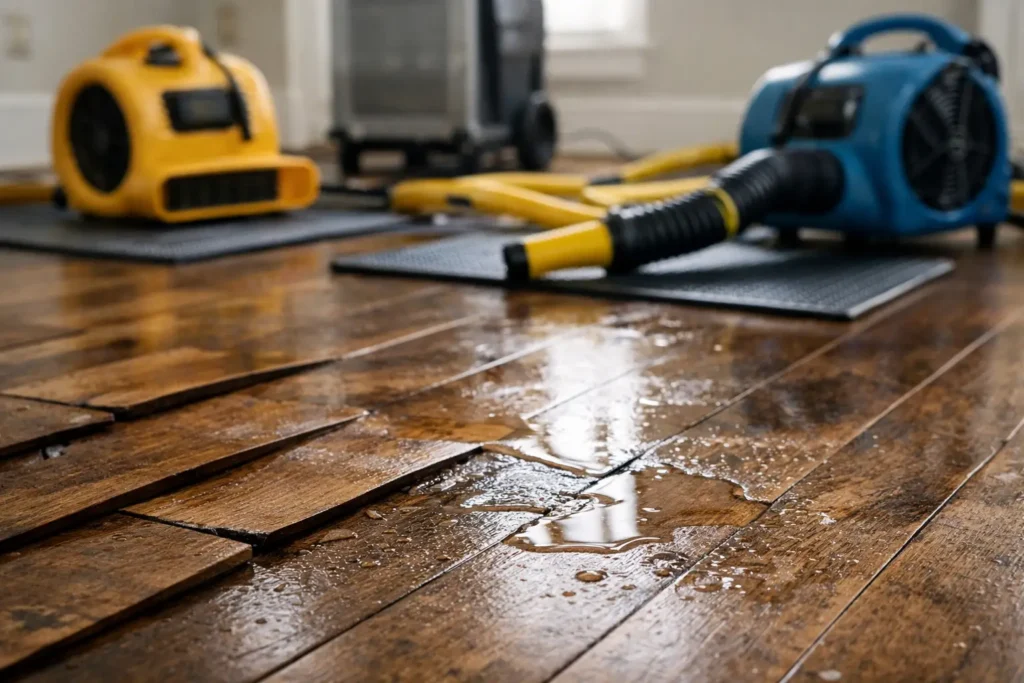
A wet hardwood floor can look manageable for the first few hours, then begin to cup, separate, stain, or lift as moisture works beneath the surface. Hardwood floor drying is not simply a matter of placing a few fans in the room. The goal is to remove water quickly, measure moisture accurately, and dry the flooring assembly without causing additional stress to the wood.
Whether the source is a burst pipe, appliance leak, overflowing toilet, roof intrusion, or flooded lower level, time matters. Fast action can preserve flooring that might otherwise need to be removed, reduce the chance of mold growth, and protect the subfloor and surrounding walls from hidden damage.
Why Hardwood Floor Drying Requires a Different Approach
Wood absorbs moisture unevenly. When the underside of a board becomes wetter than the finished surface, the edges may rise higher than the center. This is known as cupping. If the top of the board becomes wetter or if drying happens too aggressively, the center can rise instead, creating crowning. Boards can also swell against one another, push upward, loosen from fasteners, or develop gaps later as they dry.
That is why a floor that looks dry can still be at risk. Water may be trapped under the boards, inside the subfloor, beneath baseboards, or in adjacent wall cavities. A restoration professional uses moisture meters and, when appropriate, thermal imaging to identify where moisture remains and to compare wet materials with unaffected areas of the property.
The right drying plan depends on the flooring type, the amount of water, how long it was present, and what lies below the wood. Solid hardwood can sometimes be dried and refinished successfully. Engineered hardwood may be more vulnerable to delamination, especially when water reaches the plywood layers. Laminate flooring generally does not recover well after significant water exposure because its core can swell and break down.
What to Do Immediately After a Leak or Flood
First, stop the source of water if it is safe to do so. Shut off the supply valve for an appliance or fixture, or turn off the home’s main water supply if a pipe has failed. If water is near electrical outlets, appliances, or a breaker panel, stay out of the area until it can be assessed safely.
Move rugs, furniture, and loose items off the floor. Rugs hold moisture against wood and can leave dye transfer or uneven discoloration. Place furniture legs on protective blocks or remove the furniture from the affected room if possible. Do not drag heavy pieces across wet boards, since swollen wood is easier to scratch and dent.
Use towels or a wet vacuum to remove standing water from the surface, but avoid soaking the floor further with mops or cleaning solutions. If the water came from a sewer backup, toilet overflow containing waste, or outdoor flooding, do not attempt cleanup yourself. Contaminated water requires controlled removal, cleaning, and sanitization to protect occupants and prevent cross-contamination.
Avoid the urge to blast the room with high heat. Cranking up the thermostat, using space heaters, or aiming uncontrolled heat at a wet floor can cause the surface to dry much faster than the material below it. That imbalance can increase cracking, checking, and warping. Controlled drying is faster in the ways that matter because it removes moisture from the entire assembly, not just the visible surface.
How Professional Hardwood Floor Drying Works
Effective drying starts with documentation and inspection. Technicians identify the source, determine the category of water involved, photograph conditions, and create a moisture map. This establishes the affected area and provides the documentation insurers often need to evaluate mitigation work.
Next comes extraction. Removing liquid water is more efficient than trying to evaporate it. Commercial extraction equipment, weighted extraction tools, and specialized floor-drying systems can pull water from seams and from beneath certain floor coverings. Baseboards may need to be removed so trapped moisture can escape and wall materials can be checked.
After extraction, the drying environment is controlled with air movement, dehumidification, and measured temperature management. For hardwood floors, professionals may use a drying mat or panel system that creates negative pressure across the floor surface. This can draw moisture upward through the wood and reduce moisture beneath the boards without immediately removing the entire floor.
Drying equipment is not set and forgotten. Moisture readings should be monitored regularly. The objective is to bring the affected floor and subfloor back toward an appropriate moisture content relative to unaffected materials and local conditions. In Metro Atlanta, humidity can complicate drying, particularly during warm, wet stretches of the year. Dehumidification is often just as critical as airflow.
Can Water-Damaged Hardwood Be Saved?
Sometimes, yes. A floor may be a strong candidate for drying when water was addressed quickly, contamination is not present, boards remain securely attached, and moisture has not severely affected the subfloor. Even if light cupping appears, the floor may flatten as it reaches equilibrium. Refinishing should wait until moisture readings show the wood has stabilized. Sanding too early can permanently damage boards that are still moving.
Removal may be necessary when boards have buckled several inches off the subfloor, adhesive has failed extensively, engineered layers are separating, or contaminated water has saturated the flooring. Severe subfloor swelling, microbial growth, and long-term staining can also make replacement the more reliable option.
There is a trade-off worth understanding: removing flooring immediately may feel decisive, but it can add avoidable reconstruction cost if the material was recoverable. Waiting too long while hidden moisture remains can turn a repairable event into a replacement project. Accurate moisture data helps make that decision based on conditions rather than guesswork.
Common Mistakes That Make Floor Damage Worse
The most common mistake is waiting to see whether the floor dries on its own. By the time cupping or buckling becomes obvious, moisture may have been affecting the subfloor for days. Another mistake is relying on household fans without dehumidification. Fans can move moist air around the room, but they do not remove water vapor from it.
Property owners also sometimes cover a wet area with rugs, plastic, or furniture to make the room usable. This traps moisture and slows drying. Turning off the HVAC system can create a similar problem because air conditioning often helps reduce indoor humidity. Keep the system operating normally unless an HVAC professional or restoration technician tells you otherwise.
Finally, do not assume the visible wet spot marks the full extent of damage. Water can travel under flooring, along framing, and beneath cabinets or walls. A moisture inspection is especially valuable after an upstairs leak, dishwasher failure, refrigerator line leak, or water intrusion near exterior doors.
Insurance Documentation and the Next Steps
For a covered sudden water loss, prompt mitigation can protect both the property and the claim. Take photos before moving items when it is safe, save damaged materials if advised, and record the date, time, and apparent source of the loss. Contact your insurance carrier, but do not delay emergency extraction and drying while waiting for an adjuster.
A qualified restoration team can provide moisture records, equipment logs, photographs, and a clear scope of work. That documentation helps explain why drying was necessary and whether later repairs involve flooring, subfloor replacement, drywall, baseboards, or reconstruction. It also gives landlords, investors, and commercial property managers a clear record of what happened and what was done to limit the loss.
Elevated Operations responds to water emergencies across Metro Atlanta with certified technicians, commercial drying equipment, moisture mapping, and support from initial mitigation through reconstruction. The priority is simple: protect what can be saved, document what cannot, and keep the recovery moving without leaving you to coordinate multiple contractors.
If water reaches hardwood, treat the floor as a time-sensitive building material, not just a wet surface. Quick extraction, measured drying, and informed repair decisions give the wood its best chance to recover and give you a clearer path back to a safe, usable property.