
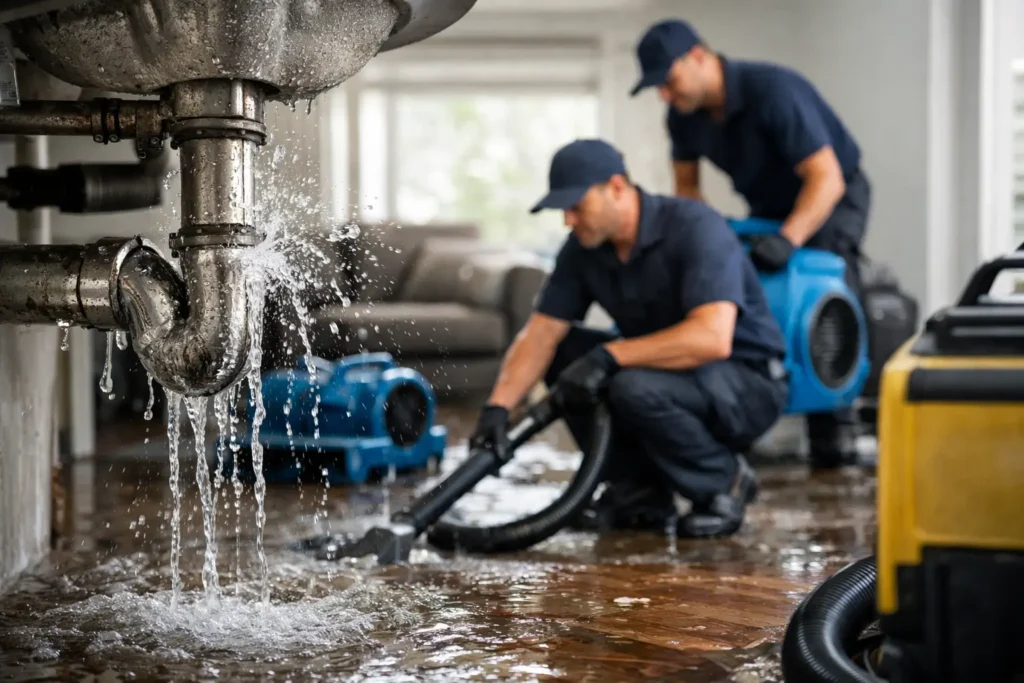
A burst pipe can turn a finished basement, office suite, or rental property into an active loss in minutes. A professional burst pipe cleanup service is not simply about removing visible water. It is about stopping further damage, finding where moisture traveled, protecting materials that can be saved, and creating a documented path to repairs and insurance recovery.
For Metro Atlanta property owners, timing matters especially during freezes, vacant-property leaks, and overnight plumbing failures. Water does not stay where it first appears. It moves beneath flooring, into wall cavities, through insulation, and along framing. The goal is to take control early, before a manageable plumbing emergency becomes a larger structural or mold problem.
What to Do Before the Cleanup Crew Arrives
Safety comes first. If water is near electrical outlets, appliances, a breaker panel, or exposed wiring, stay out of the affected area until it can be assessed safely. Do not walk through standing water in a commercial space or lower level if you cannot see what is underneath it.
If you can reach the main water shutoff without entering a hazardous area, turn off the water supply. Then call a licensed plumber to stop the source and a restoration company to address the damage. These are related jobs, but they are not the same job. The plumber repairs the pipe. The restoration team manages the water, moisture, damaged materials, documentation, and drying process.
Move lightweight valuables, electronics, and important papers away from the wet area if it is safe to do so. Avoid using a household vacuum, turning on ceiling fans beneath a wet ceiling, or pulling up flooring without guidance. Those well-meant actions can create safety risks or make it harder to determine how far the water spread.
Take a few photos or videos before cleanup begins. Capture the broken pipe if visible, the water source, affected rooms, and damaged belongings. This initial record can help support an insurance claim. After that, focus on getting qualified help on site quickly rather than spending hours trying to document every detail.
What a Burst Pipe Cleanup Service Should Include
Real recovery begins with an inspection, not a guess. Water can be obvious on tile or concrete, but hidden moisture is often the bigger concern. Certified technicians use moisture meters, thermal imaging, and other diagnostic tools to identify wet drywall, flooring assemblies, insulation, and framing that may look dry at the surface.
Water extraction and stabilization
The first priority is to remove standing water and limit additional absorption. Commercial extraction equipment removes water from floors, carpeting, padding, and other affected materials far more effectively than towels or consumer-grade wet vacuums.
Depending on the source and how long the water was present, technicians may also remove materials that cannot be safely or realistically dried. Wet carpet padding, swollen laminate, saturated insulation, and compromised drywall are common examples. The decision should be based on moisture readings, material condition, contamination risk, and the potential cost of leaving hidden water behind.
Controlled structural drying
Extraction alone does not finish the job. Materials continue holding moisture after the surface water is gone, especially wood framing, drywall, subfloors, cabinets, and insulation. A proper drying plan uses air movers, dehumidifiers, and targeted airflow to bring those materials back to acceptable moisture levels.
Drying equipment should not be placed randomly. The number of units, their placement, and the need for containment depend on the size of the affected area, the materials involved, humidity levels, and whether moisture has entered concealed spaces. Daily monitoring gives the team a chance to adjust the drying plan and confirm measurable progress.
Moisture mapping and documentation
A burst pipe claim is easier to manage when the work is documented from day one. Moisture maps show where water traveled and help explain why drying equipment, selective demolition, or repairs were necessary. Photos, readings, equipment logs, and itemized scopes can also support communication with insurance adjusters.
This documentation protects the property owner as much as the restoration provider. It creates a clear record of conditions before, during, and after mitigation, rather than relying on assumptions once walls have been closed and flooring has been replaced.
Why Hidden Moisture Changes the Recovery Plan
The biggest mistake after a burst pipe is treating visible dryness as proof that the structure is dry. A floor can feel dry while moisture remains trapped beneath it. A wall can look normal while insulation behind it is saturated. A ceiling stain may indicate water traveled much farther than the room directly below the pipe break.
That is why some projects require small, controlled openings in drywall or baseboards. It can feel counterintuitive to remove material that appears mostly intact, but selective access may prevent broader demolition later. The trade-off is simple: a limited opening now can allow proper drying and verification, while closing in wet materials can lead to odors, deterioration, or mold growth.
Not every burst pipe requires extensive tear-out. A clean-water pipe break discovered quickly on nonporous flooring may be dried with minimal material removal. A leak that ran for days inside a wall, affected engineered flooring, or involved a vacant property will usually require a more involved response. The conditions determine the plan.
Clean Water Does Not Always Stay Clean
Water from a supply line is generally considered clean at the point of release. But the classification can change as it travels through a building. Water that sits for an extended period, runs across dirty surfaces, contacts sewage, or enters heavily contaminated areas requires a different level of care.
This matters in rentals, commercial buildings, basements, and properties with delayed discovery. A restoration team should assess the water source, duration, affected materials, and contamination concerns before deciding what can be cleaned and what needs to be removed. Fast action improves the odds of saving materials, but safety and proper remediation must come before saving every surface.
Coordinating Insurance and Repairs Without Extra Delays
The days after a pipe burst can become frustrating when mitigation, insurance communication, and reconstruction are handled by separate companies with different timelines. A one-stop recovery partner can reduce that friction by carrying the project from emergency cleanup through repairs.
For homeowners and property managers, that can mean one team coordinating the drying records, insurance-ready documentation, demolition scope, and rebuild plan. Once the structure is dry and approved for repairs, reconstruction may include drywall, insulation, trim, flooring, cabinetry, paint, electrical work, or upgrades needed to return the space to its intended condition.
Insurance coverage depends on the policy and the cause of loss. A sudden, accidental pipe break is often treated differently from long-term leakage, deferred maintenance, or damage caused by an unheated vacant property. Be direct about what happened, preserve damaged components when requested, and avoid authorizing cosmetic repairs before the drying and claim documentation are complete.
At Elevated Operations, the focus is not just cleaning up the mess. IICRC-certified technicians use commercial-grade drying and diagnostic equipment to help property owners move from emergency response to documented mitigation, insurance coordination, and quality reconstruction without juggling multiple contractors.
How to Choose the Right Emergency Restoration Team
When water is actively spreading, the first available company can be tempting. Speed matters, but the quality of the response matters too. Ask whether the company offers 24/7 emergency service, how quickly it can arrive, whether technicians are certified, and how it verifies that structural materials are dry.
You should also ask who handles communication after the water is removed. A cleanup-only provider may leave you to find a contractor, coordinate estimates, and explain the same loss repeatedly to different vendors. A restoration and reconstruction team can provide more continuity, although you should still expect clear scopes, updates, and an explanation of any changes to the work plan.
For commercial property managers and investors, ask about tenant coordination, after-hours access, documentation, and the ability to keep unaffected areas operating when possible. The right approach may involve containment and phased work rather than shutting down an entire building. For a homeowner, the priority may be protecting belongings and returning critical rooms to use as quickly as possible.
A burst pipe is disruptive, but the next decision does not have to be uncertain. Shut off the water if it is safe, protect people and valuables, document the initial damage, and bring in a team that can prove the structure is dry before rebuilding begins.