
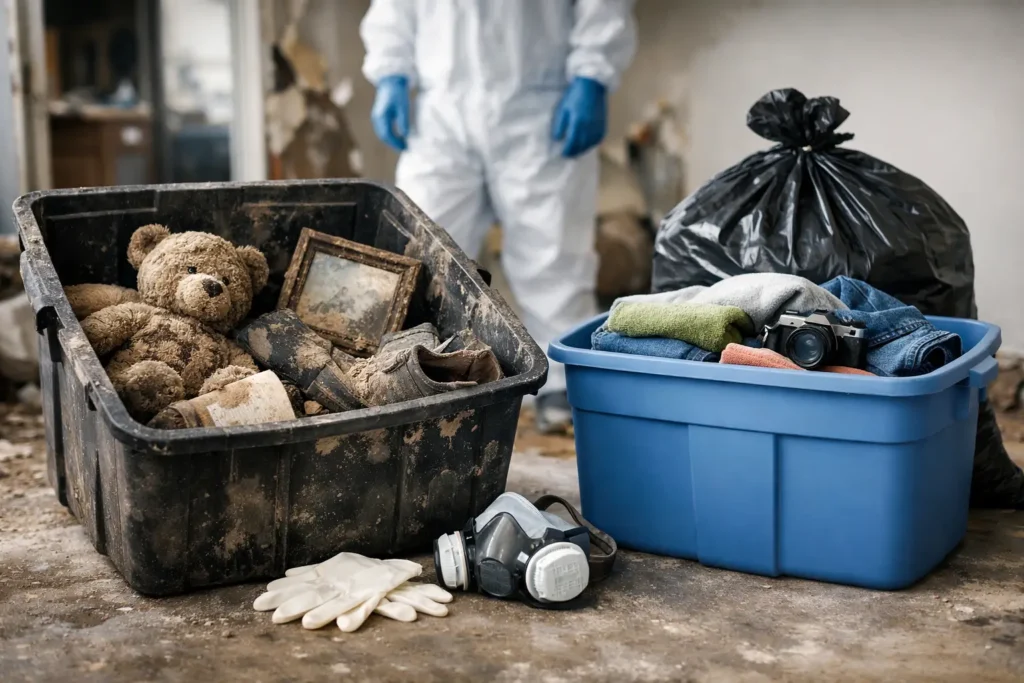
A sewer backup in a finished basement, a burst pipe soaking stored boxes, or smoke moving through a home can turn ordinary possessions into a health concern fast. Contaminated belongings cleanup is not simply about saving as much as possible. It is about identifying what is safe to restore, preventing contamination from spreading, and documenting losses before they become an insurance dispute.
The first hours matter. Moving items without the right protection can track sewage, soot, mold spores, or dirty water into unaffected rooms. Waiting too long can also turn a cleanable item into a permanent loss. A professional restoration team helps bring order to that decision while protecting the property and the people inside it.
What Makes Belongings Contaminated?
Not all water, smoke, or debris creates the same risk. Restoration professionals assess the source of damage before deciding how to handle contents. Clean water from a supply line is different from water that has flowed across a floor drain, backed up from a sewer line, or sat for days in a flooded structure.
Category 3 water, commonly called black water, may contain sewage, bacteria, viruses, and other hazardous contaminants. Items exposed to it require a much stricter response than possessions affected by a clean-water pipe leak. If the water has been standing, it can become progressively more contaminated even if it started clean.
Fire damage creates another challenge. Soot can be acidic, oily, and easily transferred by touch. Smoke odors can settle into fabric, paper, unfinished wood, insulation, and electronics. Storm damage may introduce mud, animal waste, polluted runoff, and moisture that supports mold growth. The visible mess is only part of the problem.
Contaminated Belongings Cleanup Starts With Safety
Before sorting, avoid using household fans, shop vacuums, or dry sweeping methods around contaminated materials. Those actions can push particles into the air and spread them through the property. Keep children, pets, and anyone with respiratory concerns away from the affected area.
If sewage, mold, heavy soot, or unknown floodwater is involved, do not start handling contents with bare hands. Restoration technicians use appropriate personal protective equipment and containment practices based on the type of loss. They can isolate the affected area, protect clean surfaces, and use commercial equipment to address both the materials and the surrounding air.
For a small clean-water incident caught immediately, some items may be safely moved to a dry area after photographs are taken. But when contamination is uncertain, pause before relocating anything. A rushed attempt to save a box of belongings can contaminate the hallway, vehicle, or temporary storage space where it is placed.
What Can Often Be Cleaned and Restored
The answer depends on the contaminant, how long the item was exposed, its material, and whether it can be thoroughly cleaned and dried. Hard, nonporous items are generally the strongest candidates for restoration. Glass, metal, sealed plastic, ceramic, and certain washable items may be cleaned, disinfected when appropriate, and evaluated for remaining odor or damage.
Some furniture can be restored if contamination was limited and did not penetrate porous components. For example, a sealed wood table exposed briefly to clean water may be dried and refinished. A leather chair affected by light smoke may respond to specialized cleaning and deodorization. These are material-specific decisions, not promises that every item can be saved.
Textiles, clothing, and washable linens can sometimes be professionally cleaned after smoke or clean-water exposure. Electronics may be evaluated by specialists when the source was clean water and power was safely disconnected. For high-value belongings, a contents inventory and specialist evaluation may be worth the added time.
The goal is not to discard possessions unnecessarily. It is to restore items only when restoration can produce a safe, usable result. A lower-cost replacement may make more sense than extensive cleaning for common household goods, while heirlooms, art, or business records may require more specialized attention.
What Usually Needs to Be Discarded
Porous materials exposed to sewage, black water, or extensive mold growth are often not safely recoverable. These materials absorb contamination beyond the surface, where household cleaning cannot reliably reach.
Items commonly identified for disposal after sewage contamination include:
- Mattresses, upholstered furniture, pillows, and foam cushions
- Carpet padding, rugs with absorbent backing, and fabric window treatments
- Cardboard boxes, books, paper files, photographs, and unsealed documents
- Particleboard furniture, pressed wood cabinets, and unsealed wood items
- Cosmetics, medications, food, and personal hygiene products
There are exceptions, particularly for irreplaceable documents, photographs, or collectibles. A restoration professional may recommend controlled drying, digitization, or specialist conservation rather than routine cleaning. Still, health and safety come first. No item is worth creating an ongoing contamination problem in the home or workplace.
Document Before Disposal
Many property owners make the understandable mistake of throwing away damaged belongings before the insurance carrier has enough information to evaluate the loss. Do not leave hazardous materials in place just for an adjuster, but document them thoroughly first whenever it is safe to do so.
Take wide photos showing each affected room, then closer photos of individual items and labels. Record the date, the source of the damage if known, and a basic description of each item. Include make, model, age, and estimated replacement cost when available. For business properties, document damaged inventory, files, equipment, and any interruption to normal operations.
Keep receipts, serial numbers, and pre-loss photos when possible. If items must be removed quickly because of sewage or mold conditions, a professional restoration company can create a contents inventory and maintain disposal records. This documentation supports the claim while allowing the cleanup to move forward without delay.
The Professional Cleanup Process
Effective contaminated belongings cleanup follows a controlled process. First, technicians identify the source, stop active water intrusion when possible, and assess the extent of contamination. Moisture meters and thermal imaging help locate wet materials that may not be obvious from the surface.
Next comes containment and removal. Cleanable contents are separated from unsalvageable materials, while affected structural materials such as carpet, drywall, insulation, or baseboards are evaluated. In sewage losses, removal of porous materials is often necessary to prevent hidden contamination and odor from remaining behind.
After removal, the affected area is cleaned using methods appropriate to the material and loss type. Drying equipment addresses hidden moisture in framing, subfloors, and cavities. Air filtration and odor-control measures may be needed after smoke, sewage, or mold-related events. Final documentation should show the work completed, the conditions found, and the basis for repair or replacement decisions.
This is where a one-stop restoration partner can reduce stress. Instead of coordinating cleanup, insurance paperwork, and rebuilding with separate vendors, property owners can move from emergency mitigation to repairs through one accountable team. Elevated Operations handles emergency response, detailed documentation, drying, cleanup, insurance coordination, and reconstruction for Metro Atlanta property owners facing these difficult losses.
Avoid These Common Mistakes
Do not rely on bleach as a universal solution. It is not appropriate for every material or contamination type, and it does not replace removal of sewage-soaked carpet padding, mold-damaged drywall, or other porous materials. Mixing cleaning products can also create dangerous fumes.
Do not close up a wet room and hope it dries on its own. Moisture behind walls, beneath flooring, or inside cabinets can support mold growth long after the visible water disappears. Likewise, do not paint over smoke stains or odor without addressing the residue first. Paint can hide the evidence while the odor continues to return.
Finally, do not accept vague documentation. A proper restoration record should explain what was affected, what was removed, what was cleaned, how moisture was monitored, and what repairs are needed. Clear records protect both the property and the claim.
When a loss affects the belongings that make a property feel like home or keep a business operating, the right decision is rarely about saving everything or throwing everything away. It is about acting quickly, separating safe items from unsafe ones, and giving the rest of the recovery a clean foundation to build on.