
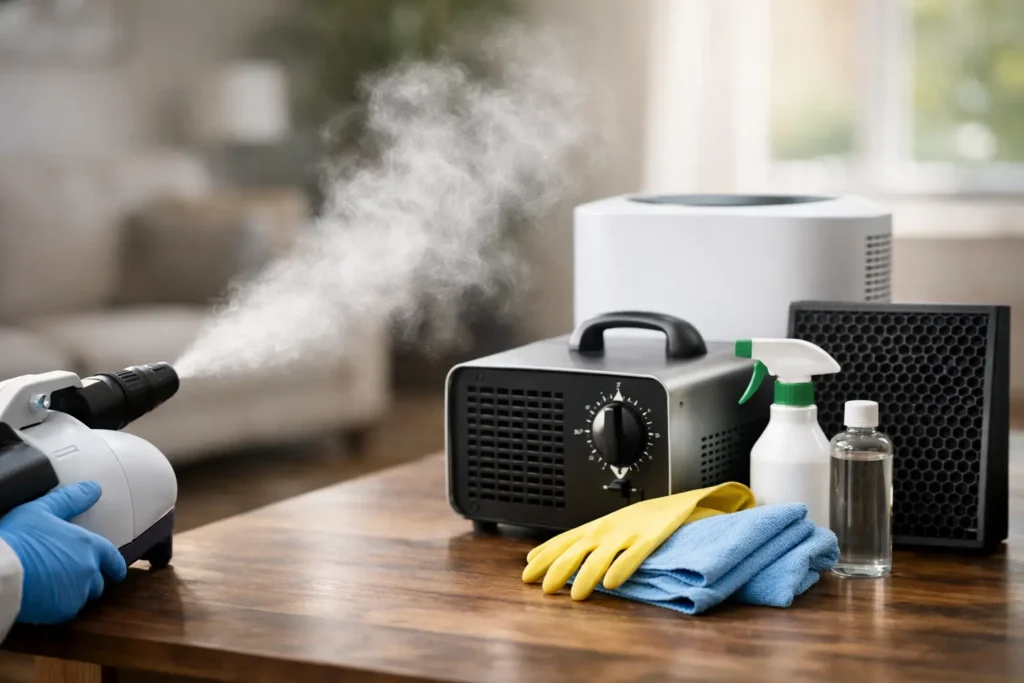
A property can look clean and still carry the unmistakable smell of smoke, sewage, mildew, or stagnant water. That odor is not just unpleasant. It can signal contamination trapped in drywall, carpet padding, insulation, framing, HVAC components, or other building materials. Effective odor removal methods do more than cover the smell with fragrance. They locate the source, remove affected materials when necessary, clean remaining surfaces, and verify that the conditions causing the odor are gone.
For homeowners, landlords, and property managers, the right response depends on what caused the odor and how long it has been present. A minor cooking smell and a post-fire smoke odor are not the same problem. Neither are a damp closet after a small spill and a basement that smells musty after a flood. Treating every odor the same can waste money, delay repairs, and allow hidden damage to spread.
Why Odors Return After Basic Cleaning
Most persistent property odors are carried by microscopic particles, moisture, bacteria, or gases embedded in porous materials. Spraying a deodorizer may make the room smell better for a few hours, but it does not remove soot from insulation or dry water beneath flooring. Once the fragrance fades or humidity rises, the odor returns.
This is especially common after water, fire, sewer, and mold-related losses. Smoke particles can travel far beyond the room where a fire began. Water can wick into baseboards and wall cavities. Sewage can contaminate carpet, padding, and contents. Mold-related odors often point to an ongoing moisture problem, even when visible growth is limited.
The first job is determining whether the odor is surface-level or evidence of a deeper condition. Professional restoration teams use visual inspections, moisture meters, thermal imaging, and, when appropriate, air-quality or contamination assessments to guide the work. That investigation matters because deodorizing a wet structure is not restoration. The structure must be dry first.
Odor Removal Methods That Address the Source
The best method is determined by the source material, the affected area, and whether porous building components can be safely restored. In many losses, several methods work together.
Source removal and controlled demolition
Removing the source is the most reliable form of odor control. If carpet padding absorbed sewage, it typically needs to be removed. If insulation is heavily contaminated by smoke or water, cleaning its surface will not solve the problem. If mold growth is tied to wet drywall, the damaged material may need controlled removal so the wall cavity can be cleaned and dried.
This can feel disruptive, but selective demolition is often less expensive than repeatedly treating an odor that cannot be cleaned away. It also creates access for drying, cleaning, and repairs before hidden deterioration gets worse.
Extraction, drying, and humidity control
Water-related odors require moisture control before anything else. Standing water should be extracted quickly, followed by structural drying with commercial air movers, dehumidifiers, and monitored airflow. Moisture mapping helps identify wet areas behind walls, beneath flooring, and in other locations that are easy to miss.
A musty smell can persist if materials remain slightly damp, even when they feel dry to the touch. Drying should continue until documented moisture readings show that affected materials have returned to an acceptable condition. If water came from a sewer backup or another contaminated source, drying is paired with proper cleaning and removal of unsalvageable materials.
HEPA vacuuming and detailed surface cleaning
After a fire, smoke residues may settle on walls, ceilings, furniture, fixtures, and inside cabinets. HEPA vacuuming captures fine particles without simply pushing them back into the air. Technicians then use cleaning agents selected for the type of residue involved, whether it is dry soot, oily soot, protein residue, or residue from a burned synthetic material.
The same principle applies to mold-related and sewage-related odors. Physical cleaning is critical. Deodorizers work best after contaminants and residues have been removed, not before.
HVAC inspection and cleaning
If odors become stronger when the heat or air conditioning turns on, the HVAC system may be distributing particles or moisture through the property. Smoke can enter return ducts after a fire. A water loss can affect equipment in a utility closet or create conditions for microbial growth near condensate lines.
The system should be evaluated before it is used to circulate air through the building. Depending on the situation, the solution may involve filter replacement, cleaning accessible components, duct cleaning by qualified specialists, or repair of the moisture source. Running contaminated air through a building can undo otherwise careful cleanup work.
Thermal fogging and hydroxyl treatment
Some odor-causing particles remain in inaccessible areas after cleaning and source removal. Thermal fogging uses a deodorizing agent in a very fine fog designed to reach similar areas as smoke particles. It can be useful after fire and smoke damage, but it is not a substitute for removing charred materials or cleaning soot-covered surfaces.
Hydroxyl generators use ultraviolet light to create reactive molecules that help break down certain airborne and surface odors. They can often operate in occupied spaces under proper conditions, though the area still needs professional assessment and monitoring. Results depend on the odor type, the size of the space, humidity, and how thoroughly the original source was removed.
Ozone treatment – effective, but not for every situation
Ozone can react with odor molecules and may be considered for certain severe smoke or biological odors after cleaning is complete. It requires strict safety controls. People, pets, and plants cannot remain in the treatment area, and the space must be properly ventilated before reentry.
Ozone is not a first-line answer for an active mold problem, a wet building, or sewage contamination. Used too early, it can create the impression that the problem is solved while moisture or contaminants remain behind walls or under floors. This is one reason professional judgment matters more than choosing the strongest-smelling treatment.
Matching the Method to the Damage
A fire loss usually calls for soot removal, content cleaning, HVAC evaluation, and targeted deodorization. The longer smoke residues sit, the more deeply they can bond with surfaces, so prompt action protects more materials from permanent damage.
A sewage backup requires a different approach. The priority is containment, safe removal of contaminated water and materials, cleaning, disinfection where appropriate, and complete drying. Masking the odor without addressing contamination creates a health and property risk.
For water damage, the category of water and the duration of exposure determine what can be saved. Clean water from a recently discovered supply-line leak may allow more materials to be dried and restored. Water that has sat for days, or water affected by outdoor flooding or sewage, may require more aggressive removal.
Mold-related odors demand a search for moisture. Cleaning visible growth without correcting a roof leak, plumbing leak, high indoor humidity, or condensation issue invites the odor and growth to return. The successful repair is often as important as the remediation itself.
When DIY Odor Control Is Enough – and When It Is Not
For small, non-damage-related odors, basic cleaning and ventilation can be reasonable. Wash washable fabrics, clean the immediate source, replace HVAC filters, and use a dehumidifier if the issue is limited to seasonal humidity. Baking soda, activated carbon, and enzyme-based cleaners can help with minor household odors when used as part of cleaning rather than as a replacement for it.
Call for professional restoration help when an odor follows a fire, flood, burst pipe, storm intrusion, sewage backup, or visible mold. You should also get help if the smell persists after cleaning, returns after rain or HVAC use, is strongest near walls or flooring, or accompanies staining, bubbling paint, warped materials, or health symptoms. Those signs can point to conditions that are not safely resolved with retail products.
Protect the Property Before the Odor Spreads
Persistent odor is often a message from the building. It may be telling you that smoke particles are still present, moisture is trapped where you cannot see it, or contaminated materials need to be removed. Acting early can reduce the amount of demolition, protect indoor conditions, and make insurance documentation clearer.
For Metro Atlanta property owners facing a damage-related odor, Elevated Operations can assess the source, complete the mitigation work, coordinate the claim process, and rebuild affected areas when repairs are needed. The goal is not to make the property smell better for a day. It is to help make it safe, dry, clean, and ready to move forward.