
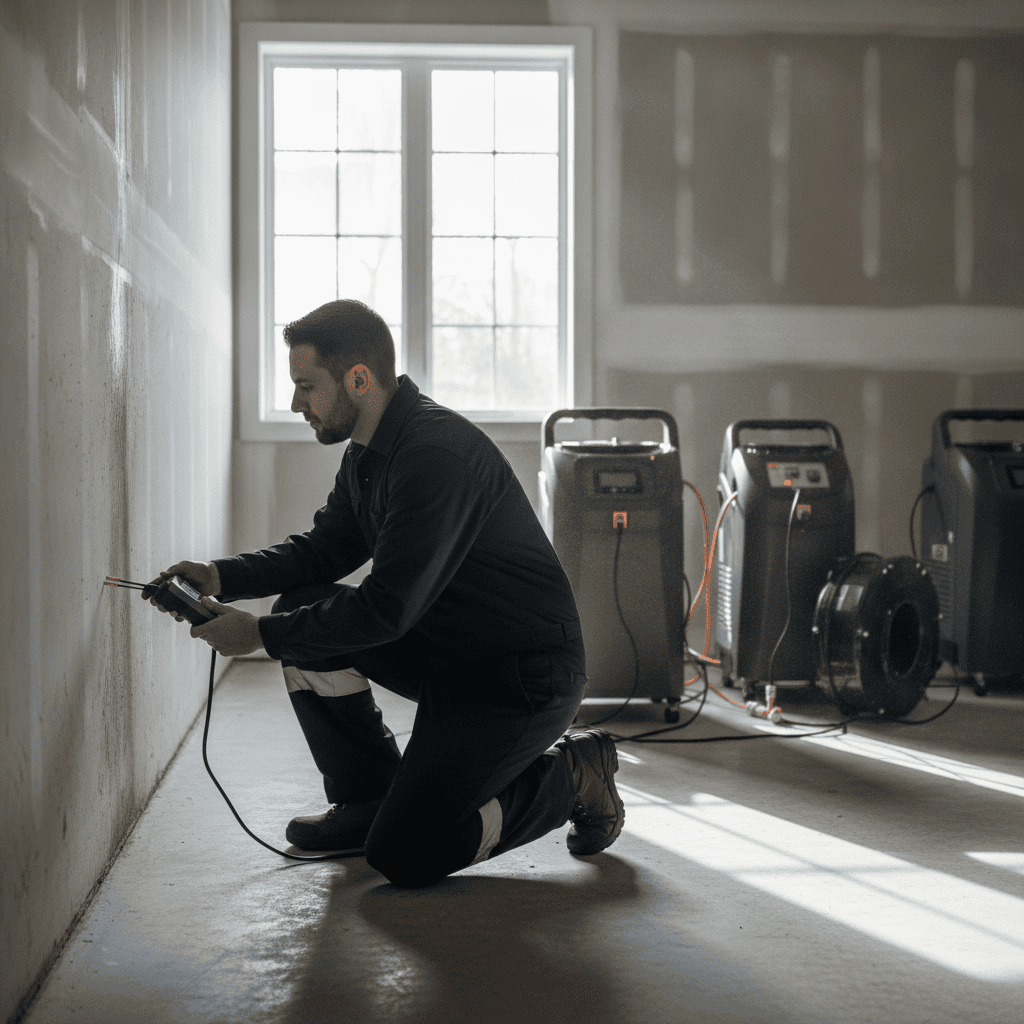
How do I go about eliminating mold after water damage?
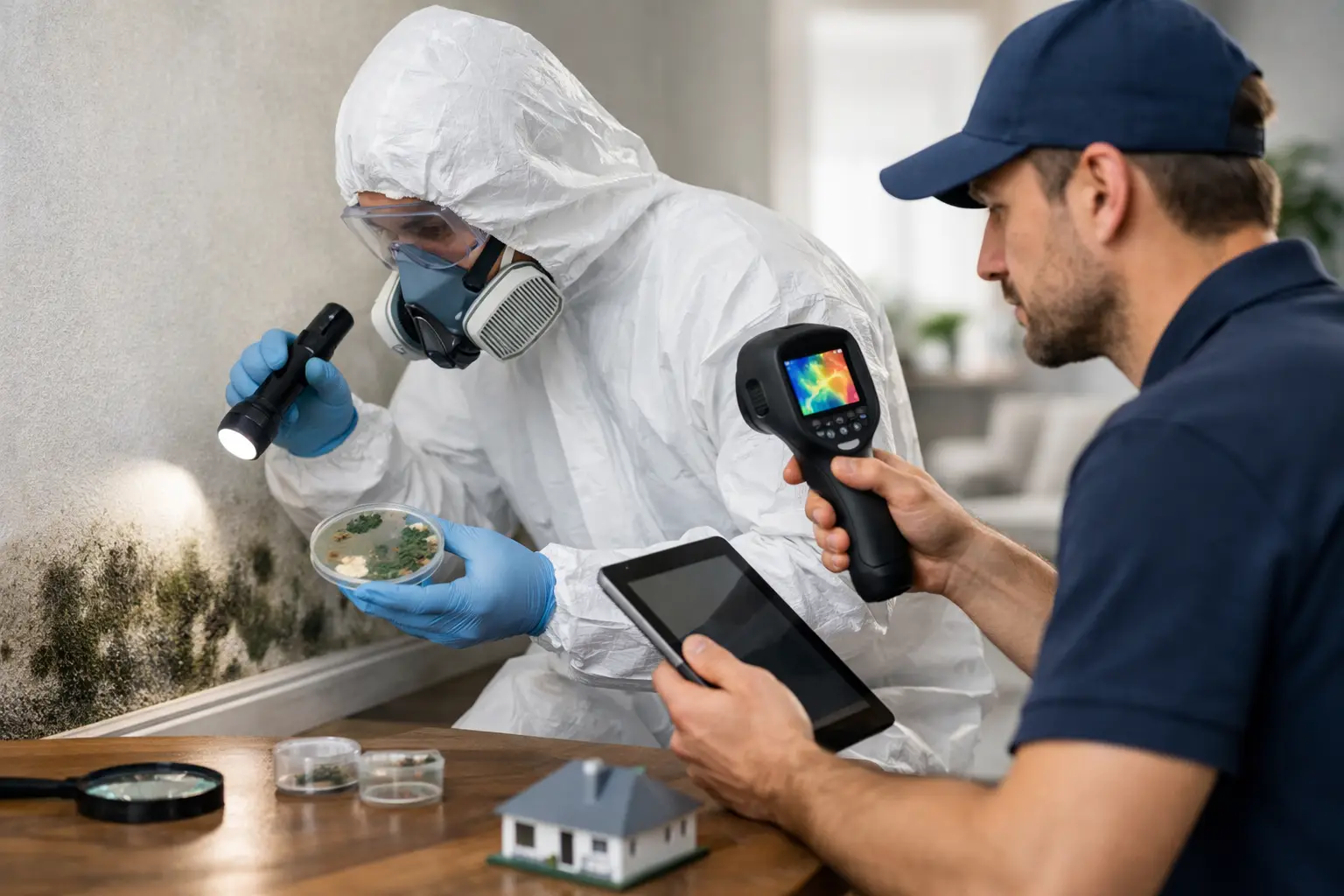
Eliminating mold starts with stopping the water source, removing materials that cannot be cleaned, and drying the structure before spores keep spreading. If the leak, burst pipe, or sewer backup is still active, cleanup alone will fail. The real fix is source control, containment, removal, drying, and verification.
What does eliminating mold actually mean after a leak?
Eliminating mold means removing the conditions mold needs to survive, not just making a stain disappear. If the material is wet, damaged, or contaminated, the real job is to stop the moisture, isolate the area, remove what cannot be saved, and dry the structure fully.
People often use “eliminating mold” when they really mean “getting rid of what I can see.” Those are not the same thing. Visible growth is only the symptom. Moisture is the engine, and porous building materials can hold that moisture long after the surface looks dry.
After water damage, the first question is not whether you can spray something on it. The question is whether the source is fixed and whether the affected materials can be restored safely. If drywall, insulation, carpet pad, or framing stayed wet too long, removal is usually part of the answer.
This is why the common DIY approach falls apart. You clean one spot, the odor returns, and now you are looking at a wider area because humidity, hidden saturation, or trapped moisture kept feeding the colony. Mold cleanup without drying is just delayed frustration.
For a homeowner, the goal is simple: get the moisture out, protect the rest of the house, and restore the damaged area without spreading contamination. That is the actual meaning of elimination in a water-loss setting.
- Fix the moisture source before cleaning anything.
- Treat visible growth as a sign of a deeper wet-material problem.
- Assume porous materials may need removal, not just surface cleaning.
- Use drying and containment as part of the fix, not an afterthought.
- Plan for reconstruction if the damage reached walls, ceilings, or floors.
How do you know if the mold is still active or just stained?
If the material is still damp, soft, musty, or worsening, assume the problem is active until proven otherwise. Staining can remain after cleanup, but active growth usually comes with moisture, odor, or spreading discoloration that keeps changing.
This is where homeowners waste a lot of time. They see dark marks and assume the mold is dead because it looks old. But stains and active growth are not the same thing. A stain can be left behind after treatment. Active mold usually means the environment still supports growth.
The easiest clues are not fancy. A musty smell that keeps coming back, soft drywall, bubbling paint, warped trim, or new spotting after a leak are all red flags. If the wall feels cool or the area never seems to dry out, hidden moisture is likely still there.
You also have to respect where water travels. A ceiling stain may point to a leak elsewhere. A baseboard issue can trace back to a wall cavity, crawl space, or underfloor wet area. Mold often shows up where the water finally surfaced, not where it started.
So the practical move is to identify moisture first, then decide whether the affected materials can be cleaned, dried, or need to be removed. If the damage is in porous material, what looks like “just staining” may actually be contamination trapped inside the material.
- Musty odor that returns usually means moisture is still present.
- Soft, swollen, or warped building materials are not just cosmetic issues.
- Spreading discoloration after drying suggests the source was not fixed.
- Hidden moisture can sit behind walls and under floors.
- A visible stain can remain even after the active mold is removed.
Which materials usually need removal instead of cleaning?
Porous materials are the troublemakers after a water event. If the item absorbed moisture and cannot be reliably dried or cleaned, removal is often the safer route. That usually includes drywall, insulation, carpet pad, and some ceiling or baseboard materials.
Not every surface should be treated the same way. Tile, sealed metal, and some hard non-porous surfaces can often be cleaned. But materials that soak up water behave differently because the contamination can move into the material, not just sit on top of it.
That is why drywall and insulation are such a problem. Once they take on enough moisture, they can hold it deep in the cavity. Carpet pad is similar. It may look salvageable from the top while staying wet underneath, which is exactly how mold keeps growing where people cannot see it.
A homeowner trying to save everything can accidentally make the issue worse by trapping moisture with paint, plastic, or the wrong cleaning step. If the material is compromised, removing it is sometimes the cleaner, safer path because it lets the structure dry and lets the rest of the home stay protected.
The point is not demolition for its own sake. It is to separate what can be saved from what is acting like a sponge. That decision matters because mold elimination is partly a materials problem, not just a cleaning problem.
- Drywall can hide moisture inside the wall cavity.
- Insulation usually loses value once it gets wet and contaminated.
- Carpet pad often holds moisture longer than the surface carpet.
- Porous trim and ceiling materials may need replacement if damage is advanced.
- Cleaning only works when the material can actually be made clean and dry.
Elevated Operations provides 24/7 water, fire, mold, storm, and sewage damage restoration across Metro Atlanta.
Get a free quoteWhy does speed matter so much after water damage?
Because moisture gives mold a head start, and the longer the material stays wet, the larger the cleanup becomes. Speed matters less because of panic and more because wet building materials change fast, especially when the leak is hidden inside the structure.
A lot of people treat water damage like a housekeeping problem. It is not. It is a building-material problem with a timer on it. The longer wet materials sit, the more likely they are to swell, break down, or support microbial growth that spreads beyond the original area.
That is why quick assessment matters. If the source is a burst pipe, leak, flooding, or sewer backup, you want the damaged area evaluated before the moisture keeps traveling. Water follows framing, subfloors, insulation pockets, and wall cavities. What looks small on the surface can be wider behind it.
Waiting also complicates the job. Drying a room that was addressed promptly is very different from drying a room after materials have already degraded. Once contamination and structural damage overlap, cleanup often expands into demolition and reconstruction.
This is one of those cases where doing nothing is the most expensive option, even if it feels calmer in the moment. Every hour the area stays wet, the odds go up that you will be dealing with more material loss and more complicated restoration.
- Wet materials change quickly, even when the surface looks minor.
- Hidden water can travel through walls, floors, and cavities.
- The cleanup grows when materials start to break down.
- Prompt drying can reduce the amount of demolition needed.
- A delayed response often turns cleanup into reconstruction.
What has to happen before mold removal can actually work?
The order matters: stop the water, contain the area, remove damaged materials, dry the structure, then finish the cleanup and rebuild. Skip the order and you get a partial fix that looks better for a week and fails later.
People want the final stage first. They want the stain gone. But the correct sequence is annoyingly practical. You cannot remove mold from an area that is still being fed by water. You also should not rip into an affected space without containing it, because that can spread contamination elsewhere.
Containment is especially important when the affected space connects to living areas, hallways, closets, or HVAC return paths. Once dust and spores move through the home, the problem is no longer local. The job gets harder, and the homeowner gets more cleanup than they bargained for.
After containment, removal and drying do the real work. Damaged materials come out. Remaining structural components are dried and checked. Then the area can be rebuilt in a way that does not trap moisture or leave hidden pockets behind the finished surface.
This sequence is why mold elimination after water damage is rarely one simple service. It is a process. When you respect the order, the outcome is cleaner, safer, and less likely to come back under the same conditions.
- Fix the leak or intrusion before touching the mold.
- Use containment so spores and debris do not spread.
- Remove compromised materials rather than painting over them.
- Dry structural components before reconstruction starts.
- Rebuild only after the affected area is stable and clean.
What tells you the job is bigger than a surface cleanup?
If the odor, staining, or damage reaches multiple building materials, the problem is bigger than a wipe-down. When walls, trim, flooring, or hidden cavities are involved, you are not just cleaning a spot. You are restoring part of the structure.
This is where people underestimate the scope. One affected patch of drywall may sound small, but if water moved behind it, into the insulation, or along the floor edge, the cleanup is no longer cosmetic. It becomes a building system issue because multiple materials interact.
A bigger job also tends to announce itself through clues that do not go away. Odor after cleaning. Discoloration that returns. Soft spots. Swelling. Nearby finishes that start to fail after the original leak. Those signs point to moisture that reached beyond the first visible area.
The smart move is not to guess based on what looks cheap to fix. It is to assess how far the damage reached and what has to be removed to prevent ongoing growth. That often saves money compared with repeated patching, repeated cleaning, and repeated disappointment.
When the scope crosses into structural materials, the solution often includes reconstruction, not just remediation. That is not overkill. That is matching the repair to what the water actually did.
- Odor returning after cleanup means the issue likely goes deeper.
- Soft or swollen finishes indicate hidden material damage.
- Multiple affected layers usually require more than cleaning.
- Repeated patching is a sign the source problem was not fully resolved.
- Structural involvement often means reconstruction is part of the fix.
Doing it yourself vs bringing in Elevated Operations
DIY can make sense for tiny, fully dry, non-porous spots. Once water damage, hidden moisture, or multiple affected materials enter the picture, you are juggling containment, drying, demolition, and verification at the same time. That is where a restoration crew earns its keep.
Homeowners usually start with the wrong assumption: if they can see it, they can clean it. But mold after water damage is not a stain problem. It is a moisture plus materials problem. If you miss one part, the whole thing keeps going.
DIY also tends to undercount the hidden work. You need to identify the source, decide what is salvageable, control spread, dry the structure, and know when to stop cleaning and start removing. Miss that judgment call and you can spread contamination or leave a wet cavity behind.
Elevated Operations is built for the full-loss version of this problem. That means emergency response, water extraction, drying, mold removal, and reconstruction under one roof. You are not coordinating a pile of unrelated contractors while the house keeps sitting in limbo.
If you want a clean end state instead of a temporary patch, that matters. Especially after sudden water damage, the real goal is not to make the room look better. It is to make the property safe, dry, and ready to use again without dragging the issue out.
- DIY is risky when the moisture source is still active.
- Containment and drying are easy to get wrong without the right setup.
- Mold remediation often turns into demolition and rebuild.
- One-stop restoration reduces handoffs and confusion.
- A full fix has to address both contamination and structural impact.
If you are deciding what to do next, use this filter
| Situation | What to do | Why |
|---|---|---|
| You smell musty odor after the leak, but the stain looks small. | Assume hidden moisture until the affected area is opened and assessed. | Odor often comes from damp materials behind the visible surface, not the spot you can see. |
| Drywall, trim, or insulation feels soft, swollen, or crumbly. | Plan for removal of compromised materials, then dry and rebuild. | Porous materials can hold contamination deep inside and rarely return to a safe condition with surface cleaning alone. |
| The home was hit by a burst pipe, flood, or sewer backup. | Get source control, containment, extraction, and remediation in one plan. | These events can spread moisture and contamination into multiple rooms and hidden cavities quickly. |
| The problem keeps returning after you clean it yourself. | Treat it as an unresolved moisture problem, not a cleaning failure. | Repeated growth means the underlying condition is still active somewhere in the structure. |
DIY cleanup vs Elevated Operations on a mold problem after water damage
| Doing it yourself | With Elevated Operations | |
|---|---|---|
| Finding the moisture source | You may chase visible spots and miss where the water is actually coming from. | We address the water loss as a restoration problem, not just a surface cleanup. |
| Containment and spread control | It is easy to disturb spores and dust without proper barriers or controls. | We isolate affected areas so the problem does not travel into clean spaces. |
| Drying and removal | You may dry what you can see and leave wet material behind walls or under floors. | We handle water extraction, drying, mold removal, and demolition as one connected process. |
| Rebuild and finish work | You still have to find someone to repair what was removed. | We also provide reconstruction, so the project can move from mitigation to completion with fewer handoffs. |
Frequently Asked Questions
How do I know if I need mold removal or just drying?
If the area is only damp and the materials are still sound, drying may be enough. If drywall, insulation, carpet pad, or trim stayed wet long enough to discolor, soften, or smell musty, you are usually looking at removal plus drying. The key is whether the material is still salvageable.
Can mold come back after cleaning?
Yes, if the water source was not fixed or hidden moisture remains in the structure. That is why surface cleaning alone is not a real solution after water damage. To keep mold from returning, the source has to be controlled and the affected area fully dried or rebuilt as needed.
Is a small patch of mold after a leak a big deal?
It can be. Small visible growth often points to a larger moisture issue behind the surface. A patch on drywall or baseboard may be the first clue that the wall cavity, subfloor, or adjacent material also got wet. The visible spot is not always the whole story.
What does mold cleanup usually cost?
It depends on the size of the affected area, the materials involved, how far water moved, and whether reconstruction is needed. Because every loss is different, the honest way to price it is with an assessment and a free quote. That gives you a clear scope instead of a guess.
Who can help if I want the mold handled and the damaged area put back together?
If you want one team to manage the cleanup and the rebuild, Elevated Operations can help with water damage restoration, mold remediation, and reconstruction in the Atlanta metro area. If you are dealing with a leak, burst pipe, flooding, or sewer backup, book a call for a free quote.
Get a free, no-obligation restoration estimate
Elevated Operations provides 24/7 water, fire, mold, storm, and sewage damage restoration across Metro Atlanta.
Get a free quoteCall (770) 404-6895Last updated September 21, 2026