
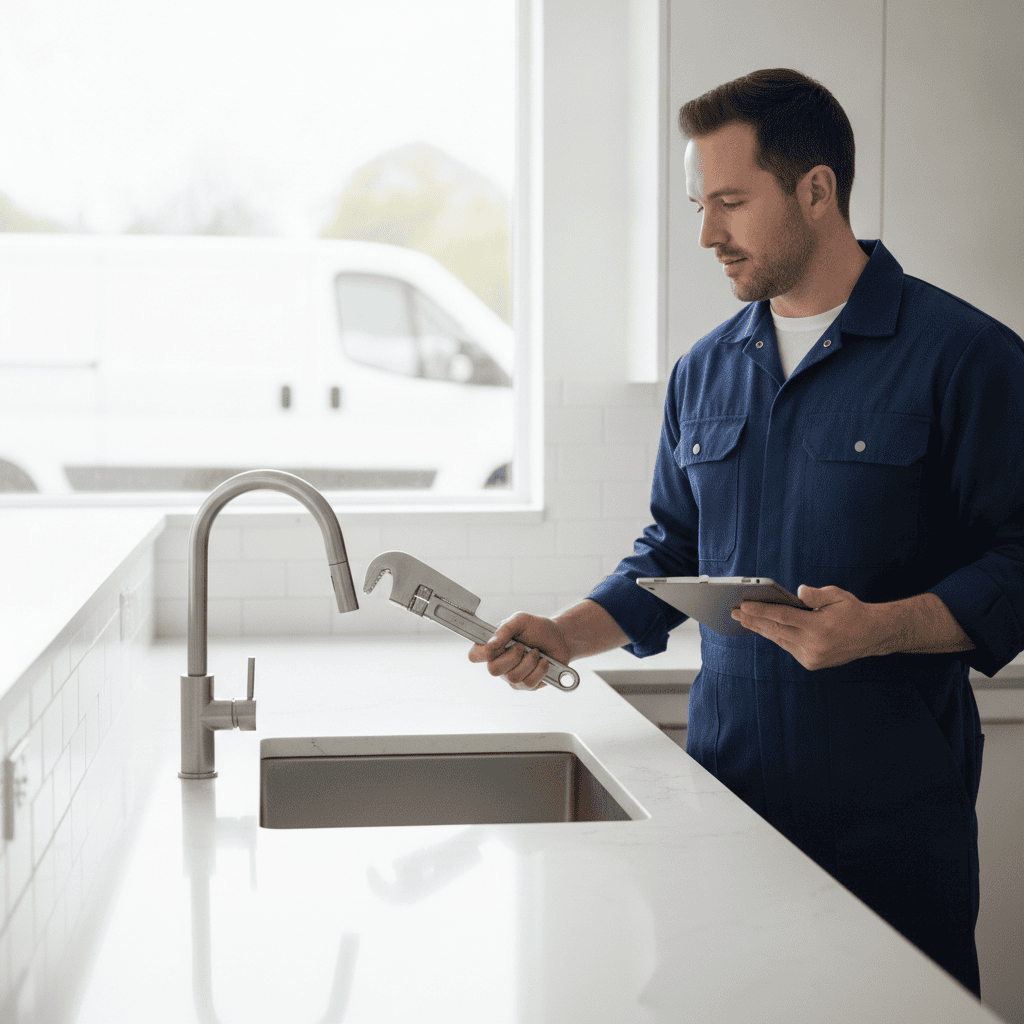
How do I find a burst pipe plumber fast after a pipe burst?

A burst pipe plumber should stop the active leak, protect the structure, and get the water out before mold or hidden damage spreads. In practice, that means emergency shutoff, extraction, drying, and repair, not just patching the pipe and leaving you with wet walls.
What is a burst pipe plumber, and what do they actually fix?
A burst pipe plumber is not just the person who stops the leak. In a real loss, they should address the pipe burst itself and the water damage that follows, because a quick pipe burst fix without drying leaves you with a bigger problem later.
If you are searching for a plumber for burst pipe damage, you are usually under pressure and short on time. Fair. But the first mistake is thinking the pipe is the whole problem. The pipe is the source. The home damage is the issue.
A proper burst pipe fix means finding the failure point, isolating the water, and restoring the line so it is safe to use again. That may be a simple repair or a section replacement, depending on what failed and why.
Then the scope shifts to the wet building materials. Water can move under flooring, behind trim, into insulation, and into wall cavities. If those areas are not inspected, you are guessing. Guessing is how people get mold and reconstruction surprises.
For homeowners, this is where the practical side matters. You do not need a lecture. You need the leak stopped, the water out, and a clear answer on what got damaged while the pipe burst was happening.
A good burst pipe plumber conversation should quickly tell you whether you are dealing with a small plumbing repair or a full water mitigation and repair job. That distinction saves time and keeps you from hiring the wrong kind of help.
burst pipe, pipe burst, and pipe burst fix are often used interchangeably online, but on site they are not the same problem. One is the event, one is the failure, and one is the repair that gets the line closed again.
- Stop the leak at the source.
- Inspect surrounding materials for hidden wet areas.
- Decide whether the line needs repair or replacement.
- Document the damage before tearing out materials.
- Move from plumbing repair to water mitigation fast.
How do you tell a pipe burst from a slow leak?
A pipe burst usually shows up like a sudden failure, not a slow drip. If the damage appeared fast, spread quickly, or is coming from a hidden wall or ceiling area, treat it as an active water event, not a normal plumbing annoyance.
People waste time here because they want the answer to be smaller than it is. A slow leak stains. A pipe burst makes a room go wet fast, often without much warning.
The difference matters because the response changes. A slow leak may give you some time to schedule repairs. A burst pipe means you need to protect floors, drywall, insulation, and electrical areas right away.
If the source is behind a wall or ceiling, you may not see the pipe at all. You see the symptom: water spots, bubbling paint, sagging drywall, or a floor that feels wrong underfoot. That is enough to act.
Don’t wait for perfect certainty before calling. When a pipe burst is on the table, the cost of waiting is usually hidden damage. The home does not care whether the leak started with a pinhole or a split seam.
This is also why a plumber for burst pipe calls often turn into restoration calls. Once the source is fixed, the wet structure still needs help. Ignoring that part is how a simple repair becomes a remodel.
If you smell dampness, hear dripping, or see water at the base of cabinets or trim, assume there is more going on than a surface issue.
- Sudden spread usually points to a burst, not a drip.
- Hidden wall or ceiling moisture is a red flag.
- Visible staining is not the same as the full damage footprint.
- Once water reaches insulation or drywall, drying matters.
- If the source is unclear, treat it as an emergency.
Can you fix a burst pipe without opening walls?
Sometimes, but not if the water has already traveled where you cannot see it. A clean burst pipe fix may be possible on an exposed line, yet hidden damage behind walls or under floors is what usually forces opening and drying.
This is where homeowners hope for the easy version. Sometimes you get it. Exposed piping under a sink, in a basement, or in a mechanical area can be repaired with limited disruption.
But if the burst pipe happened inside a wall, under a vanity, above a ceiling, or beneath finished flooring, you need a closer look. Water does not stop at the leak point. It spreads along framing, insulation, and finish materials.
Opening a wall is not overreacting when there is evidence of trapped moisture. It is how you confirm what is wet and what is still salvageable. You cannot dry what you refuse to expose.
The goal is not demolition for its own sake. The goal is to remove only what has been damaged, dry what can be saved, and rebuild cleanly. That sequence protects the structure and keeps the repair from being half-done.
A burst pipe plumber who understands restoration will not pretend a pipe-only fix is enough when the wall cavity is already soaked. That honest answer matters more than a quick patch.
If the area smells musty or the paint is bubbling, hidden water is already telling on the problem.
- Exposed pipes are simpler to repair.
- Hidden leaks often require inspection openings.
- Wet insulation and drywall cannot be dried in place forever.
- Targeted removal is better than guessing.
- Proper drying determines whether repair is enough.
Elevated Operations provides 24/7 water, fire, mold, storm, and sewage damage restoration across Metro Atlanta.
Get a free quoteWhich emergency steps matter before help arrives?
The first moves after a burst pipe are practical, not dramatic. Shut off the water if you can, reduce the spread, and keep people out of unsafe areas while you line up the right help for the leak and the water damage.
You do not need to become a hero. You need to slow the damage. If you can safely shut off the main water supply, that is usually the first move. If not, focus on keeping the area clear and avoiding anything electrical.
Then protect what you can. Move small items out of the wet zone, but do not waste time trying to salvage everything before the source is controlled. Water wins while you are moving knickknacks.
A burst pipe can create slippery floors, soft drywall, and hidden electrical risk. So the goal is safety first, not cleanup theater. Once the leak is stopped, the real water extraction and drying can begin.
Take photos if it is safe. Insurance claims and repair scopes are easier when you have a clear record of what happened and where the water reached. That does not mean staging anything. It means documenting reality.
If you are dealing with a plumber for burst pipe damage, ask whether they are also evaluating the moisture footprint. If they are not, you may be getting only half the solution.
A fast response matters because water keeps moving until it is removed, not until you are ready.
- Shut off the water supply if it is safe.
- Avoid standing water near electrical areas.
- Move light belongings out of the affected zone.
- Photograph the damage for records.
- Get the wet structure assessed, not just the pipe.
Why burst pipe fix jobs often turn into water mitigation
A burst pipe fix stops the leak. Water mitigation handles the consequences. If water reached drywall, insulation, flooring, or contents, the repair is no longer just plumbing work. It becomes a damage-control job with drying, cleanup, and likely reconstruction.
This is the assumption flip that saves homeowners money and stress. People think the job ends when the pipe is repaired. In reality, that is only when the next job starts.
Water mitigation exists because wet building materials do not politely reset themselves. Drywall swells, baseboards warp, wood flooring cups, and trapped moisture lingers where you cannot see it. That is the part that causes mold and secondary damage.
The smarter sequence is source control, water removal, moisture assessment, drying, then repair. Skip one step and you will usually pay for it later. That is not theory. It is how water behaves.
For a homeowner, this also affects insurance communication. Clear documentation, organized repair steps, and direct invoicing are easier when one team handles the chain instead of a bunch of disconnected vendors.
A burst pipe plumber who can only do the source repair may leave you coordinating everything else. That is a lot to manage when the house is already disrupted.
The right question is not just who can fix the pipe. It is who can finish the problem.
pipe burst damage often includes things you can’t see until the trim comes off or the meter readings tell the truth.
- Pipe repair stops the source.
- Mitigation removes moisture and limits spread.
- Hidden water is the reason repairs expand.
- Documentation helps with insurance.
- One coordinated team reduces handoff problems.
What should you ask before hiring a plumber for burst pipe damage?
Ask about source repair, drying, reconstruction, and insurance handling in the same conversation. If the answer is vague, you are probably talking to someone who treats water damage like a normal plumbing ticket, and that is not enough for a burst pipe.
You do not need a giant checklist. You need a few sharp questions that tell you whether the contractor understands the full scope. First: can they stop the leak and assess the water damage? Second: can they dry the structure properly? Third: can they rebuild what has to come out?
Ask about certification and process. IICRC-certified technicians matter because water damage is not guessed at. It is assessed, documented, extracted, dried, and checked again. That is the difference between doing work and doing the right work.
Also ask who manages the claim paperwork and adjuster communication if insurance is involved. When homeowners have to chase multiple companies, small tasks become big delays.
Do not ignore reconstruction capability. If cabinets, drywall, flooring, or trim need replacement, you want a contractor who can move from mitigation to rebuild without turning your kitchen into a months-long inconvenience.
If someone says they only handle the plumbing and you need to coordinate the rest, that may be fine for a minor repair. It is not fine when water has spread into the structure.
The honest test is simple: do they understand the house, or only the pipe?
- Ask if they handle both source repair and moisture assessment.
- Confirm drying and reconstruction are available if needed.
- Ask who handles insurance paperwork and communication.
- Look for IICRC-certified technicians.
- Prefer one coordinated team over scattered vendors.
When a burst pipe needs more than a plumber, use this filter
| Situation | What to do | Why |
|---|---|---|
| Water is still spreading or the source is unclear. | Shut off the supply and get an emergency response that can locate, stop, and document the damage. | Until the source is controlled, every minute adds more wet materials and a larger repair scope. |
| Drywall, baseboards, or flooring feel soft, swollen, or damp. | Have the area assessed for moisture, extraction, and drying instead of only patching the pipe. | Surface cleanup does not remove trapped water inside building materials. |
| There is a musty smell after the leak was fixed. | Request inspection for hidden moisture and potential mold conditions. | Odor often means the water stayed in the structure long enough to create a second problem. |
| Insurance, cabinets, flooring, or reconstruction are now part of the mess. | Use one team that can manage mitigation, claim communication, and rebuild. | The more trades involved, the easier it is for details to get missed or delayed. |
Doing it yourself vs bringing in Elevated Operations
| Doing it yourself | With Elevated Operations | |
|---|---|---|
| Stopping the leak | You may be able to shut off the water or make a temporary move, but you are working without the tools to verify the full damage. | We respond as a water damage team, identify the source, and move the loss toward a controlled repair path. |
| Drying the structure | Fans and open windows may help a little, but hidden moisture in walls and floors can stay trapped. | We handle water extraction, drying, and moisture-focused mitigation so the structure is actually addressed. |
| Reconstruction | If materials need removal, replacement, or finishing work, you are suddenly coordinating multiple contractors. | We provide reconstruction services, so the job can move from emergency cleanup to repair under one roof. |
| Insurance coordination | You are left sorting photos, invoices, and adjuster questions while also trying to protect the house. | We offer direct insurance claim management to reduce the administrative drag on the homeowner. |
Frequently Asked Questions
Do I need a plumber for burst pipe damage if the water already stopped?
Maybe, but that is only half the issue. If the leak stopped on its own or after you shut the water off, you still need to know what got wet. A plumber handles the source. Restoration handles the structure, drying, and repair. If the area is more than a small exposed leak, it is worth getting both parts evaluated.
What should I do first after fixing a burst pipe?
Document the damage, check for standing water, and look for signs that water traveled into walls, flooring, or cabinets. Then get the moisture assessed quickly. A burst pipe fix solves the active leak, but the home can still have hidden wet materials that need drying or removal.
Can a burst pipe lead to mold?
Yes. Mold becomes a concern when moisture is left in the structure long enough for materials to stay wet. That is why fixing a burst pipe is not the end of the job. Drying, inspection, and cleanup matter if water reached drywall, insulation, or wood framing.
How much does burst pipe cleanup cost?
It depends on the size of the loss, what materials were affected, and whether reconstruction is needed. A small exposed repair is very different from water that reached walls or flooring. The honest next step is to book a call for a free quote so the scope can be reviewed properly.
Can Elevated Operations help with burst pipe damage in Atlanta?
Yes. Elevated Operations handles water damage restoration, drying, reconstruction, and related cleanup for burst pipe losses in the Atlanta metro area. If you want one team instead of juggling separate vendors, book a call for a free quote and get the scope looked at quickly.
Get a free, no-obligation restoration estimate
Elevated Operations provides 24/7 water, fire, mold, storm, and sewage damage restoration across Metro Atlanta.
Get a free quoteCall (770) 404-6895Last updated September 22, 2026