
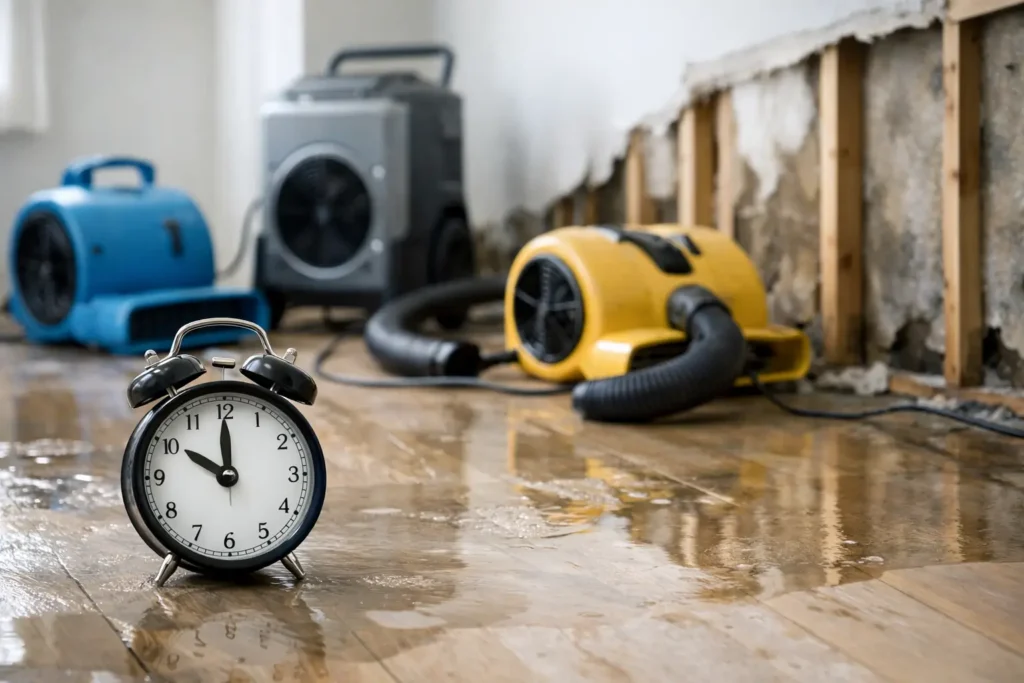
What does a construction cleanup service do after water damage?
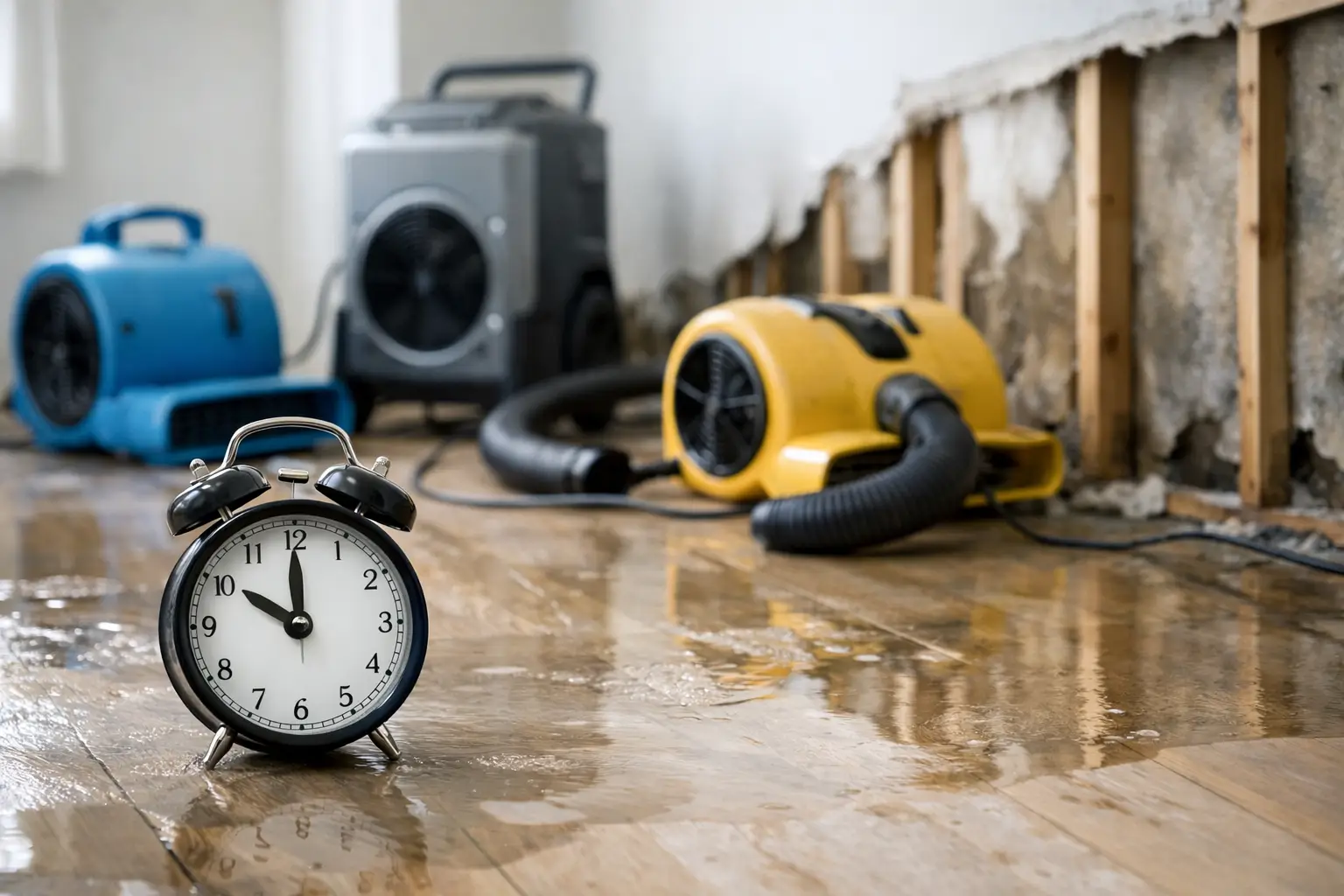
A construction cleanup service removes debris, dries the structure, and gets the site safe for repair after water damage. The real fix is fast extraction, contamination control, and documented cleanup before reconstruction starts, so you do not trap moisture behind new materials or miss hidden damage.
What counts as construction cleanup after a water loss?
It is the cleanup that makes a damaged space safe to rebuild. If water got into drywall, flooring, cabinets, or insulation, the job is not just removal. It is controlled extraction, demolition of unsalvageable material, drying, and contamination control before anyone starts repair work.
People often think cleanup means hauling out debris. That is too narrow. In a water-damaged home, construction cleanup sits between emergency response and reconstruction. The aim is to remove what cannot be saved, reduce moisture in the structure, and clear the site so repairs are not built on a problem.
The important distinction is this: if wet material stays hidden behind fresh finishes, the damage does not disappear. It waits. That is why cleanup has to account for moisture trapped in framing, insulation, subflooring, and wall cavities, not just the visible mess on the floor.
For a homeowner, this is where the process gets technical fast. You need someone who understands what can dry in place, what has to come out, and what should be documented for the insurance file. Guessing wrong here usually costs more later.
In Atlanta, where storm events, plumbing failures, and sewer backups all happen, the cleanup phase has to move quickly and cleanly. The longer the structure sits damp, the harder it gets to avoid mold, odor, and unnecessary reconstruction.
How do you know if the cleanup is really done?
You know it is done when the property is ready for repair, not just when the visible water is gone. A finished cleanup should leave the site dry, cleared, documented, and free of materials that would compromise the next phase of work.
This is where people get burned. A room can look tidy and still be holding moisture in the wrong places. If the cleanup crew has not checked the structure properly, you can end up with fresh paint over damp drywall or new flooring over a wet subfloor.
A real cleanup process has a logic to it. Stop the water intrusion if possible, remove standing water, take out damaged porous materials, dry the structure, and confirm the space is ready for reconstruction. That sequence matters because each step depends on the one before it.
The homeowner does not need to become a moisture technician, but you do need to ask better questions. What was removed? What was dried in place? What was documented for insurance? What still needs repair? Those answers tell you whether the cleanup was legitimate or just cosmetic.
If the crew cannot explain what is still wet, what was saved, and what needs to be rebuilt, that is your warning sign. Cleanup is not complete when the room looks better. It is complete when the hidden risk is gone.
Which materials usually have to come out first?
Porous materials and contaminated contents are usually the first decision point. Once water gets into items that hold moisture, you have to judge whether they can be dried safely or whether removal is the cleaner, safer move for the structure and the people living in it.
Not every wet item gets tossed, but some materials are poor candidates for drying in place. Drywall, insulation, carpet pad, and certain ceiling materials often lose integrity once saturated. If the loss involves sewage or contaminated water, the threshold for removal becomes even stricter.
The reason is simple. Some materials absorb water deep into their structure, and that moisture can keep feeding odor or microbial growth even when the surface appears dry. Homeowners often try to save too much because the damage is painful to look at. That instinct is understandable, and sometimes it is expensive.
Construction cleanup should make these calls based on the material, the extent of contamination, and the condition of the surrounding structure. A technician who knows the difference between salvageable and compromised material will save you from rebuilding over a weak or unsafe base.
This is one place where experience matters more than optimism. If someone tells you everything can be dried without examining the structure closely, that is not a plan. That is a shortcut.
Elevated Operations provides 24/7 water, fire, mold, storm, and sewage damage restoration across Metro Atlanta.
Get a free quoteWhy moisture control matters before reconstruction
Because rebuilding over trapped moisture is how a small incident turns into a second job. If the structure is not properly dried and cleaned, reconstruction can lock in odor, warping, and hidden damage that shows up after the contractor is gone.
This is the part people skip when they are eager to get their home back. The walls are open, the mess is gone, and the urge is to move straight into repair. But moisture does not care that you are tired of the project. It keeps working.
Moisture control is not just about comfort. It protects the materials that get installed next. Drywall, trim, flooring, and paint all perform better on a stable substrate. If the base is compromised, the finish work can fail early or hide the underlying issue until it becomes more expensive.
For a homeowner, this also affects insurance and peace of mind. A properly controlled cleanup creates a cleaner scope for reconstruction and fewer surprises once repairs begin. That is what you want: fewer surprises, not a fresh round of discovery after new materials are already in place.
The mistake is assuming cleanup is only about appearance. It is really about the condition of the structure itself. If the hidden layers are not handled, the surface fix will not hold.
What should insurance documentation cover during cleanup?
It should show what happened, what was affected, what was removed, and what still needs repair. If the cleanup is tied to a claim, the documentation has to make the loss understandable without forcing the adjuster to guess what was done.
Insurance paperwork gets messy when the cleanup team is vague. You need more than a stack of invoices. You need a trail that ties the damage to the work performed, especially when the claim includes extraction, demolition, drying, and later reconstruction.
Good documentation usually includes photos, notes on affected areas, and a clear separation between mitigation and repair scope. That matters because the claim has to reflect what was urgent loss response versus what is part of the rebuild. Mixing those pieces together creates confusion and delays.
Homeowners do not want to become project managers during a water loss. Fair. But it helps to ask for organized records while the work is happening, not after the fact. Once walls are closed up, the evidence gets harder to see and harder to explain.
If your restoration company can communicate clearly with the insurance side, that removes one of the most frustrating parts of the process. And yes, that matters almost as much as the drying itself when the house is in pieces.
Atlanta water damage cleanup has a local timing problem
In Metro Atlanta, delays compound fast because water does not wait for a convenient schedule. A cleanup plan has to account for emergency access, weather, humidity, and how quickly the loss can move from isolated damage to a larger structural headache.
This is not a case for waiting until business hours if water is actively spreading. Burst pipes, appliance failures, storm intrusion, and sewer backups all demand fast action because every hour increases the chance that more materials will need removal.
Local response also matters because the home is part of a larger chain of decisions. If the cleanup crew cannot get to the property, assess the damage, and stabilize the area quickly, the homeowner is left making uncertain calls in the dark. That is how mistakes happen.
Atlanta homeowners also deal with a wide mix of property types, from older homes to remodeled spaces to crawl space issues. The cleanup approach has to match the structure, not a generic checklist. A crawl space problem is not the same as a kitchen leak, even if both started with water.
The practical takeaway is simple. The sooner the cleanup is handled correctly, the more of the property has a chance of being saved and the less chaotic the rebuild becomes.
What a homeowner should ask before booking cleanup
Ask the questions that separate real restoration from surface-level cleanup. You want to know who is handling the drying, who is handling the rebuild, how the claim will be documented, and whether the crew is qualified for the job they are actually doing.
This is where buyers often default to the first company that sounds responsive. But responsiveness alone is not enough. You are hiring someone to manage a damaged structure, not just to show up with tools. Ask about credentials, scope, and whether the team can carry the project from cleanup into reconstruction.
If a company only does the obvious part and then hands you off, you become the project manager. That is where friction starts. One team blames the other, the insurance file gets messy, and the homeowner ends up repeating the same story three times.
A better setup is simple: one team that can assess, mitigate, document, and rebuild. That reduces handoff errors and keeps the project moving in a way that makes sense to the person living through it. The point is less drama, not more vendors.
And yes, credentials matter. IICRC-certified technicians give you a better signal that the crew understands the technical side of water loss cleanup and drying, not just the visible mess.
When the cleanup plan needs a harder reset
| Situation | What to do | Why |
|---|---|---|
| The room looks better, but it still smells damp or musty. | Reassess hidden moisture, remove compromised materials, and dry the structure before repair starts. | Surface cleanup without moisture control usually leaves the real problem in place. |
| Drywall, insulation, or trim feels soft, swollen, or stained. | Treat those materials as likely candidates for removal and structure cleanup. | Porous materials can hold water and contamination even when the surface seems fine. |
| You are not sure what the crew removed or why. | Ask for a written scope with photos and a clear mitigation record. | If you cannot see what happened, the insurance file and the rebuild both get harder. |
| Reconstruction is about to start, but the area still feels unresolved. | Pause and confirm the space is reconstruction-ready, not just visually tidy. | Building over trapped moisture creates avoidable repair problems later. |
Doing it yourself vs bringing in Elevated Operations
| Doing it yourself | With Elevated Operations | |
|---|---|---|
| Initial water removal | You may get the visible water out, but it is easy to miss what soaked into hidden areas. | We handle emergency water removal and water extraction with a focus on what the structure absorbed, not just what you can see. |
| Damage assessment | You are guessing which materials are salvageable and which are not. | Our IICRC-certified technicians assess the loss and build the cleanup around the condition of the property. |
| Insurance coordination | You become the note-taker, photo keeper, and message relay for the claim. | We manage the claim side of the process and keep the documentation organized for the loss. |
| Cleanup to rebuild handoff | You may end up hiring different people for each stage and re-explaining the problem. | We provide a one-stop path from emergency response through reconstruction, so the project stays coherent. |
Frequently Asked Questions
Is construction cleanup the same as water damage restoration?
Not exactly. Water damage restoration usually includes the emergency response, extraction, drying, and mitigation steps. Construction cleanup is the part that clears damaged materials and prepares the property so repairs or reconstruction can start cleanly. For a homeowner, the two often overlap, which is why a single team that handles both is easier to manage.
How much does construction cleanup for water damage cost?
It depends on the size of the loss, the materials affected, and whether the work includes drying, demolition, or reconstruction. There is no honest one-size-fits-all price for a water loss. The right move is to book a call for a free quote so the scope can be evaluated on site.
Can wet drywall be saved during cleanup?
Sometimes, but not always. If drywall has only been lightly affected and the structure underneath is sound, drying may be possible. If it is swollen, weakened, or has wicked moisture, removal is often the safer call. The key is not guessing based on appearance alone.
Do I need a cleanup crew if the leak happened days ago?
Yes, because delayed cleanup can mean hidden moisture, odor, and mold risk even when the surface looks manageable. The longer water sits in walls, floors, or insulation, the more likely you are to need removal rather than simple drying. A proper assessment is worth it.
Can Elevated Operations help after the cleanup phase too?
Yes. Elevated Operations can help from emergency response through reconstruction, which keeps the project from bouncing between unrelated vendors. If you want a free quote and a cleaner handoff from damage cleanup to repair, book a call and get the loss reviewed by a team that handles the full path.
Get a free, no-obligation restoration estimate
Elevated Operations provides 24/7 water, fire, mold, storm, and sewage damage restoration across Metro Atlanta.
Get a free quoteCall (770) 404-6895Last updated September 12, 2026