
Water mitigation near me: what do I do right now?
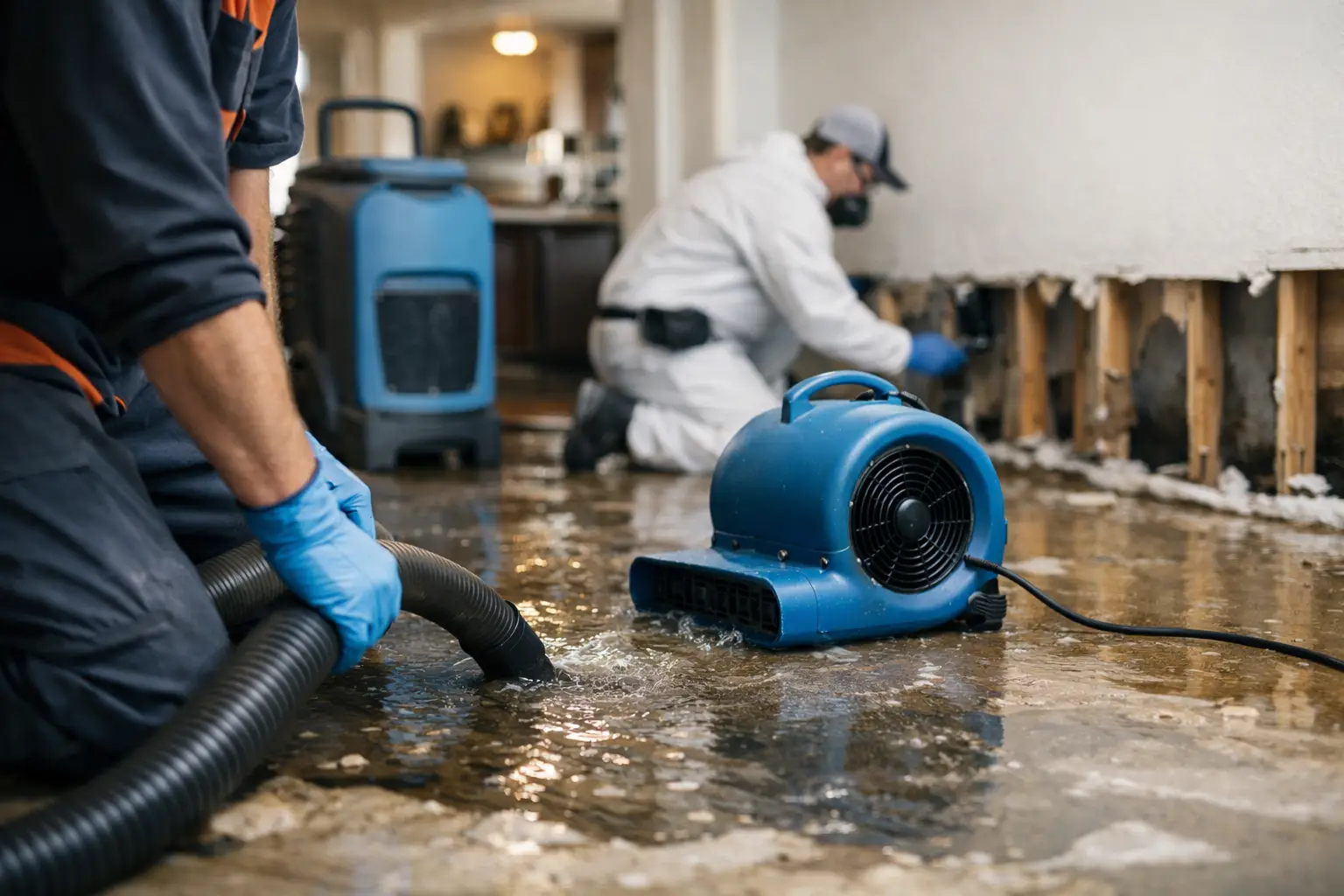
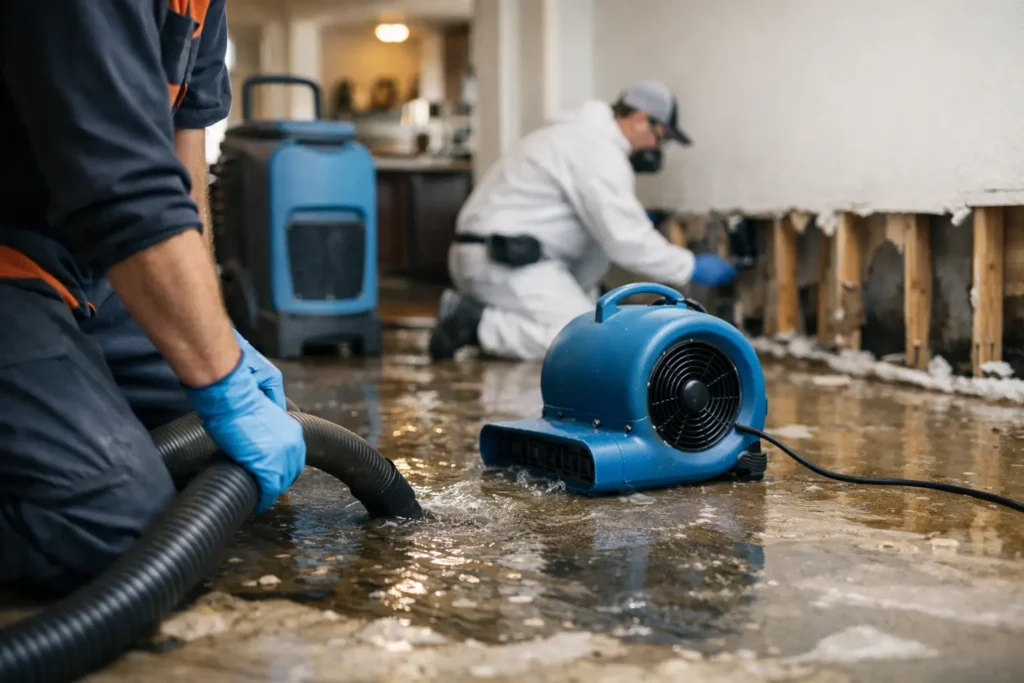
Water mitigation near me means fast extraction, drying, and moisture control before water turns into mold or structural damage. The real fix is to stop the source, remove standing water, dry hidden areas, and document the loss so repairs and insurance can move without extra delay.
What does water mitigation near me actually cover?
Water mitigation is the emergency response phase, not the final repair phase. In plain English, it covers stopping the spread, removing standing water, drying what can still be saved, and identifying what has already been compromised.
If you searched water mitigation near me, you are probably not shopping for a remodeling project. You want the water gone, the wet materials stabilized, and the situation made safe enough to move forward without guessing.
The reason this matters is simple: water does not stay politely where you first found it. It migrates into wall cavities, under baseboards, into subfloors, and into insulation. The visible puddle is usually not the whole loss.
A competent mitigation job focuses on containment and moisture control first. That may include extraction, air movement, dehumidification, selective removal of unsalvageable material, and documentation for the next step.
For a homeowner, the test is not whether a team can mop a floor. It is whether they understand how hidden moisture behaves and can interrupt that process before mold and structural issues start stacking up.
The phrase near me matters too. In this category, proximity is not a vanity metric. It affects how quickly someone can respond, how fast equipment can be deployed, and whether the first visit happens before the damage compounds.
- Stop the water source before or during mitigation
- Remove standing water and wet contents quickly
- Dry hidden spaces, not just visible surfaces
- Document conditions for insurance and repair planning
- Prevent secondary damage such as mold and swelling
What happens in the first call and the first visit?
The first call should sound practical, not theatrical. You want a provider who asks what happened, what is wet, whether the source is still active, and what areas are at risk before anyone arrives.
A useful first call is about triage. If a pipe burst, a supply line failed, or water came in from outside, the questions should sort out urgency, safety, and access. That is the difference between dispatching equipment and just taking a message.
At the first visit, the goal is to confirm the source, assess the spread, and start mitigation immediately where possible. That means looking beyond the obvious wet spot, because water often runs under flooring or behind walls in a way the homeowner cannot see.
This is where a local team has a real advantage. If someone can get to the property quickly in the Atlanta metro area, they can limit the amount of material that stays wet long enough to become a bigger problem.
You should expect clear communication about what was found, what has to happen next, and what conditions will be monitored. No jargon dump. No vague reassurance. Just a direct explanation of the scope and the plan.
If the company cannot tell you what they are doing and why, that is a problem. Emergency restoration is a technical service, but the buyer experience should still be understandable.
- A good call starts with source, spread, and safety questions
- The first visit should include a moisture assessment
- Visible water is only part of the damage picture
- Fast local response can reduce hidden spread
- You should leave with a clear next-step plan
How do Atlanta homes get water damage that seems small at first?
Small-looking water problems are often the ones that spread quietly. A cabinet leak, burst pipe, crawl space intrusion, or basement seepage can move into materials you do not inspect every day.
People tend to underestimate water because the floor can look passable after a quick cleanup. That is the trap. Moisture behind drywall or beneath laminate does not announce itself immediately, and the delay makes the damage harder to spot early.
In Atlanta-area homes, the structure itself can hide the problem. You may have water in a crawl space, moisture in a basement wall, or seepage around plumbing penetrations that only shows up after materials have already absorbed it.
This is also why the scope can change after the first inspection. What starts as a localized leak may reveal itself as a broader loss once moisture mapping begins. That is not upselling. That is reality.
The homeowner mistake is assuming visible dryness means the job is done. The right question is whether the building envelope and interior materials have returned to acceptable moisture levels.
When a provider understands this, they do not rush to cosmetic reassurance. They focus on what the structure is actually doing, which is what protects the house and keeps the project from bouncing back later.
- Cabinet leaks can migrate into subfloors and framing
- Burst pipes often affect more area than the first puddle
- Basements and crawl spaces hide moisture well
- Quick surface cleanup can miss trapped water
- Moisture mapping matters more than appearances
Elevated Operations provides 24/7 water, fire, mold, storm, and sewage damage restoration across Metro Atlanta.
Get a free quoteWhat should you look for in a local mitigation company?
Choose the company that can explain the process clearly, show up fast, and handle the job from emergency response through reconstruction if needed. That is where local service stops being marketing and starts being useful.
For this search, the best fit is not the loudest ad. It is the provider that can answer basic operational questions without dancing around them: how fast they can respond, whether they handle water removal and drying, and whether they can rebuild what gets taken out.
You also want actual credentials, not vague confidence. IICRC-certified technicians matter because mitigation is not guesswork. It is a technical process with standards around drying, containment, and damage control.
Another practical filter is whether the company can manage the downstream mess. A water loss often becomes an insurance conversation, a contents issue, and sometimes a reconstruction project. If those pieces are scattered across different vendors, the homeowner carries the coordination burden.
Local reputation in maps and reviews matters, but not in the fake sense of chasing stars only. You want evidence of responsiveness, clarity, and consistency across the real signals buyers use: Google Business Profile, reviews, service categories, NAP consistency, and whether the provider matches the search intent.
That is the boring truth behind near-me visibility. The companies that show up and do the work are usually the ones that make it easiest for people to understand what happens next.
- Look for IICRC-certified technicians
- Ask whether mitigation and reconstruction are both available
- Check for direct, plain-language communication
- Confirm local service coverage in Metro Atlanta
- Make sure the business identity is consistent online
Why does insurance coordination matter after a water loss?
Because paperwork can stall the repair even after the water is gone. If the documentation is sloppy, the claim gets harder, the timeline gets slower, and the homeowner ends up answering questions that should have been handled by the restoration team.
A water loss is not only a property problem. It is often an insurance workflow problem too. The provider needs to document what happened, what was affected, what was mitigated, and what remains to be repaired.
That matters because adjusters and carriers need a coherent record. If the project data is incomplete, the claim conversation becomes murky, and murk is expensive in terms of time and stress.
The homeowner should not have to become the project coordinator by default. A restoration company that can manage insurance communication helps keep the process moving, especially when the damage affects multiple rooms or a more complicated area like a basement or crawl space.
This is one of the practical reasons local search intent often overlaps with urgency. People do not want a directory listing. They want someone who can answer, act, and document in a way that fits both the repair and the claim.
When a provider is used to working with claims, the conversation changes from panic to sequence: mitigate, document, review, repair. That is the sequence that protects the property and reduces avoidable friction.
- Good documentation supports the claim process
- Clear scope notes reduce back-and-forth
- The homeowner should not manage every detail alone
- Insurance coordination can shorten confusion
- A structured record helps repair planning
What should happen after the drying equipment is removed?
Drying is not the end of the story. Once moisture is under control, the next question is what was damaged, what can be repaired, and what needs reconstruction so the home returns to normal safely.
A lot of people think the job is finished when the fans leave. It is not. Once the building is dry, the remaining work is to evaluate materials, contents, trim, finishes, and any structural areas that were opened or removed during mitigation.
This stage is where the one-stop model matters. If the same company can move from mitigation into reconstruction, the handoff is cleaner and the homeowner is not left coordinating multiple contractors who each interpret the loss differently.
Depending on the damage, that can involve replacing affected materials, restoring rooms, and making sure the final work matches the condition needed for safe use. The goal is not just dry. The goal is usable again.
The better providers also stand behind their work. Elevated Operations offers a one-year warranty, which is the kind of detail that matters when you are trying to make a repaired space feel finished, not temporary.
If your loss started as water damage and now involves repairs, you are no longer looking at a cleanup problem. You are looking at a restoration and reconstruction problem, and those are not the same thing.
- Drying completion does not equal full recovery
- Post-drying inspection determines next repairs
- One-stop reconstruction reduces coordination gaps
- Final work should make the space usable again
- Warranty coverage adds confidence after repairs
How to decide whether to book a call now
| Situation | What to do | Why |
|---|---|---|
| Water is still actively leaking or spreading | Book a call immediately and request emergency mitigation | Active water changes the damage by the minute, and fast intervention can limit what has to be removed or rebuilt. |
| The visible area looks small, but walls, floors, or cabinets feel damp | Ask for a moisture-focused assessment, not just a surface cleanup | Hidden moisture is how a small-looking loss becomes a larger restoration job. |
| You are worried about mold, sewage, or unsafe air | Treat it as a contamination and mitigation issue, not a simple wipe-down | Health and structural risks rise when wet materials and contamination sit too long. |
| You need the loss documented for insurance and repair planning | Choose a provider that can manage the claim workflow and next-step scope | Good documentation reduces delays and keeps the repair sequence organized. |
Doing it yourself vs bringing in Elevated Operations
| Doing it yourself | With Elevated Operations | |
|---|---|---|
| Speed of response | You are gathering towels, renting equipment, and trying to figure out what the damage really is while water keeps moving. | Elevated Operations provides 24/7 emergency service and rapid response in the Atlanta metro area so mitigation starts fast. |
| Finding hidden moisture | You can see the puddle, but not the water in walls, subfloors, crawl spaces, or insulation. | IICRC-certified technicians assess the full moisture picture and dry the areas that are easy to miss. |
| Coordination after the cleanup | You may need to juggle mitigation, insurance questions, and a separate contractor for repairs. | We offer a one-stop path from emergency call through reconstruction, which keeps the job moving. |
| Documentation and follow-through | You are left piecing together notes, photos, and vendor conversations while stressed. | We help manage the claim process and support the project through final construction, backed by a one-year warranty. |
Frequently Asked Questions
How soon should I call after I notice water damage?
Call as soon as you know the source is active or the wet area is expanding. The longer water sits, the more likely it is to spread into hidden spaces and create mold, swelling, or structural issues. A fast call gives the mitigation team the best chance to control the loss early.
Is water mitigation the same as repair?
No. Mitigation is the emergency work that limits damage and dries the property. Repair or reconstruction comes after that, once the wet materials are controlled and the scope is known. If someone skips straight to cosmetic fixes, they may miss hidden moisture that causes bigger problems later.
Do I need a local company for water mitigation near me?
Usually yes, because response time matters. Water damage is not a situation where a slow appointment helps. A local Atlanta-area company can typically assess the loss sooner, start extraction and drying faster, and reduce the chance that the problem spreads while you wait.
How much does water mitigation cost?
It depends on the type of loss, how far the water spread, what materials are affected, and whether reconstruction is needed after drying. The honest answer is that it is a custom estimate, not a one-size-fits-all price. Book a call for a free quote so the scope can be reviewed properly.
Can Elevated Operations help if the damage is more than just water cleanup?
Yes. If the loss has moved from mitigation into repairs, reconstruction, or related issues like mold, sewage, or storm damage, Elevated Operations can help guide the project from emergency response through the finish work. If you are dealing with a sudden loss in Metro Atlanta, book a call for a free quote.
Get a free, no-obligation restoration estimate
Elevated Operations provides 24/7 water, fire, mold, storm, and sewage damage restoration across Metro Atlanta.
Get a free quoteCall (770) 404-6895Last updated September 12, 2026