
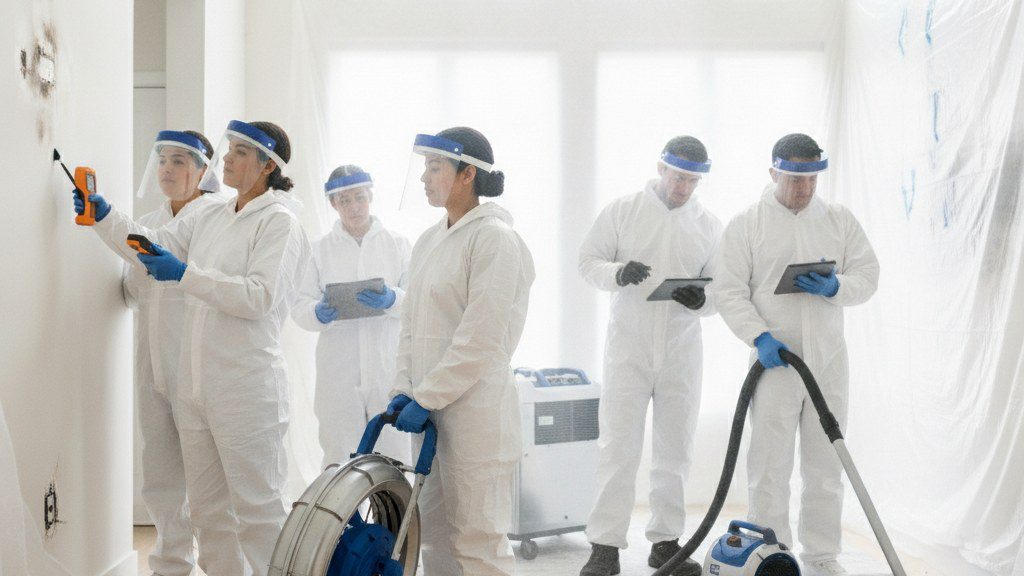
How does black mold remediation work after water damage?
Black mold remediation means finding the moisture source, containing affected areas, removing contaminated materials safely, and drying the structure so mold does not keep growing. If you only clean the surface and ignore the leak, you have not solved the problem. A proper fix starts with moisture control and ends with verification.
What is black mold remediation after a water leak?
Black mold remediation is the combination of moisture control, containment, removal, and drying. If you only wipe the visible growth, you are treating a symptom, not the cause. The useful definition here is simple: find what stayed wet, remove what cannot be saved, and stop the environment that allowed the mold to grow.
The part people miss is that mold is a moisture problem first. Visible dark growth usually shows up after a leak, seepage, burst pipe, or flood has kept materials damp long enough to support growth. So the question is not just, what does the stain look like? It is, what is still wet behind it?
Black mold remediation is not the same as general cleaning. Porous materials like drywall, insulation, carpet pad, and some contents can hold contamination in the material itself. When that happens, surface spray is cosmetic. The real fix is containment, removal where needed, and proper drying of the structure.
This is why the first inspection matters so much. You are trying to determine the path of the water, the extent of the moisture, and whether the affected materials can be restored or need to come out. That decision changes everything that follows.
If the home smells musty after a leak, that odor often tells you the problem is larger than the visible spot. The smell is not proof of black mold, but it is a clue that moisture may still be trapped somewhere hidden.
The practical takeaway is annoying but true: mold grows where water was not fully controlled. That is why remediation and drying belong together, not as separate problems handled in separate passes.
- Moisture source first, because mold follows water.
- Containment matters to keep disturbed spores from spreading.
- Porous materials may need removal, not surface cleaning.
- Drying is part of remediation, not an optional extra.
- Visible black growth after a leak deserves an actual inspection.
What does black mold look like on walls, ceilings, and floors?
Black mold does not always look dramatic, and that is why people miss it. It can be dark spotting, streaking, fuzzy patches, or blotchy discoloration on damp building materials. The useful rule is this: if the area was wet and the growth is concentrated near that moisture, treat it as real until proven otherwise.
On painted drywall, mold may look like dark freckles, gray-green smudges, or a spread of speckled growth along a seam or baseboard. On wood, it can look like darker staining or powdery patches. On caulk or tile grout, it may hide in the edges where water sits too long.
Ceilings are a common place to miss the pattern because the stain often starts small. A roof leak, bathroom leak, or upstairs plumbing issue can create a soft ring, then a wider field of discoloration if the source keeps feeding moisture into the material.
Floors are different because the visible issue may be the finish, not the mold itself. Warped flooring, lifting seams, dark edges, or a persistent odor can point to moisture trapped underneath. In other words, what you see on top is not always the whole story.
Color alone is not enough to identify the species. That matters because buyers often fixate on whether something is literally toxic black mold. The better question is whether the growth is tied to water intrusion and whether the affected material can be safely restored.
If you are staring at a wall and debating whether to ignore it, that indecision is usually the wrong move. After water damage, uncertainty tends to mean hidden moisture, and hidden moisture is what keeps mold going.
- Look for spots, streaks, fuzz, or blotchy dark growth.
- Check seams, corners, baseboards, and places with past leaks.
- Watch for warping, bubbling paint, or soft drywall.
- Musty odor can indicate hidden growth behind surfaces.
- Color does not confirm species, but it does justify action.
Which symptoms of mold exposure should you actually notice first?
The first symptoms people notice are often irritation signals, not dramatic illness. Think coughing, congestion, watery eyes, throat irritation, or headaches that seem to track with time spent in the affected space. Those symptoms do not diagnose the problem, but after water damage they are enough to stop delaying and inspect the source.
This is where people waste time. They wait for some perfect proof, but the body is usually the first warning system. If you feel worse in one room, after cleaning up a leak, or near a damp basement, that pattern matters more than trying to identify the exact mold species from a photo.
Symptoms of mold exposure can overlap with allergies, colds, or irritation from dust and debris. That is why the practical move is to focus on the building conditions. Was there a leak? Was the area fully dried? Is there visible growth or a persistent smell?
In homes with water damage, symptoms are only one piece of the picture. A child, older adult, or someone with respiratory sensitivity may react faster than others. That does not mean panic. It means the environment should be checked before the problem spreads further.
People also ask about ingestion, but the bigger issue in a home setting is usually inhalation and contact from contaminated dust, disturbed materials, or aerosolized particles during cleanup. That is another reason not to rip into a damaged wall without a plan.
The honest move is simple: if the house got wet and someone in it is reacting, treat the moisture as the priority. You can argue about labels later. First you remove the conditions that let growth continue.
- Coughing and congestion are common early irritation signs.
- Watery eyes or throat irritation can point to indoor exposure.
- Headaches or symptoms that ease away from home matter.
- Exposure signs are not a diagnosis, but they are a warning.
- After water damage, symptoms plus moisture equal a serious clue.
Elevated Operations provides 24/7 water, fire, mold, storm, and sewage damage restoration across Metro Atlanta.
Get a free quoteWhy can a leak turn into a mold problem so fast?
Because mold does not need a dramatic flood to get started. It only needs damp materials and time. If drywall, carpet, insulation, or framing stayed wet, the problem can move from hidden moisture to visible growth without giving you much warning.
A small plumbing leak can be worse than a big obvious spill because people underestimate it. They dry the surface, maybe run a fan, and assume the job is done. But moisture can keep moving into the cavity behind the wall or under the floor finish.
That hidden wet layer is the real problem. Once porous materials absorb enough moisture, they become a sustained food source for mold growth. The result is visible staining, odor, and contamination that may spread beyond the spot where the water first showed up.
The mistake is assuming that if the room looks dry, it is dry. Materials dry at different speeds, and cavities dry more slowly than the surface you can see. That is why water damage and mold are so often linked in the same cleanup job.
After a burst pipe, sewer backup, or flooded basement, the risk is even more obvious. Water touches more surfaces, and the cleanup often disturbs dust and debris that were already sitting there. That mix creates a harder remediation job if it is not handled promptly.
So the real question is not how much water you saw. It is how long the structure stayed damp, where it traveled, and whether the affected materials were ever properly dried. That is the whole game.
bullets
- Small leaks can be worse than obvious spills because they hide.
- Drywall, insulation, and carpet pad absorb moisture quickly.
- Surface drying does not prove the cavity is dry.
- Flooding and sewer backups raise the contamination stakes.
- The longer materials stay damp, the more removal may be needed.
What parts of a home usually need the most attention?
The trouble spots are usually the places where water settles, lingers, or gets trapped. That means bathrooms, basements, crawl spaces, around windows, under sinks, behind appliances, and anywhere a leak has been running quietly. Those are the spots most likely to hide both moisture and growth.
Bathrooms are obvious, but not always obvious enough. Caulk lines, shower surrounds, wall corners, and the area behind vanities can trap moisture if ventilation is poor or if a leak is slow enough to stay hidden. The visible patch may be tiny while the damaged area is not.
Basements and crawl spaces deserve extra caution because they often stay cooler and hold moisture longer. A water event in either area can feed mold growth on framing, insulation, subflooring, or stored contents. If the smell is strongest there, you already have a clue.
Around windows and exterior walls, leaks can travel before they show. You might see bubbling paint or a stained corner, but the entry point may be elsewhere. That is why a single discolored spot should be treated as a map, not just a blemish.
Appliance zones are another common failure point. Water heaters, washing machines, dishwashers, and refrigerators can leak slowly enough that the first sign is odor or floor damage, not standing water. By then, growth can already be underway below the surface.
The point is not to chase every dark spot blindly. It is to identify the water path, because that tells you where hidden contamination and structural damage are most likely to be sitting.
bullets
- Bathrooms trap moisture in corners, caulk, and wall cavities.
- Basements and crawl spaces hold dampness longer than you think.
- Window and exterior wall leaks often travel before showing up.
- Appliance leaks can damage subfloors before you notice them.
- A visible stain is a clue to the water path, not just a mark.
What should a real remediation plan do before cleanup starts?
A real plan starts with containment and drying strategy, not with a bottle of cleaner. Before anyone removes material or scrubs a surface, the team should identify the affected area, control airflow, and decide what can be restored versus what must be removed.
If the space is not contained correctly, cleanup can move debris and spores into cleaner areas of the home. That is why containment is not theater. It is the barrier that keeps the problem from becoming a wider problem while the work is underway.
The plan also needs moisture mapping. You want to know where water traveled, which materials are wet, and whether the structure itself is still holding moisture. Without that information, you are guessing. Guessing is how people waste time and leave contamination behind.
Then comes the removal decision. Nonporous surfaces may be cleaned and dried, but contaminated porous materials often cannot be saved. If drywall or insulation is compromised, leaving it in place usually just preserves the problem behind the finish surface.
Good remediation is also about sequence. Drying equipment, debris removal, cleaning, and reconstruction all need to happen in the right order. If reconstruction starts too early, you can seal in a problem that will come back later.
That is the difference between a cosmetic cleanup and a true remediation job. One makes the room look better. The other makes the room actually usable again.
bullets
- Containment helps prevent spread during cleanup.
- Moisture mapping shows how far the water traveled.
- Porous materials may need removal, not more cleaning.
- Drying, cleanup, and reconstruction must happen in the right order.
- A good plan solves the cause, not just the visible damage.
When the problem needs more than surface cleaning
| Situation | What to do | Why |
|---|---|---|
| The odor stays after wiping and airing out the room. | Have the area inspected for hidden moisture and trapped contamination. | Persistent odor usually means the source is still active somewhere in the structure. |
| Drywall is soft, swollen, or visibly darkened after a leak. | Remove compromised material and dry the framing and cavity. | Porous materials often hold contamination below the surface, where spray will not reach. |
| Mold shows up again after a previous cleanup. | Check for an unresolved leak, poor drying, or incomplete removal. | Regrowth usually means the conditions were never fully corrected. |
| Someone in the home has irritation that worsens in one area. | Treat the room as an indoor environmental problem and inspect it promptly. | Health clues do not confirm mold by themselves, but they do justify a faster response. |
Doing it yourself vs bringing in Elevated Operations
| Doing it yourself | With Elevated Operations | |
|---|---|---|
| Finding the source of the problem | You may clean what you can see and miss the leak path behind walls or under floors. | We focus on the moisture source first, then trace what was affected so the cleanup is built on facts. |
| Containment and cleanup | It is easy to spread dust, debris, and contaminated material into clean areas if you do not have the right setup. | We use a controlled process so the affected area is handled without turning one problem into several. |
| Drying and reconstruction | Homeowners often stop after the visible stain is gone, then discover the damage was deeper. | We handle the work through drying and, when needed, reconstruction so the space is actually put back together correctly. |
| Insurance and paperwork | You are left juggling photos, notes, and adjuster questions while also dealing with the damage. | We can manage the claim process directly, which removes a layer of stress when you are already dealing with a loss. |
Frequently Asked Questions
How do I know if dark spots are mold or just staining?
You usually cannot tell from color alone. Staining can look similar to growth, especially after a leak or flood. What matters is whether the area was wet, whether there is odor, and whether the material is soft, damaged, or spreading. If the spot is tied to moisture, it deserves a professional look.
What is the difference between mold removal and remediation?
Mold removal sounds final, but remediation is the better term because the goal is to correct the moisture problem, remove contaminated materials when needed, clean the area properly, and keep the growth from returning. If the cause is not fixed, the mold can come back even after visible cleaning.
Are symptoms of mold exposure always obvious?
No. Some people notice coughing, congestion, headaches, eye irritation, or a general feeling that they do better away from the house. Others notice nothing at first. That is why you should not wait for severe symptoms before acting if there has been a leak, flood, or sewage issue.
Do I need a professional after a small leak?
If the leak reached drywall, insulation, flooring, or a hidden cavity, yes, it is worth getting it checked. Small leaks are often the ones people underestimate. The visible damage can be minor while the hidden moisture is much larger. A proper inspection helps you avoid bigger repairs later.
How much does black mold remediation cost in Atlanta?
It depends on the size of the affected area, the amount of removal needed, and whether drying, cleanup, or reconstruction is involved. The right way to get a number is a custom estimate after inspection. If you want help in the Atlanta metro area, Elevated Operations can book a call and provide a free quote.
Get a free, no-obligation restoration estimate
Elevated Operations provides 24/7 water, fire, mold, storm, and sewage damage restoration across Metro Atlanta.
Get a free quoteCall (770) 404-6895Last updated October 19, 2026