
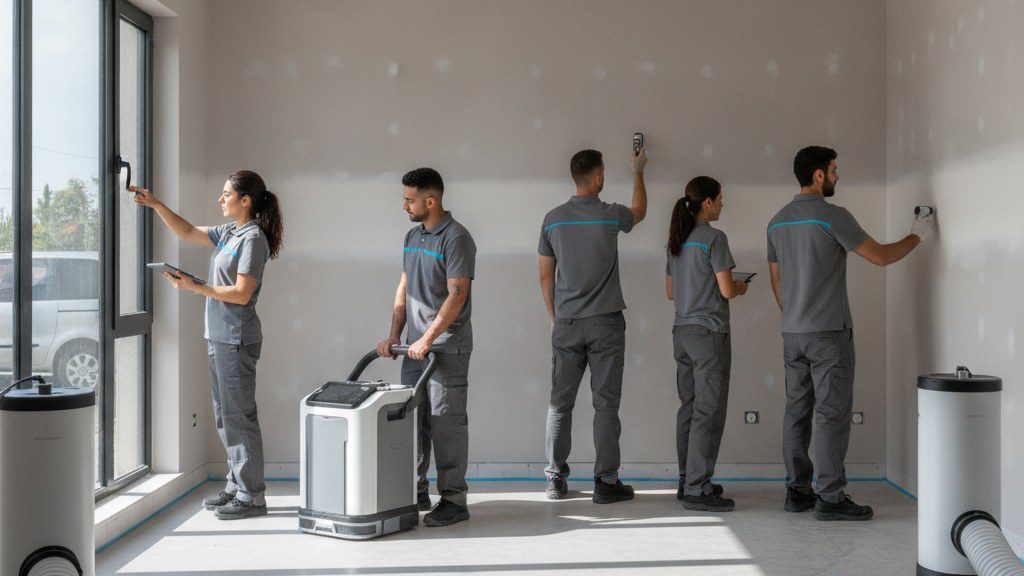
Can I use vinegar for cleaning mold with vinegar on drywall?
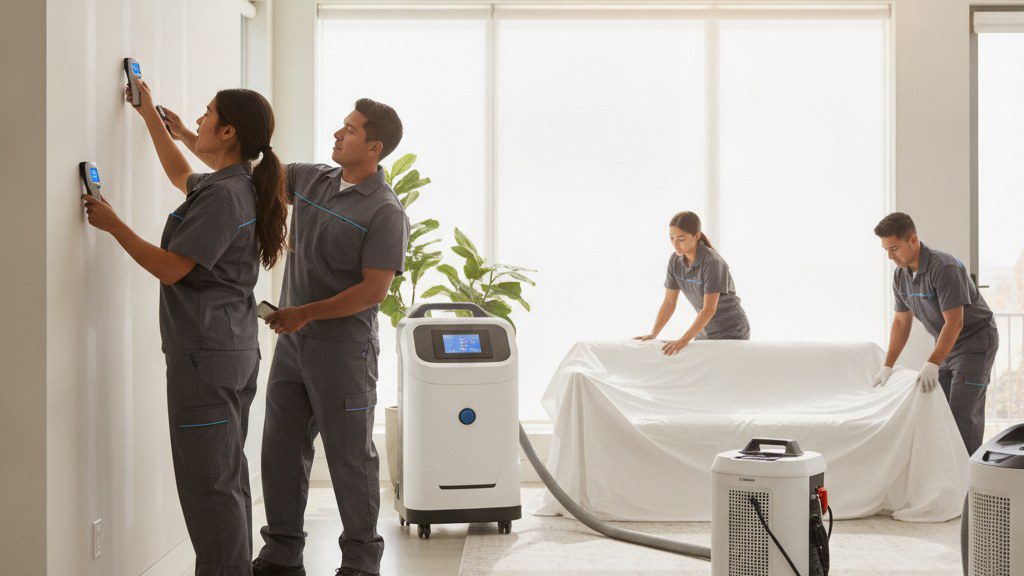
Cleaning mold with vinegar can remove small surface spots, but it does not solve the moisture problem that lets mold come back. If the area is on drywall, smells musty, or followed a leak or flood, the real fix is drying, containment, and professional mold remediation.
Is vinegar enough for cleaning mold with vinegar?
Vinegar can be part of a surface cleanup, but it is not the same thing as fixing a mold problem. If the moisture source is still there, you have treated the symptom and left the cause in the wall, subfloor, or air space.
That is why people get frustrated. They clean, it looks better, and a week later the stain is back. Mold does not appear because a shelf is dirty. It appears because moisture stayed where it should not have stayed.
For a hard, nonporous spot, vinegar may help loosen visible growth. But once you are dealing with painted drywall, paper backing, trim seams, or soft materials, you are no longer talking about a simple wipe-and-done task.
The hidden issue is water migration. A leak can run behind a wall, soak insulation, and feed mold you cannot see. If the surface is the only thing you clean, the structure can keep supporting growth after you walk away.
This is why a professional mold cleaning service starts with the water source and the affected materials, not the bottle on the counter.
Vinegar may be a short-term cosmetic step. Mold remediation is the actual fix when the problem has moved beyond a small surface spot.
- Works best only on very small surface spots
- Does not dry out wet walls or framing
- Does not replace containment or air control
- Does not remove hidden mold behind drywall
- Does not solve the leak, flood, or condensation source
What does cleaning mold on drywall actually involve?
Cleaning mold on drywall usually means deciding whether the drywall can be saved or needs to come out. That is the real decision point, and vinegar does not answer it. Drywall is porous, so the question is not just what you can see on the face paper.
Drywall can absorb water through the face paper and the gypsum core. Once that happens, mold can grow not only on the surface but within the material. A quick scrub may make it look clean while leaving the deeper contamination in place.
A careful evaluation looks at staining, softness, swelling, odor, and how long the material stayed wet. Those clues matter more than the cleaning product. If the board is compromised, cleaning it is the wrong job.
In a water damage situation, the wall cavity may also include insulation, base plates, or adjacent trim that need attention. That is where the problem expands. You are no longer dealing with a spot. You are dealing with a damaged assembly.
This is also why mold cleaning companies often separate cleaning from demolition. Sometimes the safe move is removal, drying, and then reconstruction, not more chemical wiping.
If you are seeing recurring spots on drywall, the issue is usually moisture management, not product choice.
- Check for softness, swelling, and staining
- Look for odor coming from the wall cavity
- Treat repeated return of spots as a warning sign
- Consider hidden insulation or framing damage
- Replace compromised drywall instead of masking it
Can mold cleaning services fix the moisture problem behind the stain?
Yes, that is the point. Mold cleaning services should do more than wipe visible growth. They should trace the water intrusion, dry the affected structure, and address the materials that let mold continue to spread.
A stain on the wall is often the last thing you notice, not the first thing that happened. By the time mold shows up, water may have already moved through hidden spaces. So the clean-looking surface can be misleading.
Proper cleaning means the source is identified. That might be a plumbing leak, roof intrusion, humidity issue, crawl space moisture, or sewer backup. Different causes require different fixes, and vinegar does not distinguish between them.
Once the source is handled, the area must be dried to appropriate conditions and any damaged material removed. That is what keeps the problem from cycling back after a cosmetic cleanup.
This is where a mold cleaning company earns its keep. The work is not just removal. It is containment, drying, material decision-making, and follow-through so you are not dealing with the same smell next month.
If the plan stops at surface cleaning, it is incomplete.
- Identify the water source first
- Contain affected areas to limit spread
- Dry structure and surrounding materials
- Remove damaged porous materials when needed
- Verify the area is ready for restoration
Elevated Operations provides 24/7 water, fire, mold, storm, and sewage damage restoration across Metro Atlanta.
Get a free quoteWhy mold cleaning companies ask about water damage first
Because mold is usually downstream from water damage. If a mold cleaning company does not ask about the leak, flood, or backup first, it is missing the root cause. That is how people end up cleaning the same wall twice.
When someone says they have mold, the next question should be what got wet and for how long. That history tells you whether you are dealing with a surface issue or a building-material issue. It also tells you whether hidden damage is likely.
Water damage changes the plan. A small condensation patch on tile is not the same as a burst pipe behind finished drywall or a flooded basement. The cleanup method, drying setup, and demolition threshold are completely different.
This is why mold cleaning companies that also understand water damage are more useful than a narrow cleaner with a spray bottle. They can read the whole situation instead of just the stain.
The common mistake is treating visible mold as the main event. It is usually the receipt, not the problem itself. The problem is the wet building system underneath it.
If the wet source was recent, the restoration clock matters more than the cleaning product on your shelf.
- Water history changes the remediation plan
- Wet drywall often needs a different response than tile
- Burst pipes and flooding create hidden damage risk
- Humidity issues can keep feeding new growth
- A broad restoration team can handle the full chain
How mold cleaning services protect a home after a leak or flood
The protection comes from controlling spread, drying the structure, and removing what cannot be salvaged. After a leak or flood, mold cleaning services should make the space safe to use again, not just make it look better for a day.
After water intrusion, the goal is not cosmetic improvement. It is stopping mold from expanding into more materials and more rooms. That means working methodically, not casually wiping at whatever is visible.
A proper response may include removing wet porous materials, cleaning salvageable surfaces, drying concealed spaces, and managing any odor or contamination that follows standing water. That is especially important in basements, crawl spaces, and areas with poor airflow.
If sewage was involved, the risk profile changes again. Sewage cleanup requires a different level of containment and cleaning because contamination is not limited to visible mold growth.
People often ask whether they can save time with vinegar. The better question is whether they can afford to leave moisture behind and hope it disappears. That is how bigger reconstruction jobs start.
Good cleanup prevents a small incident from becoming a larger repair bill later, even if no one likes hearing that at the sink with a rag in hand.
- Control spread before surface cleaning
- Remove materials that cannot be fully dried
- Use containment when contamination is active
- Address basements, crawl spaces, and hidden voids
- Treat sewage-related events as a separate hazard
What mold cleaning with vinegar misses in crawl spaces and basements
Crawl spaces and basements are where vinegar usually falls apart. The surface might look manageable, but the real issue is air movement, humidity, and materials that stay damp. That is a structural moisture problem, not a bottle problem.
These areas trap moisture because they often have less ventilation and more exposed framing. If water gets in, the wood, insulation, and subfloor can all hold it longer than people expect. That gives mold time to spread beyond what is visible.
Vinegar may clean a small spot you can reach. It will not tell you whether humidity is staying elevated, whether a vapor barrier is compromised, or whether the crawl space has hidden growth on framing and joists.
Basement mold also tends to return when drainage issues or recurring seepage are ignored. You keep seeing the same pattern because the environment keeps feeding it.
This is why homeowners searching for mold cleaning services often need a moisture-focused response, not a surface-only response. The cleaning step and the drying step have to work together.
If the smell is stronger than the stain, assume the problem is bigger than the wall patch.
- Crawl spaces trap moisture and slow drying
- Basements often have recurring seepage problems
- Hidden framing can hold growth after surface cleaning
- Humidity control matters as much as wiping
- Odor can point to deeper contamination than you see
Professional mold cleaning service or a bottle on the shelf?
A bottle is fine for a tiny, clearly contained spot. A professional mold cleaning service is what you call when the stain, smell, or water history says the problem is bigger than a quick household fix.
The difference is not drama. It is scope. A homeowner can handle some surface housekeeping. A restoration team handles hidden damage, containment, drying, contaminated materials, and the work needed to put the property back together.
That matters because mold problems rarely stay politely in one place. They follow moisture paths, travel into cavities, and show up where people are least likely to look. By the time you can smell them, the building may already need more than cleaning.
Elevated Operations is built for that larger picture in the Atlanta metro area, with 24/7 response, IICRC-certified technicians, and reconstruction capability when materials need to be removed and rebuilt. That is the difference between “looks cleaner” and “actually handled.”
If you are comparing mold cleaning companies, ask whether they can manage the full chain from emergency water removal through final repairs. If they cannot, you may still be holding the wrong end of the problem.
The easiest choice is not always the right one. The right choice is the one that stops the recurrence.
- Use DIY only for very small, isolated spots
- Call a pro when drywall or framing is involved
- Choose teams that can handle drying and demolition
- Look for certified technicians and reconstruction support
- Prioritize full remediation over cosmetic cleanup
When vinegar is not the right fix
| Situation | What to do | Why |
|---|---|---|
| The mold keeps coming back after cleaning | Find and stop the moisture source, then dry and evaluate the affected materials | Recurring growth means the problem is feeding itself somewhere hidden |
| The affected area is on drywall, ceiling board, or insulation | Inspect for removal or professional remediation instead of surface wiping | Porous materials can hold contamination below the surface |
| You smell mold but cannot see much of it | Have the space assessed for hidden water damage and concealed growth | Odor often shows up before visible damage does |
| The issue followed a burst pipe, flood, or sewer backup | Treat it as a water damage and contamination event, not a simple cleaning task | These events can spread moisture and contaminants into cavities and adjacent rooms |
Doing it yourself vs bringing in Elevated Operations
| Doing it yourself | With Elevated Operations | |
|---|---|---|
| Scope of the problem | You can wipe what you can see, but hidden moisture and damaged materials are easy to miss | We assess the water intrusion, affected materials, and next steps from cleanup through reconstruction |
| Containment and drying | Most homeowners do not have containment, extraction, or structural drying equipment | We handle emergency water removal, drying, and the controls needed to keep the issue from spreading |
| Material decisions | You have to guess whether drywall, trim, or insulation can be saved | We help determine what should be cleaned, removed, or rebuilt based on the condition of the space |
| Insurance and repairs | You are left managing documentation, scheduling, and the repair follow-through | We provide direct insurance claim management and licensed reconstruction under one roof |
Frequently Asked Questions
Is vinegar safe for cleaning mold on drywall?
Vinegar may be used on very small surface spots, but drywall is porous and can hold moisture and contamination below the surface. If the stain is on drywall, especially after a leak or flood, the safer move is to have the area evaluated before you keep scrubbing and driving the problem deeper.
What is the difference between mold cleaning and mold remediation?
Mold cleaning usually means removing visible growth from a surface. Mold remediation goes further by finding the moisture source, containing the area, removing damaged materials when needed, drying the structure, and reducing the chance of recurrence. For water damage, remediation is usually the real answer.
Can I use a mold cleaning company for a small bathroom spot?
Yes, if the spot is small but you are unsure whether the moisture source is fixed. A mold cleaning company is especially useful when the stain keeps returning, the drywall feels soft, or there is an odor. That tells you the issue is probably more than surface grime.
How do I know if I need professional mold cleaning services?
If the growth follows a burst pipe, flooding, sewer backup, or a leak that soaked drywall or insulation, you likely need professional mold cleaning services. Those jobs are about drying, containment, and damage assessment, not just removing what is visible.
How much will this cost to clean?
It depends on the size of the affected area, how far the moisture traveled, and whether demolition or reconstruction is needed. Because every loss is different, the best next step is to book a call for a free quote. Elevated Operations can help if you want a careful assessment in the Atlanta metro area.
Get a free, no-obligation restoration estimate
Elevated Operations provides 24/7 water, fire, mold, storm, and sewage damage restoration across Metro Atlanta.
Get a free quoteCall (770) 404-6895Last updated October 6, 2026