
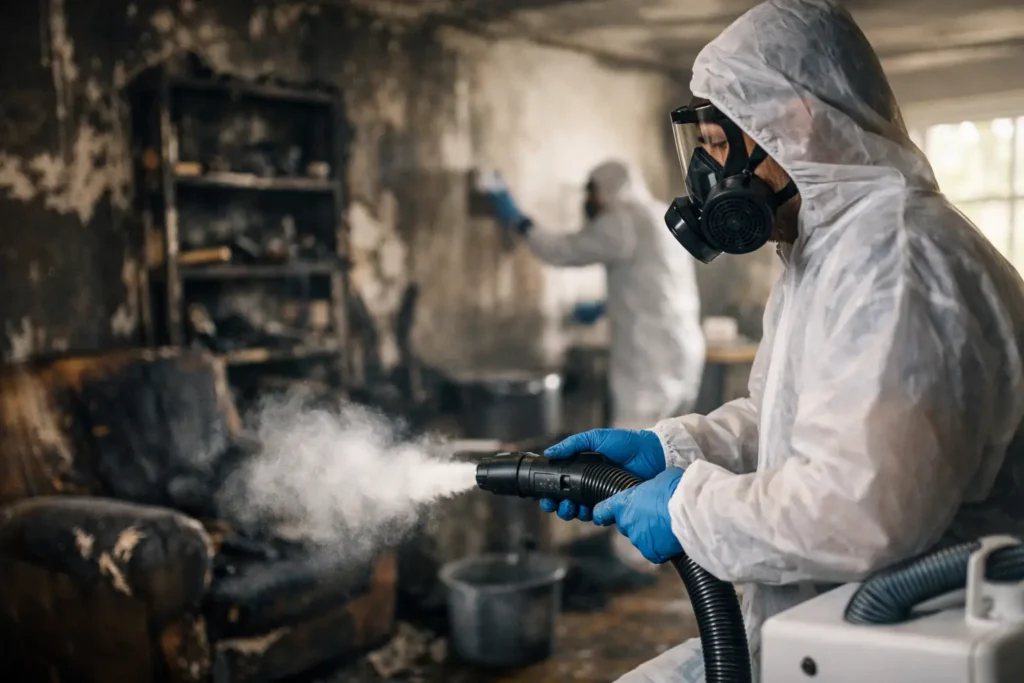
Smoke can leave a property long after the flames are out. You may notice it when you open a closet, run the HVAC system, or walk back into a room that seemed clean the day before. A professional smoke odor removal service does more than cover that smell with fragrance. It identifies where smoke particles settled, removes the contamination, and treats the odor source so your home or business can move forward safely.
For Metro Atlanta property owners, speed matters after a fire. Smoke residue becomes harder to remove as it sits, and odors can spread through porous materials, insulation, ductwork, cabinetry, fabrics, and wall cavities. The right response protects the structure, supports the insurance claim, and prevents a small fire loss from becoming a much larger rebuilding project.
Why smoke odor stays after visible cleanup
Smoke odor is not simply stale air. It comes from microscopic particles and gases produced when materials burn. Those particles are often oily, acidic, and small enough to settle in places that a standard cleaning cannot reach. Even a minor kitchen fire can send residue through nearby rooms through air movement and the HVAC system.
What burned also affects the cleanup plan. Burning wood, food, plastic, upholstery, wiring, or synthetic flooring can each leave different residues and odors. Some are dry and powdery, while others are sticky and difficult to lift without the proper cleaning method. Using the wrong product or rubbing soot into a surface can stain finishes, damage fabrics, and make odor removal harder.
Heat adds another complication. It can drive smoke particles deeper into drywall, trim, insulation, carpet padding, and soft furnishings. A room may look restored after surface cleaning but still release odor when humidity rises or the heating and cooling system starts running. That is why odor control must be tied to thorough smoke and soot remediation, not treated as a final cosmetic step.
What a smoke odor removal service should include
Effective odor removal begins with a complete assessment. Technicians inspect the affected areas, identify the type and extent of smoke residue, and determine whether contamination traveled beyond the original fire location. This includes checking contents, HVAC pathways, wall cavities, attics, and concealed building materials when conditions call for it.
The first priority is source removal. Technicians use appropriate dry or wet cleaning methods based on the surface and residue type. Delicate contents, electronics, painted surfaces, hard flooring, cabinetry, and textiles all require different handling. The goal is to remove soot before it can continue to release odor or cause corrosion and staining.
Next comes controlled odor treatment. Depending on the conditions, a restoration team may use HEPA air filtration, hydroxyl technology, thermal fogging, or other professional deodorization methods. These tools are not interchangeable. The best method depends on the materials involved, whether occupants are present, the severity of the odor, and whether the source has already been properly cleaned.
A reliable team also evaluates the HVAC system. If smoke moved through supply and return vents, turning the system back on without addressing the issue can recirculate odor and particles. Filters, coils, ductwork, and mechanical components may need cleaning or specialized service as part of the recovery plan.
Cleaning alone is not always enough
Some materials cannot be fully restored. Heavy smoke exposure may require removing and replacing insulation, carpet padding, damaged drywall, charred framing, or cabinets that have absorbed residue. That can feel discouraging, but it is often the most dependable route to a clean result.
The trade-off is straightforward: keeping a contaminated material can reduce immediate demolition costs, but it may leave a recurring odor that affects comfort, leasing, resale, or daily operations. An experienced restoration contractor should explain which materials can be cleaned, which should be tested further, and which need replacement – without pushing unnecessary demolition.
The professional process after fire and smoke damage
A well-managed project gives you control at a time when the property may feel unmanageable. While every loss is different, the work generally follows a clear sequence.
First, the property is stabilized. That may include emergency board-up, roof tarping, securing access points, and removing wet materials if fire suppression caused water damage. Water and smoke damage frequently occur together, so drying and moisture mapping are often essential before repairs begin.
Then the team documents conditions for the insurance claim. Photos, measurements, moisture readings, inventories, and a detailed scope help show what was affected and why the proposed work is necessary. Clear documentation is especially valuable for landlords, investors, and commercial property managers who need to explain downtime, repair decisions, and costs.
After cleaning and deodorization, the property is reassessed before reconstruction begins. This is the point where a one-stop restoration partner makes a real difference. Instead of finding a separate contractor after mitigation is complete, you can move directly into repairs such as drywall replacement, painting, flooring, electrical work, cabinetry, or larger remodeling upgrades.
At Elevated Operations, the work is built around that full recovery path. Our IICRC-certified technicians use commercial-grade equipment and documented restoration methods, then coordinate the project from emergency response through reconstruction and insurance communication. We do not just clean up the mess. We help restore a property that is ready to use again.
When to call for professional odor removal
Call for help as soon as you notice smoke odor after a fire, even if the fire was contained quickly. Fast action can limit permanent staining, corrosion, and odor migration. It is also wise to request an evaluation if you are preparing to sell, re-rent, reopen, or renovate a property with a known fire history.
Professional help is particularly important when odor returns after cleaning, when occupants report headaches or irritation, when soot is visible around vents or ceilings, or when smoke reached multiple rooms. Businesses should act quickly as well. Lingering odor can affect staff, customers, inventory, and the perception of the space long after the immediate emergency has passed.
For property owners in Atlanta, Marietta, Mableton, Austell, Douglasville, and nearby communities, a 24/7 response can reduce the time smoke contaminants have to settle into the building. Early mitigation also gives the insurance carrier clearer evidence of the damage and the steps taken to prevent further loss.
Can you remove smoke odor yourself?
For a very small cooking incident with no visible soot and no damage beyond one washable surface, airing out the space and cleaning promptly may be enough. Replace the HVAC filter, wash hard surfaces with a suitable cleaner, and do not use candles or heavy fragrance sprays to mask the problem. If the odor disappears completely and does not return, extensive restoration may not be necessary.
But DIY methods have limits. Vinegar, baking soda, air fresheners, and consumer-grade odor machines can temporarily change how a room smells without removing contamination from porous materials. Ozone devices also require careful handling and should not be used around people, pets, plants, or certain materials. They are not a substitute for source removal.
A practical rule is this: if the event involved open flame, visible soot, smoke in more than one room, fire extinguisher residue, or water from firefighting efforts, bring in a professional. The cost of a proper inspection is usually far less than repeated cleaning attempts, tenant complaints, or having to reopen finished walls later.
Insurance, documentation, and the path back to normal
Fire losses move faster when the mitigation and repair plan is documented from the start. Keep photos of the initial damage if it is safe to do so, save receipts for emergency expenses, and avoid discarding damaged contents until your insurer or restoration team has documented them. Your policy may cover smoke cleaning, odor treatment, temporary protection, and reconstruction, but coverage depends on the policy and the cause of loss.
You do not need to become a restoration expert while managing a claim. Ask for a clear scope of work, regular updates, and documentation that explains the condition of the property. A contractor who understands both mitigation and reconstruction can also help prevent gaps between the emergency phase and the final repairs.
Smoke odor is a signal that the recovery is not finished. Address it at the source, protect the materials that can be saved, and replace the ones that cannot. With the right team and a clear plan, your property can move from fire damage and uncertainty to a clean, usable space again.