The fire is out, but the property is not yet safe. Soot can travel well beyond the room where flames started, smoke odor can settle into framing and soft materials, and water used to extinguish the fire can begin creating a second problem within hours. Fire damage restoration Atlanta property owners can depend on starts with controlling those risks quickly, then building a documented path back to a safe, usable space.
For homeowners, landlords, and commercial property managers, the goal is not simply to make the building look clean. The goal is to protect what can be saved, prevent avoidable damage, support the insurance claim, and complete repairs without having to manage a rotating list of vendors.
What to Do After a Fire
Do not re-enter a fire-damaged structure until the fire department or appropriate authority says it is safe. Even a small kitchen or electrical fire can leave behind weakened materials, contaminated surfaces, exposed wiring, and hidden moisture. A space that appears mostly intact may still have smoke damage in cabinets, HVAC pathways, insulation, or wall cavities.
Once access is approved, document visible conditions with photos and video before moving personal property. Keep receipts for emergency lodging, temporary repairs, and essential replacement items. Contact your insurer promptly, but do not wait for every claim detail to be resolved before taking reasonable steps to protect the property from further loss.
That may mean emergency board-up for broken windows and doors, roof tarping after a fire reaches the attic or roofline, and immediate water extraction where firefighting efforts soaked floors or ceilings. Delays can invite theft, weather exposure, mold growth, and more extensive structural deterioration.
Fire Damage Restoration in Atlanta Is More Than Cleanup
A proper restoration plan begins with an assessment of the fire, smoke, soot, and water impact. The visible burn area is only part of the picture. Technicians evaluate which materials can be cleaned, which require removal, how far smoke traveled, and whether water has migrated beneath flooring or behind walls.
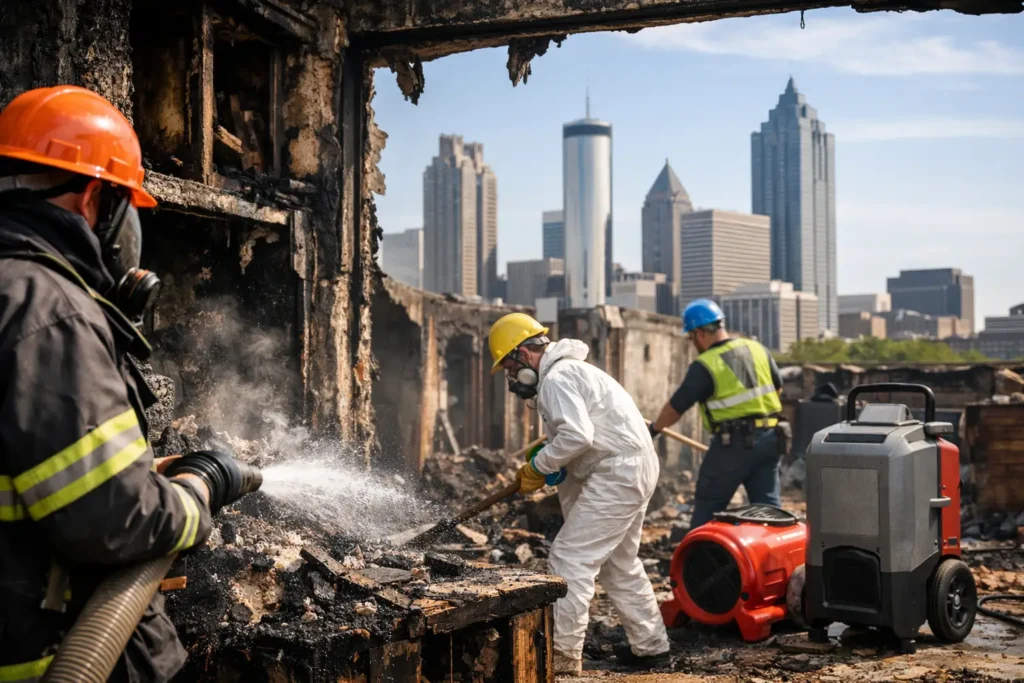
The process usually starts by securing the building and removing standing water. Commercial-grade extraction equipment, moisture meters, and thermal imaging help identify wet materials that cannot be judged by touch alone. Structural drying is then carefully monitored, because drying too quickly or unevenly can damage certain materials, while drying too slowly leaves moisture trapped where mold can develop.
Smoke and soot removal require a different approach than ordinary cleaning. Soot particles can be acidic and oily, and wiping them with the wrong method may grind contamination deeper into paint, wood, textiles, or flooring. Restoration technicians use surface-specific cleaning methods, HEPA filtration, controlled demolition when necessary, and odor-control procedures designed to address contamination at its source.
Odor is often the issue that frustrates property owners most. A scented product may cover smoke temporarily, but it does not remove residue embedded in porous materials. Depending on the fire and affected materials, effective odor control may require detailed cleaning, removal of unsalvageable contents, sealing treated surfaces, and specialized deodorization equipment.
Why the Type of Fire Matters
Not every fire leaves the same restoration challenge. A protein fire from burned food can create a strong, persistent odor with limited visible soot. A grease fire may leave sticky residue across a kitchen and adjacent rooms. Electrical fires can produce fine soot that reaches far through the property, while a larger structural fire may require significant demolition and reconstruction.
The right scope depends on what burned, how long the fire lasted, the building’s ventilation, the materials affected, and the amount of suppression water used. That is why a one-size-fits-all quote or a quick surface cleaning can create problems later. Careful inspection protects both the property and the claim.
Protecting Your Insurance Claim Without Delaying Work
Insurance claims often feel like another emergency layered onto the first one. A restoration partner should make the process clearer, not add more paperwork for you to chase. Detailed photos, moisture records, drying logs, itemized estimates, and documented cleaning or demolition decisions give adjusters a clear record of the loss and the work performed.
There is a balance to maintain. Property owners should preserve evidence, avoid discarding damaged items before they are documented when possible, and communicate with the carrier. At the same time, emergency mitigation should not be postponed while waiting for an adjuster to inspect every affected surface. Most policies expect reasonable action to prevent additional damage.
For rental properties and commercial spaces, documentation also helps explain downtime, protect lease records, and support decisions about temporary operations. If smoke affected only part of a building, a disciplined containment and cleaning plan may allow some areas to remain operational. If the HVAC system spread contamination, a broader response may be needed. The facts of the loss should drive the plan.
When Reconstruction Should Begin
Cleanup is not the finish line. After soot removal, drying, and clearance of damaged materials, the property may still need drywall, insulation, flooring, paint, cabinetry, electrical work, roofing, or full room reconstruction. Coordinating those phases through separate contractors can slow the return to normal and make accountability unclear.
A one-stop restoration and reconstruction team keeps the sequence organized. First, the source of damage and safety hazards are addressed. Next comes mitigation and documentation. Then repairs can move forward based on the approved scope, building requirements, and the owner’s goals for the finished space.
This is also the point where practical upgrades may make sense. If a fire-damaged kitchen requires cabinet and drywall replacement, an owner may choose a layout improvement or more durable materials. That decision depends on budget, insurance coverage, timelines, and whether the upgrade extends beyond restoring pre-loss condition. A clear estimate separates covered restoration work from elective improvements so there are no surprises.
Choosing a Fire Restoration Partner
Speed matters after a fire, but speed without process is not enough. Look for a provider that can respond around the clock, secure the property, document conditions, manage water and smoke damage, and carry the project into reconstruction. Ask how they determine whether materials are salvageable, how they monitor drying, and how they communicate with insurers.
Credentials and equipment matter as well. IICRC-certified technicians understand recognized restoration standards, while thermal imaging, moisture mapping, air filtration, and professional drying systems help reveal and address conditions that visual inspection can miss. Just as important, choose a team that communicates plainly about what is happening, what must happen next, and what decisions are yours to make.
Elevated Operations provides Metro Atlanta property owners with emergency response, smoke and soot cleanup, odor control, insurance-ready documentation, and post-loss reconstruction under one accountable team. The focus is simple: we do not just clean up the mess. We elevate recovery by helping protect the property from the first emergency step through the final repair.
A Faster Return Starts With the First Call
After a fire, uncertainty can make every decision feel urgent and complicated. Start with safety, protect the property from additional exposure, document what you can, and bring in qualified restoration help before smoke residue, moisture, or odor has more time to spread. The sooner the recovery plan is organized, the sooner your home, rental, or business can move from disruption toward a space that feels secure again.