
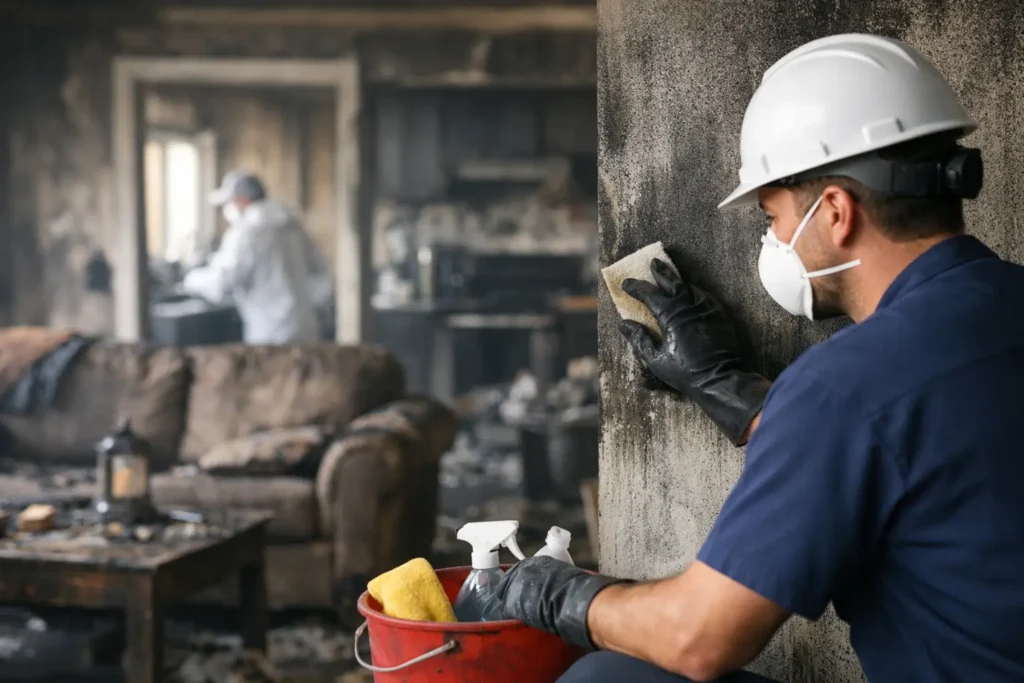
A fire can be out, yet the damage is still moving through your property. Black residue on walls, ceilings, cabinets, and belongings is more than an unpleasant reminder of the event. Soot cleanup after fire is time-sensitive because those tiny particles can stain surfaces, corrode metals, carry odors into porous materials, and affect indoor air quality.
For homeowners, landlords, and business property managers, the first priority is protecting people and preventing a manageable loss from becoming a larger reconstruction project. That means knowing what not to touch, documenting the damage, and bringing in trained restoration help before residue is ground into finishes or spread through the building.
Why soot causes more damage than it appears to
Soot is a mix of carbon particles, ash, oils, acids, and chemicals created when materials burn incompletely. Its makeup depends on what burned. A kitchen fire, an electrical fire, and a fire involving plastics, insulation, or synthetic furnishings can each leave behind different residues that require different cleaning methods.
The particles are extremely small. They settle on visible surfaces, but they also move through HVAC systems, open cabinetry, fabrics, wall cavities, and areas far from the original fire. A room that looks untouched may still carry a smoky odor or a fine film of contamination.
Time matters because soot can become more difficult to remove as it sits. Acidic residue may discolor painted walls, tarnish metal fixtures, etch glass, yellow plastics, and damage electronics. Humidity can accelerate that process, which is especially relevant in Metro Atlanta’s warm, moisture-heavy conditions. Fast mitigation protects what can be saved and creates a clearer record for the insurance claim.
What to do immediately after a fire
Do not reenter a fire-damaged property until the fire department or another qualified authority says it is safe. Structural instability, electrical hazards, falling debris, and contaminated air are real concerns even after flames are gone.
Once access is approved, take wide and close-up photos of affected rooms, surfaces, and belongings before moving or cleaning anything. Keep a basic written record of what happened, including the date, the fire’s apparent source if known, and any emergency work already completed. This documentation supports both restoration planning and insurance coordination.
Avoid wiping soot with a wet rag, household cleaner, or a standard vacuum. Rubbing can drive particles deeper into paint, drywall, upholstery, carpet, and wood grain. Water can turn certain dry residues into a smeared stain. Ordinary vacuums may also send fine particles back into the air unless they have appropriate HEPA filtration.
If it is safe to do so, limit traffic through affected areas. Keep doors closed between damaged and clean spaces, and do not run the HVAC system until it has been inspected. Changing into clean clothes before entering unaffected rooms can also reduce cross-contamination.
Why DIY soot cleanup after fire has limits
A small, contained incident may allow for limited owner cleanup after a professional assessment. For example, a minor stovetop flare-up that leaves a light film on a nonporous backsplash may not require extensive demolition. Even then, the correct cleaning approach depends on the residue and the material underneath it.
The trade-off is easy to underestimate. Attempting to save money with the wrong cleaner, sponge, or vacuum can permanently damage paint and finishes, set stains into textiles, or spread soot into additional rooms. It can also make it harder to establish the full scope of loss for insurance purposes.
Professional fire restoration is usually warranted when soot is visible across multiple rooms, the fire involved wiring or plastics, the HVAC system was operating, odors persist, or occupants have respiratory sensitivities. Commercial properties also need a careful response because smoke contamination can affect inventory, equipment, tenant spaces, and the ability to reopen safely.
Materials that need special handling
Drywall, acoustic ceiling tiles, unfinished wood, carpet, upholstery, and insulation are porous. They can absorb odor and residue deeply enough that surface cleaning alone will not solve the problem. Some materials can be professionally cleaned and deodorized; others may need removal and replacement.
Electronics are another concern. Soot can settle inside computers, appliances, televisions, and electrical panels, where corrosive residue may cause failures later. Do not power on fire-exposed equipment until it has been evaluated by a qualified professional.
What professional soot removal involves
Proper soot cleanup is not simply spraying deodorizer and repainting. The process begins with an inspection to identify the fire’s impact, the type and extent of residue, safety hazards, moisture conditions, and materials that can be restored. Restoration technicians document affected areas and separate salvageable contents from items that cannot be safely or reasonably recovered.
The first cleaning stage often uses dry methods. HEPA vacuuming and specialized dry sponges lift loose soot without smearing it across the surface. Technicians work from cleaner areas toward heavier contamination and from ceilings downward, helping control the spread of particles.
Next comes wet cleaning where appropriate. Different surfaces require different agents and techniques. Painted walls, wood trim, tile, metal, glass, cabinetry, and textiles do not respond the same way. The goal is to remove residue while preserving the finish, not to use one harsh product on everything.
Odor control follows the source. Smoke odor may be addressed through detailed cleaning, HEPA air filtration, thermal fogging, hydroxyl treatment, or other professional deodorization methods selected for the conditions. Masking the smell is not the same as removing the particles and odor-causing compounds that created it.
When fire suppression introduced water, drying must happen alongside soot work. Moisture mapping, commercial dehumidification, and air movement help prevent secondary water damage and mold growth. If drywall, insulation, flooring, or framing must be removed, a capable restoration partner can then coordinate the repairs rather than leaving you to find another contractor after mitigation ends.
Insurance documentation and reconstruction decisions
Fire claims often involve more than the room where the fire began. Smoke migration, water used to extinguish the fire, emergency board-up, content cleaning, and code-related repairs may all be part of the loss. Thorough photographs, moisture readings, cleaning records, itemized estimates, and communication with the adjuster can reduce confusion during a stressful process.
Do not throw away damaged belongings before they have been documented unless they pose an immediate health or safety risk. Make an inventory with descriptions, estimated age, and photos when possible. For businesses, include equipment, inventory, furniture, records, and affected areas that may interrupt operations.
Reconstruction decisions should be based on what is truly restorable, not just what looks clean at first glance. A wall may need replacement because odor remains inside the cavity. Cabinets may be structurally sound but require refinishing. In other cases, targeted cleaning and sealing can preserve materials and control costs. The right decision depends on contamination level, material condition, insurance coverage, and the property owner’s long-term plans.
A faster path back to a safe property
After a fire, property owners should not have to coordinate emergency cleanup, insurance paperwork, and rebuilding across several disconnected vendors. Elevated Operations provides fire, smoke, soot, water-damage, and reconstruction support for property owners in Atlanta and nearby communities, with trained technicians focused on controlling the loss before it expands.
The best next step is simple: protect the scene, avoid DIY scrubbing, document what you can, and request a professional assessment as soon as the property is cleared for entry. Prompt, methodical soot removal gives your property its best chance of recovery and gives you a clearer path toward getting life or business operations back on track.