
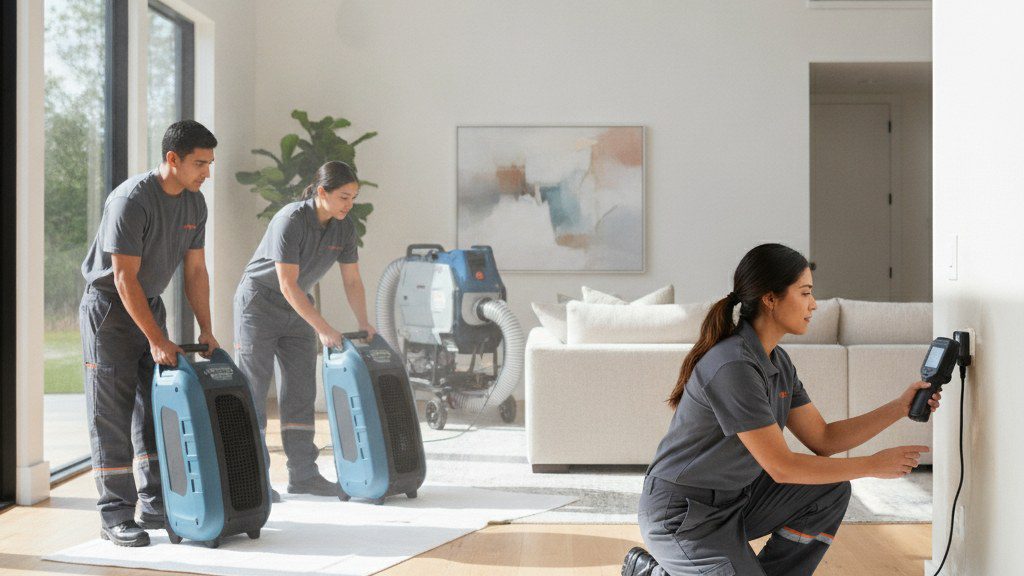
How do I handle water damage near Marietta Georgia Square?
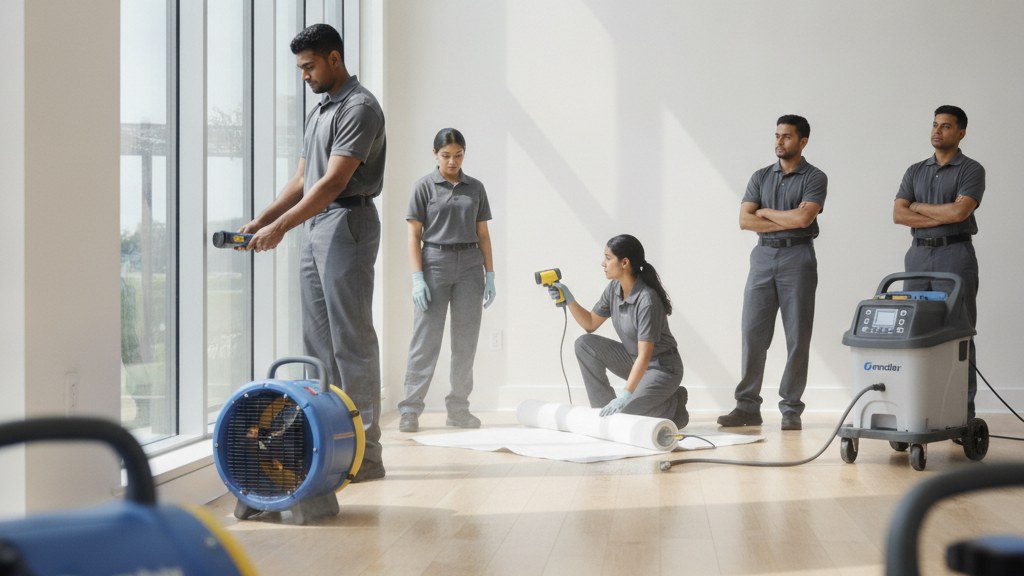
Marietta Georgia Square water damage needs fast drying, source control, and a clean restoration plan before moisture turns into mold or hidden structural damage. The real fix is to stop the water, document the loss, dry the property correctly, and bring in an IICRC-certified team that can handle cleanup and reconstruction.
What does Marietta Georgia Square actually mean for a water loss?
It means location changes the job. Near Marietta Georgia Square, access, building age, and traffic around the property can all affect how quickly a crew can assess the loss and how carefully they need to protect the structure.
People search the square as a shorthand for downtown Marietta, but restoration work does not treat it like a pin on a map. A home close to the center of town may have older materials, tighter drive-up access, or previous repairs that change the way water spreads.
That is why the first mistake is thinking visible water tells the whole story. It does not. Water follows framing, wicks into drywall, runs under flooring, and settles where you cannot see it until the odor or staining shows up later.
In historic Marietta Georgia settings, the inspection has to be more careful. Different materials dry differently, and shortcuts create problems. You need a team that looks past the surface and treats the whole assembly, not just the puddle.
If the property is near the square, response speed matters because time keeps moving even when the house feels frozen. The job is to reduce loss, not just make the room look better for the moment.
- Downtown location can affect access and logistics.
- Older materials need a different drying eye.
- Visible water is only part of the loss.
- Moisture can migrate beyond the room you see.
- Documentation should start immediately.
Why is historic Marietta Georgia harder to dry correctly?
Because older structures do not behave like newer ones. Historic Marietta Georgia properties can contain mixed materials, older finishes, and prior repairs that make water tracking less obvious and drying less predictable.
The common mistake is assuming all water losses are the same. They are not. A newer house with standard materials and easy access is one thing. An older home with layered repairs and sensitive finishes is another.
Historic construction can also complicate what gets saved. Some materials can tolerate careful drying, while others may swell, delaminate, or hold contamination longer than expected. If you rush, you can damage what might have been preserved.
That is why the best restoration work starts with assessment, not demolition. You need to know where the moisture is, how far it spread, and what the material response is likely to be before you decide what gets removed.
For a homeowner, this is the part that usually feels backwards. You want the wet stuff gone now. Fair. But unnecessary tear-out creates its own cost, and insufficient drying creates a larger one later.
- Older homes often hide moisture in layers.
- Material response matters as much as the leak.
- Assessment should come before demolition.
- Drying needs to be tailored to the structure.
- Bad assumptions create repeat damage.
Which signs around the square mean the loss is bigger than it looks?
If you notice smell, staining, or soft materials, the damage has likely moved beyond the surface. In a downtown Marietta home, those signs usually mean the water has already reached hidden areas.
A lot of homeowners wait for the obvious stuff. Standing water gets attention. But the bigger concern is when the room seems mostly fine and still smells damp, musty, or off. That is often the clue that water has gone deeper.
Watch for cupping floors, bubbling paint, swollen trim, and drywall that feels soft near the base. Those are not cosmetic annoyances. They are clues that the assembly absorbed water and may continue breaking down if left alone.
Electrical concerns, ceiling staining, and repeated dripping after the source is “fixed” are also red flags. So is a loss that involved a burst pipe, appliance leak, or overflow that sat for any meaningful time.
If you are near Marietta Georgia Square and the problem started in a kitchen, basement, crawl space, or upstairs bath, assume the water traveled farther than the easiest-to-see spot. That assumption saves time.
- Odor is often the first hidden clue.
- Soft materials usually mean deeper penetration.
- Ceiling stains should never be ignored.
- Repeated moisture points to an unresolved source.
- Basements and crawl spaces deserve full inspection.
Elevated Operations provides 24/7 water, fire, mold, storm, and sewage damage restoration across Metro Atlanta.
Get a free quoteMarietta Georgia history and the materials most likely to trap moisture
Older Marietta homes can hold water in places that newer homes do not. Marietta Georgia history matters because the age and mix of building materials change how fast moisture hides and how hard it is to remove.
This is where a lot of homeowners get blindsided. They think the visible wet area is the whole problem. In older properties, it may be the smallest part of it. Plaster, wood, legacy flooring, and past repairs can create pockets that hold moisture after the room looks dry.
A historic house also tends to have more variation from room to room. Someone may have replaced one section years ago and left another original. That means the drying approach has to be specific, not broad-brush. Otherwise you miss what matters.
For searchers comparing options near the square, this is one reason local context matters. You are not just hiring someone to remove water. You are hiring someone to understand how a particular building behaves after the loss.
And yes, it sounds obvious. Yet the market is full of generic responses that treat a downtown home like a warehouse bay. That is how moisture gets missed and why the problem returns.
- Marietta Georgia history affects building behavior.
- Mixed materials need tailored drying.
- Prior repairs can hide moisture pockets.
- The right plan depends on the structure.
- Generic treatment causes missed damage.
What insurance paperwork tends to slow homeowners down?
The paperwork is usually slower than the water. Claims get bogged down when the loss is not documented clearly, the scope is vague, or the communication between homeowner, adjuster, and contractor becomes fragmented.
This is where good restoration work pays off in boring but important ways. The goal is not just to dry the home. It is to create a clean, defensible record of what happened and what it takes to restore it.
Homeowners often try to handle the claim while also trying to manage cleanup. That is a bad trade. You are already dealing with damage, disruption, and the chance of hidden problems. Adding unclear estimates and missing documentation makes everything slower.
Direct insurance claim management matters because it reduces the back-and-forth that wastes time. If the team on site can document conditions, explain the scope, and keep the restoration plan organized, the claim moves more cleanly.
Near Marietta Georgia Square, where older homes and mixed damage types can complicate scope, that clarity is even more useful. It keeps the process grounded in what the property actually needs.
- Claims slow down when documentation is weak.
- Homeowners should not juggle everything alone.
- Clear scope language helps the adjuster process.
- Good records support faster decisions.
- Coordination is part of restoration, not extra fluff.
How the square changes the response plan, not just the address
The address is only the beginning. Around the square, response plans often have to account for building age, access, traffic, and the practical reality that water keeps moving while people are still deciding what to do.
This is where a lot of service pages get lazy. They talk about “local” like it is a slogan. It is not. Location affects staging, equipment placement, and how quickly a crew can get in and stabilize the loss.
In a downtown setting, timing and coordination matter because a small delay can let water soak further into hidden spaces. The job is to reduce the amount of material that has to be removed later, which means fast action and smart triage.
You also want a team that can go from mitigation to reconstruction. Why? Because every handoff adds delay and confusion. One company managing the whole path keeps the job moving and keeps responsibility clear.
That is especially helpful when the property is near Marietta Georgia Square and the loss already feels like too many moving parts. Fewer moving parts is the point.
- Local conditions affect the response plan.
- Early delay creates larger hidden loss.
- Single-team coordination reduces confusion.
- Mitigation should lead directly into repair.
- Downtown access can change the logistics.
What you should ask before you book a call
Ask the questions that reveal whether the company understands the problem or just wants to start tearing. In a water loss near Marietta Georgia Square, the first conversation should tell you how they think, document, and communicate.
The best filter is simple. Ask what they look for first, how they document moisture, and whether they can handle both the cleanup and the rebuild. If the answers are vague, that is a signal.
You should also ask about certification, because training matters when hidden moisture and contamination are possible. Elevated Operations uses IICRC-certified technicians, which is the kind of credential that tells you the team follows recognized restoration standards.
For homeowners, the right question is not, “Who is cheapest?” It is, “Who will solve the problem without creating a second one?” That question saves people from the usual cycle of rushed demolition and half-finished repairs.
If you want a free quote, book a call and use that first conversation to test for clarity. You will know fast whether the team is organized enough for the job.
- Ask about inspection before tear-out.
- Certification should be part of the conversation.
- Cleanup and rebuild should not be disconnected.
- Clear documentation is a must.
- The first call reveals a lot about competence.
When the water loss needs a faster, cleaner decision
| Situation | What to do | Why |
|---|---|---|
| Water is visible but the room still smells damp or musty. | Get immediate moisture inspection and drying, not just surface cleanup. | Hidden moisture often means the loss has already moved into walls, floors, or insulation. |
| Drywall, trim, or flooring feels soft, swollen, or warped. | Document the damage and start controlled extraction and drying right away. | Material breakdown gets worse if you wait for it to air out on its own. |
| The home is older or has mixed finishes near the square. | Use a restoration team that understands older structures and material-specific drying. | Historic buildings can trap moisture differently and need a more careful plan. |
| Insurance communication is slowing everything down. | Choose a team that can manage the claim documentation and restoration scope. | Better paperwork and cleaner communication reduce delays and confusion. |
Doing it yourself vs bringing in Elevated Operations
| Doing it yourself | With Elevated Operations | |
|---|---|---|
| Finding the real extent of the damage | You can see the puddle, but hidden moisture often stays in walls, floors, and cavities. | We look for the source, the spread, and the hidden impact so the loss is actually mapped. |
| Drying and cleanup | You may remove some visible water, but incomplete drying can leave odor, mold risk, or recurring problems. | Our team handles water extraction, drying, and cleanup with restoration equipment and process discipline. |
| Insurance coordination | You are stuck collecting photos, notes, and paperwork while also dealing with the mess. | We offer direct insurance claim management to keep the documentation and communication organized. |
| Repair and reconstruction | You may still need another contractor after cleanup, which adds delay and handoff problems. | We are a one-stop solution from emergency response through reconstruction, so the job stays connected. |
Frequently Asked Questions
What does Marietta Georgia Square mean for a homeowner with water damage?
It usually means you are dealing with a downtown Marietta location where access, building age, and response speed matter. That affects how quickly the damage can be assessed and whether hidden moisture is caught before it becomes a bigger repair issue.
How do I know if the damage near the square is more than a surface leak?
Look for musty odor, soft drywall, warped flooring, ceiling stains, or repeated moisture after the source is supposedly fixed. Those are signs that water moved beyond the obvious area and needs a full restoration inspection, not just a wipe-down.
What should I expect from a restoration company in historic Marietta Georgia?
You should expect a careful inspection, moisture tracking, and a drying plan that fits the structure. Older homes can trap water differently, so the company should explain what is salvageable, what must come out, and how the repair phase will be handled.
How much does water damage restoration cost near Marietta Georgia Square?
It depends on the source of the water, how long it sat, what materials were affected, and whether reconstruction is needed. The clean answer is to book a call for a free quote, because the scope has to match the actual property conditions.
Can Elevated Operations help if I need cleanup, insurance help, and repairs?
Yes. Elevated Operations handles water damage restoration, direct insurance claim management, and reconstruction, which helps keep the process organized from the first emergency call through the final repair. If you want a free quote, book a call.
Get a free, no-obligation restoration estimate
Elevated Operations provides 24/7 water, fire, mold, storm, and sewage damage restoration across Metro Atlanta.
Get a free quoteCall (770) 404-6895Last updated October 5, 2026