
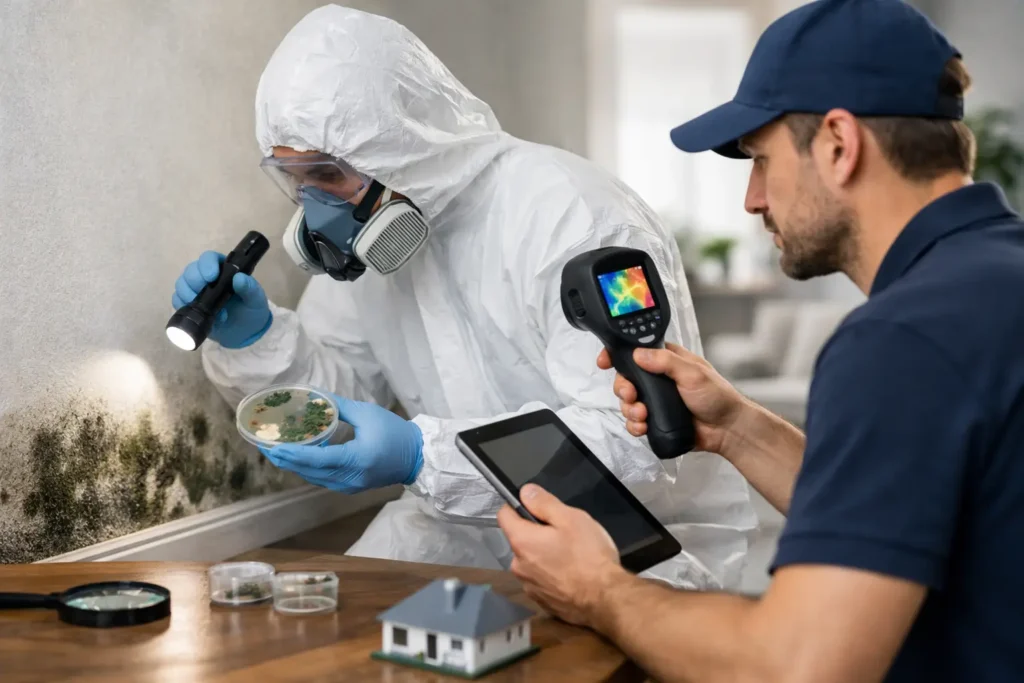
How do I choose a mold remediation company near me?
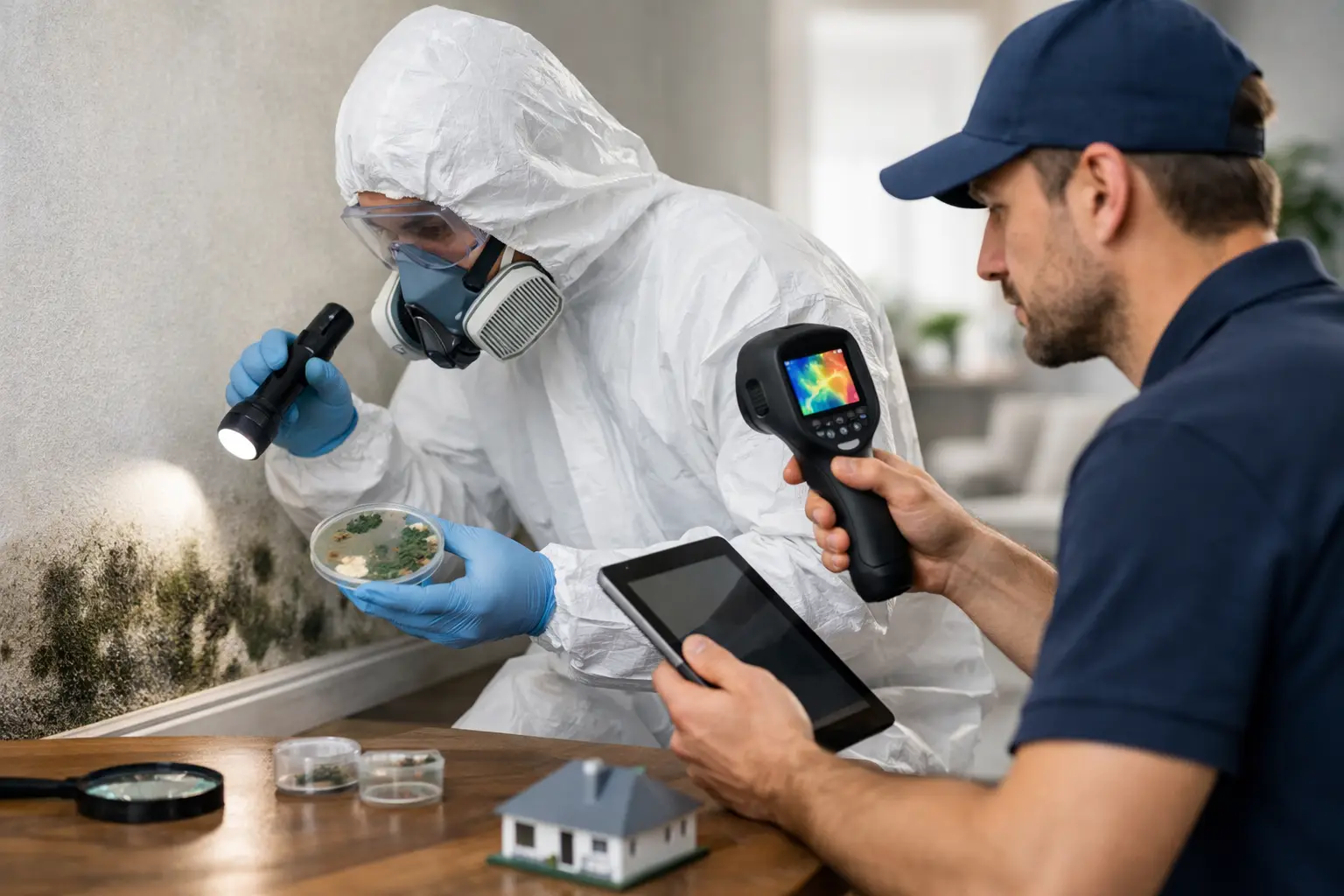
A mold remediation company near me should inspect the source, contain the area, remove contaminated materials, dry what is left, and fix the moisture problem so the mold does not come right back. If a company cannot explain containment, drying, and source control in plain English, keep looking.
What does a mold remediation company near me actually do?
A real mold remediation company near me is not a surface cleaner with a respirator. It is a contractor that identifies the source, contains the affected area, removes contaminated materials, cleans salvageable surfaces, and dries the structure so the problem does not keep feeding itself.
That distinction matters because homeowners usually search for help after water damage, not after a neat little mold problem. The visible spot is often the last thing to show up. The real issue is hidden moisture in drywall, insulation, crawl spaces, or framing.
In this context, mold remediation and mold removal are related but not the same. Removal is the physical taking out of damaged material. Remediation is the larger process that includes source control, containment, cleanup, and drying. If a company only talks about scrubbing, they are skipping the part that keeps the house from getting worse.
You also want a contractor that thinks about the structure, not just the stain. Mold and remediation work usually touches airflow, porous materials, and whether the area can be safely restored or needs reconstruction. That is why the local search result should be a company that can handle the whole sequence, not one narrow task.
When you search near me, you are also asking a map-pack question without saying it out loud. You want a company close enough to respond quickly, with a real local footprint, clear services, and a profile that matches the job you need done, not a generic category tag.
- Source control first, because moisture drives the growth.
- Containment matters, because disturbed mold can spread dust and debris.
- Removal and cleaning are different tasks and should be explained separately.
- Drying is part of remediation, not an optional add-on.
- Local relevance helps because the fastest help is usually the one closest to the loss.
What is remediation for mold when the damage came from water?
Remediation for mold after water damage means you are treating a moisture problem, not chasing a stain. If the house was wet and stayed wet, the scope usually includes containment, removal of affected materials, drying, and follow-up repairs.
This is where homeowners get misled by fast answers. A patch of visible mold may look small, but if the drywall behind it stayed damp, the real loss is broader. Remediation for mold has to account for what water did inside the wall assembly, under flooring, or in a crawl space.
The common mistake is to confuse a cosmetic cleaning with a dry, stable structure. Remediation mold work should be based on the wet materials, the length of exposure, and whether the area can be salvaged. That is why an inspection matters before anyone starts tearing things apart.
A credible company will explain where the water came from, what needs removal, and what can be cleaned and dried. If you hear vague language and no mention of the water source, you are not getting remediation of mold. You are getting a cleaning pitch.
In Atlanta metro homes, the concern often comes after burst pipes, leaks, flooding, or sewer backups. In those situations, the right response is not just to kill visible growth. It is to remove the conditions that let it happen, then rebuild the damaged area correctly.
- Ask whether the moisture source is still active.
- Ask which materials are porous and likely to need removal.
- Ask whether the plan includes drying and reconstruction.
- Ask how they decide between cleaning and demolition.
- Ask how they prevent cross-contamination during the work.
Mold remediation and removal: what should be cleaned, and what should be thrown out?
Mold remediation and removal depends on the material, the amount of damage, and how long it stayed wet. The right answer is not always to throw everything out, but it is also not to save materials that cannot be cleaned safely.
This is where homeowners often hope for a miracle. They want the least disruption, which is normal. But porous materials like soaked drywall, insulation, and some ceiling components can hold contamination in ways that cleaning cannot fully solve.
A good contractor will separate salvageable from unsalvageable materials. Nonporous surfaces may be cleaned and disinfected. Porous materials that were heavily affected may need removal. That judgment call is the heart of mold remediation removal, not a side issue.
The confusing part is that mold can look small while the affected area is larger. You may have a visible patch on one wall and hidden damage behind baseboards or around a window. If a contractor does not inspect the adjoining areas, they are guessing.
The better process is methodical. Containment first, then removal, then cleaning, then drying, then repair. That sequence matters because once disturbed, mold debris can migrate. Shortcuts here are how homeowners end up paying for the same problem twice.
In other words, the question is not whether a company can spray something on a surface. It is whether they know what belongs in the dumpster and what belongs in a controlled cleaning plan.
- Porous materials often cannot be fully restored once saturated.
- Nonporous materials may be cleanable if the damage is limited.
- Hidden damage around trim, flooring, and wall cavities must be checked.
- Containment protects the rest of the home during removal.
- A proper scope avoids both over-removal and under-removal.
Elevated Operations provides 24/7 water, fire, mold, storm, and sewage damage restoration across Metro Atlanta.
Get a free quoteHow do I tell if a mold and remediation company is actually local?
A local mold and remediation company is one that shows up like a local company, not a directory listing. You want Atlanta-area service coverage, consistent business name and contact details, and signals that the company really works the neighborhoods you live in.
Search results can be messy. A business may rank for near me queries without being the right fit, especially if the page is vague or the profile is built around broad service terms. That is why the map pack matters, but so do the underlying trust signals behind it.
Check whether the company’s name, address, and phone are consistent wherever they appear. NAP consistency helps search engines, but it also helps you avoid dead ends when you need someone to respond fast. If the details are muddy online, the operation is probably muddy in practice too.
The other clue is relevance. A real local provider should clearly serve the Atlanta metro area and nearby communities like Mableton, Marietta, Decatur, and Sandy Springs. If the business language feels generic and detached from the area, it was likely written for search first and customers second.
You should also look at whether the service mix matches the problem. A true local restoration contractor can usually handle water damage, mold remediation, sewage cleanup, and reconstruction. That matters because the mold often arrives after a water event, and you do not want to hire three separate companies to solve one issue.
This is also where review velocity, service pages, and schema can support visibility. Not because you need to audit the internet yourself, but because strong local signals usually mean the company is organized enough to respond well when your house is on the line.
- Look for consistent NAP information across listings and the website.
- Confirm the company serves your exact metro area, not just a broad state claim.
- Make sure the services match the problem, especially if water caused the mold.
- A complete profile should support map-pack visibility and customer trust.
- Local presence matters most when speed and coordination are urgent.
Which problems make mold remediation company near me searches urgent?
A mold remediation company near me becomes urgent when water, odor, or visible growth suggests the structure is still at risk. If the home smells musty, feels damp, or has a recent leak, you are probably past the stage where waiting is harmless.
Homeowners often wait because the damage looks manageable. That is the expensive instinct. Mold does not need a dramatic headline to become a bigger job. It needs moisture, time, and a place to hide. That is enough.
The classic triggers are burst pipes, roof leaks, flooded basements, crawl space moisture, and sewer backups. Each one can create a different cleanup path, but the common issue is the same. Water entered the building, and the building materials may now be contaminated or weakened.
If the odor is strong or the air feels stale after the incident, do not assume it is nothing. The smell is a clue that moisture or microbial growth is active somewhere. In practical terms, that means remediation for mold should be looked at quickly, before demolition becomes larger and reconstruction becomes more complicated.
The reason urgency matters is simple: the longer wet materials stay in place, the harder they are to save. You are not just buying cleanup. You are buying a faster decision about what can be preserved, what must be removed, and how much of the home can be put back without drama.
A company that responds like a restoration team, not a scheduling desk, is usually the better bet when the home is actively changing under your feet.
- Recent water damage is a big red flag.
- Musty odor can signal hidden growth even before you see it.
- Crawl space and basement moisture often spreads the problem quietly.
- Sewer backups raise both contamination and indoor air concerns.
- Quick inspection helps limit unnecessary removal and added repair cost.
What should a restoration plan include after remediation mold work?
A restoration plan after remediation mold work should cover drying, repairs, and the return of the damaged area to usable condition. If a contractor stops at removal, you still have a broken room and a messy handoff.
This is where one-stop capability becomes practical instead of promotional. A lot of homeowners do not need a lecture about mitigation. They need the floor dried, the damaged wall opened correctly, and the room rebuilt without chasing separate trades.
Once the contaminated material is out, the space still has to be stabilized. That can include water extraction, drying, debris removal, and then reconstruction. If the original loss came from a burst pipe or sewer issue, the rebuild may also need extra care around finishes and contents.
The restoration plan should also account for insurance communication. Not because paperwork is glamorous, but because the claim process can slow everything down if the documentation is incomplete or contradictory. The cleaner the scope, the easier it is to move from mitigation to reconstruction.
A strong plan is especially important when the affected area includes kitchens, basements, crawl spaces, or adjacent living areas. Those spaces can look simple on the surface and still hide enough damage to make a quick patch unreliable.
So yes, mold remediation and removal is the headline. But the real outcome is a clean, dry, structurally sound space that is ready to be used again without leaving a hidden problem in the walls.
- Drying should continue until the structure is stable.
- Damaged materials should be removed before reconstruction starts.
- The rebuild scope should match the actual loss, not a guess.
- Insurance documentation should support the repair sequence.
- Contents and finishes may need separate cleaning and handling.
When to call now, when to inspect, and when to rebuild
| Situation | What to do | Why |
|---|---|---|
| You smell mold or mustiness after a leak or flood | Call for an inspection and containment plan | Odor often means hidden moisture or growth behind finished surfaces |
| Drywall, insulation, or carpet stayed wet | Ask what must be removed versus cleaned | Porous materials often trap contamination and usually cannot be saved |
| The damage came from a sewer backup | Treat it as a contamination event, not a normal cleanup | Sewage adds health risk and changes the remediation scope |
| The area is already torn open and the home feels unstable | Bring in a contractor that can handle mitigation and reconstruction | You need one coordinated plan, not separate vendors guessing at the next step |
Doing it yourself vs bringing in Elevated Operations
| Doing it yourself | With Elevated Operations | |
|---|---|---|
| Source identification | You may clean the surface and miss the leak, humidity issue, or hidden wet cavity | We focus on the moisture source first so the mold does not just return later |
| Containment and cleanup | It is hard to contain dust, spores, and debris without the right setup | Our IICRC-certified technicians handle the remediation process with proper containment and cleanup |
| Drying and rebuild | You may stop after cleanup and still have damp structure or unfinished repairs | We can manage drying, reconstruction, and final repairs through one coordinated process |
| Insurance and coordination | You are left to juggle invoices, photos, and adjuster conversations | We help manage the claim process and keep the job moving from first call to final construction |
Frequently Asked Questions
What is the difference between mold remediation and mold removal?
Mold removal is the physical taking out of contaminated material and visible growth. Mold remediation is broader. It includes identifying the moisture source, containing the area, removing damaged materials, cleaning salvageable surfaces, drying the structure, and preventing the problem from coming back. That is why the two terms often show up together in searches.
What does remediation mold mean if I just see a small spot?
It means you should not assume the problem is small just because the stain is small. A visible spot can be the tip of a larger moisture issue behind a wall, under flooring, or in a crawl space. Remediation mold work should start with source control and inspection, not just a wipe-down.
How do I know if I need mold remediation and removal after water damage?
If the area stayed wet, smells musty, or has visible growth, you likely need both mold remediation and removal. Water damage can affect more than the surface you see, especially with drywall, insulation, carpet, and trim. A proper assessment should tell you what can be cleaned and what needs to come out.
What should I expect from remediation for mold on a claim?
Expect photos, a scope of work, removal of damaged materials, drying, cleanup, and likely coordination with your insurer. Good documentation matters because the adjuster needs to understand what caused the loss and what has to be repaired. The goal is to make the work clear, not mysterious.
How much does mold remediation removal cost?
It depends on the size of the affected area, the source of the moisture, the materials that must be removed, and whether reconstruction is needed. Because every loss is different, the honest answer is a custom estimate. If you want a clear number, book a call for a free quote. Elevated Operations can help with the inspection, remediation, and rebuild if your Atlanta-area home needs it.
Get a free, no-obligation restoration estimate
Elevated Operations provides 24/7 water, fire, mold, storm, and sewage damage restoration across Metro Atlanta.
Get a free quoteCall (770) 404-6895Last updated September 15, 2026