
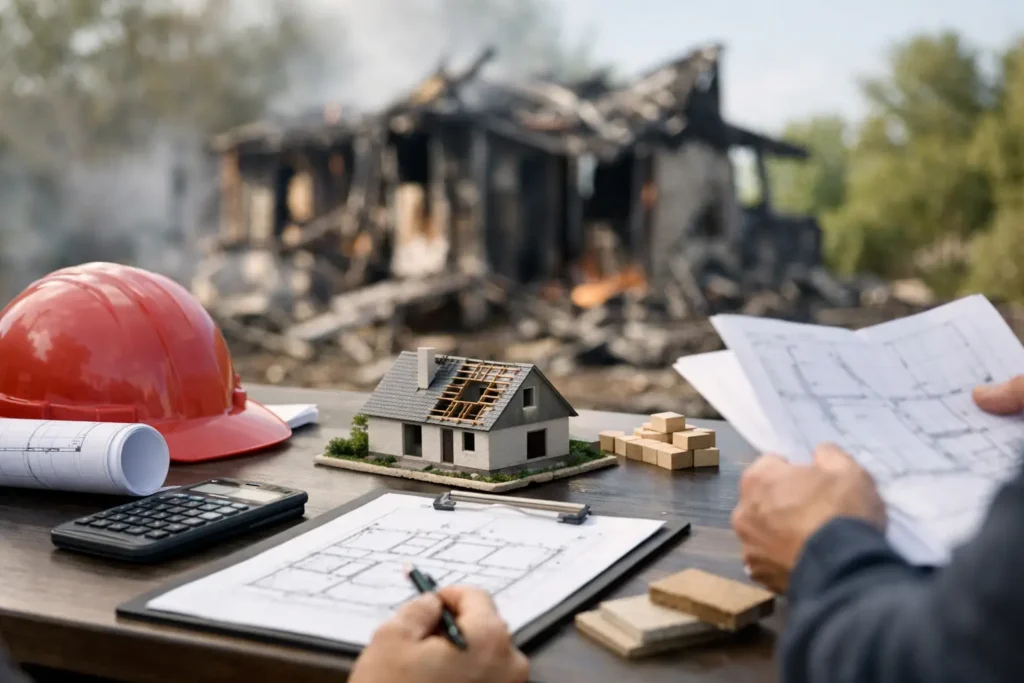
How does fire damage restore work after a house fire?
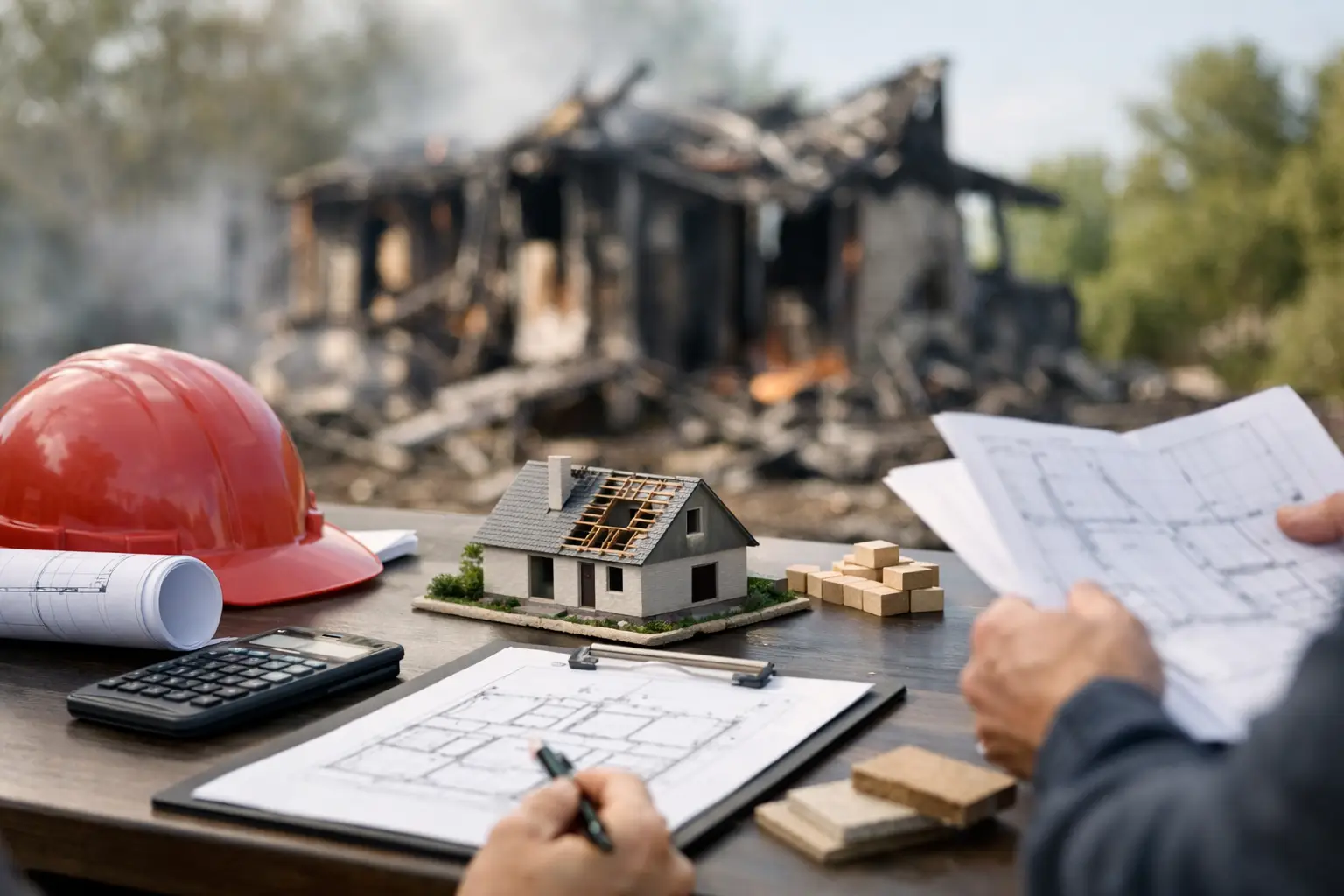
Fire damage restore is the process of making a fire-damaged property safe, clean, and usable again, starting with board-up and smoke control, then soot cleanup, odor removal, contents restoration, and reconstruction. The real fix is a documented, insurance-friendly plan that stops secondary damage and gets the build back on track.
What does fire damage restore actually include?
Fire damage restore means more than removing char. It starts with making the property safe, then moves through smoke cleanup, soot removal, odor control, contents restoration, and any reconstruction the structure needs.
The word fire damage restore gets used loosely, and that causes problems. People hear “cleanup” and picture wiping surfaces, but the real job is layered. First comes stabilization. Then comes contamination control. Then comes the rebuild work that makes the property usable again.
A house fire changes materials in different ways. Some things are visibly burned. Others look intact but carry smoke odor, acidic soot, or hidden residue that keeps damaging surfaces over time. If you skip the diagnostic part, you end up cleaning the wrong layer.
A proper restoration plan also has to account for the insurance side. Documentation matters. Scope matters. Photos, notes, and clear line items help explain what was damaged, what was cleaned, and what had to be removed. That is not paperwork fluff. It is how the claim stays organized.
For a homeowner, the practical question is simple: what can be saved, what has to come out, and how fast can the property be made safe enough to move forward? That is the real center of this service, not just the word “cleanup.”
- Emergency stabilization comes first, including securing openings and limiting further exposure.
- Smoke and soot are treated as contamination, not just a visual problem.
- Odor can linger in hidden materials long after the flames are gone.
- Contents need separate evaluation from structural materials.
- Reconstruction begins only after damaged materials are identified and documented.
What happens in the first 24 hours after a fire?
The first priority after a fire is not cosmetic cleanup. It is stopping more damage, keeping people out of unsafe areas, and preserving evidence and salvageable materials before soot and moisture spread further.
This is where people make expensive mistakes, usually by trying to air out the house, wipe surfaces, or move items around too early. Fire damage restore work gets harder when residues are disturbed. Soot smears. Odor embeds. Moisture from firefighting efforts can trigger a second problem while everyone is still focused on the first one.
The first phase should focus on containment and safety. That can mean board-up, tarping, restricting access, and identifying which areas are unsafe. It can also mean documenting conditions before anything is cleaned or removed. If insurance is involved, this step matters more than most homeowners expect.
You also want the initial inspection to identify hidden affected zones. Smoke does not stay polite. It follows air movement, collects in cavities, and settles into surfaces that look fine at a glance. HVAC pathways, attic voids, and adjacent rooms often need attention even when the burn pattern is localized.
If the property took on water during firefighting, the timeline gets more urgent. You are now dealing with fire damage and water damage together, which means the clock is running on both odor and mold risk. That is why the first response has to be coordinated, not improvised.
- Secure open, damaged, or exposed areas right away.
- Document visible damage before cleanup starts.
- Identify smoke migration zones beyond the burned room.
- Remove wet materials only after the scope is clear.
- Preserve salvageable contents before residues set in.
Why smoke odor keeps coming back after cleaning
Smoke odor comes back when the source is still inside the structure. Wiping a wall may improve the smell for a day, but embedded residue in porous materials keeps releasing odor until it is properly removed or treated.
This is the part that frustrates homeowners, and for good reason. They clean the visible soot, run air fresheners, and the house still smells like a fire site. That is because odor is usually being generated by residue in fabrics, insulation, drywall, trim, and even dust inside mechanical pathways.
The chemistry matters here. Smoke particles are tiny and sticky. They cling to surfaces, move through airflow, and settle into places your eyes do not catch. If the source remains, the odor returns when humidity changes or the HVAC kicks on. That is why simple surface cleaning is rarely enough.
A real restoration approach looks for the odor reservoir. That means identifying which materials can be cleaned, which need deeper treatment, and which cannot be salvaged. It also means protecting clean areas from cross-contamination while the work is underway. Otherwise, you clean one room and reintroduce the smell from another.
If the odor is especially stubborn, it is often a sign that residue was not fully removed or the material is too saturated to save. In other words, the smell is information. It tells you where the cleanup stopped short.
- Porous materials hold odor longer than hard surfaces.
- HVAC systems can spread smoke smell after the fire.
- Humidity can reactivate odors trapped in materials.
- Surface freshening without source removal usually fails.
- Deep cleaning has to match the actual contamination path.
Elevated Operations provides 24/7 water, fire, mold, storm, and sewage damage restoration across Metro Atlanta.
Get a free quoteWhich fire-damaged materials can be saved?
Not every damaged item has to be thrown out, but salvage decisions should be based on contamination level, material type, and whether cleaning will actually restore safety and appearance.
A lot of homeowners assume anything near a fire is automatically trash. That is not always true, and the opposite mistake is just as bad: trying to save everything because it feels wasteful. The right answer depends on what the item is made of and how far the smoke or heat reached.
Nonporous surfaces often have a better chance of being cleaned successfully. Porous materials are more complicated because they absorb odor and residue. Fabrics, insulation, and some finishes can hold contamination so deeply that replacement is more practical than repeated cleaning.
Contents restoration follows the same logic. Some belongings can be cleaned, deodorized, and returned. Others are too damaged, too fragile, or too contaminated to justify the effort. A good restoration team helps sort that out quickly instead of leaving you to guess room by room.
This is also where documentation saves time and money. If a material is removed, the reason should be clear. If an item is salvaged, the method should be clear. That makes the process easier to understand for the homeowner and easier to justify in the claim file.
- Hard surfaces are often more salvageable than porous ones.
- Visible soot is not the only factor; odor and residue matter.
- HVAC, insulation, and fabrics need careful evaluation.
- Contents should be separated by salvage potential.
- Replacement is sometimes the most efficient and honest call.
How fire damage restoration supports the insurance claim
Insurance gets easier when the restoration work is documented clearly. The claim is not just about damage existing. It is about proving what was affected, what was done, and what needs to be rebuilt.
People dread the insurance part because it feels like a second job, and frankly, it often is. Fire damage restore work creates a paper trail whether you want one or not. The cleanest claims are built from clear photos, written scope notes, and consistent communication about what was removed, cleaned, or replaced.
The trick is to avoid gaps. If an area was contaminated but not documented, you may have trouble explaining why it needs attention later. If an item was discarded without recording why, the claim can get messy. Good restoration work keeps the field process and the paperwork aligned.
Adjusters and restoration teams are not supposed to guess. They need a scope that reflects the actual condition of the property, including hidden damage and secondary effects like smoke migration and water intrusion. That is one reason one-stop service matters. Fewer handoffs, fewer missing details.
For a homeowner, the benefit is not abstract. It is less back-and-forth, fewer surprises, and a clearer path from emergency cleanup to final rebuild. That is the kind of support that keeps a bad week from turning into a dragged-out one.
- Photos should show damage before any cleanup begins.
- Scope notes should distinguish cleaning from replacement.
- Salvage and disposal decisions should be recorded.
- Secondary damage, including smoke travel, should be included.
- A single coordinated process reduces claim confusion.
When fire and water damage hit at the same time
When firefighting water enters the picture, fire damage restore becomes a mixed loss problem. You are not just dealing with smoke and soot. You are also racing moisture, staining, and possible mold growth.
This combination is more common than people think, and it changes the restoration plan fast. Water from hoses, sprinklers, or runoff can soak building materials while smoke residue is already settling on top. That creates a layered contamination problem that does not respond to one trade alone.
Moisture changes the urgency. Wet drywall, insulation, flooring, and contents can deteriorate quickly, and damp materials can hold odor differently than dry ones. If drying does not start at the right time, you are no longer asking only about fire cleanup. You are asking about structural drying and mold prevention too.
A coordinated approach matters here because the work overlaps. You may need emergency board-up, water extraction, drying, soot cleanup, odor control, and reconstruction. If those steps are handled separately by different vendors who do not talk to each other, the job slows down and details get lost.
For the homeowner, the key is simple: treat the scene as one connected loss, not two unrelated problems. The faster the scope is understood, the less likely you are to be stuck redoing work later.
- Fire suppression water can damage the same rooms the fire affected.
- Damp materials raise mold risk if they are left alone.
- Smoke residue and moisture can interact and worsen odors.
- Drying should be coordinated with fire cleanup.
- One restoration plan is better than two disconnected ones.
How to tell what needs immediate fire damage restore work
| Situation | What to do | Why |
|---|---|---|
| You smell smoke in rooms that were not visibly burned. | Have the property inspected for hidden soot migration and HVAC contamination. | Odor usually means residue has reached more than one surface layer. |
| Walls or contents look clean but feel tacky or greasy. | Treat the area as soot-contaminated and clean it before the residue sets. | Smoke film is often acidic and keeps damaging materials over time. |
| The fire was put out with water and materials are still damp. | Start drying and moisture control alongside the fire cleanup plan. | Wet materials can deteriorate fast and create mold risk. |
| You cannot tell what can be saved versus removed. | Get a professional scope that separates salvageable items from replacement items. | Guessing leads to repeat work and avoidable claim confusion. |
Doing it yourself vs bringing in Elevated Operations
| Doing it yourself | With Elevated Operations | |
|---|---|---|
| Initial safety and access | You are making judgment calls while dealing with damage, odor, and possibly unstable materials. | We help secure the site and organize the work so the property can be assessed safely. |
| Smoke, soot, and odor | Surface cleaning may make things look better without fixing the source of the smell. | We treat smoke and soot as a contamination problem and address the source, not just the surface. |
| Insurance coordination | You have to document damage, keep records, and explain the loss while also handling the mess. | We manage the restoration side with direct insurance claim support and clear documentation. |
| Rebuild readiness | It is hard to know when a room is actually ready for repair versus still contaminated. | We provide a one-stop path from emergency response through reconstruction by licensed contractors. |
Frequently Asked Questions
How long does fire damage restore usually take?
It depends on how much of the property was affected, whether smoke traveled through the structure, and whether water damage is also present. The honest answer is that every loss is different, so the best next step is to book a call for a free quote and get the scope reviewed.
Can I stay in my home during fire damage restoration?
Sometimes, but only if the affected areas are safely separated and the air quality, odor, and access issues are under control. If smoke has spread widely or the structure is unsafe, it may not be practical to remain in the home during the work.
What if the smell is still there after cleaning?
That usually means the source of the odor was not fully removed or the material is too contaminated to salvage. Smoke smell is rarely solved by fragrance or a quick wipe-down. It needs source-based cleanup and, in some cases, removal and replacement.
Will insurance cover the restoration work?
Coverage depends on the policy and the cause of the loss. Restoration documentation, photos, and a clear scope help make the claim easier to review. If you are unsure how to start, the restoration company can help organize the file and communicate the damage clearly.
How much does fire damage restoration cost?
Cost depends on the size of the loss, the amount of smoke and soot, whether contents can be restored, and whether reconstruction is needed. Because every fire is different, the right move is to book a call for a free quote. Elevated Operations can help evaluate the damage and outline the next steps.
Get a free, no-obligation restoration estimate
Elevated Operations provides 24/7 water, fire, mold, storm, and sewage damage restoration across Metro Atlanta.
Get a free quoteCall (770) 404-6895Last updated September 12, 2026