
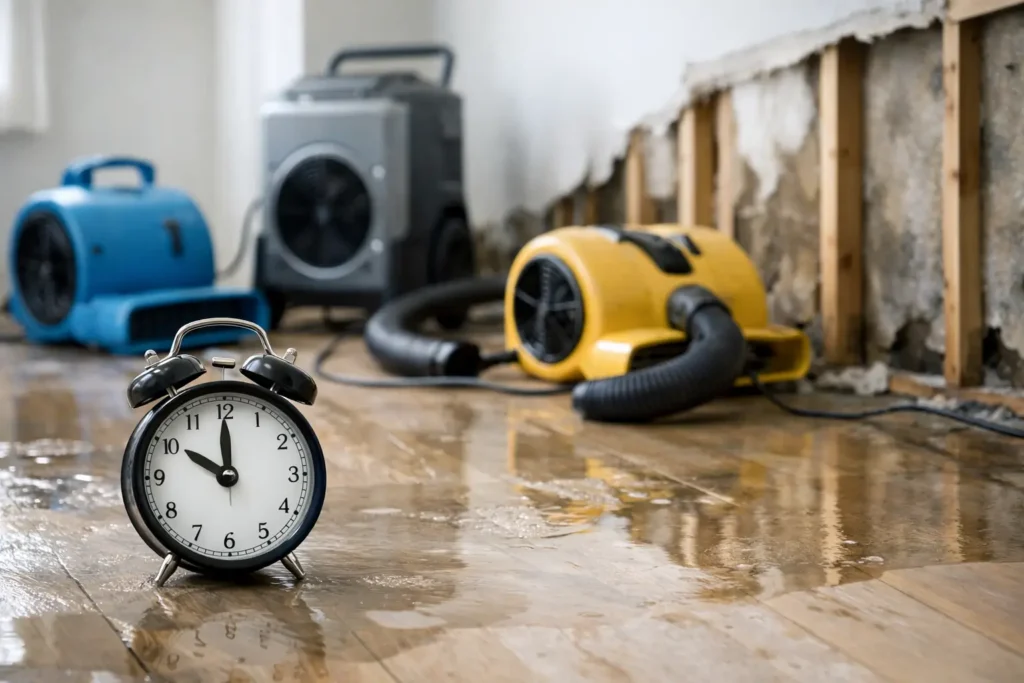
A water loss can look under control as soon as the standing water is gone. That is rarely the full story. Structural drying time begins after extraction, when moisture hidden inside drywall, flooring, framing, insulation, and subfloors must be removed before it creates a larger repair problem.
For a small, clean-water leak caught quickly, drying may take a few days. A burst pipe that soaked walls and flooring, a flooded basement, or water that sat unnoticed can take much longer. The right answer is not based on how dry a room feels. It is based on moisture readings, material conditions, and documented drying goals.
Typical Structural Drying Time After Water Damage
Most professionally managed water-damage drying projects take three to five days after water extraction. That range assumes the affected materials can be dried in place, equipment has been properly sized, and the source of water has been stopped.
Some losses take one to two days. Others require a week or more, particularly when water reached dense materials, traveled beneath flooring, soaked insulation, or affected multiple rooms. Drying can also take longer when materials need to be removed before air can reach wet structural components.
There is a difference between drying a room and drying a structure. Carpet may feel dry at the surface while the pad beneath it remains wet. Drywall may look normal while moisture has wicked several inches above the visible water line. A professional drying plan addresses what cannot be seen, not just what is obvious.
What Controls Structural Drying Time?
No two water losses behave exactly alike. A technician should assess the category of water, the materials involved, the length of exposure, and the path water traveled before giving a realistic timeline.
How quickly the water was removed
Fast extraction is one of the biggest factors in drying time. The less water left in carpet, flooring assemblies, wall cavities, and framing, the less moisture equipment must remove later. A supply-line leak addressed within hours is usually far more manageable than a leak discovered after a weekend away.
Quick action also helps preserve materials. Drywall, laminate flooring, baseboards, insulation, and engineered wood can begin to lose integrity as water exposure continues. Once materials swell, delaminate, or become contaminated, removal may be safer and more cost-effective than attempting to dry them.
The type of building materials affected
Different materials release moisture at different rates. Nonporous materials such as metal and some tile surfaces generally dry quickly. Wood framing, concrete, plaster, thick rugs, hardwood flooring, and multiple layers of underlayment can hold moisture longer.
Drywall is especially deceptive. It can absorb moisture upward through wicking, which means the visible water line is not always the true boundary of damage. Wet insulation behind drywall can further slow the process because it blocks airflow and retains water. In some cases, controlled drywall removal is the best way to protect framing and shorten the overall recovery timeline.
Temperature, humidity, and airflow
Drying equipment does not simply blow warm air around a room. Effective drying relies on controlled evaporation and dehumidification. Air movers increase airflow across wet surfaces, while commercial dehumidifiers pull moisture from the air so it can continue accepting moisture from building materials.
Atlanta humidity can complicate this work, especially during warm, wet weather. Opening windows is not always helpful. Outdoor air with high humidity may introduce more moisture instead of helping materials dry. Restoration technicians monitor indoor temperature and relative humidity, then adjust equipment and containment to keep conditions working in the right direction.
How far the water traveled
Water follows gravity, gaps, and the path of least resistance. A leak from an upstairs bathroom may affect the bathroom floor, the ceiling below, wall cavities, insulation, light fixtures, and flooring in an adjacent room. Even a seemingly minor appliance leak can travel under cabinets or beneath resilient flooring before it becomes visible.
That is why moisture mapping matters. Moisture meters and thermal imaging help identify the actual footprint of the loss. If hidden wet areas are missed, the property may appear dry only to develop odors, staining, material failure, or microbial growth later.
Whether the water was contaminated
Clean water from a broken supply line is handled differently from a sewage backup or floodwater intrusion. Category 2 and Category 3 water can carry contaminants that make certain porous materials unsuitable for drying and reuse. The priority becomes safe removal, cleaning, disinfection, and containment, followed by drying of the remaining structure.
Removing affected materials can seem like it will extend the project, but it often prevents a more serious delay. Trying to save contaminated carpet padding, insulation, or damaged drywall may create avoidable health concerns and make reconstruction more complicated.
What Professional Drying Should Look Like
A proper drying project is measured, not guessed. After emergency water extraction, technicians inspect the affected area, identify the source, document conditions, and establish drying targets for the materials involved. Those targets are based on normal moisture content for comparable unaffected materials in the property.
Equipment is then placed according to the loss, not according to a one-size-fits-all formula. A wet hardwood floor needs a different approach than wet carpet and pad. A saturated wall cavity may require targeted drying through access points, while a concrete slab may need extended dehumidification and monitoring.
Technicians should return for regular monitoring. They check moisture levels, indoor humidity, temperature, and equipment performance, then reposition or reduce equipment as conditions change. This documentation is valuable for property owners and insurance claims because it shows why equipment was needed and when the structure reached its drying goal.
Drying equipment can be noisy and inconvenient. Air movers and dehumidifiers may need to run continuously, and some rooms may be temporarily unavailable. That disruption is a trade-off for preventing warped flooring, weakened drywall, hidden mold conditions, and a much larger reconstruction scope later.
Why Rushing the Process Creates Expensive Problems
Turning off equipment because surfaces feel dry is one of the most costly mistakes after water damage. Surface dryness does not confirm that subfloors, framing, insulation, or wall cavities have returned to acceptable moisture levels.
When moisture remains trapped, it can lead to cupping hardwood, buckled laminate, peeling paint, recurring odors, corrosion, and microbial growth. It can also complicate insurance coverage if a preventable secondary loss develops after the original event.
The opposite problem matters too: running equipment longer than necessary increases disruption and utility use without improving the outcome. The goal is neither the fastest possible finish nor the longest drying setup. It is a verified dry standard that protects the structure and supports a sound repair plan.
When Drying Turns Into Reconstruction
Not every material can be restored. Flooring may delaminate, cabinets may swell, drywall may lose structural integrity, and insulation may need replacement. When that happens, homeowners and property managers should not have to coordinate separate mitigation and construction companies while managing an insurance claim.
A one-stop restoration partner can move the project from emergency response through moisture documentation, demolition, claim coordination, repairs, and rebuilding. That continuity reduces handoffs, keeps the scope aligned with the actual damage, and makes it easier to restore the property without leaving unfinished work behind.
For Metro Atlanta owners dealing with a burst pipe, overflow, roof leak, or flooding, Elevated Operations brings IICRC-certified drying practices, commercial-grade diagnostics, and reconstruction planning into the same recovery process. The team focuses on controlling the damage early, documenting the work clearly, and helping owners make informed decisions at every stage.
If water has entered your property, do not wait for a stain, odor, or warped floor to tell you the structure is still wet. Stop the source if it is safe to do so, protect people from electrical hazards, and get the affected area assessed quickly. The right drying plan gives your property its best chance to recover cleanly, completely, and with fewer surprises ahead.