
A water leak does not need a dramatic burst pipe to cause serious damage. In many Metro Atlanta homes and commercial properties, the first hidden leak signs are subtle: a room that smells damp, a water bill that no longer makes sense, or a small stain that keeps returning after rain. By the time water appears on the floor, it may already be behind drywall, beneath flooring, or inside a ceiling cavity.
The right response is not panic. It is fast, informed action. Finding a leak early can limit mold growth, protect structural materials, and reduce the amount of reconstruction needed later.
1. Your Water Bill Rises Without a Clear Reason
A sudden increase in water use is one of the most practical warning signs. If household habits have not changed, but the bill has climbed, water may be escaping somewhere out of sight. Toilets that run intermittently, supply lines beneath sinks, irrigation lines, and slab leaks are common causes.
Start by checking whether your water meter moves when all faucets, appliances, and water-using fixtures are off. A moving meter can indicate an active leak, although it does not tell you where the issue is located. If the meter is still, the problem may be intermittent or tied to a particular appliance cycle.
Do not dismiss a higher bill as a seasonal fluctuation without checking. Even a small, steady leak can waste hundreds or thousands of gallons over time.
2. You Notice a Musty Smell That Will Not Go Away
A persistent damp or earthy odor often means moisture is present where air cannot circulate. Closets, basements, crawlspaces, bathrooms, utility rooms, and the areas beneath kitchen sinks are common trouble spots. Air fresheners may cover the odor briefly, but they do not remove the source.
That smell can come from wet insulation, damp drywall, wood framing, carpet padding, or early mold growth. The longer moisture remains trapped, the more difficult the cleanup can become. In a commercial building, a musty smell near a restroom, break room, mechanical room, or exterior wall deserves the same attention.
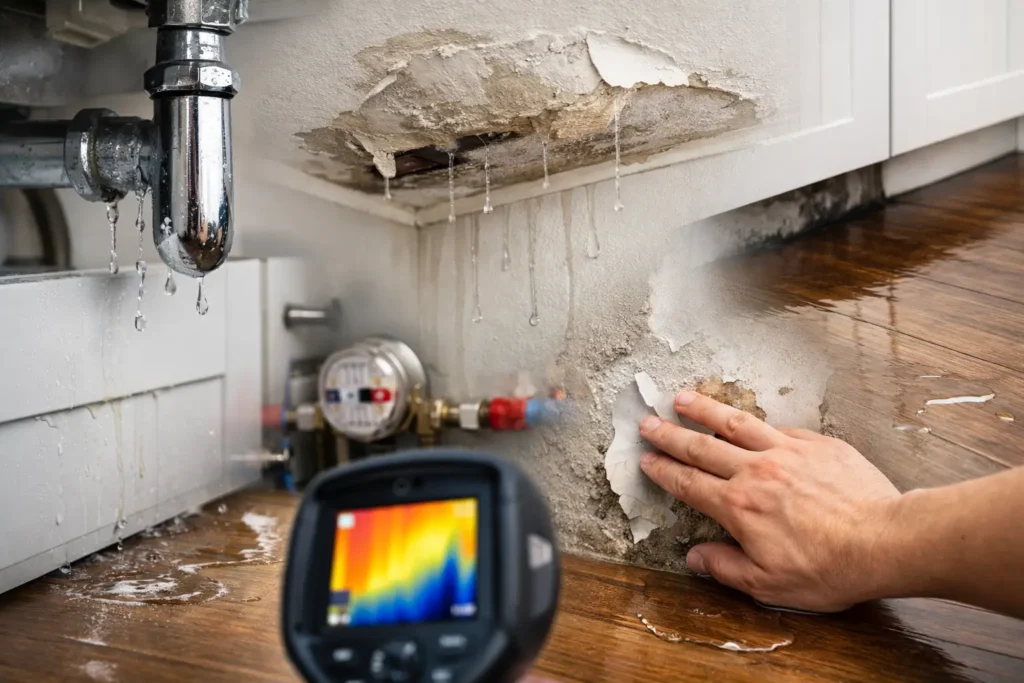
If you can safely access the area, look for damp materials, discoloration, or condensation. Avoid opening a large wall section just to investigate. Professional moisture mapping and thermal imaging can identify affected areas while limiting unnecessary demolition.
3. Paint, Drywall, or Wallpaper Starts Changing Shape
Water changes building materials before it creates a visible drip. Bubbling paint, peeling wallpaper, soft drywall, and raised seams are all signs that moisture may be affecting the wall or ceiling from behind.
A yellow, brown, or gray stain may point to a plumbing leak, a roof issue, an overflowing fixture, or water entering around windows. The pattern matters. A stain directly below a bathroom may be related to plumbing, while staining that worsens after storms may indicate exterior water intrusion.
Do not simply paint over the spot. If the material is still wet, the stain can return and the hidden damage can continue spreading. The underlying source must be stopped first, then the area needs to be properly dried before repairs are made.
4. Floors Feel Soft, Warped, or Unexpectedly Cold
Flooring often reveals leaks that walls hide. Hardwood can cup or buckle. Laminate may swell at the joints. Vinyl can loosen. Carpet can feel damp along an edge, while tile may become loose if the subfloor underneath is deteriorating.
In some cases, the floor feels unusually cold in one location because moisture is evaporating below the surface. A soft area near a dishwasher, refrigerator, washing machine, toilet, or exterior door should be checked promptly. Water can travel beneath finished flooring farther than most property owners expect.
There is a trade-off here: removing a small section of damaged flooring early can feel disruptive, but delaying the inspection may allow water to affect a much larger area of subfloor and framing. Accurate moisture readings help determine whether materials can be dried in place or need to be removed.
5. Ceiling Stains, Sagging, or Drips Appear
A ceiling stain is never just a cosmetic issue. It means water has reached the ceiling assembly, whether from a pipe, drain line, roof leak, HVAC condensation line, or upstairs appliance. If the ceiling is sagging, swollen, or actively dripping, treat it as an urgent safety concern.
Move people, furniture, and electronics away from the area. If water is near a light fixture or electrical equipment, do not touch it. Shut off power to the affected area if you can do so safely, then contact qualified help.
Ceilings can hold a surprising amount of water before failing. A small puncture may release trapped water, but it should be done only when the situation can be assessed safely. The priority is controlling the water source and protecting the structure, not creating a larger opening without a plan.
6. You Hear Water When Nothing Is Running
A hissing, dripping, trickling, or rushing sound inside a wall, ceiling, or floor is one of the clearer hidden leak signs. It may be easiest to hear late at night, when appliances and normal activity are quiet.
Listen near bathrooms, water heaters, laundry rooms, and walls that share plumbing lines. The sound may be a pressurized supply-line leak, but it can also come from a running toilet or a malfunctioning appliance. Either way, it is worth investigating before the problem becomes visible.
If you locate an active leak or see water spreading, shut off the nearest fixture valve when possible. If that does not stop the flow, use the main water shutoff valve. Every homeowner, landlord, and property manager should know where that valve is located before an emergency occurs.
7. Mold Appears Where It Should Not
Mold around shower caulk can be a maintenance issue. Mold forming on a bedroom wall, beneath a sink, at a baseboard, or around an HVAC vent is different. It may be telling you that moisture is repeatedly feeding the area.
Small visible spots do not always mean a large contamination problem, but they should not be ignored. Cleaning the surface without correcting the leak leaves the moisture source in place. It can also create a false sense that the issue is solved while growth continues behind the wall or under the floor.
The response depends on the size of the affected area, the materials involved, and whether the moisture source is active. Porous materials such as wet drywall, carpet padding, and insulation may require removal. Nonporous surfaces may be cleanable if the water damage is addressed quickly and correctly.
8. Your Foundation, Driveway, or Yard Has Unusual Wet Areas
Not every hidden leak starts inside the building. A soggy patch in the yard during dry weather, unexplained pooling near the foundation, cracking pavement, or a warm spot on a slab floor can indicate an underground plumbing leak.
Water near a foundation can create more than a high utility bill. Over time, it may contribute to soil movement, moisture intrusion in crawlspaces, and damage to interior finishes. In a rental or commercial property, it can also become a tenant-safety and maintenance issue if wet surfaces create slip hazards.
Outdoor moisture can come from drainage or irrigation rather than a supply-line leak, so diagnosis matters. A qualified plumber can identify the source, while a restoration team can assess and dry any interior materials affected by the water.
9. Appliances and Fixtures Show Repeated Small Problems
A refrigerator ice-maker line that drips occasionally, a dishwasher that leaves water beneath the cabinet, or a toilet that rocks slightly can all create slow, hidden damage. These problems are easy to postpone because they do not always feel like emergencies.
Check appliance supply lines and shutoff valves regularly, especially in older homes or vacant properties. Look beneath bathroom and kitchen cabinets with a flashlight. Feel for dampness at baseboards near water-using appliances, and pay attention to corrosion, mineral deposits, or warped cabinet bottoms.
For landlords and property managers, routine inspections between tenants can catch these issues before they spread into adjoining units. A few minutes spent checking plumbing connections can prevent a much larger claim later.
What to Do When You Find Signs of a Hidden Leak
First, stop the water if the source is known and accessible. Next, protect contents by moving furniture, rugs, documents, and electronics away from the affected area. Take clear photos and videos before cleanup begins, particularly if you may file an insurance claim.
Then get the moisture assessed. Visible water is only part of the problem. Professional moisture meters, thermal imaging, and moisture mapping can identify damp materials behind walls, under floors, and inside ceiling cavities. Thorough extraction and structural drying matter because surfaces can feel dry while moisture remains trapped underneath.
For active water damage in Austell, Mableton, Marietta, Atlanta, or nearby communities, Elevated Operations provides 24/7 emergency response, certified mitigation, insurance-ready documentation, and reconstruction when repairs are needed. The goal is not just to remove water. It is to protect the property from the damage that develops after the leak.
A hidden leak rarely gets better on its own. If a smell, stain, soft floor, or unexplained bill has your attention, trust that signal and investigate it while the solution can still be smaller, faster, and less disruptive.