
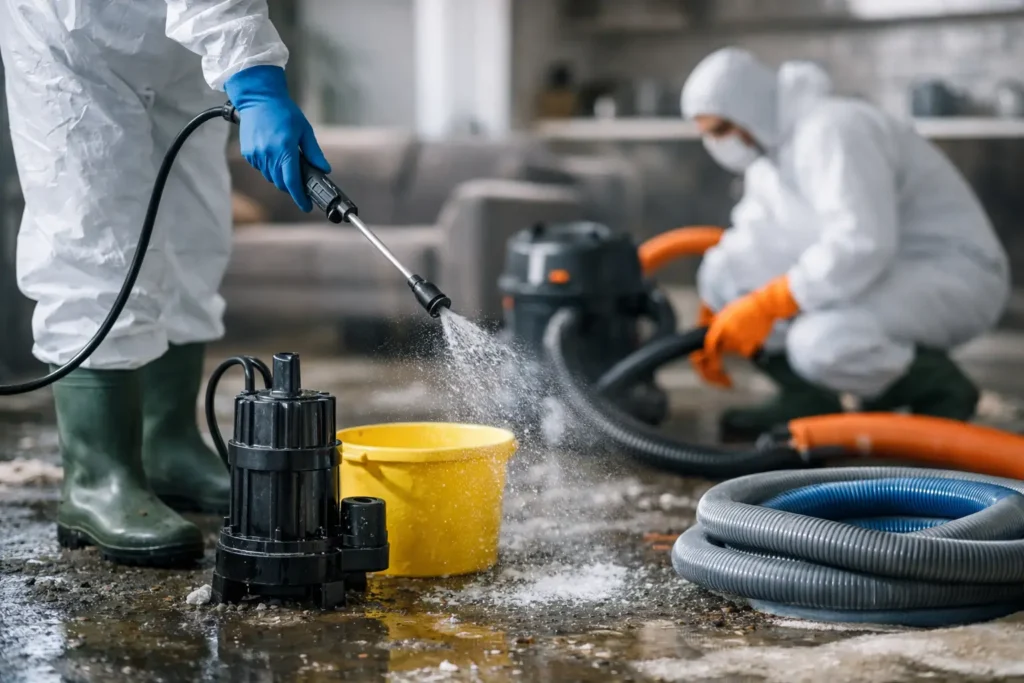
A sewer backup is not a mop-and-spray problem. The sewage disinfection steps taken in the first hours can determine whether contamination stays limited to one room or spreads through flooring, walls, HVAC systems, and personal belongings. For homeowners, landlords, and property managers, the priority is protecting people first, then protecting the structure from avoidable damage.
Sewage water can carry bacteria, viruses, parasites, and harmful organic waste. Restoration professionals classify it as Category 3 water, often called black water. Even when the water appears to have receded, contaminated moisture and residue may remain behind in materials that look dry or clean.
Start With Safety and Containment
Keep people and pets out of the affected area immediately. Do not walk through sewage water and then move through clean parts of the property. That simple foot traffic can carry contamination into hallways, bedrooms, offices, and vehicles.
If it can be done safely, shut off electrical power to the affected area. Do not enter a room with standing water if electrical outlets, appliances, or wiring may be submerged. Avoid running fans before containment is in place because they can move contaminated dust and airborne particles to unaffected spaces.
A professional crew begins by identifying the source of the backup. A blocked sewer line, toilet overflow, broken drain pipe, storm-related backup, or failed sump system may call for different repairs, but every source must be stopped before cleanup begins. Technicians then isolate the work zone using physical barriers and controlled access routes to prevent cross-contamination.
Remove Sewage Water Quickly, but Do Not Skip Documentation
Standing water needs to come out as soon as possible. Fast extraction reduces absorption into drywall, subflooring, cabinets, insulation, and framing. It also helps limit odor and microbial growth, which can begin when wet materials remain in place.
Before major removal begins, document the loss. Photos, videos, moisture readings, a record of affected rooms, and an inventory of damaged contents can support an insurance claim and establish the full scope of work. This matters for commercial properties as much as homes. A small-looking backup in a restroom or break room can affect adjacent suites, shared walls, stored inventory, and operations below the visible surface.
Extraction equipment is selected based on the volume of water and the materials involved. Wet vacuums may be appropriate for limited hard-surface areas, while truck-mounted extraction, submersible pumps, and specialty equipment are often needed for larger losses. The objective is not simply to remove visible water. It is to remove water without spreading contamination to clean areas.
Separate Salvageable Materials From Unsalvageable Materials
One of the most critical sewage disinfection steps is deciding what can actually be cleaned. Disinfection cannot make every soaked item safe. Porous materials absorb contaminated water, and many must be removed rather than treated on site.
Carpet, carpet padding, upholstered furniture, mattresses, paper products, cardboard, insulation, particleboard furniture, and unfinished wood products are often not salvageable after contact with sewage. Depending on the extent of impact, drywall may need to be removed above the water line, particularly if moisture traveled behind the wall or insulation was affected.
Hard, nonporous surfaces such as tile, metal, glass, sealed concrete, and some plastic materials can often be cleaned and disinfected if they are structurally sound. Hardwood flooring, cabinets, engineered flooring, and other semi-porous materials require a closer assessment. The answer depends on exposure time, construction, the direction water traveled, and whether contamination reached concealed areas.
This is where cutting corners becomes expensive. Leaving contaminated padding beneath a cleaned carpet or wet insulation behind a wall may create persistent odor, microbial conditions, and a more extensive repair later.
Clean Before Applying Disinfectant
Disinfectants work best on surfaces that have already been physically cleaned. Mud, sewage solids, grease, and residue can shield microorganisms from the product applied over them. That is why professional remediation follows a sequence: remove contaminated debris, clean the remaining surfaces, and then disinfect.
Technicians use appropriate personal protective equipment throughout this work, including gloves, protective clothing, eye protection, and respiratory protection when conditions require it. They use controlled cleaning methods to remove soil and residues from structural surfaces without creating unnecessary splashing or aerosols.
The disinfectant itself must be appropriate for sewage contamination and applied according to its label requirements. More chemical is not automatically better. Product concentration, surface compatibility, ventilation, and contact time all matter. Wiping a disinfectant on and immediately drying it off may not provide the intended level of treatment.
Bleach is frequently treated as a universal answer, but it has limits. It can damage finishes, reacts dangerously with some household chemicals, and does not solve contamination inside porous materials or wall cavities. Mixing cleaning products is never safe. When sewage has affected a property, professional-grade cleaning and disinfection protocols provide far more control than a quick household approach.
Dry the Structure and Check Hidden Moisture
Disinfection is only part of a safe recovery. The property must also be dried to an appropriate standard. Moisture that remains in framing, subfloors, baseboards, cabinets, or wall cavities can support mold growth and cause materials to warp, swell, or fail.
Restoration teams use moisture meters, thermal imaging, and humidity readings to map the true affected area. These tools help reveal damp drywall behind a baseboard, moisture under flooring, or water migration into an adjoining room. Air movers and commercial dehumidifiers are then placed strategically to dry the structure under controlled conditions.
Drying should be monitored, not guessed. Daily readings help confirm that materials are trending toward their dry standard and that equipment is doing its job. If readings stall, the crew may need to remove additional materials, adjust the drying setup, or investigate a concealed source of moisture.
Verify Conditions Before Repairs Begin
A room can smell better and look clean while still needing additional work. Before reconstruction starts, the affected area should be inspected for remaining debris, staining, odor, elevated moisture, and compromised materials. This final check is what prevents fresh drywall, flooring, or paint from covering an unresolved contamination issue.
For extensive losses, documentation should show the water category, the materials removed, cleaning and disinfection work completed, drying records, and the repair scope. Clear records protect property owners and make insurance conversations more straightforward. They also help landlords and commercial managers demonstrate a responsible response to a health-related property event.
Once the structure is clean, dry, and cleared for rebuilding, repairs can move forward. That may include replacing insulation and drywall, repairing trim, restoring flooring, repainting, rebuilding cabinets, or completing larger reconstruction. Using one coordinated team for mitigation and repairs reduces handoffs and helps ensure the rebuild matches what was removed during remediation.
When to Call a Professional Immediately
A sewage backup warrants professional help when water has touched flooring, drywall, contents, HVAC components, multiple rooms, or any occupied commercial area. The same is true when the source is uncertain, the backup involves exterior sewage, or occupants may have been exposed.
For a very limited toilet overflow containing clean water, a homeowner may be able to clean and dry a nonporous floor safely after stopping the source. But once sewage, drain-line waste, or contaminated water enters the space, the risk changes. The job becomes about containment, material decisions, disinfection, moisture control, and documentation – not just surface cleaning.
Metro Atlanta property owners need a response that brings order to a disruptive event. Elevated Operations provides emergency sewage remediation, moisture mapping, insurance-ready documentation, and reconstruction coordination so the work does not stop at cleanup. The safest next move after a backup is to keep the area isolated, avoid moving contaminated belongings, and get a qualified team assessing the damage before hidden moisture turns one bad day into a longer recovery.