
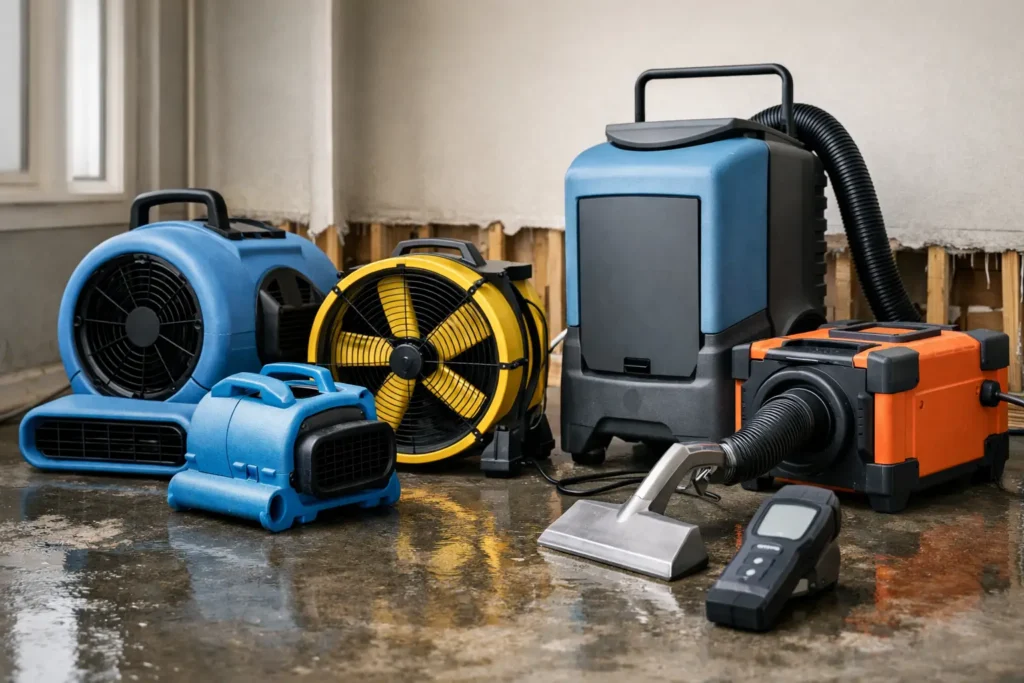
A flooded floor can look dry long before the structure is actually safe. Water moves beneath baseboards, into wall cavities, under flooring, and through insulation. That is why a proper drying equipment comparison matters after a burst pipe, overflow, roof leak, or storm intrusion. The right equipment does more than move air around a room. It removes moisture from building materials, verifies drying progress, and helps prevent secondary damage such as mold growth, warped floors, odors, and weakened drywall.
For homeowners and property managers, the goal is not to become a restoration equipment expert during an emergency. The goal is to know what professional drying should accomplish, what questions to ask, and why one fan in a wet room is rarely an adequate plan.
Drying Equipment Comparison: What Each Tool Does
Professional water mitigation relies on a system, not a single machine. Extraction, airflow, dehumidification, and moisture measurement work together. The equipment selected depends on the water source, how long materials remained wet, the affected area, indoor conditions, and the type of construction involved.
Water extractors remove the bulk water first
Extraction equipment is the first priority when standing water is present. Truck-mounted extractors, portable extraction units, weighted extractors for carpet, and submersible pumps remove liquid water far faster than evaporation ever could.
This step has a direct effect on the rest of the job. The more water removed immediately, the less time air movers and dehumidifiers need to run. Fast extraction can also make the difference between saving a carpet and pad or needing to remove both.
An extractor is not a drying machine, however. Even after the visible water is gone, moisture can remain in carpet backing, subfloors, drywall, framing, and cabinets. That is where the next stages begin.
Air movers speed evaporation from wet materials
Air movers are the high-velocity fans commonly seen after water damage. Their purpose is not simply to make a room feel breezy. They direct controlled airflow across wet surfaces so moisture can evaporate into the air.
In a typical loss, technicians position air movers to dry carpet, baseboards, drywall, wood floors, and other affected materials. The number and placement matter. Too few units may leave slow-drying areas behind furniture or inside corners. Poor placement can waste energy without improving evaporation.
Air movers are especially effective when materials are still salvageable and moisture is close enough to the surface to be released. They are less effective on their own when a room is closed up and humidity rises quickly. Once the air becomes saturated, evaporation slows. That is why dehumidification is essential.
Dehumidifiers pull moisture out of the air
Dehumidifiers collect the moisture released by air movers and wet building materials. Without them, moisture can remain trapped indoors or migrate to unaffected rooms and materials.
Commercial restoration dehumidifiers generally fall into two categories: refrigerant units and desiccant units. Refrigerant dehumidifiers are often efficient in warm, humid conditions and are common in homes, apartments, offices, and retail spaces. Desiccant dehumidifiers use a moisture-absorbing material and can perform better in lower temperatures or demanding drying environments.
Neither type is automatically better in every situation. A basement with warm, humid air may respond well to refrigerant dehumidification. A colder commercial space, dense structural assembly, or specialty drying project may call for desiccant equipment. A qualified restoration team chooses based on conditions, not on what happens to be available.
Drying mats and specialty systems protect hard surfaces
Hardwood floors, cabinetry, plaster, and dense wood materials can hold moisture where standard airflow cannot reach it. Specialty drying systems address those hidden areas.
Drying mats use a vacuum-based system to draw moisture through wood flooring. When deployed early, they can sometimes reduce cupping, crowning, and permanent damage to hardwood. They do not guarantee that every floor can be saved, especially if the water was contaminated or sat for an extended period. Still, targeted drying may preserve materials that would otherwise be removed.
Wall cavity drying systems can also be useful when water has entered behind drywall. Rather than immediately removing large wall sections, technicians may create small access points and direct airflow into the cavity. Whether this approach is appropriate depends on the water category, insulation type, visible deterioration, and moisture readings. Sewage-contaminated water requires a very different response than a clean supply-line leak.
Moisture meters and thermal imaging confirm the real conditions
The most valuable tools in a drying setup may be the diagnostic tools. Moisture meters, thermo-hygrometers, and thermal imaging cameras help identify where water traveled and whether materials are returning to acceptable moisture levels.
A thermal camera can reveal temperature differences that may indicate moisture, but it does not prove that a material is wet. Technicians use it alongside moisture readings and visual inspection. Pin meters can measure moisture within wood and drywall, while non-invasive meters scan wider surfaces without creating holes.
This documentation matters for two reasons. First, it prevents guesswork. Second, it creates a clear record for insurance claims and property owners. Equipment should not be removed simply because a room feels dry or a surface looks normal. It should be removed when measurements show that the affected materials have reached an appropriate dry standard.
Why More Equipment Is Not Always Better
A common misconception is that a restoration company can solve any water loss by placing as many fans as possible. Excess equipment can create unnecessary cost, noise, and electrical demand without improving results.
Effective drying is about balance. Air movers need enough dehumidification capacity to control humidity. Dehumidifiers need adequate airflow to capture moisture evaporating from wet surfaces. The affected materials need regular monitoring so the setup can be adjusted as conditions change.
For example, a wet living room with exposed carpet and drywall may need several air movers and a refrigerant dehumidifier. A water-damaged hardwood floor may need a smaller, more targeted system with drying mats. A large commercial facility may require multiple drying zones, containment, temporary power planning, and desiccant dehumidification.
The best drying plan is calculated, monitored, and adjusted daily. It is not a one-time equipment drop-off.
What Property Owners Should Ask After Water Damage
You do not need to know every technical specification, but direct questions can help you understand whether the work is being managed professionally. Ask where moisture was detected, which materials are being dried, how often readings will be taken, and what conditions must be met before equipment is removed.
It is also reasonable to ask whether the water source affects what can be saved. Clean water from a recently broken supply line may allow more drying and restoration options than a sewer backup or long-standing floodwater. In contaminated losses, safety and proper removal of affected materials can take priority over saving every finish.
For landlords and commercial property managers, request documentation that identifies affected areas, equipment placed, moisture readings, and the drying timeline. Clear records support claim coordination and help you make informed repair decisions after mitigation is complete.
The Value of a Full Recovery Plan
Drying equipment protects a property, but it is only one part of recovery. Once moisture is under control, damaged drywall, flooring, cabinets, insulation, paint, and structural finishes may still need repair. Coordinating mitigation and reconstruction through separate vendors can create delays and confusion when the property is already disrupted.
Elevated Operations handles the emergency response, moisture control, insurance communication, and reconstruction process as one coordinated effort. For Metro Atlanta property owners, that means the drying plan can support the repair plan from the beginning instead of leaving unanswered questions once the equipment comes out.
If water has reached building materials, act before the damage spreads behind finished surfaces. Fast extraction, measured drying, and honest documentation give your property the best chance of a clean, controlled recovery.