
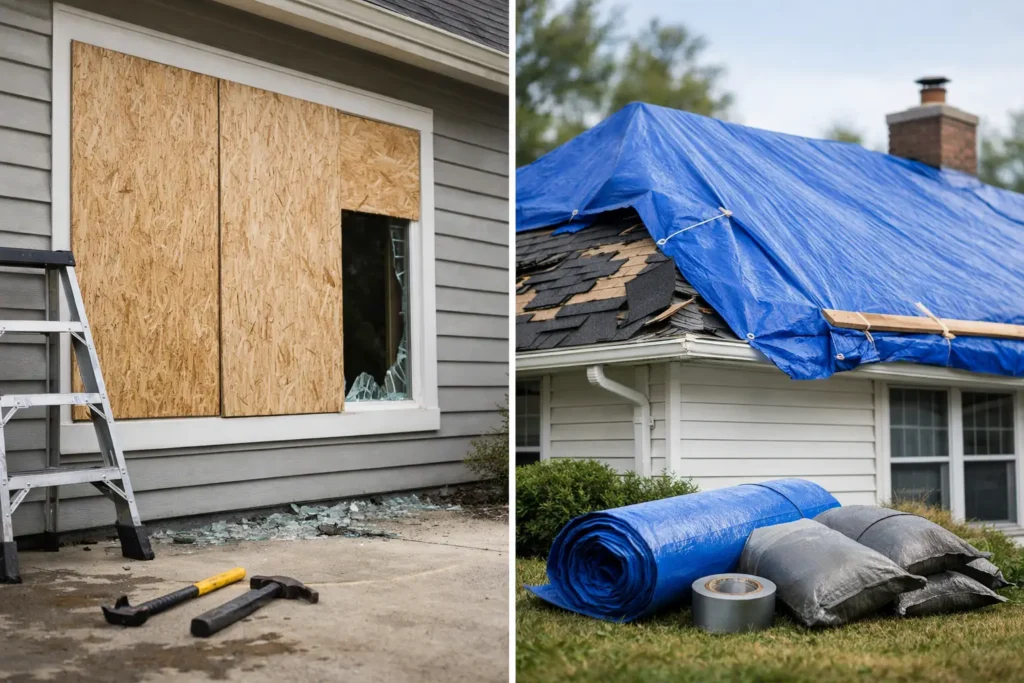
A broken window after a fire and a hole in the roof after a storm may look like separate problems, but the immediate goal is the same: stop the property from taking on more damage. This boardup tarping comparison explains where each emergency protection method works, where it falls short, and why the right decision in the first few hours can protect your building, belongings, and insurance claim.
The wrong temporary protection can leave a home exposed to rain, wind, animals, intruders, and further structural deterioration. The right one buys time for a proper inspection, mitigation plan, and permanent repair.
Board-Up vs. Tarping: What Each Method Does
Board-up and tarping are not interchangeable services. They solve different exposure problems, though a damaged property often needs both.
A board-up closes openings in vertical surfaces. Restoration crews typically secure plywood over broken windows, damaged doors, shattered storefront glass, garage openings, or holes in exterior walls. The goal is to reestablish a physical barrier between the interior and the outside.
Tarping covers damaged roof areas and other overhead surfaces where water can enter from above. A professional roof tarp is anchored and positioned to direct rainwater off the damaged area instead of allowing it to reach insulation, ceilings, framing, electrical systems, and contents below.
Both are temporary measures. Neither should be treated as a permanent repair, but both can prevent a manageable loss from becoming a much larger reconstruction project.
When Board-Up Is the Better Choice
Board-up is the first line of defense when the building envelope has been opened at the walls, doors, or windows. After a vehicle strikes a storefront, a tree breaks a window, or firefighters force entry during a fire response, the property may be exposed even if the roof is intact.
Plywood provides a solid, visible barrier that a tarp cannot. It helps deter unauthorized entry, reduces wind-driven rain infiltration, and protects the interior from debris. For commercial properties, securing a storefront quickly can also reduce liability concerns and help preserve inventory, equipment, and confidential materials.
Board-up is especially useful after fire damage. Windows can crack from heat, exterior doors may be compromised, and portions of siding or wall sheathing may be removed during firefighting operations. Closing those openings helps contain the site while the property is assessed for smoke, water, and structural damage.
That said, plywood does not make a building watertight in every situation. If water is entering through a damaged roof, boarded windows will not solve the primary problem. The property needs overhead protection as well.
What a Professional Board-Up Should Include
A quick sheet of plywood nailed over a window is not always enough. Improper installation can damage trim, crack remaining glass, create additional openings, or leave gaps that invite wind and rain.
Professional crews assess the opening, select suitable materials, fasten them securely, and document the condition of the damage. That documentation matters when an insurer needs to see what was exposed, what emergency work was performed, and why it was necessary to prevent further loss.
When Tarping Is the Better Choice
Tarping is designed for roof leaks and overhead exposure. It is often needed after high winds lift shingles, falling limbs puncture decking, hail damages a roof system, or fire burns through part of the roof structure.
Water travels fast once it gets below the roofing material. A small roof opening can saturate attic insulation, stain ceilings, feed mold growth, weaken drywall, and spread into rooms far from the original impact point. The longer rain continues to enter, the more likely the property will need extraction, structural drying, material removal, and reconstruction.
A properly installed tarp covers beyond the visible opening because water can travel beneath shingles and along the roof deck. It must be secured with the roof pitch, wind exposure, and drainage path in mind. A loose tarp may flap, tear, pool water, or even create more roof damage during the next storm.
For Metro Atlanta property owners, this matters because severe weather rarely arrives on a convenient schedule. A roof may be damaged late in the day, then face another round of rain before a roofer can complete permanent repairs. Emergency tarping creates a critical layer of protection during that gap.
Tarping Has Limits
A tarp can reduce incoming water, but it cannot correct compromised framing, replace missing roof decking, or make an unsafe structure safe to occupy. If the roof has sagged, partially collapsed, or suffered major fire damage, crews may need to stabilize the area and restrict access before covering it.
Tarping also cannot address water already inside. If ceilings, insulation, or flooring are wet, moisture mapping and commercial drying equipment are needed to locate and remove hidden moisture before secondary damage develops.
The Board-Up and Tarping Comparison Property Owners Need
The practical choice comes down to the location of the opening. Use board-up for wall-level entry points and tarping for roof-level water entry. When a storm or fire damages both, using only one method leaves part of the property vulnerable.
Consider a common scenario: a tree falls across a home during a storm. It breaks a rear window, tears through roof shingles, and exposes attic decking. Board-up protects the broken window from intrusion and wind-driven rain. Tarping protects the roof opening from rainfall. Then, water mitigation work addresses the moisture that entered before and during the emergency.
The same logic applies to commercial buildings. A damaged glass door needs board-up. A punctured low-slope roof needs a properly secured cover or temporary roof protection. The goal is not merely to make the site look closed. It is to limit additional damage until repairs can be completed correctly.
Why Speed and Documentation Matter
Insurance policies generally expect property owners to take reasonable steps to protect a damaged structure from further loss. Emergency board-up and tarping are often part of that duty. Waiting for a permanent repair before protecting the opening can allow avoidable water damage, theft, or vandalism to compound the claim.
Take photos and video of the damage if it is safe to do so. Keep records of emergency services, including invoices and any communication with your insurer. Do not climb onto a damaged roof, handle broken glass, or enter a fire-damaged area to document it. Safety comes first.
A qualified restoration team can document the original damage, emergency protection installed, moisture conditions, and mitigation work that follows. That creates a clearer record for the claim and helps establish the connection between the covered event and the work required to restore the property.
What Happens After Emergency Protection
Board-up and tarping are the first control measures, not the finish line. Once the property is secure, the next steps depend on the loss. A storm loss may require water extraction, thermal imaging, drying, roof repair, ceiling replacement, and flooring repair. A fire loss may require soot cleanup, odor control, demolition of unsalvageable materials, and reconstruction.
This is where working with one accountable recovery partner can reduce disruption. Elevated Operations can secure exposed areas, document conditions, manage mitigation, coordinate insurance information, and carry the project into reconstruction. You should not have to chase separate emergency crews, drying contractors, roofers, and rebuild teams while trying to protect your property.
If an opening is exposed now, act before the next rain, wind event, or security issue creates a second loss. Secure the structure, document the damage, and give the property a protected path toward full repair.