
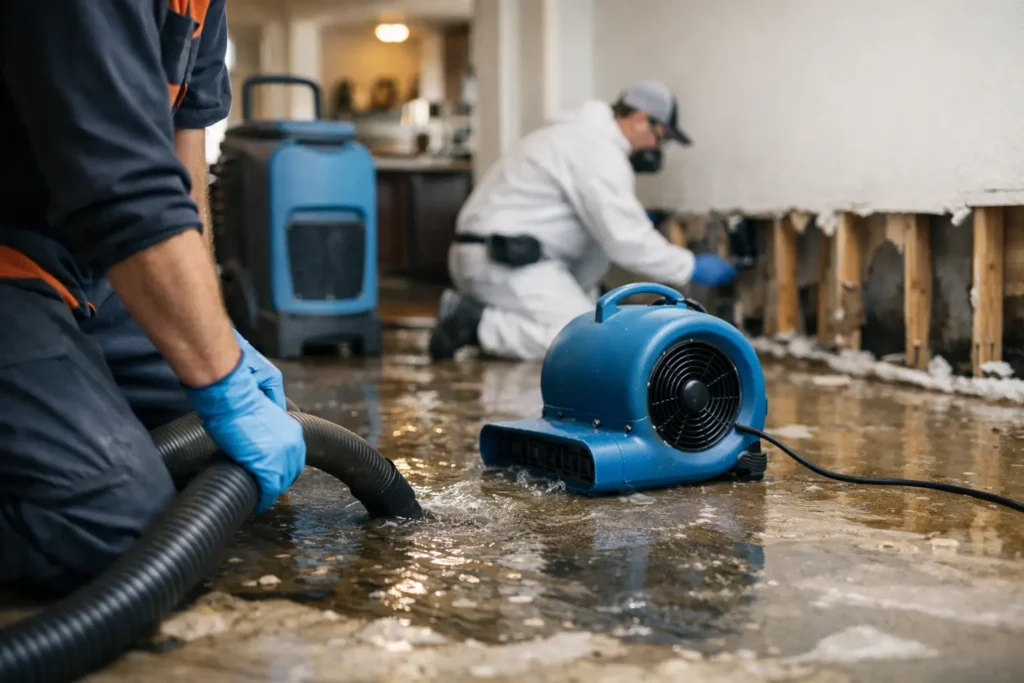
A burst supply line behind a wall can soak insulation, framing, flooring, and the ceiling below long before water becomes visible. That is why water mitigation is not simply mopping up and setting out a few fans. It is the emergency work that stops active damage, removes water, finds hidden moisture, and creates the conditions for safe repair.
For Metro Atlanta homeowners, landlords, and property managers, the first hours after a leak, flood, or backup can affect the scope of the loss, the chance of mold growth, and the cost of rebuilding. A fast, documented response gives you control when your property suddenly feels anything but controllable.
What water mitigation actually means
Water mitigation is the process of reducing further damage after a water event. The goal is to stabilize the property before moisture causes more structural deterioration, microbial growth, odors, or damage to finishes and belongings.
Mitigation begins with stopping the source when possible. That may mean shutting off the main water supply after a burst pipe, isolating a failed appliance line, or arranging emergency protection after storm exposure. From there, trained technicians assess the affected areas, remove standing water, measure moisture in materials, and set drying equipment based on the building’s actual conditions.
This is different from reconstruction. Mitigation protects and dries what can be saved. Reconstruction restores what cannot be saved or needs to be rebuilt, such as drywall, flooring, cabinets, insulation, trim, or electrical components. When one team can manage both phases, property owners avoid the handoff gap between emergency cleanup and final repairs.
Why visible water is only part of the problem
Water follows gravity, but it also travels through materials and building assemblies. A leak from an upstairs bathroom may affect the subfloor, ceiling cavity, wall insulation, baseboards, and flooring in a room below. Water under luxury vinyl plank or hardwood can remain hidden even after the surface appears dry.
Drying only what you can see creates risk. Moisture left inside walls or beneath flooring can weaken materials and create conditions that support mold growth. Some materials can be dried and preserved when treatment starts early. Others, including swollen particleboard cabinetry or heavily contaminated porous materials, may need removal. The right decision depends on the water source, how long materials were wet, moisture readings, and the material itself.
Clean water from a broken supply line is handled differently than wastewater from a sewer backup. Sewage and other contaminated water require controlled removal, cleaning, disinfection, and appropriate disposal practices. In those situations, saving every material is not the objective. Protecting occupants and preventing contamination spread comes first.
The water mitigation process, step by step
A professional response should be organized, not rushed. Speed matters, but so does knowing where water has moved and documenting what was done.
1. Emergency assessment and source control
Technicians first identify the likely source and determine whether it has been stopped. They inspect visible damage and use tools such as moisture meters and thermal imaging to locate moisture behind surfaces and under flooring. Thermal imaging helps identify temperature differences that can indicate moisture, while moisture readings confirm whether materials are actually wet.
This assessment also identifies safety concerns. Water near electrical systems, sagging ceilings, compromised flooring, and contaminated water all change the plan. Never enter an area with a ceiling that appears ready to collapse or where electricity may be affected.
2. Water extraction
Removing standing water quickly is one of the most effective ways to limit loss. Commercial extraction equipment can pull water from carpet, padding, concrete, subfloors, and other affected materials far more effectively than household wet vacuums alone.
Extraction is not limited to obvious puddles. Technicians may remove wet carpet padding, extract water through flooring, or create controlled access to wet wall cavities when needed. The trade-off is straightforward: limited, strategic removal can often prevent much larger demolition later.
3. Moisture mapping and drying
After extraction, the property needs a drying plan. Air movers increase evaporation, while dehumidifiers remove that moisture from the air. Proper placement, containment, and monitoring matter. Adding fans without enough dehumidification can move humid air around the property without lowering moisture levels where it counts.
Technicians establish drying goals by comparing affected materials with dry, unaffected areas. They take moisture readings throughout the process and adjust equipment as conditions change. This is why a room may look dry but still require equipment for several days. The finish surface is not the only material that must reach an acceptable moisture level.
4. Cleaning, protection, and documentation
Depending on the source, mitigation may include cleaning affected surfaces, applying antimicrobial treatments where appropriate, removing unsalvageable materials, and protecting unaffected rooms from dust and moisture migration. Contents may also need to be moved, documented, or evaluated for cleaning.
Detailed documentation supports insurance communication. Photos, moisture records, equipment logs, sketches, and itemized invoices show the cause, affected areas, and steps taken to prevent additional damage. Insurers make final coverage decisions, but clear records can reduce confusion and help a claim move forward.
5. Repair and reconstruction
Once the structure is dry and cleared for repair, reconstruction can begin. This may be as simple as replacing a section of drywall and repainting. It can also involve flooring, cabinetry, insulation, ceilings, trim, electrical work, or a larger remodel after a major loss.
A one-stop recovery partner is especially valuable here. Elevated Operations can manage emergency mitigation, insurance coordination, and the rebuilding work that returns the property to a finished condition. We do not just clean up the mess. We elevate recovery from the first emergency call through the final repair.
What to do before the mitigation team arrives
Your first priority is safety. If water is near outlets, appliances, or the electrical panel, avoid the area and seek qualified help. If it is safe to do so, shut off the water source or the main supply. Move dry valuables, documents, and electronics away from the affected area, but do not lift heavy wet furniture or disturb contaminated water without protective equipment.
Take a few photos and short videos before moving items, especially if the event may lead to an insurance claim. Then contact your insurer and a qualified restoration company. Avoid throwing away damaged materials immediately unless they pose a health or safety hazard. Documentation can matter, and a mitigation professional can help determine what is salvageable.
Do not assume bleach, space heaters, or open windows will solve a significant water event. Bleach is not a complete answer for porous materials, space heaters can create safety concerns, and humid outdoor conditions can slow drying. Georgia’s warm, humid weather makes controlled dehumidification particularly important after water damage.
When a small leak needs professional help
Not every spill requires a full mitigation project. A small amount of clean water on a nonporous surface that is dried immediately may be manageable. The situation changes when water reaches drywall, carpet, wood flooring, insulation, cabinets, or areas you cannot inspect.
Professional help is usually warranted when water has been present for more than a few hours, the source is unknown, a ceiling or wall is wet, flooring is buckling, there is a musty odor, or the water came from a drain, toilet, or sewer line. It is also the right call for rental and commercial properties, where documented drying protects both the building and the people who use it.
For property owners in Atlanta, Marietta, Mableton, Douglasville, and nearby communities, a 24/7 response can make the difference between targeted drying and a much larger rebuild. Ask whether the team uses moisture mapping, documents daily drying progress, explains what can be saved, and can handle repairs after mitigation is complete.
Water damage is disruptive, but the next step does not have to be uncertain. Stop the source if it is safe, protect people and valuables, document what you see, and get qualified help before hidden moisture turns a manageable leak into a larger property loss.