
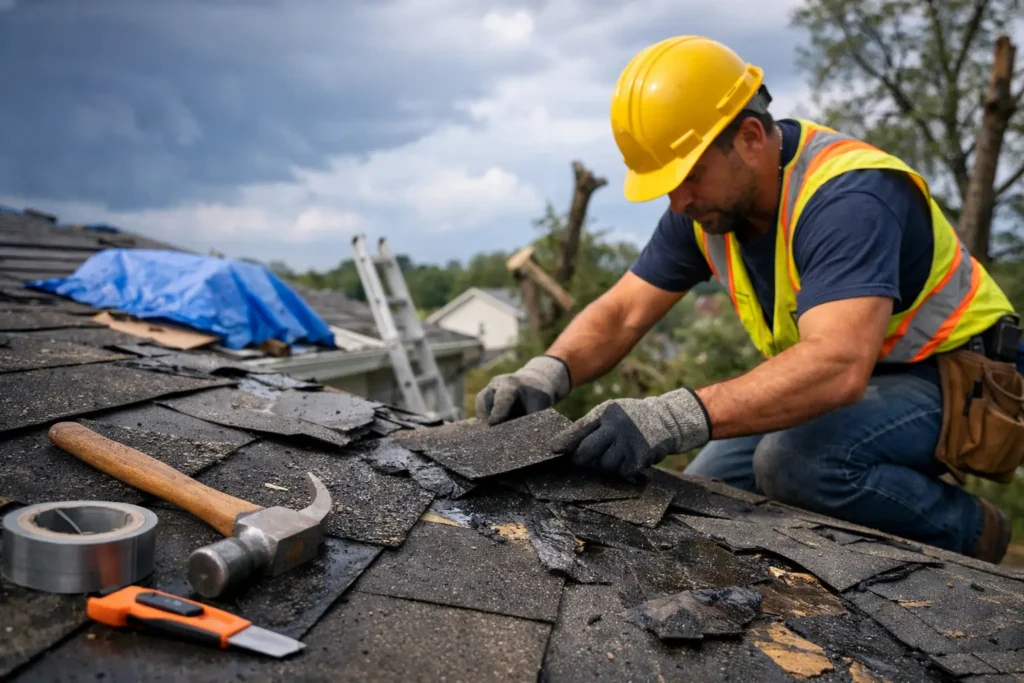
A few missing shingles can look like a minor problem from the driveway. After a hard Metro Atlanta storm, however, small roof failures can quickly become active leaks, soaked insulation, stained ceilings, and damaged framing. Timely roofing repairs are about more than restoring curb appeal. They are a critical step in stopping water from moving deeper into your property.
For homeowners, landlords, and commercial property managers, the first goal is control. Protect people, limit additional damage, document what happened, and get the roof properly assessed before the next round of rain turns a manageable repair into a larger restoration project.
Start With Safety and Immediate Protection
Do not climb onto a storm-damaged roof to inspect it yourself. Wet shingles, loose flashing, hidden soft spots, and downed power lines create serious fall and electrical hazards. From the ground, look for visible signs such as missing or curled shingles, lifted metal panels, damaged gutters, fallen limbs, punctures, or sections of roof decking that appear uneven.
Inside the property, check the attic, upper-floor ceilings, and exterior walls for dripping water, fresh discoloration, bubbling paint, or a damp odor. Move furniture, electronics, inventory, and other valuables away from active leaks if it is safe to do so. Place containers under drips, but do not assume that a bucket solves the problem. Water can travel along rafters, electrical lines, and wall cavities before it becomes visible.
If water is entering the building, emergency tarping or board-up protection may be necessary. A properly secured tarp creates a temporary barrier against further rain while the damage is documented and a repair plan is developed. It is not a substitute for a roof repair, but it can prevent the situation from getting worse overnight.
What Storm Damage Looks Like From the Ground Up
Roof damage is not always obvious. High winds can break the seal between shingles without removing them completely. Hail may bruise asphalt shingles and shorten their service life, even when the roof still looks intact from the street. Wind-driven rain can also enter around vents, skylights, chimneys, flashing, and pipe boots.
A professional inspection should look beyond the roof surface. The condition of the underlayment, decking, attic insulation, ventilation, gutters, and interior building materials all matter. A roof leak that has been active for several days may require both exterior repairs and interior drying.
That distinction matters because replacing a few shingles without addressing wet materials underneath can leave hidden moisture in place. Over time, that moisture can lead to wood deterioration, mold growth, damaged drywall, and odor problems. The visible roof issue may be small, while the full loss extends into the structure.
Signs the Damage May Be More Than a Simple Repair
Call for professional help promptly if you see a sagging ceiling, water near light fixtures, widespread staining, soft drywall, wet attic insulation, or water collecting in more than one room. These conditions can indicate that water has moved beyond the roof assembly.
Commercial properties need the same urgency, especially where leaks threaten electrical equipment, tenant spaces, inventory, ceiling systems, or business operations. A small opening above a flat or low-slope roof can allow substantial water intrusion during repeated storms.
Roofing Repairs or Roof Replacement: How to Decide
The right solution depends on the age of the roof, the type of material, the extent of the damage, and whether the roof system can still perform as intended after repairs. A newer roof with localized wind damage may only need shingles, flashing, or a vent boot replaced. A roof near the end of its expected lifespan may not be a good candidate for repeated patchwork.
Repairs are usually appropriate when the damaged area is contained and surrounding materials are in sound condition. Replacement may make more sense when there is broad storm damage, recurring leaks, deteriorated decking, extensive granule loss, or multiple failed roof components.
Cost matters, but the cheapest immediate option is not always the most economical one. A temporary patch that fails during the next storm can add water mitigation, drywall replacement, flooring repairs, and mold remediation to the original roofing expense. A clear inspection and written scope help property owners make a decision based on the actual condition of the structure, not guesswork.
Why Fast Drying Matters After a Roof Leak
Once water gets inside, the clock starts. Drywall, insulation, wood framing, carpet, and flooring can absorb moisture quickly. Some materials may look dry at the surface while retaining moisture behind walls or above ceilings.
Effective recovery requires more than fans placed in a room. Restoration teams use moisture meters, thermal imaging, and targeted drying equipment to identify where water traveled and verify that affected materials are returning to an acceptable moisture level. This documentation is especially valuable when insurance claims are involved.
If the roof opening is repaired but the interior is not properly dried, a property owner may face delayed damage weeks later. Paint can peel, flooring can warp, odors can develop, and microbial growth may take hold in concealed areas. Addressing the exterior and interior as one coordinated job protects the property more completely.
Document Damage Before Cleanup Begins
Take clear photos and videos of visible roof damage, interior leaks, wet belongings, stained ceilings, and any emergency protective measures. Record the date of the storm and keep notes on when the leak was first noticed. If a fallen tree or branch caused the damage, photograph it before removal when possible.
Then report the loss to your insurance carrier. Avoid discarding damaged materials until you have documented them and received guidance, unless they create an immediate health or safety issue. Save invoices for emergency services, temporary protection, and reasonable mitigation efforts.
Insurance coverage varies by policy, deductible, roof age, cause of loss, and prior damage. A qualified restoration and reconstruction provider can help organize photos, moisture records, repair scopes, and invoices so the claim reflects the work needed to return the property to pre-loss condition. That support does not guarantee coverage, but it can reduce confusion at a stressful time.
Choose a Team That Can Handle the Full Recovery
Roofing repairs after water intrusion often involve more than a roofing crew. You may need emergency tarping, water extraction, structural drying, mold prevention, ceiling and wall repairs, painting, flooring work, and insurance documentation. Coordinating separate contractors can delay the project and leave gaps between the roof repair and interior restoration.
Elevated Operations provides emergency protection, moisture assessment, drying, claim support, and reconstruction for properties affected by storm damage. For owners in Atlanta, Mableton, Marietta, and nearby communities, one coordinated recovery team can mean fewer handoffs and a clearer path from the first leak to completed repairs.
When comparing providers, ask how they identify hidden moisture, whether they document drying progress, who performs the reconstruction, and how they communicate with your insurer. Credentials, equipment, response time, and workmanship accountability all affect the outcome.
Reduce the Risk Before the Next Storm
Regular maintenance cannot prevent every storm loss, but it can reduce the chance that a small weakness becomes a major leak. Keep gutters clear, trim branches away from the roofline, check flashing around penetrations, and have aging roofs inspected before severe weather season. After major wind or hail, schedule an inspection even if you do not see an immediate interior leak.
The best time to address roof damage is before the next rainfall exposes it. A fast, well-documented response protects the roof, the rooms below it, and the long-term value of the property.