
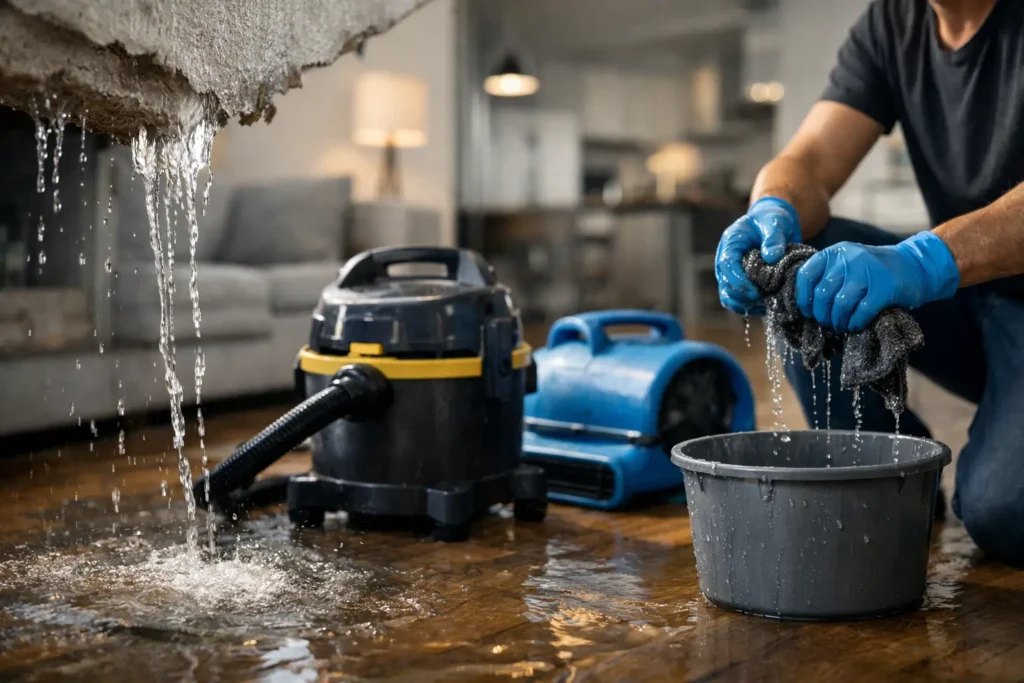
A burst supply line behind a wall can soak insulation, framing, and flooring long before water reaches the center of the room. That is why water damage is not a wait-and-see problem. The first 24 hours can determine whether a property needs targeted drying and repair or faces mold growth, material replacement, and a much larger insurance claim.
For Metro Atlanta homeowners, landlords, and property managers, the goal is simple: stop the source, protect people, document the loss, and get professional drying underway as quickly as possible. Cleaning up visible water matters, but it is only one part of protecting the structure.
Water Damage Starts Spreading Immediately
Water follows gravity, but it also travels sideways through drywall, under baseboards, beneath flooring, and into cabinets. A small leak on the second floor may show up as a ceiling stain below. A flooded basement can wick moisture into wall materials several inches above the visible water line.
The type of water also changes the response. Clean water from a broken supply pipe is usually less hazardous at the start, but it can become contaminated if it sits. Water from a washing machine overflow may contain detergents and soil. Sewage backups, toilet overflows involving waste, and outdoor floodwater require a more controlled cleanup process because they can carry bacteria and other contaminants.
Time matters because wet materials do not all dry at the same rate. Hardwood can cup, laminate flooring can swell, drywall can lose strength, and insulation can hold moisture out of sight. The right response is based on moisture readings, material conditions, and the source of the loss, not just what looks wet.
What to Do First After a Leak or Flood
Before moving furniture or starting cleanup, make sure the area is safe. If water is near electrical outlets, appliances, a breaker panel, or exposed wiring, do not enter the area until the power can be safely shut off or evaluated by a qualified professional. Never walk through standing water if you suspect an electrical hazard.
If it is safe to do so, stop the source. Shut off the local supply valve for a fixture or appliance, or turn off the main water supply if a pipe has failed and the leak cannot be isolated. For a roof leak during a storm, move belongings away from the affected area and place containers under active drips only if you can do so safely. Do not climb onto a wet roof.
Then begin documenting the condition. Take wide photos of each affected room, then close photos of damaged flooring, walls, contents, appliances, and the apparent source. Record the date, time, and any steps you took to stop the water. This documentation helps support an insurance claim and gives the restoration team a clearer picture of how the loss developed.
Call your insurance carrier to report the incident, but do not delay mitigation while waiting for an adjuster. Most policies expect property owners to take reasonable steps to prevent additional damage. Keeping damaged materials in place until they can be documented is different from allowing water to continue spreading.
What You Can Safely Do Before Help Arrives
If the water is clean, shallow, and away from electrical risks, remove lightweight belongings from the affected area. Lift furniture off wet carpet or flooring with blocks or foil barriers where possible. Move rugs, books, electronics, and other valuables to a dry location. Wet fabric and paper products can develop odors and staining quickly.
You can use towels, a mop, or a wet vacuum for limited clean-water spills. Run air conditioning when appropriate to help reduce indoor humidity, but do not assume household fans will solve a major loss. Fans can move humid air around without removing enough moisture from walls, subfloors, or cavities.
Avoid pulling up flooring, cutting into walls, or removing cabinets unless a restoration professional advises it. Those actions can complicate documentation, create a larger repair scope, or expose hidden contamination. The same caution applies to porous items affected by sewage or floodwater. Do not attempt to salvage contaminated carpet, padding, upholstered furniture, or drywall on your own.
Why Professional Drying Is More Than Extraction
Water extraction is the urgent first step, but dry-looking surfaces can be misleading. Professional restoration teams use moisture meters and thermal imaging to identify where water has migrated behind finished surfaces. They establish drying goals for materials, place commercial-grade air movers and dehumidifiers, and return to monitor progress.
This process is called moisture mapping and structural drying. It helps determine whether materials can be dried in place or need removal. In some cases, carefully removing baseboards or making controlled access points can allow walls to dry without extensive demolition. In other cases, saturated insulation, swollen engineered flooring, or compromised drywall must be removed to prevent long-term problems.
There are trade-offs. Fast removal of damaged materials can speed drying, but unnecessary demolition adds cost and reconstruction time. On the other hand, trying to preserve every material without verifying moisture levels can trap water in the building. The right decision depends on the water category, how long materials were wet, the extent of saturation, and the condition of the affected materials.
Common Mistakes That Make the Loss Worse
The biggest mistake is waiting for a stain to get larger before acting. By the time discoloration is visible, water may have already traveled into adjacent materials. Another common error is relying only on a shop vacuum and opening windows. Atlanta humidity can slow drying significantly, especially in basements, crawl spaces, and interior rooms with limited airflow.
Property owners also sometimes throw away damaged items before taking photos or fail to keep receipts for emergency expenses. Documenting the loss does not mean delaying cleanup. It means creating a clear record while protecting the property.
Finally, do not treat sewage water or suspected microbial growth as a normal cleaning project. These conditions call for protective procedures, containment where needed, and removal of materials that cannot be safely cleaned. The health and safety of occupants come first.
What a Full Recovery Should Look Like
A water loss is easier to manage when one team can handle the full path from emergency response through rebuilding. After extraction and drying, the work may include removing damaged drywall, replacing insulation, repairing flooring, repainting, rebuilding cabinets, or addressing electrical and plumbing repairs connected to the original loss.
That continuity matters for homeowners and commercial property managers. It reduces handoffs, keeps drying records connected to the repair scope, and makes it easier to communicate with the insurance carrier. Elevated Operations provides emergency mitigation, moisture documentation, insurance coordination, and reconstruction so property owners are not left coordinating separate cleanup and repair contractors during an already stressful event.
For rental properties and commercial spaces, clear documentation is especially valuable. Moisture readings, photographs, equipment logs, and itemized estimates help establish what happened, what was done to prevent further damage, and what repairs are needed to return the space to use.
When to Call for Emergency Water Damage Help
Call for professional help immediately when water is actively flowing, standing water covers more than a small area, ceilings are sagging, walls or flooring feel wet, or the water may be contaminated. The same applies when a leak has been hidden for an unknown period, such as behind a refrigerator, inside a vanity, or under a sink.
A rapid response can often limit the repair scope. In Austell, Douglasville, Marietta, Mableton, Atlanta, and nearby communities, a 24/7 restoration response is most valuable before moisture has time to migrate further into the structure. Certified technicians can assess the source, extract water, map hidden moisture, and create a drying plan based on evidence rather than guesswork.
Your property does not need to look flooded to need urgent attention. If water has reached building materials, act early, keep the area safe, and make decisions based on measured moisture conditions. That is how you protect the structure, support your claim, and move toward a repair that lasts.