
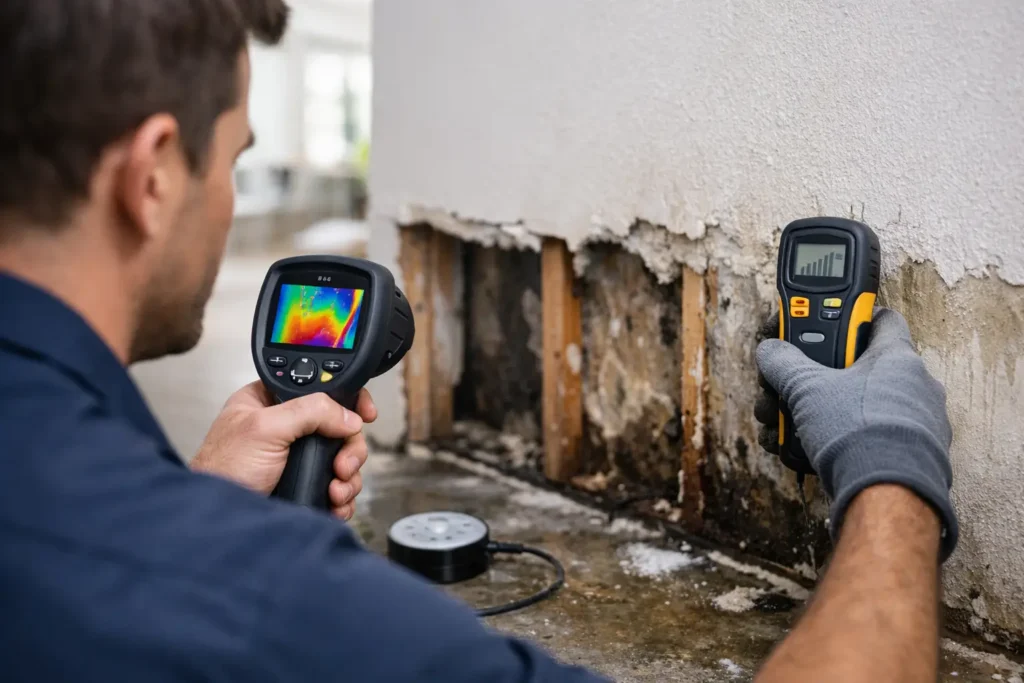
A floor can feel dry while water remains trapped under the surface. A ceiling stain can stop spreading while damp insulation above it continues to deteriorate. That is why moisture mapping services are a critical part of water damage restoration, not an optional add-on after a leak, flood, or sewer backup.
At Elevated Operations, we use professional moisture detection tools to locate water you cannot see, measure how far it traveled, and build a drying plan based on evidence. The goal is simple: protect the parts of your property that can be saved and prevent a manageable water event from becoming a mold, odor, or reconstruction problem.
What Moisture Mapping Services Actually Reveal
Water rarely stays where the visible damage begins. A burst supply line behind a wall may soak baseboards, insulation, framing, adjacent rooms, and the subfloor beneath nearby flooring. Water from an upstairs bathroom can move along joists and show up several feet away from the original leak.
Moisture mapping creates a clear picture of that migration. A trained technician takes and records readings across affected and unaffected areas, then compares them to normal moisture levels for the material and environment. Those readings help define the true extent of the loss.
This process can reveal moisture in drywall, wood framing, flooring systems, cabinets, insulation, ceiling assemblies, and concrete. It also helps determine whether a material is drying successfully or whether water remains behind a surface that looks normal.
A proper map does more than identify wet spots. It establishes a starting point for the drying process, guides equipment placement, and provides documentation that supports insurance communication and repair decisions.
How Professional Moisture Mapping Works
Moisture detection is not one quick pass with a handheld device. Reliable results come from pairing the right tools with restoration experience and repeating measurements throughout the drying process.
Inspection starts with the source and the path
Before placing drying equipment, technicians identify the likely source of water and assess how long materials may have been exposed. Clean water from a recent supply-line break presents different concerns than a long-term appliance leak or a sewage backup. The category of water, the affected materials, and the time since the incident all influence what can be safely dried or what must be removed.
The inspection also considers the construction of the property. Water moves differently through a slab-on-grade home, a crawl-space foundation, a multistory apartment building, or a commercial suite with shared walls. A moisture map should follow the building, not assumptions.
Thermal imaging helps locate suspicious areas
Infrared cameras can show temperature differences across a wall, ceiling, or floor. A cooler area may indicate evaporation from wet materials, while a warmer pattern may point to another condition. Thermal imaging is valuable because it helps technicians locate areas that deserve closer testing without opening every surface.
But a thermal image alone does not prove that a material is wet. Airflow, sunlight, HVAC operation, and insulation gaps can all affect surface temperature. Professional moisture mapping confirms thermal patterns with moisture meters and material-specific readings before making removal or drying decisions.
Moisture meters confirm what is wet
Pin and pinless moisture meters measure moisture in different ways and are used based on the material being tested. Technicians may check drywall, wood trim, subflooring, framing, carpet padding, and other building components to identify elevated readings.
Readings are compared with dry reference areas whenever possible. This matters because materials naturally hold different amounts of moisture. A reading that is acceptable for concrete may be a serious concern for wood flooring. Accurate interpretation prevents both missed damage and unnecessary demolition.
Documentation tracks drying progress
Once the affected areas are identified, the information becomes the drying roadmap. Technicians document moisture readings, humidity conditions, equipment placement, and ongoing progress. As air movers, dehumidifiers, and other drying equipment do their work, follow-up readings show whether conditions are improving.
If a material is not responding as expected, the plan can be adjusted. That may mean changing airflow, adding dehumidification, opening a wall cavity, removing unsalvageable insulation, or addressing a hidden source that was not fully repaired. Drying should be measured, not guessed.
Why Visual Inspection Is Not Enough
Visible water is urgent, but it is only part of the problem. Drywall can look dry on the face while the back side remains saturated. Carpet may feel dry after surface extraction while its pad and subfloor retain moisture. Cabinet toe kicks can hide water that has traveled beneath kitchen flooring.
Waiting for visible signs can create costly consequences. Moisture left in place may weaken drywall, swell wood materials, delaminate flooring, corrode metal components, create persistent odors, and support mold growth. In many cases, the most expensive repairs happen after the original water has disappeared from view.
For Metro Atlanta property owners, humidity can complicate drying even further. High outdoor humidity, damp crawl spaces, and HVAC conditions can slow evaporation. A professional monitoring plan accounts for indoor humidity and material moisture, rather than relying on how the room feels.
When to Request Moisture Mapping Services
Any event involving water inside the structure deserves a professional assessment, especially when water may have reached concealed materials. Request moisture mapping services promptly after:
- A burst pipe, overflowing fixture, appliance leak, or water-heater failure
- Flooding in a basement, crawl space, garage, or lower-level living area
- Storm damage that allows rainwater through a roof, window, or exterior wall
- A sewage backup or toilet overflow that affects flooring, walls, or cabinets
- A slow leak under a sink, behind a refrigerator, around a shower, or near an HVAC unit
The urgency depends on the situation, but fast action generally preserves more materials. A clean-water leak caught early may allow for targeted drying with limited disruption. A long-standing leak, contaminated water event, or widespread saturation may require selective removal to protect the building and its occupants.
Moisture Mapping Supports Better Insurance Decisions
Insurance claims often depend on clear documentation of what happened and what work was necessary to prevent further damage. Moisture maps and drying records provide objective evidence of affected materials, monitoring results, and the steps taken to restore the property.
That documentation can be especially useful when damage is hidden. If water traveled behind walls or beneath flooring, photographs of the visible area may not tell the whole story. Recorded readings help explain why targeted drying, material removal, or later reconstruction was required.
Property owners should also understand that insurance coverage varies. The cause of the loss, the policy language, maintenance history, and whether the damage was sudden or gradual can all affect coverage. A restoration team can document conditions and coordinate with the claim process, but the carrier makes final coverage decisions.
Mapping Is the Beginning of Recovery, Not the Finish Line
Finding moisture is only valuable if the next steps are handled correctly. After mapping, the response may include water extraction, controlled structural drying, cleaning, removal of affected materials, odor control, and reconstruction. The right approach depends on the water source, building materials, contamination level, and measured drying response.
Not every wet material must be removed. Hardwood, framing, concrete, and some drywall assemblies can often be dried when addressed quickly and monitored carefully. On the other hand, swollen laminate flooring, contaminated insulation, compromised drywall, and materials affected by sewage may not be safe or practical to restore.
The best restoration plan balances preservation with protection. Cutting out materials without evidence creates unnecessary cost and disruption. Leaving wet materials in place because they look fine creates a different kind of risk. Moisture mapping gives property owners a factual basis for the decision.
If you have had a leak, flood, or unexplained dampness, do not wait for a stain, odor, or mold concern to confirm there is a problem. A measured inspection can show what is happening behind the surface and give you a clear path to protect your property before hidden moisture takes control.