A burst pipe can stop dripping in minutes, but the water behind a wall, under flooring, or inside insulation can keep damaging your property for days. Structural drying services address that hidden moisture before a manageable water loss becomes mold growth, warped materials, odors, and costly reconstruction.
At Elevated Operations, we do not just clean up the mess. We locate moisture, remove it with purpose, document the drying process, and help move your property toward repairs and normal use. For Metro Atlanta homeowners, landlords, and property managers, fast action can make the difference between drying a room and rebuilding it.
What Structural Drying Services Actually Do
Water extraction is the first step after a flood, appliance leak, roof leak, or burst pipe. It is not the finish line. Even after standing water is removed, building materials can hold a surprising amount of moisture. Drywall wicks water upward, wood framing absorbs it, insulation retains it, and moisture can travel beneath baseboards and flooring.
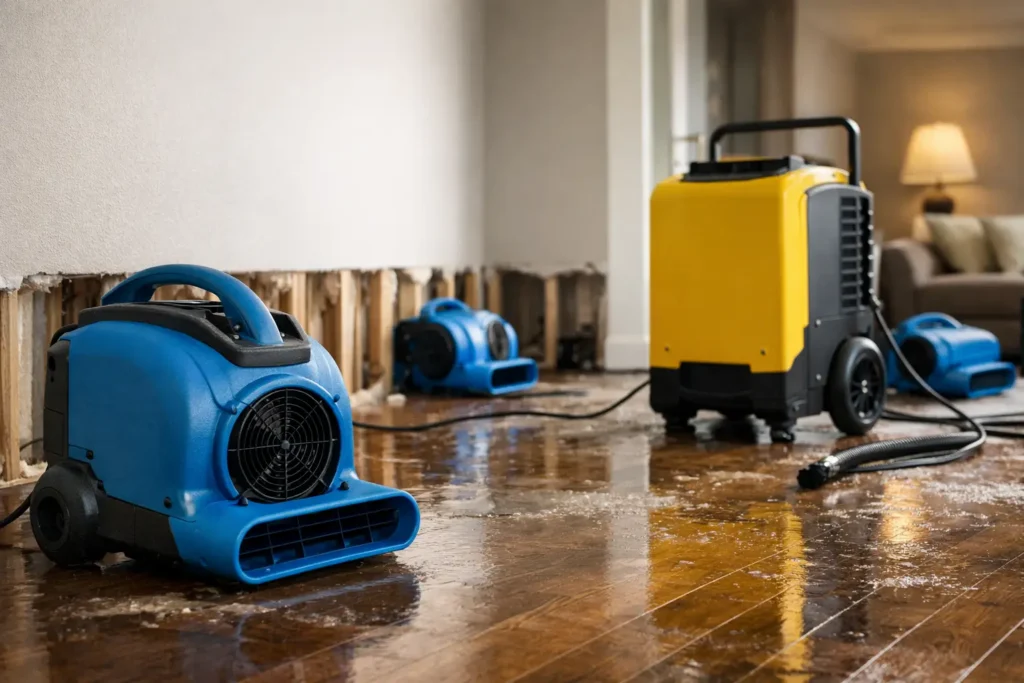
Structural drying is the controlled process of removing that remaining moisture from the structure. Certified technicians use moisture meters, thermal imaging, air movers, dehumidifiers, and containment methods when needed. The goal is not simply to make surfaces feel dry. The goal is to return affected materials to an acceptable drying standard and verify the result with documented readings.
That distinction matters. A carpet may look dry while the pad beneath it remains saturated. A ceiling may appear normal while water has collected above it. If moisture is left behind, it can weaken materials, create staining, trigger odors, and support mold growth.
Why Fast Drying Protects More Than Your Floors
The first 24 to 48 hours after water damage are especially important. Clean-water losses from a supply line may be less contaminated than a sewage backup, but they still create a time-sensitive drying problem. The longer water remains in contact with porous materials, the more likely those materials are to swell, delaminate, or require removal.
Wood flooring can cup or buckle. Laminate flooring may separate at the seams. Cabinets can swell at the base. Drywall can lose strength, and insulation can become ineffective once saturated. In commercial properties, moisture can also interrupt operations, affect inventory, and create safety concerns for employees and visitors.
Professional drying helps preserve materials when preservation is realistic. It also identifies when removal is the safer or more cost-effective option. That decision depends on the source of water, how long it was present, the type of materials affected, and whether contamination is involved. A clean-water pipe break and a category 3 sewage backup cannot be handled the same way.
The Drying Process After Water Damage
A reliable drying plan begins with assessment, not assumptions. Our team identifies the source of water, checks for visible and concealed damage, and measures moisture levels in affected materials. Thermal imaging can help identify temperature differences associated with hidden wet areas, while moisture meters provide readings that guide the drying plan.
Next comes extraction. Removing bulk water quickly reduces the drying load and can limit additional damage. Depending on the loss, this may involve extracting water from carpet, removing wet padding, pulling baseboards, creating controlled access points, or removing materials that cannot be safely dried.
Then the equipment work begins. High-velocity air movers encourage evaporation from wet surfaces, while commercial dehumidifiers capture that moisture from the air. Proper placement matters. Too little equipment can extend drying time; careless placement can move moisture without effectively controlling humidity. Technicians monitor conditions and adjust equipment as materials dry.
The final step is verification. Equipment should not be removed just because the room feels better or the air no longer smells damp. Moisture readings should show that affected materials have reached appropriate drying goals. This documentation also provides valuable support for insurance claims and repair planning.
Drying Is Not One-Size-Fits-All
A small kitchen supply-line leak may dry with limited demolition and targeted equipment. A flooded basement may require extensive extraction, carpet and pad removal, and several days of monitored dehumidification. A roof leak after a storm can involve ceiling cavities, insulation, and electrical safety concerns.
The right approach depends on the structure and the loss. Drying every material is not always possible or advisable, particularly when water is contaminated or materials have been wet too long. The responsible solution is the one that protects health, prevents further damage, and avoids spending money on materials that will fail later.
Hidden Moisture Is the Problem Property Owners Miss
Most property owners can see standing water. The harder issue is moisture that has moved beyond the visible area. Water follows gravity, but it also travels through seams, framing, insulation, and porous building materials. A leak on the second floor may show up as a stain downstairs, while the actual wet area extends far beyond the stain itself.
This is why surface cleaning alone is risky. Fans from a hardware store may improve airflow, but they do not provide moisture mapping, humidity control, or proof that wall cavities and subflooring are dry. They can also be inadequate for a larger loss, especially in Atlanta’s humid conditions, where outside air may add moisture rather than remove it.
Professional equipment and measurement bring control to the situation. Instead of guessing whether the area is dry, you have a documented process that identifies where moisture was found, how drying progressed, and when the affected structure met the drying target.
When to Call for Professional Structural Drying
Call immediately if you have a burst pipe, overflowing appliance, flooded basement, roof leak, plumbing leak behind a wall, toilet overflow, or water entering through storm damage. Even a slow leak deserves attention if drywall feels soft, flooring is lifting, paint is bubbling, or a musty odor has appeared.
Sewage backups require an even faster professional response. Sewage and other contaminated water can introduce harmful bacteria and make porous materials unsafe to dry and keep. The priority in those situations is containment, safe removal, cleaning, disinfection, and a controlled drying plan.
For landlords and commercial property managers, early response also protects the people who occupy the building. Prompt mitigation can reduce downtime, support clearer communication with tenants, and create a record for insurers and owners.
Insurance Documentation and Repairs Matter Too
Drying is only one part of recovery. Property owners are often left trying to understand coverage, document damage, schedule repairs, and coordinate different vendors while their home or business is disrupted. That is where a one-stop restoration partner changes the experience.
Elevated Operations can handle emergency mitigation, moisture documentation, insurance coordination, and post-loss reconstruction. Once the structure is dry and the scope is clear, repairs may include drywall, paint, flooring, cabinetry, electrical work, roofing, or larger remodeling work. Keeping mitigation and reconstruction connected helps reduce handoffs, missed details, and delays between the emergency and the final repair.
If you are in Austell, Douglasville, Marietta, Mableton, Smyrna, Atlanta, or nearby communities, do not wait for visible mold or major material failure to take a water loss seriously. The property may look calm after the water is gone, but the drying work is what protects what remains. A quick, measured response gives you clearer options and a better path back to a safe, usable property.