
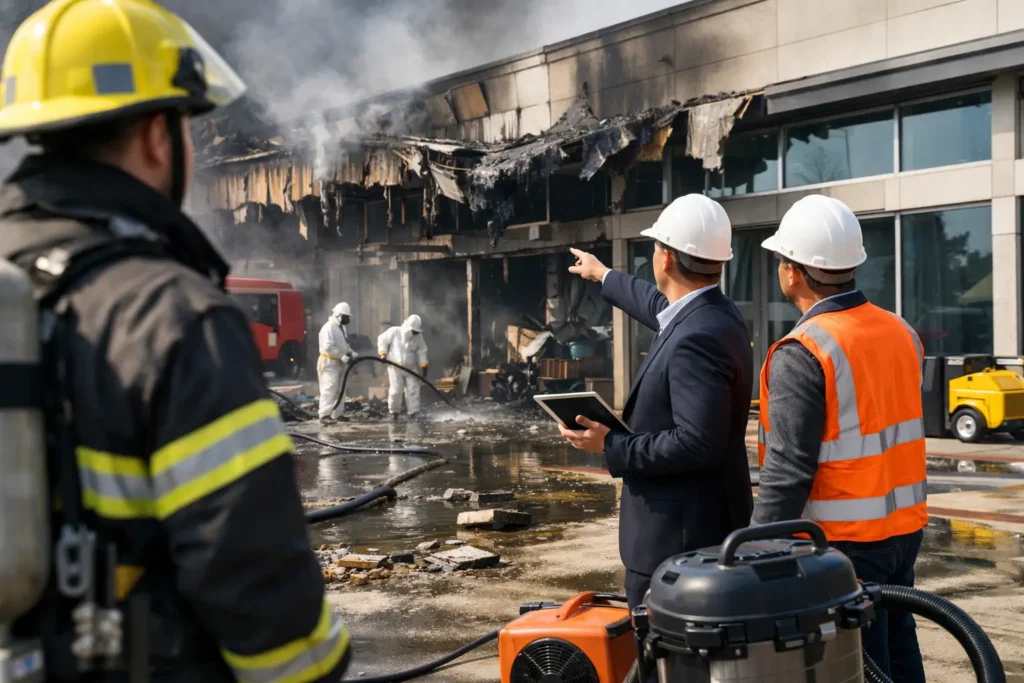
A burst pipe above a suite of offices can soak ceiling insulation, flooring, inventory, and electrical systems long before the water reaches the lobby. A kitchen fire can leave smoke residue in areas the flames never touched. For property managers and business owners, commercial property disaster recovery is not simply about cleaning up visible damage. It is about stopping the loss, protecting occupants, documenting conditions, and getting the building safely back into service without creating a second, more expensive problem.
The first 48 hours set the direction for the entire claim and recovery process. Fast action can limit demolition, prevent mold growth, preserve business records, and make insurance documentation far easier. Delays can turn a manageable water event into a long closure, a tenant dispute, or a reconstruction project that could have been avoided.
The First Priority Is Stabilizing the Property
Before repairs begin, the immediate threat has to be controlled. With water damage, that may mean shutting off the source, extracting standing water, protecting unaffected rooms, and checking for electrical hazards. After fire or storm damage, it can mean emergency board-up, roof tarping, securing broken windows, and preventing unauthorized entry.
Commercial buildings add complexity because the damage may affect multiple tenants, shared mechanical systems, stored materials, or public access areas. A water loss in one unit can travel through wall cavities and ceilings into neighboring suites. A compromised roof can expose an entire floor to rain. The goal is to contain the loss before it spreads beyond the original point of damage.
This is why a 24/7 response matters. Waiting until normal business hours may be tempting when the damage looks limited, but water moves and moisture hides. Acting quickly protects the building, the people inside it, and the continuity of the business operating there.
Document Before the Evidence Changes
Emergency work should move quickly, but it should never be careless. Proper documentation is one of the most valuable parts of commercial property disaster recovery. Before materials are removed or drying equipment is installed, the restoration team should record the condition of affected spaces with photographs, moisture readings, thermal imaging, notes, and an itemized scope of work.
That documentation gives owners and insurers a clear picture of what happened and why each step was necessary. It can also help distinguish damage caused by the current event from pre-existing issues. For a property manager responsible for several tenants, it creates a reliable record of affected suites, contents, and access restrictions.
Keep your own records as well. Save incident reports, tenant communications, invoices, photos, and any notes about when the event was discovered and when utilities were shut off. If a business must close or relocate operations, document those impacts early. Your insurance carrier may require specific information, and organized records reduce back-and-forth during the claim.
Extraction and Drying Are Different Jobs
Removing visible water is only the first phase of a water loss. Carpeting may feel dry while the pad beneath it remains saturated. Drywall can wick water upward. Insulation, subflooring, baseboards, and framing can retain moisture long after the surface appears normal.
Professional extraction removes as much water as possible before drying begins. Then certified technicians use commercial-grade air movers, dehumidifiers, moisture meters, and thermal imaging to locate hidden moisture and verify that materials are returning to an acceptable dry standard. This is not a matter of placing a few fans in the room and hoping for the best.
The right drying plan depends on the building materials, the category of water, the extent of migration, and how long the area remained wet. A clean supply-line break may allow more materials to be saved if addressed immediately. A sewage backup or floodwater intrusion requires a different approach because contamination can make porous materials unsafe to retain.
Moisture Mapping Prevents Expensive Surprises
Moisture mapping shows where water has traveled, including behind walls, under floors, and above ceilings. It helps determine which materials can be dried in place and which must be removed. It also provides a measurable way to monitor progress rather than relying on appearance alone.
Skipping this step can lead to one of the most frustrating outcomes in restoration: a property that looks repaired but develops odors, microbial growth, peeling finishes, or damaged flooring weeks later. Thorough drying protects the reconstruction work that follows.
Contamination Changes the Recovery Plan
Not every water event is a clean-water event. Sewage backups, toilet overflows involving waste, and some forms of floodwater can carry bacteria and other contaminants. In these cases, the priority is safe containment, removal of unsalvageable porous materials, cleaning of structural surfaces, and odor control.
Fire losses create their own contamination concerns. Smoke and soot can migrate through HVAC systems, settle on inventory and furnishings, and leave corrosive residue on metal surfaces. The type of smoke matters. Residue from a protein fire, for example, behaves differently than residue from burned plastics or building materials. Effective cleanup requires the right cleaning method for the affected surfaces, not a one-size-fits-all wipe-down.
Business owners should avoid moving contaminated materials through unaffected portions of the building. Restrict access where needed and let trained technicians establish containment. Protecting clean areas is often as important as cleaning damaged ones.
Keep Tenants, Employees, and Customers Informed
A commercial loss becomes harder to manage when people do not know what is happening. Tenants need clear guidance on access, safety restrictions, expected work hours, and any temporary changes to utilities or parking. Employees need to know whether they can safely return to work. Customers need practical updates if operations are interrupted.
The best communication is specific and honest. Do not promise a reopening date before drying, inspections, and repair requirements are understood. Instead, explain the current phase of work, what must happen next, and when the next update will be provided.
For multi-tenant properties, designate one point of contact for the restoration team. That reduces conflicting instructions and ensures important decisions, such as approving access after hours or selecting replacement finishes, do not get lost in a chain of emails.
Recovery Should Continue Through Reconstruction
Mitigation stops ongoing damage. Reconstruction returns the property to working condition. Treating these as disconnected projects often creates delays, duplicate site visits, and confusion about what was removed, why it was removed, and how the space should be rebuilt.
A coordinated provider can carry the job from emergency extraction and drying through drywall, flooring, paint, roofing, electrical repairs, and other necessary reconstruction. That continuity helps preserve the original documentation and keeps the scope aligned with the claim. It also gives property owners one accountable team instead of several contractors pointing to one another when schedules slip.
There are trade-offs. A specialized contractor may be appropriate for a highly technical system or a major custom build-out. But for many commercial losses, choosing a recovery partner that manages both mitigation and rebuilding reduces handoffs during the period when speed and communication matter most.
Elevated Operations supports Metro Atlanta commercial owners through that full process, from emergency stabilization and insurance-ready documentation to skilled repairs and final walkthroughs. The objective is not to perform the minimum cleanup required to close a work order. It is to restore a space that is safe, dry, functional, and ready for the people who rely on it.
Build a Better Plan After the Emergency
Once the property is stable, use the event to identify weak points. A burst pipe may reveal an unprotected line in a vacant suite. Repeated roof leaks may point to deferred maintenance. A sewage backup could expose a drain issue that needs correction before the next heavy rain.
Review shutoff locations, emergency contact lists, roof and plumbing maintenance schedules, tenant reporting procedures, and insurance policy details. If your business has critical equipment, paper records, or high-value inventory, consider whether they are stored above likely flood paths and whether staff know what to do after hours.
Disasters are disruptive, but confusion does not have to be part of the damage. A fast, documented, professionally managed response gives commercial property owners control when the building is at its most vulnerable. When the next call comes in, the right first steps can protect far more than walls and floors – they can protect your tenants, your revenue, and your ability to reopen with confidence.