
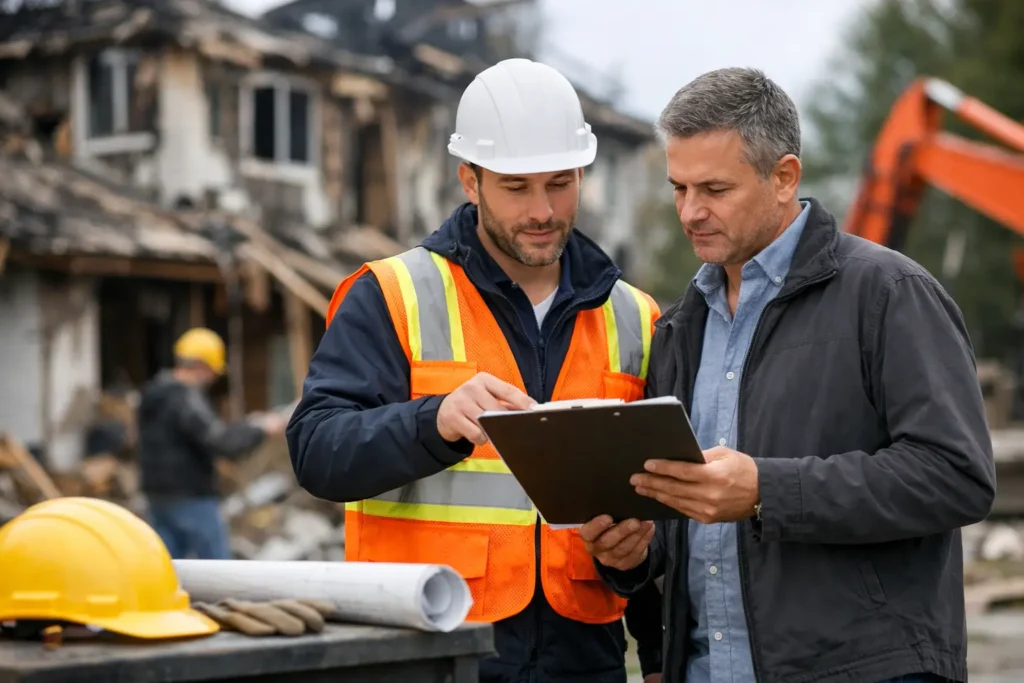
A burst pipe can soak framing behind a finished wall long after the visible water is gone. A kitchen fire can leave smoke residue inside cabinets, ductwork, and insulation even when the flames were contained. That is why choosing a post disaster reconstruction contractor is not simply about finding someone to replace drywall or install new flooring. The right contractor protects the property from additional damage, documents the loss, coordinates the claim, and rebuilds only after the structure is truly ready.
For Metro Atlanta homeowners, landlords, investors, and property managers, the goal is clear: regain control without having to manage a mitigation company, an insurance adjuster, and a separate construction crew on your own. Recovery moves faster when one accountable team carries the work from the emergency call through final repairs.
Reconstruction Starts Before the Rebuild
Post-loss reconstruction should never begin with a paint color or a flooring sample. It begins with stabilization. After water, fire, sewage, mold, or storm damage, the property may need extraction, containment, board-up, roof tarping, debris removal, or temporary power protection before any repair work makes sense.
Water damage is a common example. Replacing wet drywall before moisture has been measured and removed can trap water inside wall cavities. That can lead to mold growth, warped materials, and another repair bill later. A qualified restoration team uses moisture meters, thermal imaging, and commercial drying equipment to identify what is wet, track drying progress, and determine when reconstruction can safely start.
Fire losses require the same discipline. Smoke and soot are not ordinary dirt. They can be acidic, oily, and harmful to surfaces if handled incorrectly. Cleaning methods must match the material involved, whether that is painted drywall, natural wood, carpeting, electronics, or HVAC components. Reconstruction performed before proper smoke cleanup can seal odors and residues into the building.
A contractor who treats mitigation and rebuilding as unrelated jobs may leave you coordinating critical handoffs. A one-stop recovery partner has a clearer view of what was damaged, what was removed, what needs approval, and what must be rebuilt.
What a Post Disaster Reconstruction Contractor Should Handle
A reliable post disaster reconstruction contractor should be prepared to manage the full path back to a functional, safe property. The exact scope depends on the cause and severity of the loss, but the work should connect rather than feel like a series of disconnected vendor appointments.
First comes a documented assessment. The team should identify visible damage and concealed conditions, take photos, record moisture readings where applicable, and establish a clear scope. For commercial properties, this may also include planning around tenant access, safety requirements, business interruption, and phased repairs.
Next comes mitigation and cleaning. This may involve water extraction, structural drying, sewage remediation, smoke and soot removal, odor control, mold containment, or emergency roof protection. Fast action matters because damage can spread quickly. A wet ceiling can collapse, a roof opening can allow more rain inside, and standing water can affect flooring, baseboards, and adjacent rooms.
Then comes reconstruction. Depending on the loss, that can include framing, insulation, drywall, painting, flooring, trim, cabinets, roofing, electrical work, plumbing repairs, and restoration of kitchens, bathrooms, living areas, offices, or retail spaces. In some cases, a loss creates a practical opportunity to make an approved upgrade while rebuilding. The key is to separate covered restoration work from elective improvements so the budget and claim remain clear.
Finally, the contractor should provide closeout accountability. That means confirming the agreed work is complete, addressing punch-list items, and standing behind the craftsmanship. A written warranty is not a substitute for quality control, but it is a meaningful sign that the contractor expects its work to last.
Questions to Ask Before You Sign
The lowest estimate is not always the lowest-cost decision. A quote can look attractive because it excludes steps that will later become change orders, delays, or out-of-pocket expenses. Ask how the contractor will manage the project, not just what they will charge for visible repairs.
Start by asking whether the company performs both emergency mitigation and reconstruction. If the answer is no, ask who is responsible for the transition between vendors and who verifies that drying, cleaning, or remediation is complete. No property owner should have to guess whether it is safe to close a wall or reinstall a cabinet.
Ask about credentials and equipment. IICRC-certified technicians, moisture mapping, thermal imaging, and commercial-grade drying systems matter because they support decisions with evidence. They are particularly important after flooding, burst pipes, sewer backups, and hidden leaks, where surface conditions can be misleading.
Ask how insurance communication will be handled. An experienced contractor can provide photos, itemized estimates, moisture documentation, and insurance-ready invoicing. They should communicate clearly with the carrier and adjuster while keeping you informed. They cannot promise what an insurer will cover, and no ethical contractor should make that promise. They can, however, help ensure the damage and necessary work are properly documented.
You should also ask who will be on site, how changes are approved, and how often you will receive updates. Property recovery is stressful enough without unanswered calls or vague timelines. Good communication is a project-control tool, not a courtesy.
The Insurance Claim Is Part of the Recovery Plan
Insurance claims often create confusion because there are two related but different decisions: what needs to be done to restore the property, and what the policy will pay. A skilled contractor helps bridge that gap with clear scope documentation and practical explanations.
For example, if a pipe bursts behind a wall, the initial estimate may focus on extraction and drying. Once materials are removed and conditions are visible, the reconstruction scope may include insulation, drywall, paint, baseboards, and flooring transitions. That is not necessarily a problem. It is a normal part of discovering the full extent of a concealed loss. What matters is that changes are documented and communicated promptly.
Be cautious of anyone who encourages inflated claims, vague invoices, or work that is not tied to the actual damage. That can complicate payment and place the property owner in a difficult position. Choose a contractor who explains the difference between emergency mitigation, covered repairs, depreciation, deductibles, and optional upgrades in plain language.
Speed Matters, but So Does the Sequence
After a disaster, every owner wants the property back quickly. That urgency is justified. Delays can disrupt family life, rental income, tenant relationships, and business operations. But fast work only helps when the work is performed in the correct order.
Drying too briefly to begin rebuilding can create hidden damage. Ordering custom materials too late can delay an otherwise ready project. Starting repairs before the insurer has enough documentation can create avoidable disputes. The best recovery plan moves urgently at the beginning, then stays organized through each approval, material selection, and construction phase.
This is where local response capacity makes a real difference. For properties in Atlanta, Marietta, Mableton, Smyrna, and nearby communities, a team that can respond quickly, inspect in person, and remain accountable through construction reduces the chance that a small emergency becomes a long-term property problem.
Know When Reconstruction Is More Than a Repair
Not every loss requires a full rebuild. A contained supply-line leak may need drying, limited drywall replacement, and paint. A major fire, roof failure, sewer backup, or prolonged flood can require substantial demolition and reconstruction. The right scope depends on material conditions, building systems, safety requirements, and the extent of contamination.
It also depends on how the property is used. A homeowner may prioritize getting bedrooms and a kitchen functioning first. A landlord may need to balance tenant safety, lease obligations, and durable finishes. A commercial property manager may need a phased plan that keeps part of the operation open. A capable contractor adjusts the plan to the property and the people relying on it.
Elevated Operations approaches recovery as one connected process: emergency protection, technical mitigation, insurance support, and quality reconstruction. We do not just clean up the mess. We help restore the place where life, work, and investment continue.
When disaster interrupts your property, do not settle for a contractor who only sees the final repair. Choose a team that can protect what remains, document what happened, and rebuild with clear communication from the first call to the final walkthrough.