
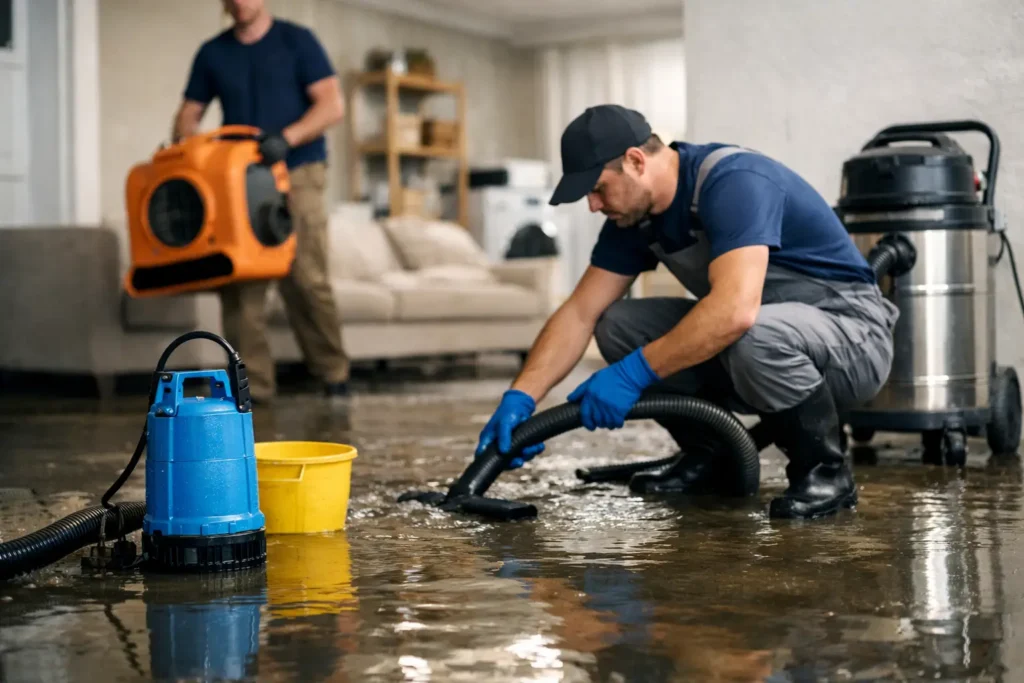
A basement flood rarely stays contained to the visible puddle. Water moves beneath flooring, into wall cavities, behind baseboards, and through insulation where it can keep damaging the structure long after the surface looks dry. Flooded basement cleanup Atlanta property owners need is about controlling that hidden damage quickly, protecting what can be saved, and documenting every step for a cleaner insurance claim.
Whether the source is a burst pipe, heavy rain, failed sump pump, appliance leak, or sewer backup, the first few hours shape the outcome. Fast action can reduce demolition, prevent mold growth, and make the path back to a usable basement much clearer.
Start With Safety, Not Cleanup
Do not enter a flooded basement if the water is near electrical outlets, appliances, a furnace, or an electrical panel. Turn off power to the affected area only if you can do so safely from a dry location. If there is any uncertainty, wait for a qualified professional.
The water source also matters. Clean water from a supply line is not the same as water that has traveled through the ground, stormwater system, or a sewage line. Category 2 and Category 3 water can contain contaminants that require controlled removal, disinfection, and disposal of affected porous materials. A sewer backup is not a wet-vac project. Keep people and pets out, avoid moving contaminated belongings through clean areas, and call for professional remediation.
If a pipe is actively leaking, shut off the main water supply if possible. For storm-related flooding, do not begin extraction until it is safe to access the property and the incoming water has stopped. Taking photos and video before moving items can also help establish the scope of damage for your insurer.
What Professional Flooded Basement Cleanup in Atlanta Includes
A proper restoration job is more than pumping out water. At Elevated Operations, the work begins with a clear assessment of the source, affected materials, safety concerns, and the areas water may have reached without being visible.
Water extraction and contents protection
Standing water is removed using commercial-grade extraction equipment. The goal is to remove as much water as possible before drying begins, because every gallon left behind adds time and risk. Technicians may move salvageable furniture, boxes, electronics, and personal belongings to a dry area, then identify items that need specialized cleaning or contents restoration.
Carpet, padding, laminate flooring, engineered wood, drywall, and insulation each react differently to saturation. In some clean-water losses, a carpet may be saved if extraction and drying happen quickly. In other situations, especially with contaminated water or prolonged saturation, removal is the safer choice. The right decision depends on the water category, how long materials remained wet, and what moisture testing shows.
Moisture mapping before and during drying
The dry-looking edge of a flood is often not the real edge. Certified restoration technicians use moisture meters, thermal imaging, and other diagnostic tools to map affected walls, floors, framing, and concealed spaces. This creates a drying plan based on conditions inside the material, not guesswork from the room’s appearance.
Industrial air movers and dehumidifiers are positioned to create the right drying conditions. In some cases, baseboards, sections of drywall, insulation, or flooring must be removed to expose wet building materials. That can feel disruptive, but leaving trapped moisture behind is what turns a flood into a larger repair months later.
Drying is monitored with repeat readings. Equipment should not simply be removed because the room feels comfortable. The affected materials need to reach an appropriate drying standard, with documentation that supports the restoration file and insurance claim.
Cleaning, sanitizing, and odor control
Once water and damaged materials are addressed, surfaces are cleaned according to the type of loss. Clean-water events may require targeted cleaning and antimicrobial treatment where appropriate. Floodwater and sewage events require more extensive containment, cleaning, disinfection, and disposal procedures.
Odors deserve attention, too. A musty basement smell is often a warning that moisture remains in materials or air is not circulating properly. Odor control works best after the source and affected materials have been handled. Covering the smell without correcting the moisture problem is not restoration.
The First 24 Hours: Decisions That Protect Your Property
If conditions are safe, remove lightweight belongings from wet floors and place aluminum foil or wood blocks under furniture legs to limit staining and transfer. Do not use a household vacuum on standing water. Avoid running central HVAC if it could spread contaminated air or pull moisture through the system.
Do not tear out walls or flooring before the affected area has been inspected and documented, unless there is an immediate safety reason. Premature demolition can make it harder to identify the water path, support a claim, or preserve materials that could have been dried.
It is also wise to avoid opening windows during humid Atlanta weather. Outdoor air can raise indoor humidity and slow drying rather than help it. Controlled dehumidification is far more reliable than hoping fresh air will solve a wet basement.
Why Atlanta Basements Need a Complete Drying Plan
Metro Atlanta properties face a mix of heavy rain, drainage issues, aging plumbing, and high humidity. A basement can flood because of one obvious event, but recurring moisture often points to a larger issue such as poor exterior grading, foundation cracks, a failed sump system, clogged drains, or plumbing deterioration.
Emergency mitigation stops immediate damage. Reconstruction and prevention address what comes next. After drying, a property owner may need drywall replacement, flooring installation, trim work, electrical repairs, painting, or a redesigned basement layout that is better suited to future water risk.
This is where a one-stop recovery partner changes the experience. Instead of coordinating an extraction crew, a drying contractor, an insurance adjuster, and separate rebuilding vendors, property owners can move from emergency response through repairs with one accountable team. Elevated Operations manages mitigation, insurance-ready documentation, and reconstruction so the recovery plan does not stop when the fans come out.
Insurance Documentation Should Begin Immediately
Most homeowners and commercial property policies have specific requirements for reporting a loss and taking reasonable steps to prevent further damage. Notify your carrier promptly, keep records of conversations, and save receipts for emergency protective measures. Your restoration provider can help document the cause, affected materials, equipment usage, moisture readings, photographs, and scope of work.
Coverage depends on the policy and source of water. A sudden burst pipe may be treated differently from groundwater seepage, surface-water flooding, gradual leakage, or a sewer backup. Do not assume a claim will be denied or fully covered before reviewing your policy and speaking with the carrier. Clear documentation gives you a stronger starting point regardless of the coverage decision.
For landlords, investors, and commercial property managers, the documentation also helps explain downtime, coordinate tenants, and establish a reliable record of repairs. Quick, organized communication limits confusion when multiple people are responsible for the property.
When to Call for Emergency Basement Flood Help
A professional response is especially urgent when there is standing water, water near electrical systems, soaked drywall or insulation, visible sewage, a burst pipe, floodwater after a storm, or a musty smell following a leak. The same is true when a basement appears dry but moisture is showing on walls, flooring is buckling, or paint is peeling.
Elevated Operations provides 24/7 emergency property restoration with a stated 60-minute Metro Atlanta response. IICRC-certified technicians use commercial drying equipment and moisture diagnostics to identify the full scope of the loss, not just the water you can see. From Atlanta to Marietta, Mableton, Smyrna, and surrounding communities, the focus is simple: protect the property now and guide the recovery through the final repair.
A flooded basement is disruptive, but it does not have to become a long-term problem. The right response replaces uncertainty with a documented plan, a dry structure, and repairs built to put the space back to work for you.