
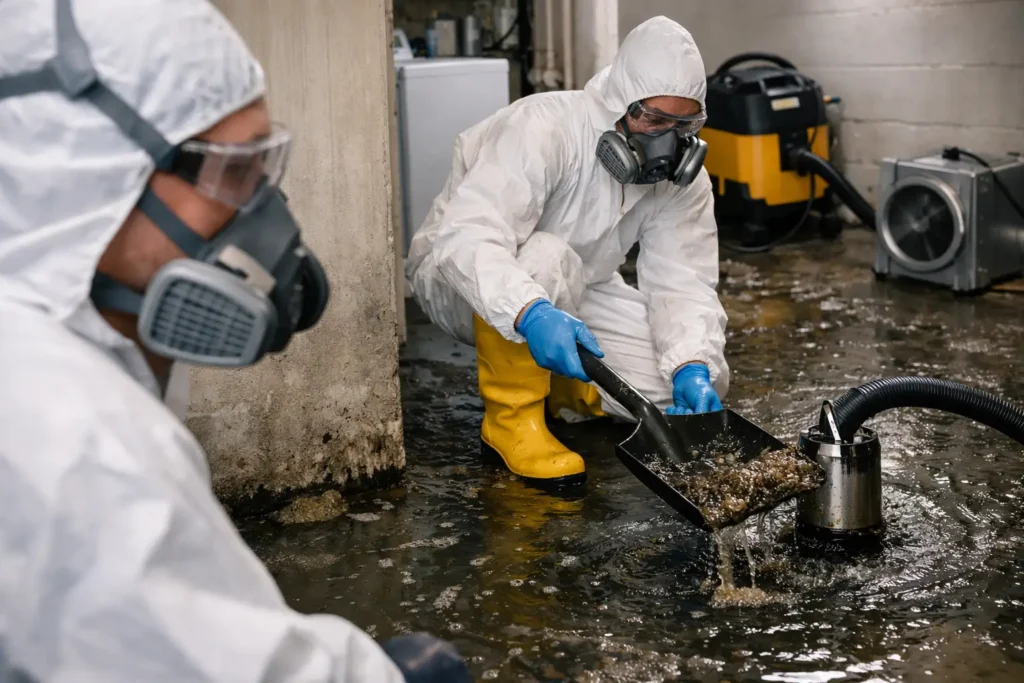
A sewage remediation company is not simply a cleaning crew. After a sewer backup, toilet overflow, or contaminated flood enters your property, the job is to protect people, stop damage from spreading, remove hazardous materials, dry the structure, and document the loss for insurance. The first few hours can affect the safety of your home or business, the size of the repair scope, and how quickly life gets back to normal.
Sewage water can move beneath flooring, behind baseboards, into insulation, and through drywall before the visible mess is even addressed. That is why a mop, a wet vacuum, and a fan are rarely enough. You need a controlled recovery plan from a team that understands contamination, moisture, construction materials, and the claims process.
What Makes Sewage Damage Different?
Sewage backups are generally treated as Category 3 water losses, often called black water. The water may contain bacteria, viruses, waste, chemicals, and other contaminants. Even when the source appears limited, it can carry contamination across nearby rooms through foot traffic, splashing, porous materials, and HVAC airflow.
The risk is not only the water you can see. Carpet padding, laminate flooring, untreated wood, drywall, insulation, upholstered furniture, and paper products can absorb contaminated water. Some materials can be cleaned and disinfected depending on the conditions. Others must be removed because they cannot be safely restored.
This is also where delayed action gets expensive. Water trapped beneath flooring can cause swelling, microbial growth, odors, and deterioration of the subfloor. Moisture behind walls can compromise framing and create a hidden repair issue long after the floor looks dry.
When You Need a Sewage Remediation Company Immediately
Call for professional help when sewage has entered any occupied area, touched porous materials, spread beyond the toilet area, or remained standing for more than a short period. The same applies to wastewater from a drain backup, septic failure, or exterior flooding that may contain contaminants.
A professional response is especially urgent when the affected area includes a kitchen, bedroom, child-care area, commercial workspace, rental unit, finished basement, or space served by HVAC equipment. Property managers and landlords should act quickly because a delayed response can expose tenants to unnecessary health risks and make documentation harder.
Before help arrives, keep people and pets away from the affected area. If it is safe to do so, stop the water source and turn off electricity to affected rooms only from a dry, safe location. Do not walk contaminated water through clean parts of the property. Avoid using household fans, which can move contaminated particles and moisture into other spaces.
For a safer first response, focus on four priorities:
- Isolate the area and prevent foot traffic through the contamination.
- Shut off the source if it can be done safely.
- Move uncontaminated valuables away from the area without handling soaked materials.
- Take photos or video for your insurance record before extensive cleanup begins.
Do not attempt to save sewage-soaked carpet padding, mattresses, or other highly porous materials. Removing contaminated materials without appropriate protection and containment can create a larger exposure problem.
What a Professional Sewage Cleanup Process Should Include
A qualified sewage remediation company should begin with an on-site assessment, not assumptions. The team needs to identify the source, determine how far the water traveled, inspect affected materials, and establish what can be cleaned, dried, or removed.
At Elevated Operations, the response is built around controlling the loss first. Our IICRC-certified technicians use commercial-grade extraction and drying equipment, moisture meters, and thermal imaging to find moisture that is not visible on the surface. For Metro Atlanta property owners, fast action can mean the difference between a contained cleanup and a major reconstruction project.
Containment and Extraction
The crew establishes controlled work areas to limit cross-contamination. Standing water and sewage solids are removed using professional extraction equipment, then affected surfaces are cleaned using methods appropriate for the material and level of contamination.
Containment matters because demolition and cleanup can release contaminants into adjacent rooms. A careful team protects unaffected areas instead of treating the entire property like one open workspace.
Removal of Unsalvageable Materials
Porous materials exposed to sewage often need removal. This may include carpet, padding, insulation, sections of drywall, engineered flooring, baseboards, and damaged contents. The exact scope depends on the source of the water, how long it sat, what materials were affected, and whether contamination traveled upward through wall systems.
This can be frustrating for a homeowner who wants to save every material. But leaving contaminated material behind to reduce the initial scope can create odors, health concerns, and repeat work later. A trustworthy contractor explains the reason for removal and documents it clearly.
Cleaning, Disinfection, and Structural Drying
After source removal and demolition, the remaining structure is cleaned and treated. Then the drying phase begins. Dehumidifiers and air movers are placed strategically, while technicians monitor moisture levels in framing, subfloors, and other structural materials.
Drying is not a one-time equipment drop-off. Effective mitigation involves moisture mapping, regular readings, adjustments to equipment, and confirmation that materials have reached an acceptable dry standard. If moisture remains behind a wall or under flooring, rebuilding too soon can lock the problem in.
Documentation and Reconstruction Planning
A well-managed project includes photos, moisture records, an itemized scope, and communication that helps support an insurance claim. Once mitigation is complete, the property may need repairs ranging from drywall and flooring replacement to cabinetry, electrical work, painting, or a full rebuild of the affected area.
Using separate vendors for cleanup and reconstruction can create gaps in accountability. One team may say the next contractor caused the issue, while the next contractor questions the original mitigation. A one-stop recovery partner can carry the project from emergency response through repairs, with a clearer handoff and one point of contact.
Questions to Ask Before Hiring a Sewage Remediation Company
Speed matters, but so does capability. Ask whether the company responds 24/7, how it determines the contamination category, and whether its technicians are IICRC certified. Ask how it handles moisture testing, containment, removal of damaged materials, and documentation for insurance.
You should also ask who will rebuild the property after cleanup. Some providers perform only emergency mitigation, leaving you to find another contractor for repairs. That approach can work for a small, contained loss, but it may add time and coordination when floors, walls, cabinets, or finishes need replacement.
Price deserves a direct conversation as well. The lowest estimate is not always the lowest total cost if it omits moisture monitoring, safe disposal, documentation, or necessary reconstruction. Request a clear explanation of the work scope and communicate early if you are filing an insurance claim. A restoration partner that can coordinate directly with your insurer can reduce confusion at a stressful time.
Protecting Your Property After the Cleanup
Once the immediate emergency is controlled, address the cause of the backup. A plumbing inspection may identify a clogged main line, root intrusion, failed pipe, damaged sewer lateral, or problem fixture. If the issue originated from a municipal line or storm event, preserve records and photos before repairs change the scene.
For rental and commercial properties, keep a file containing the mitigation documentation, repair invoices, tenant or occupant communications, and insurance correspondence. These records help demonstrate that you acted promptly and responsibly.
A sewage event is disruptive, but it does not have to turn into months of uncertainty. The right response protects the structure, gives your insurance claim the documentation it needs, and creates a clear path from contamination to completed repairs. If sewage reaches your Metro Atlanta property, keep the area isolated, call for professional help quickly, and choose a team prepared to restore more than the visible mess.