
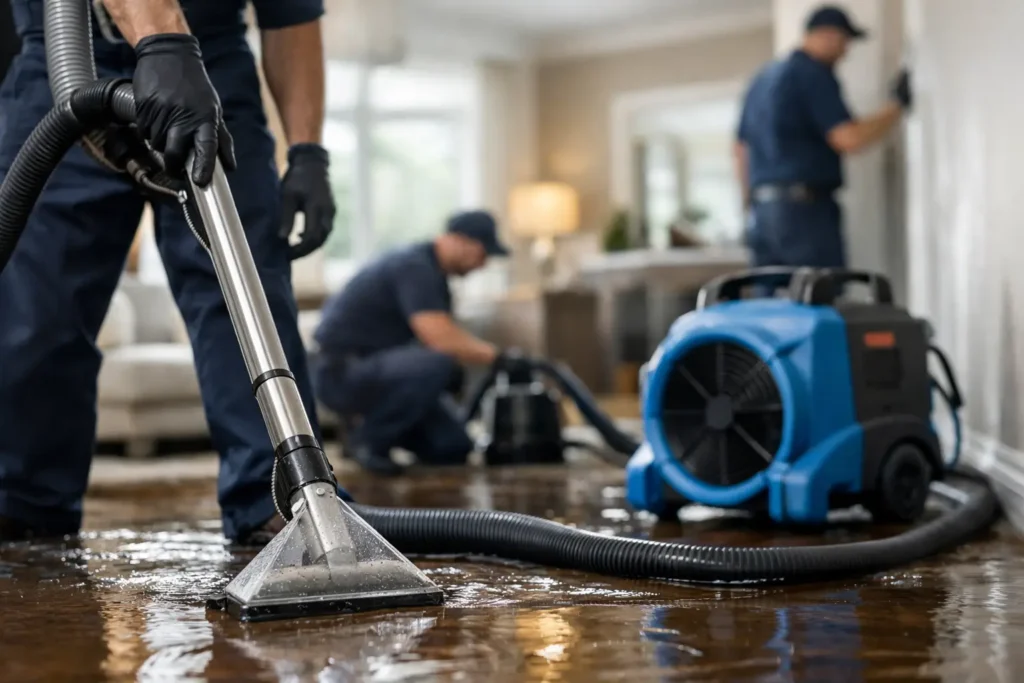
A burst supply line can release hundreds of gallons before the water is shut off. A flooded basement can push moisture into drywall, flooring, insulation, and framing long after the visible puddle is gone. That is why water extraction services are not simply about removing standing water. They are the first critical step in protecting the structure, documenting the loss, and preventing a manageable emergency from becoming a costly rebuild.
For Metro Atlanta homeowners, landlords, and commercial property managers, the right response starts with speed and continues with a clear plan. The goal is not to make the property look dry for the moment. The goal is to remove water, identify hidden moisture, control contamination, and return the space to a safe, dry condition that is ready for repair.
What Water Extraction Services Actually Include
Professional extraction begins after the source of water has been stopped, when possible. Technicians assess where the water traveled, what materials are affected, and whether the water presents a health concern. A clean-water pipe leak requires a different approach than a toilet overflow, sewage backup, or stormwater intrusion.
Commercial-grade extractors, pumps, and wet vacuums remove standing water from floors, carpets, crawl spaces, basements, and other affected areas. But extraction alone is only one part of mitigation. A professional team should also remove unsalvageable wet materials when necessary, document damage for the insurance claim, set drying equipment, and check moisture levels throughout the process.
This distinction matters because water follows paths that are easy to miss. It can wick up drywall, soak under baseboards, travel beneath vinyl flooring, enter wall cavities, and collect behind cabinets. The room may look better after the water is removed, while moisture still threatens the materials behind the surface.
The First Hours Set the Direction of the Job
Water damage moves quickly. Wood can swell, laminate flooring can separate, drywall can soften, and insulation can hold moisture against framing. In humid Georgia weather, delayed drying may create conditions that support microbial growth. The longer materials remain wet, the harder it becomes to preserve them.
The practical sequence is straightforward: stop the source, make the area safe, remove standing water, identify hidden moisture, and begin controlled drying. If electricity is involved, do not enter standing water or attempt to move equipment until the power risk has been addressed. If sewage is present, keep people and pets out of the affected area. Contaminated water calls for specialized cleaning and removal procedures, not a standard shop vacuum.
A 24/7 restoration response is especially valuable after a burst pipe overnight, a weekend appliance failure, or a storm that exposes part of the roof. Fast arrival can reduce the amount of demolition required and preserve more of the property. It does not guarantee that every material can be saved, but it gives the property its best chance.
Why Visible Dryness Is Not Enough
Drying is a measurement-based process. Fans and dehumidifiers are important, but placing equipment in a wet room without assessing moisture can leave hidden areas untreated. That is why skilled water extraction services use moisture meters, thermal imaging, and moisture mapping to establish the extent of damage and monitor progress.
Thermal imaging can help identify temperature differences that point to possible moisture behind walls or beneath flooring. A moisture meter confirms whether materials are actually wet and helps technicians compare readings over time. Together, these tools guide decisions about whether materials can be dried in place or need to be removed.
There is a trade-off here. Saving materials may reduce reconstruction costs and disruption, but only when they can be dried properly. For example, hardwood flooring may sometimes be stabilized and dried with the right methods, while swollen particleboard cabinets or delaminated laminate often cannot be returned to a reliable condition. The correct decision depends on the material, the water category, how long it has been wet, and the moisture readings – not just how it looks.
Water Category Changes the Cleanup Plan
Not every flood is the same. Clean water may come from a broken supply line or appliance connection. Gray water can contain contaminants from a dishwasher, washing machine, or toilet overflow without solid waste. Black water includes sewage and other highly contaminated sources.
As contamination increases, the priority shifts from material preservation to health protection. Porous materials exposed to sewage often need removal, while hard surfaces require detailed cleaning and disinfection. A property owner should be cautious of any provider who treats every loss as a simple drying job. The source of the water affects the scope, the equipment, the documentation, and the safe path forward.
What a Professional Drying Plan Looks Like
After extraction, technicians create a drying plan based on the affected materials and conditions inside the property. Air movers increase evaporation from wet surfaces. Dehumidifiers capture that moisture from the air. In some situations, specialty equipment may be used to dry wall cavities, floors, or dense materials more effectively.
The equipment should not be treated as a set-it-and-forget-it solution. Technicians need to revisit the site, take readings, adjust placement, and confirm that the drying goals are being reached. Removing equipment too soon can leave moisture behind. Leaving it running without monitoring can waste time and power while failing to address the real issue.
Good documentation also matters. Photographs, moisture readings, equipment logs, and a clear scope of work can support an insurance claim and help the property owner understand what was done. For rental and commercial properties, this record is also useful for communicating with tenants, ownership groups, and facilities teams.
Avoid These Common Mistakes After a Flood
The instinct to start cleaning immediately is understandable. Some actions help, but others can spread damage or create safety problems. Avoid waiting several days because the water “doesn’t seem that bad.” Avoid closing windows and doors around a wet area without ventilation or dehumidification. Do not paint over a water stain, reinstall wet carpet padding, or replace baseboards before the underlying materials have been tested and dried.
It is also wise to avoid moving contaminated belongings through clean parts of the property. If the loss involves sewage, wear appropriate protective equipment and leave porous contaminated items in place until a remediation professional can assess them. For clean-water losses, moving dry valuables away from the affected area can be helpful, provided it is safe to do so.
Most importantly, do not confuse insurance coordination with delaying mitigation. Emergency work often needs to begin immediately to limit additional damage. A restoration company experienced in claim documentation can help provide the records your insurer needs while keeping the recovery moving.
One Recovery Partner From Extraction Through Repairs
Water removal is the urgent beginning, not the finish line. Once drying is verified, the property may need drywall replacement, flooring repair, cabinet work, painting, electrical work, roofing repairs, or full reconstruction. Working with separate mitigation and construction vendors can create gaps in communication, delays, and disagreement over who is responsible for the next step.
Elevated Operations provides emergency mitigation, insurance-claim support, and reconstruction in one accountable service relationship. Our IICRC-certified technicians use professional extraction and moisture-detection equipment to help protect homes and commercial properties across the Atlanta area. We do not just clean up the mess. We help move the property from emergency response to a finished, functional space.
If water is still present, the safest next step is to stop the source if you can do so safely, keep people away from electrical or contaminated areas, and call for professional help right away. The faster the water is extracted and the drying process is measured, the more control you keep over the outcome.