
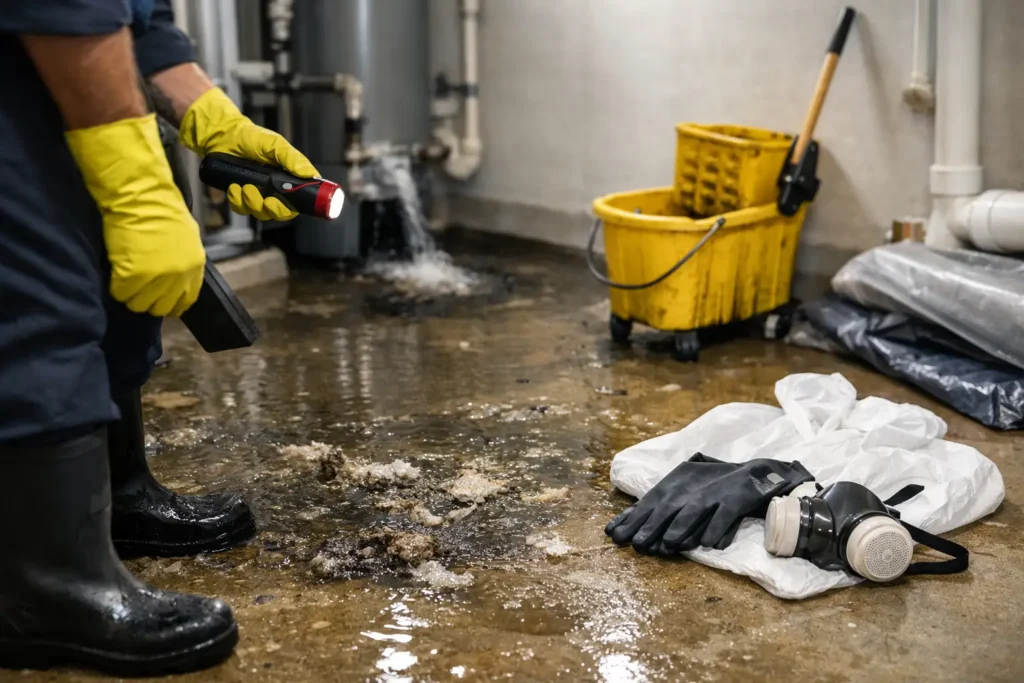
A sewage backup can turn a basement, bathroom, kitchen, or commercial space into a contaminated area within minutes. Sewage overflow safety starts with one decision: do not step into the water to investigate, retrieve belongings, or begin cleanup. Sewage can carry bacteria, viruses, parasites, and sharp debris that are not always visible on the surface.
For property owners, the pressure to act fast is real. But the safest first action is to control access, limit additional damage when it can be done safely, and bring in qualified help for remediation. A rushed DIY cleanup can expose people to illness and leave contamination inside flooring, wall cavities, and HVAC components.
Why sewage overflow safety is different from a normal water leak
A clean supply-line leak and a sewage overflow require very different responses. Water from a broken supply pipe may begin as clean water, although it can become contaminated after sitting in a building. Sewage water, often called black water in restoration work, should be treated as contaminated from the start.
That contamination may come from a toilet backup, a failed sewer line, a septic issue, or a municipal sewer backup. It can include human waste, wastewater, chemicals, and microorganisms. Porous materials such as carpet, carpet padding, insulation, upholstered furniture, paper goods, and unfinished wood can absorb that contamination quickly.
The safety concern is not limited to direct skin contact. Walking through the area can spread contaminants into clean rooms. Disturbing soaked materials can create splashes or aerosols. If sewage has reached a return vent or HVAC equipment, air movement can carry odors and contaminants farther through the property.
What to do in the first hour
Your goal is not to clean the sewage yourself. Your goal is to prevent exposure and stop the situation from expanding.
- Keep people and pets away from the affected area. Close doors, block access, and do not allow children, tenants, employees, or customers through the space. If the overflow is in a business, restrict the area immediately and redirect foot traffic.
- Avoid electrical hazards. Do not enter standing water near outlets, extension cords, appliances, or electrical panels. If you can safely turn off power to the affected area without approaching water, do so. Otherwise, wait for a qualified professional or electrician.
- Stop the source only when it is safe. If an overflowing toilet is the issue, turn off the toilet’s supply valve if you can reach it without contact with contaminated water. If the source may be a main sewer line, do not run sinks, flush toilets, use the dishwasher, or drain the washing machine. Continued water use can worsen the backup.
- Move only uncontaminated items nearby. If dry valuables are within easy reach outside the affected zone, relocate them. Do not carry wet items through the property. Photograph visible damage from a safe location before anything is removed.
- Call for professional sewage remediation and report the source. A plumber may be needed to correct a blockage or pipe failure. A restoration team is needed to extract contaminated water, remove unsalvageable materials, clean affected surfaces, dry the structure, and document the loss. If a public sewer main may be involved, contact the appropriate local utility as well.
If the overflow is significant, has spread into multiple rooms, or is affecting a commercial property, treat it as an emergency. Fast extraction and containment can reduce the amount of demolition required later, but speed should never come at the expense of personal safety.
What not to do after a sewage backup
Do not use a household vacuum, shop vacuum, mop, or rental carpet cleaner on sewage-contaminated water. These tools are not designed for biohazard extraction, and they can spread contamination or become contaminated themselves.
Avoid using fans before the sewage has been removed and the area has been properly cleaned. Air movement may push odors and particles into unaffected rooms. Do not spray air freshener or bleach over the area and assume it has been disinfected. Odor control is not contamination removal, and mixing chemicals can create dangerous fumes.
You should also avoid washing contaminated clothing or textiles with regular laundry. Keep them separated and let a restoration professional determine whether they can be cleaned safely. In many cases, items that cannot be thoroughly decontaminated need to be discarded.
Protecting the building without spreading contamination
Once the source is stopped, the property still needs a controlled recovery plan. The work usually begins with containment to separate affected and unaffected areas. Technicians then extract sewage water with commercial equipment, remove contaminated porous materials where necessary, and clean and disinfect structural surfaces.
Drying matters just as much as cleaning. Moisture left under flooring, behind baseboards, or inside wall cavities can lead to secondary damage and mold growth. Moisture mapping, meters, and thermal imaging help identify water that cannot be seen from the surface. A floor can look dry while the subfloor below it remains wet.
The right scope depends on where the sewage traveled and how long it remained. A small toilet overflow caught immediately on a nonporous tile floor may require a more limited response than a sewer backup that saturated carpet, drywall, cabinetry, and insulation. That is why a visual inspection alone is not enough.
For Metro Atlanta homeowners and property managers, a single recovery partner can make the situation easier to manage. Elevated Operations provides emergency mitigation, moisture documentation, sewage remediation, insurance coordination, and reconstruction when damaged materials must be removed and replaced. We do not just clean up the mess – we help restore the space safely and move the project forward.
When you should leave the property
You may not need to leave the entire building for a contained, minor incident, but it depends on the location and severity. Leave or relocate occupants if sewage has spread widely, entered living areas, affected multiple bathrooms, reached HVAC systems, created strong odors throughout the property, or made safe access to bathrooms and exits impossible.
For businesses, do not reopen an affected area simply because standing water is gone. The area must be cleaned, dried, and evaluated for contamination before employees or customers return. Restaurants, medical offices, childcare facilities, and properties with vulnerable occupants may have additional health and operational requirements.
Anyone who had direct contact with sewage should remove contaminated clothing carefully, wash exposed skin with soap and clean water, and monitor for symptoms such as vomiting, diarrhea, fever, or unusual skin irritation. Contact a healthcare professional if symptoms develop or if exposure involved an open wound.
Document the loss before repairs begin
Take clear photos and videos from safe, dry areas. Record the rooms affected, visible water lines, damaged belongings, and the apparent source of the overflow. Keep notes on when you discovered the problem, what actions you took, and whether a plumber or utility provider inspected the system.
Do not wait on documentation before requesting emergency help. A professional restoration team can document moisture conditions, affected materials, equipment use, and the mitigation work performed. That information can support an insurance claim and give you a clearer record of what was needed to restore the property.
If you are facing a sewage backup, protect people first and materials second. Keep the area closed off, stop water use when a sewer-line backup is suspected, and get qualified remediation underway before contamination has more time to spread.