
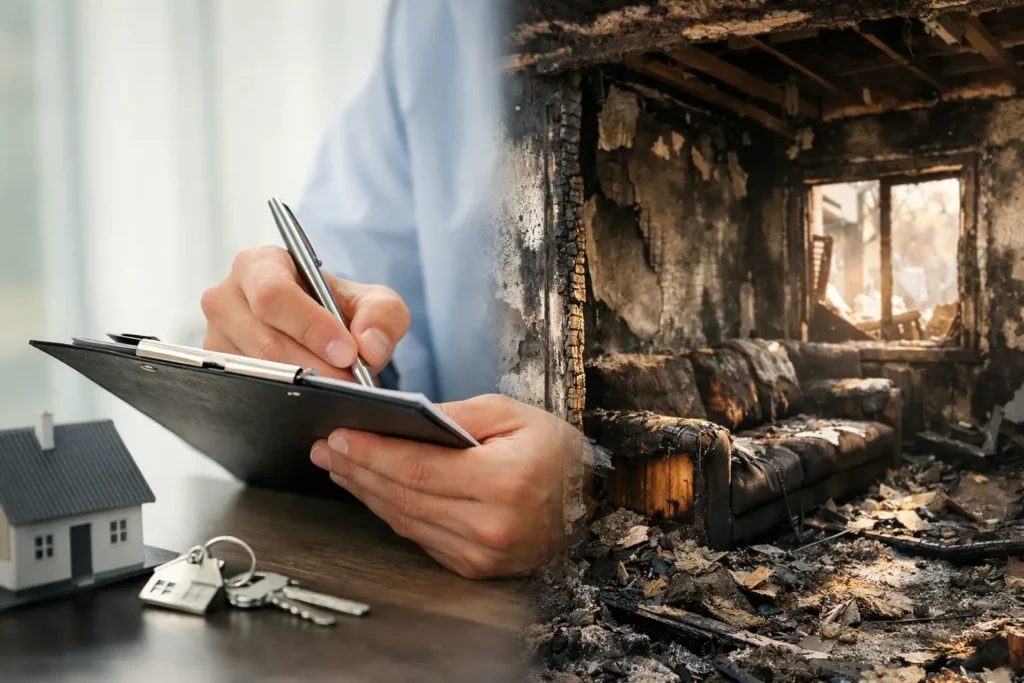
Smoke can damage a property long after the flames are out. It settles into drywall, insulation, HVAC ducts, furniture, electronics, and clothing. It can leave corrosive soot behind, create persistent odors, and turn a small kitchen fire into a whole-home cleanup project. So, does insurance cover smoke damage? In many cases, yes – but the answer depends on what caused the fire, the policy language, the type of property, and the steps taken after the loss.
For homeowners, landlords, and business owners, the priority is protecting the property and documenting the damage before smoke residue has time to spread further. Fast, professional mitigation can make a meaningful difference in the scope of repairs and the strength of an insurance claim.
Does Insurance Cover Smoke Damage Under Standard Policies?
Most standard homeowners, renters, condo, and commercial property policies cover sudden and accidental fire and the resulting smoke damage. Coverage commonly applies whether the smoke came from a fire inside the building, a neighboring property fire, or sometimes a wildfire or outdoor fire event.
A covered claim may include cleaning soot from walls and ceilings, deodorizing affected materials, restoring smoke-damaged belongings, repairing fire-damaged building components, and addressing water damage caused by firefighting efforts. If the property cannot safely be occupied, some policies also provide additional living expense coverage for a temporary place to stay. Commercial policies may include business-interruption coverage, depending on the policy and the specific loss.
Coverage is not automatic simply because smoke is visible or the odor is strong. The insurance carrier will evaluate the cause of loss, policy limits, deductible, exclusions, maintenance history, and documentation. That is why it helps to treat smoke damage as more than a surface-cleaning issue from the start.
When Smoke Damage Is Usually Covered
Insurance generally responds best when the smoke damage resulted from a sudden, accidental, and covered event. A grease fire that spreads smoke through a kitchen and nearby rooms is a common example. The same may be true after an electrical fire, fireplace accident, appliance fire, or a fire in an adjoining unit of a condo or apartment building.
Smoke can also travel farther than many property owners expect. Even if flames were contained to one room, soot particles may enter return vents, coat horizontal surfaces, and migrate into closets and adjacent rooms. Insurance may cover the cleaning and restoration needed to return those areas to their pre-loss condition, subject to the policy terms.
For a rental property, the landlord’s policy generally addresses damage to the structure, while a tenant’s renters policy may address the tenant’s personal belongings and temporary housing costs. In commercial buildings, responsibility can be split between the building owner and tenant based on the lease. Clear documentation helps prevent confusion when more than one policy may be involved.
Situations That Can Limit or Exclude Coverage
The cause of the smoke matters. A policy may deny or limit a claim if the damage traces back to a non-covered event, intentional acts, illegal activity, or a known maintenance issue that was not addressed. For example, an insurer may question a claim involving a repeatedly malfunctioning appliance, an improperly maintained chimney, or a long-standing electrical issue if there is evidence the condition was known and ignored.
Smoke from cigarettes, candles, incense, cooking over time, or a poorly vented fireplace may also be treated differently than smoke from a sudden fire. These conditions are often considered gradual damage, wear and tear, or maintenance-related issues rather than an accidental covered loss.
Wildfire smoke creates another situation where policy language matters. Many policies cover smoke damage tied to wildfire, but coverage can vary by carrier, region, and endorsement. If there was no direct fire at the property, an adjuster may ask for evidence that the smoke intrusion caused actual physical damage rather than a temporary odor. A professional inspection, photographs, and detailed cleaning documentation can be valuable in these cases.
Your deductible is another practical limit. If the cost to clean and restore the property is below the deductible, filing a claim may not make financial sense. It is still wise to document the condition and get a professional assessment before deciding the damage is minor.
What Insurance May Pay to Restore
A complete smoke damage claim is not limited to repainting a stained wall. Soot is acidic and can permanently damage surfaces when it is not handled correctly. Cleaning methods must match the material, the type of smoke residue, and the extent of contamination.
Depending on the claim, insurance may pay for emergency board-up or tarping, soot removal, odor control, content cleaning, HVAC cleaning, damaged drywall or insulation removal, painting, flooring replacement, electrical repairs, and reconstruction. Personal property may be cleaned, restored, or replaced based on its condition and the valuation terms in the policy.
There are trade-offs. Some items can be restored safely with specialized cleaning, while porous materials such as insulation, heavily contaminated carpet padding, or certain upholstered items may need replacement. Electronics can look undamaged but fail later because soot residue causes corrosion. A qualified restoration team can identify these risks and provide the documentation an adjuster needs to evaluate the right scope of work.
What to Do Immediately After Smoke Damage
Do not start scrubbing soot from walls with household cleaners. Rubbing can push residue deeper into painted surfaces, fabric, and carpet. Avoid turning on the HVAC system until it has been inspected if smoke entered the building, since running it may recirculate contaminants throughout the property.
After the fire department has cleared the site, take wide and close-up photos of every affected room, including ceilings, vents, furniture, cabinets, and belongings. Save receipts for emergency purchases, temporary lodging, meals if applicable, and any immediate protective work. Then notify your insurer promptly and ask about the claim process, deductible, and preferred documentation.
If the property has exposed openings, water from fire suppression, or structural damage, arrange emergency protection right away. Smoke damage often comes with water damage, and delaying extraction or drying can create a second loss involving mold, warped flooring, or damaged framing.
A professional restoration contractor can also prepare an itemized estimate, moisture documentation, photographs, and cleaning records. This supports the claim while giving you a practical recovery plan instead of a vague list of repairs.
How to Handle the Claim Without Losing Control
Your insurance company has the right to investigate the loss, but you do not have to manage the entire recovery alone. Keep a claim file with the claim number, adjuster contact information, photos, estimates, receipts, and notes from every conversation. Confirm major decisions in writing, especially if the scope of work changes.
Be accurate when describing the damage, but do not minimize it because the property “looks fine.” Smoke odor and soot contamination can affect rooms that appear untouched. Ask for a full inspection of the affected areas, including attics, crawlspaces, ductwork, and contents where appropriate.
It is also reasonable to ask questions when an estimate does not address necessary cleaning, odor treatment, or repairs. Insurance settlements are based on policy terms and supported damage, not on how quickly a property owner agrees to the first number presented. Detailed restoration documentation gives everyone a clearer basis for decisions.
Why Professional Smoke Restoration Matters
A smoke-damaged property needs more than a deodorizing spray and fresh paint. If soot remains beneath paint, inside cabinets, or within HVAC components, odors can return and residue can continue to damage materials. Proper restoration may involve controlled cleaning, HEPA filtration, odor-neutralization methods, air-quality precautions, and removal of materials that cannot be restored.
For Metro Atlanta property owners, Elevated Operations provides emergency mitigation, smoke and soot cleanup, insurance-ready documentation, and full reconstruction under one recovery plan. That means you are not left coordinating separate cleanup crews, repair contractors, and claim paperwork while your home or business is disrupted.
The best next step is simple: protect the property, document what happened, and get a professional assessment before smoke residue becomes a larger and more expensive problem. A fast, informed response gives your claim – and your property – the strongest path back to normal.