
The fire is out, but the property is not automatically safe. Learning how to secure home after fire damage protects your family, limits further loss, and gives your insurance claim a clearer starting point. A burned window, open roof, wet flooring, or damaged electrical panel can turn one emergency into several if the home is left exposed.
The priority is not making the house look normal on the first day. It is controlling immediate hazards, protecting the structure from weather and unauthorized entry, and documenting what happened before cleanup or reconstruction begins. Here is what property owners should do once fire officials have released the scene.
Do Not Re-Enter Until Authorities Say It Is Safe
A fire can compromise a house in ways that are not visible from the driveway. Heat may weaken framing, ceilings, stairways, and roof supports. Firefighting water can soak insulation, drywall, and subfloors, while smoke residue can contaminate rooms that appear untouched.
Wait for clearance from the fire department before entering. If they advise against re-entry, take that seriously. A partially burned structure can shift, collapse, or contain active electrical and gas hazards. Even a short trip inside to retrieve valuables may create unnecessary risk.
Once access is allowed, wear closed-toe shoes, long sleeves, gloves, and an appropriate respirator if you must enter briefly. Avoid touching soot-covered surfaces, opening electrical panels, using appliances, or turning on HVAC equipment. Smoke particles and soot can spread through the system and make a contained cleanup job much larger.
Shut Off Utilities and Identify Immediate Hazards
Utilities should be addressed before anyone starts moving belongings. The fire department may shut off gas, electricity, or water during response, but property owners should confirm the status with the utility provider or a qualified professional. Do not restore power simply because lights are needed for inspection.
Electrical wiring exposed to heat or water may be unsafe even if outlets and switches look intact. Gas lines and appliances may also require inspection before service is restored. If a water line was damaged, shut off the main water supply to prevent hidden leaks from adding to the damage.
Watch for warning signs around the property: sagging ceilings, cracked or bowed walls, soft floors, loose masonry, damaged chimneys, standing water, and exposed nails or glass. Keep children, pets, tenants, and untrained helpers out of affected areas. A professional restoration inspection can identify moisture, smoke migration, and structural concerns that are easy to miss during a stressful first walkthrough.
Secure Home After Fire With Board-Up and Tarping
Open doors, broken windows, damaged siding, and roof openings need attention quickly. They expose the home to rain, wind, animals, theft, and vandalism. In Metro Atlanta, a sudden storm can send water into an already damaged structure and create a second round of mold, ceiling, and flooring problems.
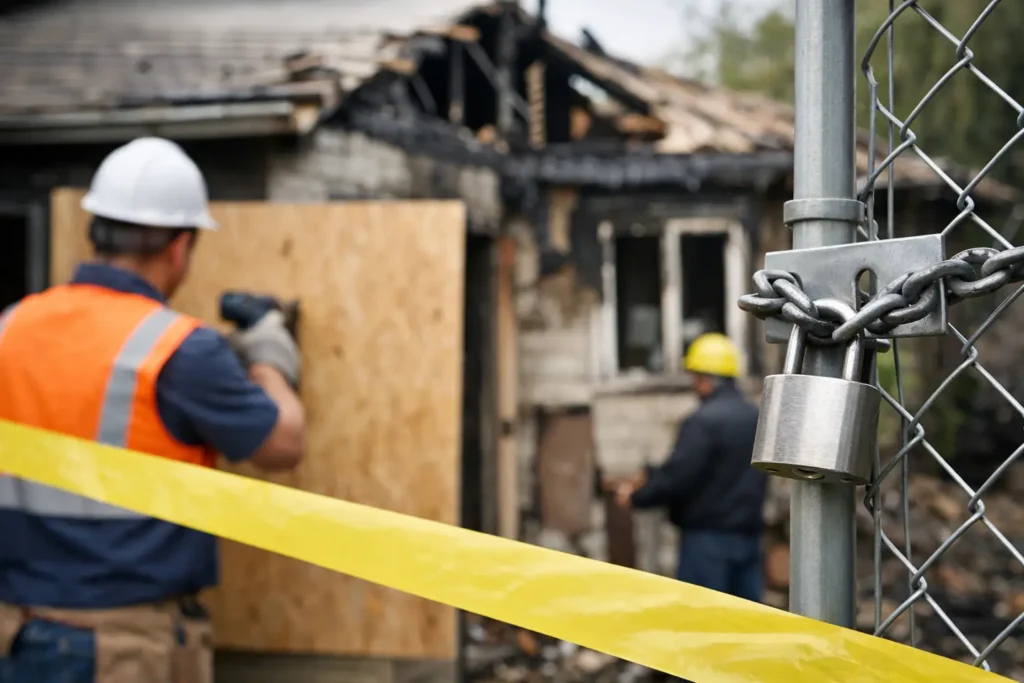
Emergency board-up closes accessible openings with properly secured materials. Roof tarping protects fire-damaged sections from rain until permanent repairs can be completed. These measures are temporary, but they are critical. They preserve the condition of the property while the loss is inspected, documented, and approved for reconstruction.
Avoid using a loose plastic sheet, a lightweight tarp, or makeshift materials that can blow free overnight. Improper temporary protection can trap moisture, damage roofing further, or leave the home vulnerable. Professional emergency crews can board up and tarp the property without causing unnecessary additional damage to salvageable areas.
If the fire affected an attached garage, storage building, or commercial entry point, secure those spaces too. Tools, equipment, and inventory can be exposed even when the main structure has limited damage.
Protect the Scene and Start Documentation
Before debris is removed or personal property is discarded, document the condition of the property. Take wide photos of every affected room, then capture close-ups of burned surfaces, soot patterns, water damage, broken windows, and damaged contents. Video can also help establish the overall condition of each space.
Create a simple record of what you see, including the date, time, and any conversations with the fire department, insurance carrier, utility company, or restoration team. Save receipts for emergency lodging, temporary repairs, boarding materials, meals, and other fire-related expenses. Your insurer may need these records when evaluating additional living expenses and claim reimbursements.
Do not throw away damaged items until the insurance company has had a chance to review them, unless they present a safety or sanitation risk. When disposal is necessary, photograph the item first and note what it was, its approximate age, and its replacement cost. This is especially useful for electronics, furniture, clothing, tools, and tenant-owned contents.
Contact Your Insurer Early, but Do Not Wait to Mitigate
Call your insurance carrier as soon as you can safely do so and open a claim. Ask for the claim number, adjuster contact information, and guidance on emergency mitigation. You should understand your policy responsibilities, but you should not leave the home open to rain or unauthorized entry while waiting for an adjuster appointment.
Most policies require property owners to take reasonable steps to prevent further damage. Board-up, tarping, water extraction, and drying are often part of that responsibility. Keep invoices, photos, and written records of all emergency work.
This is where a restoration partner can reduce the number of moving parts. Elevated Operations can document emergency conditions, perform board-up and tarping, address water and smoke damage, and coordinate the restoration scope with the insurance process. The goal is to protect the property now while building the documentation needed for a defensible claim.
Keep Water and Smoke Damage From Spreading
Firefighting efforts often leave behind substantial moisture. Water can travel behind walls, under flooring, into insulation, and across lower levels. What looks like a small wet area may be connected to a much larger moisture problem.
Professional moisture mapping uses meters and thermal imaging to locate hidden wet materials. Controlled extraction and structural drying can reduce the chance of swelling floors, deteriorating drywall, odors, and microbial growth. Drying is not just about placing fans in a room. Equipment must be sized, positioned, monitored, and adjusted based on the materials and conditions in the home.
Smoke damage also deserves a measured response. Soot is acidic and can permanently stain or corrode surfaces if it is handled incorrectly. Dry soot, oily soot, and protein-based residue each require different cleaning methods. Wiping walls with household cleaners or vacuuming with the wrong machine can spread particles deeper into fabrics and HVAC pathways.
Remove clean, unaffected belongings only after the space is safe and the route out is clear. Store them away from the damaged structure when possible. For contents with visible soot or smoke odor, ask a restoration professional whether cleaning, specialized deodorization, or replacement is the appropriate path.
Prevent Theft and Unauthorized Entry
A fire-damaged home can attract opportunistic theft, particularly when windows are broken or residents are displaced. After the property is secured, remove obvious valuables if it is safe to do so. This may include jewelry, financial records, firearms, cash, medications, and small electronics.
Tell neighbors you trust that the home is temporarily vacant, and ask them to report suspicious activity. Notify your alarm provider if the system has been damaged or shut down. If keys may have been lost during the event, consider rekeying exterior locks once the structure is stable and accessible.
Landlords and property managers should communicate clearly with tenants about access restrictions, temporary housing procedures, and when inspections will occur. Do not allow tenants or vendors to enter a damaged unit without confirming that conditions are safe and documented.
Plan Recovery as One Coordinated Project
Emergency stabilization is only the first phase. The next decisions involve cleaning, demolition, odor control, inspections, repairs, and reconstruction. The right scope depends on where the fire started, how far smoke traveled, how much water was used, and whether structural materials were compromised.
Some properties need focused smoke cleaning and a small repair. Others need removal of damaged drywall and insulation, replacement of electrical components, roof repairs, flooring work, and full room reconstruction. Trying to coordinate separate cleanup and rebuilding contractors can create gaps in documentation, scheduling, and accountability.
Ask who will manage the project from mitigation through reconstruction, how drying and cleanup will be documented, what work requires permits, and how change orders will be communicated. Clear answers matter. You need a team that treats the board-up, cleanup, insurance documentation, and final repairs as connected parts of one recovery plan.
A fire takes away a sense of control fast. Securing the property quickly and carefully is how you start taking it back – protecting what can be saved while giving the home a safer path toward repair.