
How do I handle mold remediation and removal after water damage?
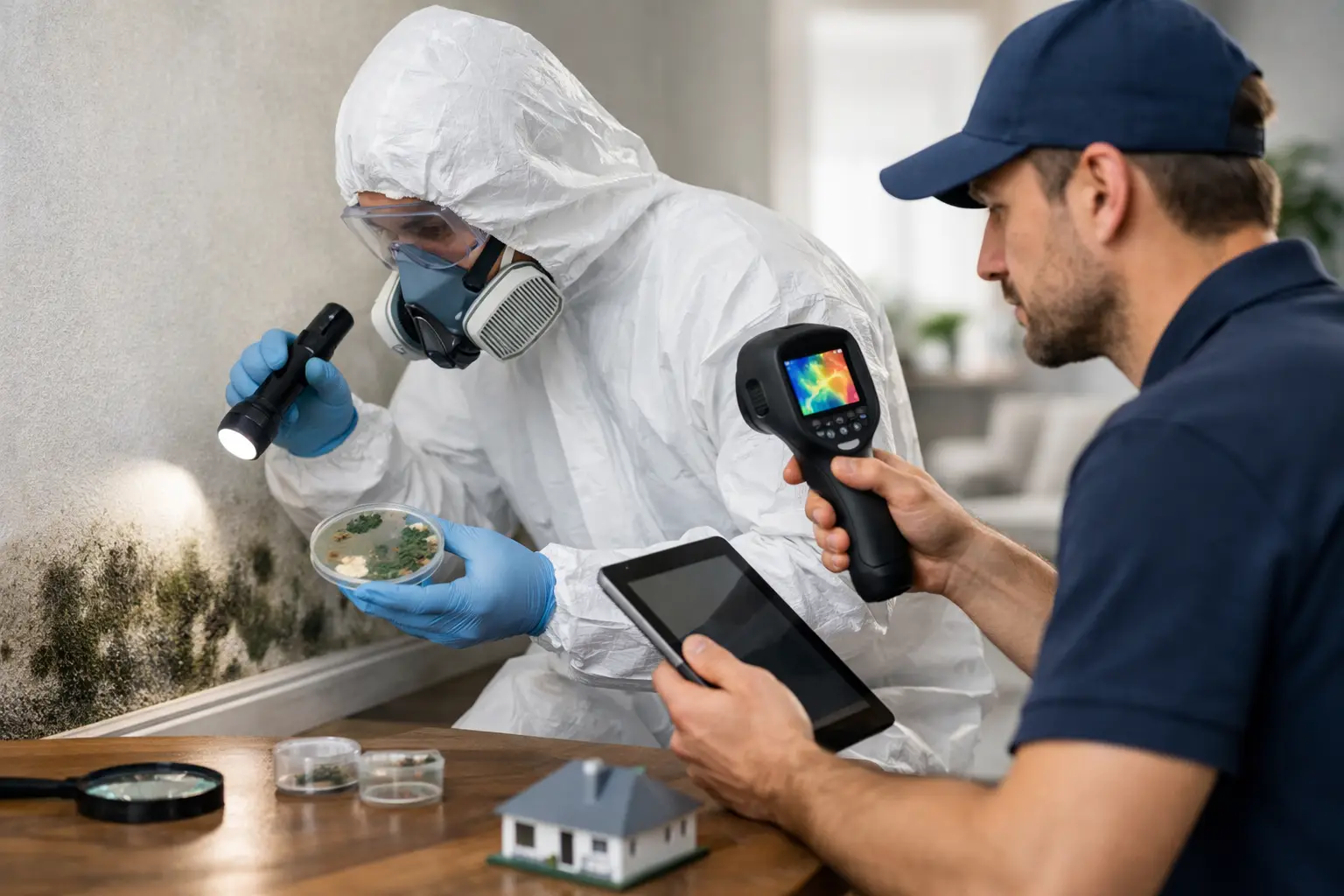
Mold remediation and removal means finding the moisture source, containing affected areas, removing contaminated materials, cleaning remaining surfaces, and drying the structure so mold does not keep coming back. The real fix is not just spraying visible growth. It is stopping the water, remediating the damage, and verifying the space is dry and safe.
What is mold remediation and removal after a leak?
Mold remediation and removal after a leak is not just wiping a dark spot off a wall. It is the controlled cleanup of mold growth caused by excess moisture, plus the drying and repair steps that keep the same problem from coming back.
The phrase gets used loosely, which causes confusion. Homeowners often hear mold remediation and removal and picture a crew spraying something on a surface. That is the mistake. The real job is to address the moisture source, isolate the contamination, remove damaged materials, and restore dry conditions.
In practical terms, remediation of mold covers the problem around the mold, not just the mold itself. If drywall, insulation, carpet pad, or subflooring stayed wet long enough to support growth, those materials may need to be removed instead of cleaned.
The reason this matters is simple. Mold does not need a dramatic flood to show up. A slow leak, a burst pipe, a damp crawl space, or a backed up drain can create the right conditions quietly, and by the time you smell it, the damage may already be inside the structure.
For a homeowner, the key question is not whether you can see the stain. It is whether moisture is still feeding the contamination behind the surface. If it is, cleanup without drying and repair is just temporary cosmetics.
- Visible staining is not the same as the full contamination area.
- Porous materials often hold moisture and growth deeper than the surface.
- A musty odor is often a clue that hidden material is affected.
- The source of water must be fixed before cleanup can hold.
- Proper work usually includes removal, cleaning, drying, and repair.
Which parts of the house usually need mold remediation?
The rooms that need mold remediation are usually the ones where water sat long enough to soak building materials. After water damage, the issue is often not the whole house. It is the damaged zones that trapped moisture and started growing mold.
The usual trouble spots are wall cavities, baseboards, flooring edges, insulation, bathrooms, laundry rooms, crawl spaces, and basements. These areas trap moisture because air movement is limited and porous materials absorb water fast.
If a pipe burst, leaked behind a vanity, or flooded a basement, the affected area can extend beyond what you first notice. Drywall may look fine until you open it. Subflooring may feel solid until mold remediation removal reveals soft, swollen, or discolored layers underneath.
Crawl spaces are especially common because humidity, standing water, and poor ventilation work together. That is why crawl space mold removal is often part of a broader water damage response, not a separate cosmetic fix.
The practical rule is to map damage by moisture path, not by surface appearance. Water travels under flooring, behind trim, and into corners. Mold follows that path.
- Wall cavities can hide growth behind paint and drywall.
- Carpet and pad can trap moisture after a leak or flood.
- Crawl spaces often need attention when humidity stays high.
- Basements can spread damage along edges and below grade walls.
- Bathrooms and laundry areas often show repeat moisture problems.
How does remediation of mold actually work step by step?
Remediation of mold works best when each step follows the last one in the right order. If you skip containment or drying, you may clean what you can see and still leave the root problem in place.
First comes inspection and moisture mapping. You need to know where the water entered, how far it traveled, and what materials are compromised. That tells you whether the job is minor surface cleanup or something deeper that affects framing, insulation, or flooring.
Next is containment. The affected zone is isolated so spores and debris do not spread into cleaner parts of the home. Then contaminated materials are removed or cleaned based on what they are and how far the growth has gone.
After that comes drying and dehumidification. This is where many DIY attempts fall apart. You can scrub a wall clean, but if the cavity is still damp, the mold returns. Drying must happen at the structure level, not just on the surface.
The final stage is reconstruction and verification. If drywall, trim, flooring, or other building materials came out, those spaces need to be rebuilt correctly so the area is safe to use again.
- Inspect the source and scope before touching the area.
- Contain the work zone to limit spread.
- Remove or clean contaminated materials based on damage.
- Dry the structure fully, not just the visible surface.
- Rebuild the affected area only after moisture is controlled.
Elevated Operations provides 24/7 water, fire, mold, storm, and sewage damage restoration across Metro Atlanta.
Get a free quoteWhen does mold remediation removal require more than cleaning?
Mold remediation removal requires more than cleaning whenever porous materials are damaged, the contamination is widespread, or the moisture has been present long enough to penetrate the structure. That is the point where surface sprays stop being useful.
Drywall, carpet pad, ceiling tiles, insulation, and some subfloor materials can absorb contamination in a way that cleaning cannot fully reverse. If the material is compromised, it often needs to come out instead of being wiped down.
The same is true when the moisture source keeps returning. A recurring leak, seepage, or sewer backup creates repeat contamination. You can clean the symptom all day and still lose the battle because the environment is still feeding the problem.
A strong odor is also a clue that the problem is deeper than the surface. Odor often means the area needs a full response, including containment, removal, drying, and possible reconstruction.
In short, cleaning handles what is on the surface. Remediation handles the building conditions that made the growth possible. Those are not the same job.
- Porous materials can hold contamination below the surface.
- Recurring moisture means the mold can return quickly.
- Odors often point to hidden damage, not just visible spots.
- Widespread growth needs containment, not just spot cleaning.
- Reconstruction may be needed after damaged materials are removed.
What should you do first after sudden water damage and visible mold?
What you do first matters because mold growth starts with moisture, not with the stain you can see. The first move is to stop the water if possible, keep people away from the affected area, and avoid stirring up the material.
If it is safe, shut off the water source, move what you can, and limit foot traffic through the area. Do not run fans randomly through a contaminated room hoping for the best. That can spread odor and debris if the space has not been contained properly.
Take photos for your records, but do not start ripping out materials unless you understand what is wet, what is contaminated, and what can be saved. Pulling the wrong thing can make the scope worse and complicate the next steps.
If sewage is involved, treat it as a higher-risk cleanup. Sewer backups are not the same as ordinary clean water leaks, and the health and safety concerns are different. The response should reflect that reality.
Then book a call for a free quote so the loss can be assessed before hidden damage grows into a larger reconstruction project.
- Stop the water source if you can do so safely.
- Limit movement through the wet, affected space.
- Document the damage before removal starts.
- Do not assume fans alone will fix the structure.
- Treat sewage contamination as a separate risk level.
Why do mold problems come back after a quick DIY cleanup?
Mold problems come back after a quick DIY cleanup because the cleanup was aimed at the symptom, not the moisture condition. You can make a wall look better and still leave wet materials, hidden growth, or contaminated dust behind.
A homeowner usually notices the visible patch first, so the instinct is to scrub it. The problem is that growth often spreads behind the surface into drywall seams, insulation, or framing. That hidden area is where repeat growth starts.
DIY cleanup also tends to miss containment. Without it, spores and debris can move into adjacent rooms, on tools, or through the air system. So the work gets spread around instead of controlled.
Another common miss is drying time and verification. If a material is not fully dried, the same conditions that caused the mold stay alive. That is why a real remediation plan includes moisture control, not just wiping and disposal.
This is where IICRC-certified technicians matter. The standard is not guesswork. It is a methodical response that treats the source, the spread, and the structure as one connected problem.
- Surface cleaning alone does not remove hidden growth.
- Without containment, contamination can spread to other areas.
- Wet building materials can restart the problem later.
- Air movement without a plan can move debris around.
- The fix has to address source, spread, and drying together.
How to decide whether the next move is cleanup, remediation, or reconstruction
| Situation | What to do | Why |
|---|---|---|
| Small surface spot with a known, stopped leak | Targeted cleanup with drying and a close look at nearby materials | If the moisture source is truly fixed and the damage is limited, the response may stay localized. |
| Musty odor, soft drywall, or hidden dampness behind walls | Full mold remediation with containment, removal, and drying | Hidden growth and wet materials usually mean the problem is beyond surface cleaning. |
| Sewer backup, contaminated water, or repeated moisture intrusion | Remediation plus sanitary cleanup and likely material removal | Higher-risk contamination needs a stronger response than a simple wipe-down. |
| Removed drywall, trim, flooring, or other structural damage | Reconstruction after the affected area is dried and cleared | You do not rebuild over unresolved moisture or contamination. |
Doing it yourself vs bringing in Elevated Operations
| Doing it yourself | With Elevated Operations | |
|---|---|---|
| Finding the full extent of damage | You can see the stain, but hidden moisture in walls, floors, and cavities is easy to miss. | We trace the affected area, identify the source, and scope the work around the actual damage. |
| Containment and cleanup | You may spread dust, odor, or debris if the area is opened without proper control. | Our crews contain the job so the work stays focused on the affected space. |
| Drying and verification | Fans and bleach do not prove the structure is dry or safe. | We handle water extraction, drying, and the next steps needed to restore usable conditions. |
| Repairing what has to come out | Once damaged drywall or flooring is removed, the rebuild becomes a separate project you still have to manage. | Elevated Operations is a one-stop solution from emergency response through reconstruction, so you are not juggling multiple contractors. |
Frequently Asked Questions
What is the difference between mold remediation and mold removal?
Mold removal is the visible cleanup part. Mold remediation is broader. It includes finding the moisture source, containing the area, removing or cleaning affected materials, and drying the structure so the problem does not keep returning.
Do I need mold remediation if I only smell mold?
Often, yes. A musty odor can mean hidden growth behind drywall, under flooring, or in a crawl space. You do not need to see a large spot for the structure to be affected, especially after water damage.
Can I just clean mold with bleach?
Bleach is not a complete solution for mold remediation and removal. It may change the appearance of some surfaces, but it does not fix the moisture source or solve hidden contamination inside porous materials.
How much does mold remediation cost?
The cost depends on the source of moisture, the amount of affected material, and whether reconstruction is needed after removal. The right next step is a free quote, so the scope can be assessed before any work begins.
Who should I call if the mold came from a burst pipe or flood?
Call a restoration company that can handle the water loss and the mold together. Elevated Operations can help with the full response in Metro Atlanta, from emergency water removal to remediation and reconstruction, which keeps the project organized.
Get a free, no-obligation restoration estimate
Elevated Operations provides 24/7 water, fire, mold, storm, and sewage damage restoration across Metro Atlanta.
Get a free quoteCall (770) 404-6895Last updated September 18, 2026