
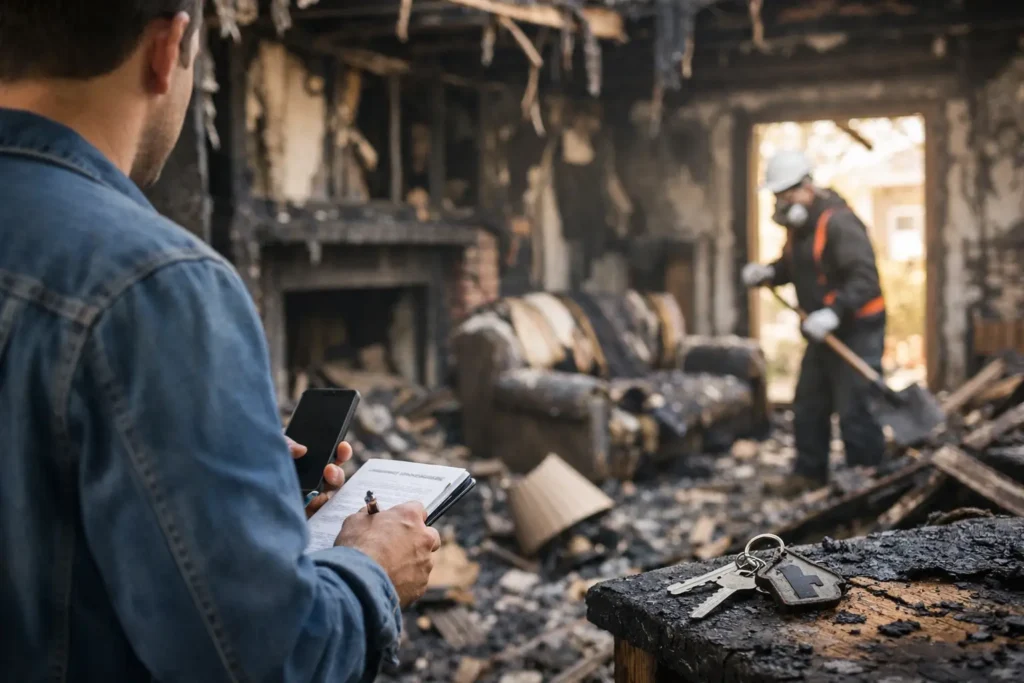
The fire is out, but the damage is still active. Smoke can move through rooms that never burned. Soot can corrode metal, stain finishes, and contaminate HVAC systems. Water used to extinguish the fire can soak framing, floors, and insulation. Effective fire damage cleanup starts with controlling those hidden problems before they become a larger loss.
For homeowners, landlords, and commercial property managers, the first few days after a fire are about protecting the structure, documenting the damage, and making informed decisions. This is not the time for rushed demolition or a surface-level cleaning. A qualified restoration team can stabilize the property, build an insurance-ready record, and create a clear path from emergency mitigation to reconstruction.
Start With Safety and Property Stabilization
Do not re-enter a fire-damaged building until the fire department or another qualified authority says it is safe. Even a small kitchen or appliance fire can leave weakened ceilings, damaged wiring, wet materials, sharp debris, and airborne contaminants behind. The visible burn area rarely tells the whole story.
Once entry is permitted, the immediate priority is preventing additional damage. That may mean boarding broken windows, securing doors, covering a damaged roof, shutting off affected utilities, or isolating areas where soot and water could spread. If rain, wind, or unauthorized entry reaches an exposed property, a manageable claim can become far more expensive.
Take photos and video before moving personal property when it is safe to do so. Document every affected room, including items that look intact but smell strongly of smoke or have a visible soot film. Save receipts for emergency lodging, temporary repairs, and other approved out-of-pocket expenses. Your insurer will need a clear record, and good documentation also helps the restoration plan match the actual loss.
Why Fire Damage Cleanup Is More Than Debris Removal
Fire restoration is a sequence of specialized tasks, not a single cleaning service. The right approach depends on the type of fire, the materials that burned, how long smoke remained in the building, and the amount of water used during suppression.
A protein fire, often caused by food burning on a stove, can leave an almost invisible residue with a strong odor. A wood or paper fire tends to produce dry soot that may be easier to remove if treated quickly and correctly. Fires involving plastics, synthetic fabrics, or electronics can create sticky, oily residues that require different cleaning methods. Using the wrong product or wiping soot incorrectly can drive particles deeper into walls, fabric, or painted surfaces.
Water damage adds another layer of urgency. Wet drywall, insulation, carpet padding, subflooring, and wood framing may require controlled drying or removal. Without moisture mapping and professional drying equipment, water can remain behind finished surfaces and create conditions for mold growth, warping, or structural deterioration.
A complete fire cleanup plan typically includes emergency securing, detailed inspection, soot removal, odor control, water extraction and drying, contents cleaning, selective demolition, and repair. The goal is not simply to make the building look clean. It is to return it to a safe, stable, and functional condition.
The First 24 to 72 Hours Matter
Soot and smoke residues become harder to remove with time. Acidic residues can discolor metals, yellow plastics, etch glass, and permanently damage certain finishes. The longer moisture remains in a structure, the greater the risk of swelling, delamination, and microbial growth.
That does not mean every damaged material should be removed immediately. Some hardwood floors, cabinets, drywall sections, and personal belongings can be saved when the fire was limited and mitigation begins quickly. Other materials may be unsafe or uneconomical to restore. The decision should be based on inspection findings, contamination levels, moisture readings, and the cost of restoration compared with replacement.
A professional team should use moisture meters, thermal imaging, air-moving equipment, dehumidification, and containment where needed. These tools help identify what cannot be seen from the doorway. For example, a ceiling may appear dry while wet insulation above it continues holding moisture, or smoke may have traveled through return vents into rooms far from the source.
What to Avoid After a Fire
Well-intended cleanup can create new damage. Do not vacuum soot with a standard household vacuum, because it can spread fine particles into the air and across surfaces. Avoid wiping walls, cabinets, or upholstered furniture with water, household sprays, or dry towels unless a restoration professional directs you to do so. Friction can smear soot and make staining worse.
Do not turn on the HVAC system until it has been inspected. Running it too soon may circulate smoke particles and odors through ducts and into clean areas. Avoid using electrical appliances or restoring power to affected areas without approval from a licensed electrician or qualified professional.
It is also wise not to discard damaged belongings before your insurer has documented them. Create an inventory, photograph items from multiple angles, and keep a list of what was removed or disposed of. If an item must be discarded for safety reasons, record its condition first whenever possible.
Insurance Coordination Should Support the Recovery
A fire claim involves more than a repair estimate. Insurers commonly need cause-of-loss information, photographs, mitigation documentation, moisture readings, itemized invoices, and a clear explanation of what can be cleaned, repaired, or replaced. Missing details can slow approvals when you need action most.
The property owner still controls the claim and should understand the scope of work. A dependable restoration partner communicates clearly about emergency work, expected timelines, materials that need removal, and repair options. They should also explain where the facts are still developing. For example, the full condition of framing, wiring, or insulation may not be known until damaged finishes are safely removed.
For Metro Atlanta property owners, working with one team from mitigation through reconstruction can reduce handoffs and confusion. Rather than coordinating an emergency cleanup company, a separate demolition crew, and a remodeling contractor, you can keep documentation, scheduling, and accountability under one recovery plan.
From Cleanup to Reconstruction
Once the structure is dry, clean, and cleared for rebuilding, reconstruction can begin. This may include drywall replacement, painting, flooring, cabinets, electrical repairs, roofing work, trim, insulation, and finish upgrades. In some cases, the rebuilding phase is an opportunity to correct pre-existing issues or choose more durable materials for the space.
Still, upgrades should be discussed carefully with your contractor and insurer. Insurance generally covers restoration to the pre-loss condition, while elective improvements may create additional costs. A clear estimate separates covered repairs from owner-requested upgrades so there are no surprises later.
At Elevated Operations, the focus is to carry the recovery forward instead of leaving property owners with a cleaned-out structure and a list of contractors to call. Certified mitigation, detailed documentation, insurance coordination, and reconstruction are all part of restoring control after a loss.
When to Call a Professional Fire Restoration Team
Any fire that leaves smoke, soot, water intrusion, a persistent odor, or visible damage deserves professional evaluation. This includes fires that seem minor, such as a stove flare-up contained quickly by the fire department. Smoke can reach cabinets, insulation, ductwork, and adjacent rooms even when flames never did.
Call for immediate help if the property has a damaged roof or window, standing water, wet ceilings, soot throughout multiple rooms, electrical concerns, or an odor that remains after ventilation. A 24/7 response is especially valuable when securing the building quickly can prevent weather exposure, theft, or further contamination.
The right next step after a fire is not to clean faster. It is to stabilize the property, identify the full extent of the loss, and restore each affected area with the right method. That careful start gives your home, rental property, or business the best chance of a safe return to normal.