
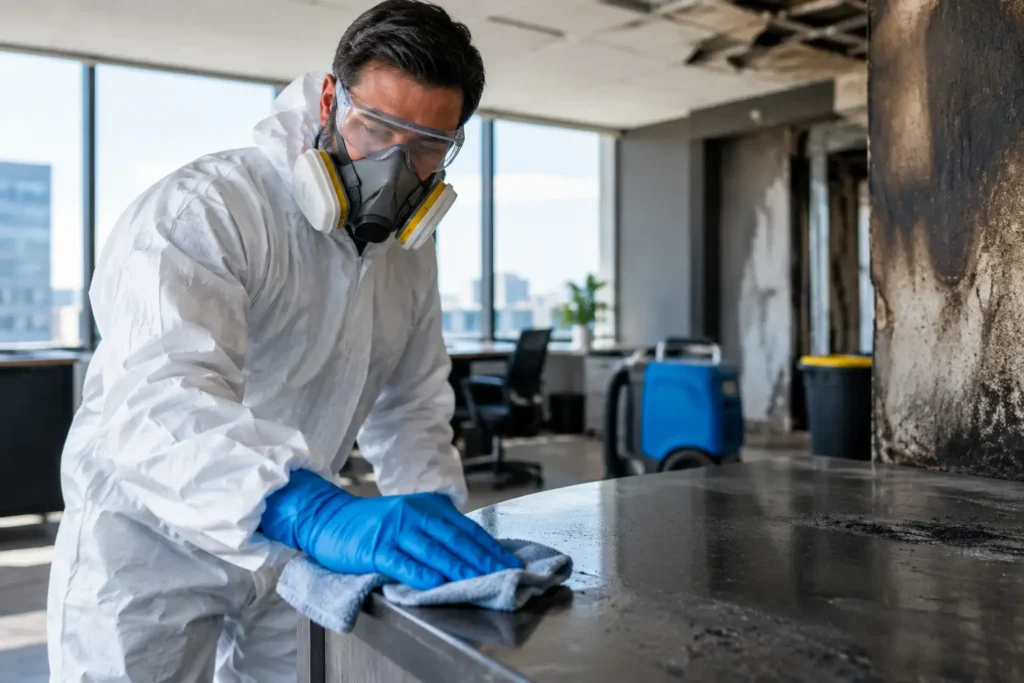
A small fire can create a large business interruption. Even when flames are contained to one room, commercial smoke cleanup may be needed across offices, hallways, inventory areas, HVAC systems, and neighboring tenant spaces. Smoke travels fast, settles on surfaces people do not see, and can leave a property smelling burned long after the visible damage is gone.
For Metro Atlanta business owners and property managers, the priority is not simply making the building look clean. It is protecting occupants, preserving equipment and materials, documenting the loss, and getting operations moving again without cutting corners that create a second problem later.
Why Smoke Damage Is More Complicated Than It Looks
Smoke is not one uniform substance. The materials that burned, the fire temperature, the amount of oxygen available, and the path smoke took through the building all affect the cleanup plan. A fire involving plastics, synthetic fabrics, electronics, food products, wood, or petroleum-based materials can leave very different residues.
Some soot is dry and powdery. Other residues are oily, sticky, corrosive, or nearly invisible against dark surfaces. Wiping a wall with the wrong method can drive particles deeper into paint, fabric, or unfinished wood. Water-based cleaning can also smear certain residues and make staining worse.
That is why a quick janitorial pass is rarely enough after a fire. Smoke contamination can affect ceiling tiles, wall cavities, ductwork, upholstered furniture, hard surfaces, insulation, documents, inventory, and sensitive electronics. If those materials are not evaluated correctly, odors and corrosion can continue after the building reopens.
Commercial Smoke Cleanup Starts With Control
The first hours after a fire matter. Once the fire department has released the property, the building still needs to be stabilized. That may mean securing broken windows and doors, placing roof tarps, shutting down affected HVAC equipment, and controlling access to unsafe areas.
Do not allow employees to begin wiping down their workspaces before the affected areas are assessed. It is understandable to want to save files, equipment, or merchandise immediately. But unprotected contact with soot can spread it into clean areas, damage delicate finishes, and complicate the insurance documentation your claim may require.
A professional restoration team begins by identifying the source area, smoke migration paths, materials affected, and conditions that require safety controls. This includes checking for structural damage, water used during firefighting, exposed electrical hazards, and moisture trapped behind finishes. Fire damage is often a combined fire, smoke, water, and odor loss, not a single-service job.
Protect people before protecting productivity
A business may be able to continue limited operations, but only after the space has been evaluated. The right decision depends on the extent of contamination, the type of business, local safety requirements, and whether critical systems are functioning.
For example, a warehouse with isolated smoke exposure may have a different reopening path than a medical office, daycare, restaurant, apartment common area, or retail store with odor-sensitive merchandise. The goal is to reduce downtime, but reopening too soon can expose staff and customers to unsafe conditions or lead to repeat closures.
What a Professional Smoke Cleanup Process Includes
Commercial smoke cleanup is a sequence of decisions and work, not a single cleaning product or odor treatment. The exact scope depends on the loss, but a qualified team commonly handles the following:
- Detailed documentation of damaged rooms, materials, contents, and visible smoke patterns for the property owner and insurance claim.
- Dry soil and soot removal using methods designed to lift particles without grinding them into surfaces.
- Specialized cleaning for walls, ceilings, floors, fixtures, electronics, contents, and HVAC components when appropriate.
- Odor source removal, followed by targeted deodorization rather than fragrance products that only cover the smell.
- Water extraction, structural drying, moisture mapping, and controlled demolition when firefighting water or wet materials are present.
- Reconstruction of damaged areas, including drywall, flooring, paint, electrical work, roofing, and other repairs needed to return the building to use.
The order matters. Deodorizing before residue is removed usually produces disappointing results because the odor source remains. Painting over smoke-stained surfaces without correct cleaning and sealing can allow stains and smells to return. Likewise, replacing a few visibly damaged ceiling tiles does not solve a smoke issue that entered the HVAC system or migrated above the ceiling grid.
Odor Control Is About Removing the Source
Persistent smoke odor is one of the most frustrating parts of a commercial loss. It can affect employee comfort, customer impressions, tenant satisfaction, and the usability of the space. A building can appear fully repaired and still smell like a fire every time humidity rises or the air conditioning starts.
Effective odor control begins with residue removal and disposal of materials that cannot be restored. Technicians then choose deodorization methods based on the building, the materials involved, and occupancy conditions. Air cleaning equipment, filtration, cleaning agents, odor counteractants, thermal fogging, and sealing may be used in the right circumstances.
There is no one-size-fits-all odor machine. Treatments that work in an empty warehouse may not be suitable for a furnished office, occupied apartment building, food-service location, or facility with sensitive equipment. The professional standard is to match the method to the property, protect occupants, and verify that the source has been addressed.
The Hidden Risk: Corrosion and Secondary Damage
Smoke residue can be acidic and corrosive, particularly around electronics and metal surfaces. Computers, point-of-sale systems, appliances, manufacturing controls, security equipment, and wiring may look unaffected at first. Over time, residue can contribute to failure, unreliable performance, or reduced equipment life.
This is why early assessment is valuable. Some contents can be cleaned, documented, and restored. Others may need specialty evaluation or replacement. The right call depends on the type of equipment, manufacturer guidance, contamination level, business use, and insurance requirements.
Water from sprinklers or firefighting efforts creates another urgent issue. Moisture can move under flooring, behind walls, and into insulation. Without professional extraction, drying equipment, and moisture monitoring, a smoke loss can turn into mold growth, material deterioration, or avoidable reconstruction costs.
Commercial Smoke Cleanup and Your Insurance Claim
After a fire, property managers and owners are often balancing vendor calls, tenant communication, employee needs, lease obligations, and insurance questions at the same time. Clear documentation reduces confusion.
Keep records of the fire event, emergency actions, damaged areas, business interruption concerns, invoices, photographs, and communications with carriers. Avoid discarding damaged materials until they have been documented and your insurer has provided direction. If temporary relocation, emergency board-up, or content handling is needed, retain the related records as well.
An experienced restoration partner can help organize the mitigation scope, provide insurance-ready documentation, and coordinate the cleanup and repair process. That does not mean every claim will follow the same path. Coverage, deductibles, policy limits, cause of loss, and the condition of the property all affect the outcome. But accurate records and a defined scope put you in a stronger position from the start.
One Team From Emergency Cleanup to Rebuild
Using separate companies for emergency mitigation, cleaning, repairs, and reconstruction can create gaps in communication. One contractor may remove materials while another questions why they were removed. A repair team may discover moisture or odor issues that should have been addressed before rebuilding began.
A one-stop recovery partner keeps the project moving from emergency response through final repairs. Elevated Operations provides commercial property owners with certified smoke and soot removal, moisture control, insurance coordination, and reconstruction support, so there is a clear line of accountability throughout the recovery.
For a commercial property in Atlanta, Marietta, Austell, or nearby communities, speed matters, but scope matters just as much. The best response is not the fastest cosmetic cleanup. It is the plan that protects the building, supports the claim, and restores a safe, functional space without leaving smoke damage behind the walls, above the ceiling, or inside the air system.
A fire can interrupt business in minutes. The recovery should begin with careful control, qualified cleanup, and a repair plan built to bring people back to a property they can trust again.